


 プレビュー
プレビュー
 シェアする
シェアする シェアする
シェアする
 詳細を見る
詳細を見る ガイド
ガイド

 ダウンロード
 似ている作品
 X線調査
X線調査 スライドショー
 統計情報
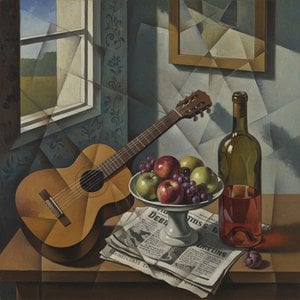
統計情報Number 28 (Still Life)


 詳細を見る
詳細を見る
手描き油彩複製画
当社のアーティストが、お客様のご希望のサイズと額縁に合わせて、キャンバスに手描きで制作する油彩画です。 ( プリント版に切り替え デジタル画像販売へ切り替え)




































作品のオリジナル比率に合わせた、当店の規定サイズからお選びください。

特定のフレームやスペースに合わせて、ご希望のサイズをご入力いただけます。選択されたサイズが元の画像の比率と異なる場合、アートワークをトリミングするか、手描きで要素を追加して絵画を拡張いたします。デジタルモックアップ を制作し、制作開始前にご確認(承認)をいただきます。
画面上のプレビューは、実際のトリミングや拡張を正確に反映しているものではありません。最終的な構図は、モックアップによってのみ正確にご確認いただけます。
カスタムサイズもご利用いただけますが、元の比率を維持するためには、あらかじめ用意されたリストからサイズを選択することをお勧めいたします。
ご注文後、ArtsDot.com チームより詳細な指示をお送りするとともに、仕上がりイメージ(モックアップ)をご提供いたします。


 ガラスオプションは、110cm未満のサイズでのみご利用いただけます。

Number 28 (Still Life)
複製技法
複製画のサイズ
-


合計金額
$ 263
関連作品


アーティストの略歴
Albert Eugene Gallatin: A Pioneer of American Modern Art
Early Life and Family Background
- Born: Villanova, Pennsylvania, 1881.
- Gallatin came from a wealthy and socially prominent family. His great-grandfather was Albert Gallatin, a Swiss-American ethnologist, linguist, politician, and diplomat who served as the United States Secretary of the Treasury.
- He developed an early interest in art and literature, beginning to collect works by artists like Max Beerbohm and James McNeill Whistler while still a teenager.
Artistic Development and Influences
- Initially drawn to the decorative qualities of Beardsley and Whistler’s work, Gallatin focused on elegance of line and aesthetic value over narrative content.
- Around 1910, his interests shifted towards American artists associated with the Ashcan School – Everett Shinn, William Glackens, Ernest Lawson, and John Sloan.
- He was also influenced by artists like John Marin and Boardman Robinson.
- Gallatin’s exposure to European modernism, particularly Cubism, proved pivotal in shaping his artistic vision.
Artistic Style and Key Works
- Park Avenue Cubism: Gallatin developed a distinctive style often referred to as “Park Avenue Cubism,” characterized by geometric forms, muted tones, and a sophisticated aesthetic.
- Notable works include "Compostion Painting" and "Number 28 (Still Life)", exemplifying his Synthetic Cubist approach.
- He also created “Map of the Indian tribes of North America”, showcasing diverse artistic interests.
- Gallatin’s paintings often reflect a balance between abstraction and recognizable forms, demonstrating his unique interpretation of Cubism.
Contributions to the American Art Scene
- Collector & Writer: Gallatin was not only an artist but also a prolific writer and collector. He authored numerous articles and monographs on modern art, advocating for its acceptance and understanding.
- Gallery of Living Art: In 1936, he founded the Gallery of Living Art at New York University (NYU), providing a platform for showcasing contemporary American artists and fostering dialogue about abstract art.
- He actively promoted the work of emerging artists and played a crucial role in establishing a vibrant modern art community in New York City.
Legacy and Historical Significance
- Donations to Museums: Gallatin’s extensive collection of modern art was generously donated to the Philadelphia Museum of Art and the Museum of Modern Art (MoMA) in New York, enriching their holdings and contributing to the preservation of artistic heritage.
- He is remembered as a visionary figure who championed abstract art at a time when it faced resistance and skepticism.
- His contributions helped pave the way for the acceptance and appreciation of modern art in America, leaving an enduring impact on the world of contemporary art.
- Gallatin died in New York City in 1952, leaving behind a legacy as one of the great figures in early 20th-century American culture.

Albert Eugene Gallatin
1881 - 1952 , United States of America
基本情報
- Birth Date: 1881
- Birth Place: Villanova, United States of America
- Death Date: 1952
- Movement:
- Cubism
- Abstract Art
- Nonobjective Art
- Name: Albert Eugene Gallatin
- Nationality: American
- Notable Works:
- Compostion Painting
- Map of the Indian tribes of North America
- Number 28 (Still Life)
関連記事

ポール・セザンヌ:至高の25選 - 傑作と革新の軌跡 | ArtsDot
ポール・セザンヌの至高の25選。ポスト印象派を代表する画家、セザンヌの傑作と革新的な技法を紐解きます。ArtsDotで高品質な複製画やインテリアアートを見つけ、芸術の世界をご自宅に。今すぐコレクションをご覧ください。

ジョルジュ・ブラック傑作25選:革新的なキュビスムの世界と装飾への誘い
ジョルジュ・ブラックの傑作25選。キュビスムを代表する画家、その革新的な色彩と技法に迫ります。名画から知られざる逸品まで、美術史に残る作品群をArtsDot.comで鑑賞。お部屋を彩るアートプリントも多数ご用意。今すぐオンラインでコレクションをご覧ください。

Deconstructing Reality: A Comprehensive Exploration of Synthetic Cubism's Evolution & Impact
Explore the revolutionary world of Synthetic Cubism! Discover its origins, key artists like Picasso & Braque, techniques, and lasting impact on modern art. A comprehensive guide for enthusiasts.

Deconstructing Reality: Cubism's Revolutionary Impact on 20th-Century Art
Explore the revolutionary world of Cubism with ArtsDot. Discover Picasso & Braque's groundbreaking techniques, its philosophical roots, and lasting impact on modern art. Expert insights for collectors.
Deconstructing Reality: A Comprehensive Exploration of Cubist Still Life
Explore the revolutionary world of Cubist Still Life with ArtsDot. Discover Picasso & Braque's groundbreaking techniques, its philosophical roots, and lasting impact on modern art. Expert insights for collectors.