 Condividi
 Condividi
 Dettagli

 Scarica immagine
 Articoli simili
 Slideshow
La disputa (detail)92

 Leggi tutto
Riproduzione a olio fatta a mano
Olio su tela dipinto a mano nelle tue dimensioni e con la tua cornice, realizzato su ordinazione dai nostri artisti. ( Passa alla stampa Passa all'immagine)




P118B $10

P118H $10

P118W $10

P438Z $10

P508JH $12

P508YH $12

P805H $10

P805Z $10

P919BZ $10

P919G $10

P919XJ $10

P959ZH $10

P968JZ $12

W106C $8

W218G $10

W218JH $8

W218Y $10

W307PJ $10

W316G $10

W316PJ $8

W316Y $10

W398PJ $8

W4111J $10

W500HY $15

W500JH $15

W692G $12

W849H $8

W940BG $15

W953PJ $8




Scegli tra le nostre dimensioni predefinite, che rispettano le proporzioni originali dell'opera d'arte.

È possibile inserire dimensioni personalizzate per adattare l'opera a una cornice o a uno spazio specifico. Se la dimensione selezionata non corrisponde alle proporzioni dell'immagine originale, provvederemo a ritagliare l'opera o a estendere il dipinto con elementi aggiuntivi dipinti a mano. Un mockup digitale ti sarà inviato per approvazione prima dell'inizio della produzione.
Si prega di notare che l'anteprima a schermo non riflette il ritaglio o l'estensione effettivi. Solo il mockup mostrerà accuratamente la composizione finale.
Sebbene siano disponibili dimensioni personalizzate, consigliamo di selezionare una dimensione dall'elenco predefinito per preservare le proporzioni originali.
Dopo l'ordine, il team di ArtsDot.com contatterà il cliente via e-mail per le istruzioni e fornirà un'anteprima del mockup
Consegna in tutto il mondo () in 3/4 settimane anziché nelle normali 5 settimane. (10 Agosto). Nessun compromesso sulla qualità.

Spedizione espressa gratuita in tutto il mondo

Tela in lino di alta qualità

Assicurazione completa sulla spedizione

Garanzia di rimborso dei dazi doganali

Garanzia di fedeltà cromatica dell'originale

Politica di reso entro 60 giorni (solo per difetti di fabbricazione)

Garanzia di rimborso al 100%

Sconto per acquisti multipli
 L'opzione vetro è disponibile solo per dimensioni inferiori a 110 cm

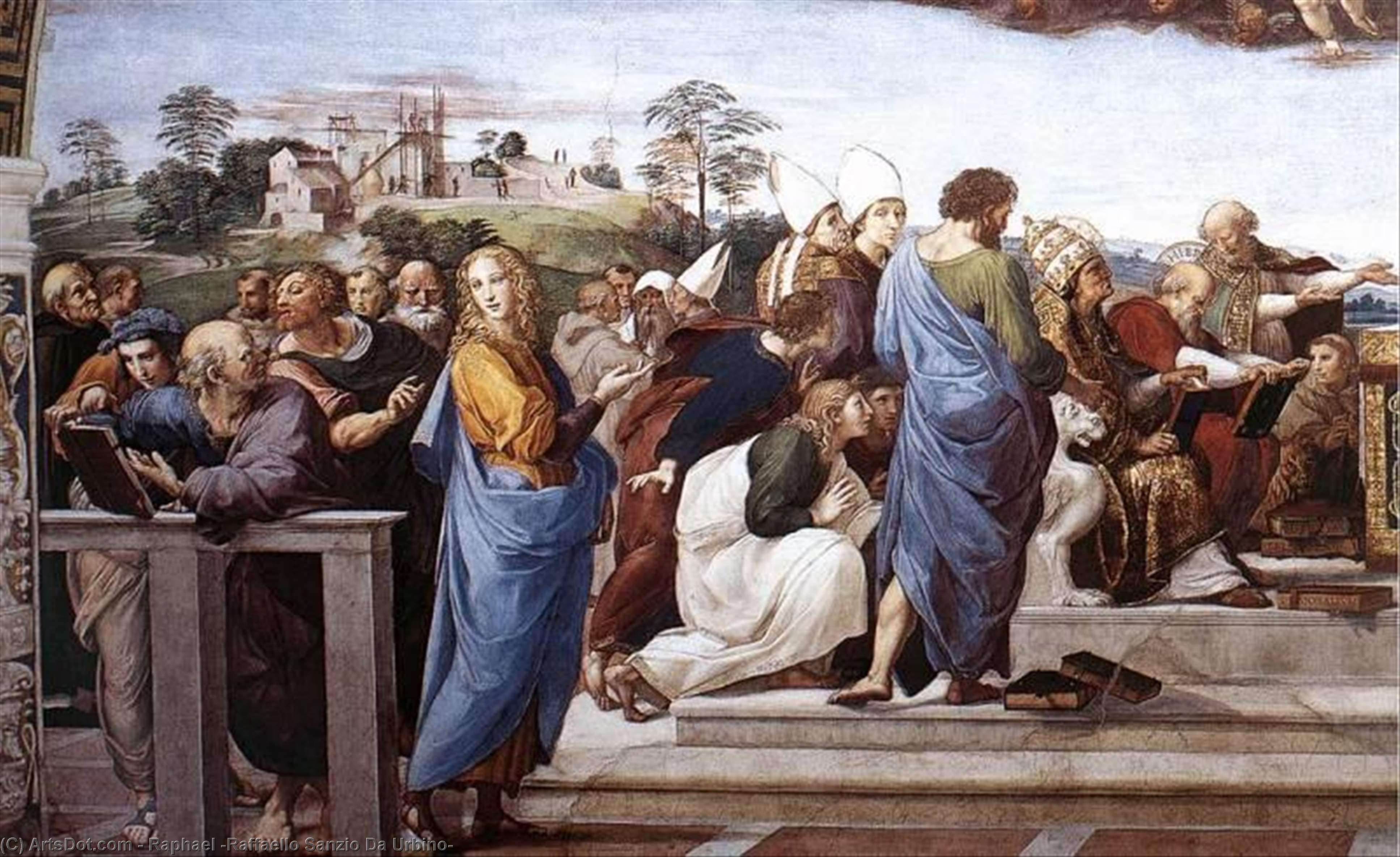
La disputa (detail)92
Tecnica di riproduzione
Dimensioni della riproduzione
-


Prezzo totale
$ 263
Descrizione dell'opera
La Disputa: A Symphony of Faith and Reason
The *Disputation of the Holy Sacrament*, painted between 1509 and 1510 by Raphael during his tenure decorating the Stanza della Segnatura in Vatican City, stands as a cornerstone of High Renaissance art—a testament to humanist ideals intertwined with profound theological contemplation. Commissioned by Pope Julius II for the papal library, this fresco transcends mere visual representation; it embodies an intellectual dialogue between divine grace and human understanding, meticulously crafted by Raphael’s unparalleled artistic vision.- Subject Matter: The scene depicts a formal debate concerning the Eucharist—the sacrament of Holy Communion—a central pillar of Christian faith. It's not simply a depiction of religious ritual but an exploration of its philosophical implications.
- Style & Composition: Raphael’s masterful use of perspective and balanced symmetry creates a harmonious visual experience, characteristic of Renaissance aesthetics. The fresco is divided into two semicircles—one above the altar representing the Church Triumphant, the other below symbolizing the Church Militant—establishing a dynamic interplay between earthly struggles and heavenly glory.
- Technique: Raphael employed the technique of *fresco*, applying pigment directly onto wet plaster, ensuring remarkable durability and preserving the artwork’s vibrant colors for centuries. The meticulous layering of glaze over underpainting contributes to the luminous quality of the painting, capturing the ethereal glow of divine light.
Historical Context: Renaissance Humanism Meets Papal Patronage
The *Disputation of the Holy Sacrament*, painted between 1509 and 1510 during Raphael’s tenure as papal architect in Rome, stands at the forefront of Michelangelo's artistic legacy. Commissioned by Pope Julius II for the Stanza della Segnatura—one of four opulent rooms decorating the Vatican Palace—the fresco embodies the spirit of Renaissance humanism, a movement that championed reason and observation alongside classical ideals. However, it’s equally rooted in papal patronage, reflecting the Church's ambition to assert its authority and prestige during a period marked by political upheaval and religious reform. Julius II himself was a fervent supporter of humanist scholarship and artistic innovation, recognizing Raphael’s genius as instrumental in elevating the Vatican’s visual splendor. The painting reflects this intellectual fervor through its careful arrangement of figures and symbols—a deliberate effort to communicate theological truths with clarity and grandeur.Subject Matter and Composition
At its core, the Disputation is a profound meditation on divine revelation and Christian theology. Raphael meticulously depicts a scene from scripture: Christ debating Saint Peter about the Eucharist – the sacrament of Holy Communion—before Mary and John the Baptist. This central tableau dominates the composition, framed by an aureole encircling Christ and illuminated by ethereal light, symbolizing God’s omnipresence and grace. The figures are arranged in two semicircles, mirroring the biblical narrative itself, creating a harmonious balance that underscores the importance of theological contemplation. Raphael skillfully employs perspective to convey depth and realism, grounding the celestial realm in earthly reality—a hallmark of Renaissance artistic ambition.Style and Technique
Raphael’s masterful technique exemplifies the ideals of High Renaissance art. Executed between 1509 and 1510 as part of his monumental commission to decorate the Stanza della Segnatura in Vatican City, the fresco demonstrates an unparalleled command of chiaroscuro—the dramatic interplay of light and shadow—creating a palpable sense of atmosphere and conveying emotional intensity. Raphael’s brushstrokes are smooth and delicate, achieving remarkable tonal gradation and capturing subtle nuances of expression. The artist's meticulous attention to detail is evident in every aspect of the painting, from the drapery folds to the facial features, reflecting the humanist fascination with anatomical accuracy and naturalism.Historical Context
The Disputation stands as a cornerstone of Renaissance artistic achievement, situated within the broader intellectual and spiritual currents of its time. Commissioned by Pope Julius II during his ambitious patronage of the arts—a period marked by papal ambition and rivalry—the fresco reflects the humanist conviction that art could illuminate moral truths and elevate the human spirit. Raphael’s work aligns seamlessly with Leonardo da Vinci's and Michelangelo's groundbreaking explorations of perspective, anatomy, and emotion, establishing a triumvirate of artistic geniuses who reshaped Western visual culture. The Stanza della Segnatura itself was conceived as a didactic space intended to inspire contemplation on divine mysteries—a testament to the papal desire to foster piety and intellectual enlightenment.Symbolism and Emotional Impact
Beyond its formal brilliance, the Disputation is laden with symbolic significance. The central tableau depicts the Holy Eucharist—the sacrament of communion—representing Christ’s sacrifice for humanity and embodying the divine Trinity. The figures surrounding Christ embody both earthly and heavenly realms, symbolizing the Church Militant (those actively battling evil) and the Church Triumphant (those victorious in eternal life). Raphael's masterful use of light and color contributes to an atmosphere of solemn grandeur, conveying a profound sense of spiritual reverence. The inclusion of portraits of prominent figures—Bramante, Francesco Maria Della Rovere, Dante—underscores the painting’s engagement with humanist ideals and its celebration of intellectual accomplishment. Ultimately, “La Disputa” transcends mere visual representation; it aspires to evoke contemplation on faith, reason, and the sublime beauty of God's revelation—leaving an indelible impression on viewers who appreciate the artistic legacy of Renaissance Italy.Opere correlate


![Stanze Vaticane - La Disputa (dettaglio) [04] — Raffaello, Alto Rinascimento](/media/artworks/images/thumbnails/f6/32/f6329bd6bb8847f99363c8080abed822.jpg)


Biografia dell'artista
**primi anni di vita e formazione**
Raphael (Raffaello Sanzio da Urbino), un rinomato pittore e architetto italiano, nacque tra il 28 marzo e il 6 aprile 1483, nella piccola ma culturalmente significativa città di Urbino. Suo padre, Giovanni Santi, era un pittore di corte per il duca, offrendo a Raffaello un'esposizione precoce al mondo dell’arte. Dopo la morte del padre all'età di undici anni, Raffaello probabilmente gestì l'officina familiare, consolidando ulteriormente le sue fondamenta artistiche.**carriera artistica e influenze**
Il percorso artistico di Raffaello può essere suddiviso in tre fasi distinte, ciascuna caratterizzata da uno stile unico:- primi anni a Umbriglia: caratterizzati dall'influenza del padre e dall'atmosfera culturale di Urbino.
- periodo fiorentino (1504-1508): assorbendo le tradizioni artistiche di Firenze, che hanno profondamente influenzato il suo stile.
- periodo romano (1508-1520): lavorando per due papi e i loro associati, producendo alcune delle sue opere più celebrate, tra cui La scuola di Atene nella stanza della segnatura Vaticana.
**opere notevoli e eredità**
Alcune delle opere più importanti di Raffaello includono:- Il giudizio di Solemano (visualizza su ArtsDot)
- La Madonna di Esterhazy (visualizza su ArtsDot)
- Stanze Vaticane - Vista della stanza della segnatura (visualizza su ArtsDot)
- S. Sebastiano (visualizza su ArtsDot)
- La donna velata (visualizza su ArtsDot)
**influenza e eredità**
L'influenza di Raffaello sull'arte è profonda, con le sue opere che costituiscono un pilastro del Rinascimento maturo. Il suo stile sereno e armonioso è stato un modello per la pittura neoclassica, come notato da l' storico dell'arte Johann Joachim Winckelmann. Nonostante l'influenza successiva dello stile di Michelangelo, Raffaello rimane uno degli artisti più celebrati della storia. visualizza il profilo di Raffaello su ArtsDot
Raffaello
1483 - 1520 , Italia
Informazioni rapide
- Artisti Influenti:
- Giovanni Santi
- Pietro Perugino
- Leonardo da Vinci
- Michelangelo
- Artisti Influenzati: ['Neoclassicismo']
- Data Di Morte: 6 aprile 1520
- Data Di Nascita: 28 marzo 1483
- Luogo Di Nascita: Urbino, Italia
- Movimento Artistico: Rinascimento maturo
- Nazionalità: Italiana
- Nome Completo: Raffaello Sanzio da Urbino
- Opere Notevoli:
- La Scuola di Atene
- Madonna Solly
- Madonna del Cardellino
- Le Tre Grazie
- La Messa a Bolsena
Articoli correlati

Raffaello Sanzio: I 25 Capolavori Immortali dell'Arte Rinascimentale | ArtsDot
Esplora i 25 capolavori immortali di Raffaello Sanzio, il maestro del Rinascimento italiano. Scopri la storia, le tecniche e l'emozione dietro dipinti iconici come 'La Scuola di Atene'. Trova riproduzioni d'arte di alta qualità per decorare casa tua su ArtsDot.com.
L'Arte dei Murales di Famiglia: Trasformare le Mura in Memorie Eterne
Scopri l'arte del fresco e crea murales familiari unici! Esplora la storia, le tecniche e realizza il tuo sogno artistico con : esperti artisti e qualità garantita.

The Enduring Legacy of Fresco Painting: Techniques, History & Contemporary Relevance
Explore the rich history & enduring artistry of fresco painting – from Giotto to Michelangelo! Discover techniques, conservation efforts, & modern applications. Learn how ArtsDot brings this timeless art form to your home.

The Enduring Legacy of Fresco: Technique, History & Artistic Expression Across Cultures
Explore the rich history & enduring legacy of fresco painting! Discover ancient techniques, Giotto's masterpieces, and modern applications. Expert insights for art lovers & professionals.
I 10 Capolavori del Rinascimento Maturo che Hanno Definito l'Arte: Scopri i Maestri
Esplora i 10 capolavori del Rinascimento Maturo con ! Scopri Leonardo, Michelangelo, Raffaello e altri maestri. Dipinti iconici, storie affascinanti e riproduzioni d'arte di alta qualità per la tua casa. Esplora la collezione online!