
- Home

- Riproduzione di dipinto a olio
- Pablo Picasso
- Acrobate blu

 Acquista stampa Acquista download
 Invia
Invia
 Condividi
 Details
 Aggiungi ai preferiti

 Scarica
 Simili
 X-Ray
X-Ray
 Slideshow
Acrobate blu
 Olio su tela
- Opere d'arte da parete
- Surrealist Style
 1929
1929- Moderno
 162.0 x 130.0 cm
 Scopri di più
Riproduzione a olio fatta a mano
Olio su tela dipinto a mano nelle tue dimensioni e con la tua cornice, realizzato su ordinazione dai nostri artisti.




































Scegli tra le nostre dimensioni predefinite, che rispettano le proporzioni originali dell'opera d'arte.

È possibile inserire dimensioni personalizzate per adattare l'opera a una cornice o a uno spazio specifico. Se la dimensione selezionata non corrisponde alle proporzioni dell'immagine originale, provvederemo a ritagliare l'opera o a estendere il dipinto con elementi aggiuntivi dipinti a mano. Un mockup digitale ti sarà inviato per approvazione prima dell'inizio della produzione.
Si prega di notare che l'anteprima a schermo non riflette il ritaglio o l'estensione effettivi. Solo il mockup mostrerà accuratamente la composizione finale.
Sebbene siano disponibili dimensioni personalizzate, consigliamo di selezionare una dimensione dall'elenco predefinito per preservare le proporzioni originali.
Dopo l'ordine, il team di ArtsDot.com invierà un'e-mail al cliente per le istruzioni e fornirà un'anteprima del mockup
Consegna in tutto il mondo () in 3/4 settimane anziché nelle normali 5 settimane. (1 Luglio). Nessun compromesso sulla qualità.

Spedizione espressa gratuita in tutto il mondo

Tela in lino di alta qualità

Assicurazione completa sulla spedizione

Garanzia di rimborso dei dazi doganali

Garanzia di fedeltà cromatica

Politica di reso entro 60 giorni (solo per difetti)

Garanzia di rimborso al 100%

Sconto per acquisti multipli
 L'opzione vetro è disponibile solo per dimensioni inferiori a 110 cm

Acrobate blu
Tecnica di riproduzione
Dimensioni riproduzione
-


Prezzo totale finale
-
Descrizione dell'opera
Pablo Picasso: A Revolutionary Artist
Pablo Diego José Francisco de Paula Juan Nepomuceno María de los Remedios Cipriano de la Santísima Trinidad Ruiz y Picasso (25 October 1881 – 8 April 1973) was a Spanish painter, sculptor, printmaker, ceramicist, and theatre designer who spent most of his adult life in France. One of the most influential artists of the 20th century, he is known for co-founding the Cubist movement, the invention of constructed sculpture, the co-invention of collage, and for the wide variety of styles that he helped develop and explore. Among his most famous works are the proto-Cubist Les Demoiselles d'Avignon (1907) and the anti-war painting Guernica (1937), a dramatic portrayal of the bombing of Guernica by German and Italian air forces during the Spanish Civil War. Beginning his formal training under his father José Ruiz y Blasco aged seven, Picasso demonstrated extraordinary artistic talent from a young age, painting in a naturalistic manner through his childhood and adolescence. During the first decade of the 20th century, his style changed as he experimented with different theories, techniques, and ideas. After 1906, the Fauvist work of the older artist Henri Matisse motivated Picasso to explore more radical styles, beginning a fruitful rivalry between the two artists, who subsequently were often paired by critics as the leaders of modern art. Picasso's output, especially in his early career, is often periodized. While the names of many of his later periods are debated, the most commonly accepted periods in his work are the Blue Period (1901–1904), the Rose Period (1904–1906), the African-influenced Period (1907–1909), Analytic Cubism (1909–1912), and Synthetic Cubism (1912–1919). Much of Picasso's work of the late 1910s and early 1920s is in a neoclassical style, and his work in the mid-1920s often has characteristics of Surrealism. His later work often combines elements of his earlier styles.Early Life and Training (1881-1904)
- Born on October 25, 1881, in Málaga, Spain, Pablo Ruiz y Picasso demonstrated artistic talent from a very young age.
- His father, José Ruiz y Blasco, was an art teacher who provided his son with early training. It’s said Picasso's first words were “piz, piz” – attempting to say ‘pencil’.
- Picasso quickly surpassed his father’s abilities, showing remarkable skill in naturalistic depictions.
- The family moved to A Coruña and later Barcelona after the tragic loss of Picasso’s sister.
- In Barcelona, he attended the School of Fine Arts but often clashed with traditional academic instruction. He briefly studied at the Royal Academy of San Fernando in Madrid, finding it stifling and preferring to study masters like Velázquez and Goya independently.
The Blue and Rose Periods (1901-1906)
- The Blue Period (roughly 1901–1904) was marked by Picasso’s exploration of themes of poverty, despair, and loneliness, rendered in muted shades of blue and indigo.
- Influenced by the artistic sensibilities of Edvard Munch and Friedrich Nietzsche, Picasso sought to convey emotional intensity through simplified forms and expressive brushstrokes.
The African-influenced Period (1907–1909)
- Picasso’s fascination with African sculpture profoundly impacted his stylistic evolution during this period.
- He incorporated geometric shapes, stylized figures, and flattened perspectives—drawing inspiration from tribal art—into his canvases.
Analytic Cubism (1909–1912)
- Picasso collaborated with Georges Braque to pioneer Analytic Cubism, a revolutionary approach that fragmented objects into multiple viewpoints simultaneously.
- The resulting images appeared almost monochrome, emphasizing the interplay of geometric planes and challenging conventional notions of representation.
Synthetic Cubism (1912–1919)
- Synthetic Cubism saw Picasso experimenting with collage techniques—incorporating textured materials like newspaper and fabric into his paintings—further expanding the boundaries of artistic expression.
A Blue Acrobat, 1929 - Pablo Picasso - WikiArt.org
Pablo Picasso: A Blue Acrobat was created in 1929 by Pablo Picasso in Surrealism style. Find more prominent pieces of genre painting at Wikiart.org – best visual art database.Artistic Context and Style
“A blue acrobat” is a quintessential example of surrealism, a movement that sought to revolutionize the way artists perceived and depicted reality. Surrealists like Picasso were fascinated by the subconscious mind and the world of dreams, often incorporating fantastical elements into their works. This painting, measuring 162 x 130 cm, is executed in oil on canvas, showcasing Picasso’s mastery over medium and technique. The acrobat, rendered in a vibrant blue hue, dominates the composition. The figure appears to be suspended in mid-air, its body contorted in an impossible pose that defies gravity and logic. This surrealistic twist challenges the viewer’s perception, inviting them to ponder the boundaries between reality and fantasy.Historical Significance
Picasso's work during this period was heavily influenced by his earlier experiments with cubism, a movement he co-founded with Georges Braque. Cubism's emphasis on fragmented forms and multiple perspectives laid the groundwork for surrealism’s exploration of the subconscious.Artistic Influences and Legacy
Picasso's influence on modern art is immeasurable, and his surrealist works have inspired generations of artists. The Musée National Picasso in Paris houses an extensive collection of artworks that reflect the diverse influences and innovations of the early 20th century.Conclusion
“A blue acrobat” is more than just a painting; it is a window into the surreal world that Picasso envisioned. This masterpiece encapsulates the essence of surrealist art, challenging our perceptions and inviting us to explore the realms of the subconscious. As we continue to marvel at the works of this artistic genius, we are reminded of the enduring legacy of Pablo Picasso and the profound impact he has had on the world of modern art. ArtsDot.com offers a unique opportunity to own handmade oil painting reproductions of these iconic works, ensuring that the beauty and intrigue of surrealist art continue to inspire future generations.Opere simili


Biografia dell'artista
Pablo Picasso: Un Artista Rivoluzionario
Primi Anni di Vita e Formazione (1881-1904)
- Nato il 25 ottobre 1881 a Málaga, in Spagna, Pablo Ruiz y Picasso dimostrò un talento artistico fin da piccolissimo.
- Suo padre, José Ruiz y Blasco, era un insegnante d'arte che gli fornì una formazione precoce. Si dice che le prime parole di Picasso fossero “piz, piz” – cercando di dire ‘matita’.
- Picasso superò rapidamente le capacità del suo padre, mostrando un’abilità notevole nelle rappresentazioni naturalistiche.
- La famiglia si trasferì a A Coruña e successivamente a Barcellona dopo la tragica perdita della sorella di Picasso.
- A Barcellona, frequentò la Scuola d'Arti Visive ma spesso entrò in conflitto con le istruzioni accademiche tradizionali. Studiò brevemente alla Royal Academy of San Fernando a Madrid, trovandola soffocante e preferendo studiare i maestri come Velázquez e Goya in modo indipendente.
Il Periodo Blu e Rosa (1901-1906)
- Il Periodo Blu (circa 1901-1904) è caratterizzato da dipinti malinconici dominati da sfumature di blu e verde acqua.
- Questi lavori raffigurano spesso figure emarginate – mendicanti, ciechi, prostitute – riflettendo malinconia e commento sociale. Esempi chiave includono La Vie (1903) e L'Oldista (1903-1904).
- Successivamente, il Periodo Rosa (1904-1906) emerse con tonalità più calde – rosa, arancione e rosso.
- Questo periodo riflette una prospettiva più ottimista, spesso ritraendo artisti di circo, harlequini e acrobati. Famiglia dei Saltimbanchi (1905) ne è un esempio.
Gli Anni Rivoluzionari: Cubismo e Oltre (1907-1919)
- Il 1907 ha segnato un momento cruciale con Les Demoiselles d'Avignon, influenzato dalla scultura iberica e dalle maschere africane. Questo dipinto infranse la prospettiva tradizionale, aprendo la strada al Cubismo.
- Lavorando a stretto contatto con Georges Braque, Picasso co-fondò il Cubismo, trasformando radicalmente il modo in cui gli artisti rappresentavano la realtà.
- Cubismo Analitico (1909-1912) presentava forme frammentate, colori tenui e una dissezione degli oggetti in forme geometriche.
- Cubismo Sintetico (1912-1919) incorporava elementi di collage – ritagli di giornale, stracci – per creare superfici testurizzate e nuovi livelli visivi.
Neoclassicismo e Surrealismo (Anni '20 - Anni '30)
- Gli anni '20 hanno visto Picasso esplorare stili neoclassici con figure monumentali che enfatizzavano le forme classiche.
- Ha anche interagito con il movimento surrealista, pur non allineandosi pienamente ai suoi principi. La sua opera ha combinato stili precedenti con immagini surrealiste e prospettive distorte.
Anni Successivi e Eredità (1940-1973)
- Durante la Seconda Guerra Mondiale, Picasso è rimasto in Francia, producendo dichiarazioni anti-guerra potenti come Guernica (1937), una risposta viscera al bombardamento di Guernica durante la guerra civile spagnola.
- Guernica è diventata un simbolo duraturo degli orrori della guerra e rimane uno dei suoi lavori più celebrati.
- Nel corso degli anni '50 e '60, Picasso ha continuato a sperimentare con vari mezzi – ceramiche, sculture, stampe – dimostrando una versatilità notevole.
- Si è sposato con Jacqueline Roque nel 1961. È morto il 8 aprile 1973 a Mougins, in Francia.
Influenze e Significato Storico
- Lo sviluppo artistico di Picasso fu plasmato da maestri spagnoli come Velázquez e Goya, dalla scultura iberica, dall'arte africana e da Henri Matisse.
- Il suo impatto sull'arte del XX secolo è incommensurabile. Ha co-fondato il Cubismo, ha pionieristicamente utilizzato collage e sculture costruite e ha costantemente sfidato le convenzioni artistiche.
- L'incessante sperimentazione di Picasso ha ridefinito l'arte moderna e continua a ispirare gli artisti oggi.
- La sua produzione prolifica – stimata in oltre 50.000 opere – consolida la sua posizione come uno degli artisti più importanti e influenti della storia.

Pablo Picasso
1881 - 1973 , Spagna
Dati rapidi
- Artisti Che Hanno Influenzato Questo Artista:
- Velázquez
- Goya
- Henri Matisse
- Data Di Morte: 8 aprile 1973
- Data Di Nascita: 25 ottobre 1881
- Luogo Di Nascita: Malaga, Spagna
- Movimento Artistico: Cubismo, Surrealismo
- Nazionalità: Spagnola
- Nome Completo: Pablo Ruiz y Picasso
- Opere Notevoli:
- Les Demoiselles d'Avignon
- Guernica
- La Vie
- L'Oldista
- Famiglia dei Saltimbanchi
Articoli correlati

I 10 Capolavori a Olio su Tela che Hanno Rivoluzionato la Storia dell'Arte
Scopri i 10 capolavori a olio che hanno segnato la storia dell'arte! Da Leonardo a Van Gogh, esplora le storie e le tecniche dei più grandi maestri. Trova stampe su tela di alta qualità e idee per decorare casa con .

Cubismo: I 10 Capolavori che Hanno Rivoluzionato l'Arte Moderna |
Esplora i 10 capolavori del Cubismo con ! Scopri Picasso, Braque e Gris e la rivoluzione dell'arte moderna. Quadri iconici, storie affascinanti e riproduzioni di alta qualità per decorare la tua casa. Esplora la collezione online!

The Eloquent Body: A Historical & Artistic Exploration of Figures in Painting & Sculpture
Explore the rich history of figure painting & sculpture! Discover classical masterpieces, modern interpretations, and expert insights for art lovers & collectors. ArtsDot offers museum-quality reproductions.
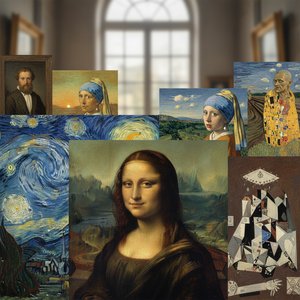
I 10 Capolavori a Olio Che Hanno Rivoluzionato la Storia dell'Arte |
Esplora i 10 capolavori a olio che hanno segnato la storia dell'arte! Da Van Gogh a Leonardo, scopri le storie e le tecniche dei più grandi maestri. Trova riproduzioni di alta qualità e idee per arredare con arte su .

Georges Braque: I 25 Capolavori che Hanno Rivoluzionato l'Arte Moderna | ArtsDot
Esplora i 25 capolavori di Georges Braque, pioniere del Cubismo. Scopri la storia, le tecniche e l'impatto di opere iconiche come 'The Patience'. Trova riproduzioni d'arte di alta qualità per decorare casa tua su ArtsDot.com.



