
- Home

- Riproduzione di dipinto a olio
- Jean-Baptiste-Camille Corot
- Landscape Studies, Italy

 Acquista stampa Acquista download
 Invia
Invia
 Condividi
 Details
 Aggiungi ai preferiti

 Scarica
 Simili
 X-Ray
X-Ray
 Slideshow
Landscape Studies, Italy
 Oil On Canvas
- WallArt
- Impressionist Landscape
 1833
1833 32.0 x 20.0 cm
 Università del Michigan Museo d'Arte
Riproduzione a olio fatta a mano
Olio su tela dipinto a mano nelle tue dimensioni e con la tua cornice, realizzato su ordinazione dai nostri artisti.




P118B €10

P118H €10

P118W €10

P438Z €10

P508JH €12

P508YH €12

P805H €10

P805Z €10

P919BZ €10

P919G €10

P919XJ €10

P959ZH €10

P968JZ €12

W106C €8

W218G €10

W218JH €8

W218Y €10

W307PJ €10

W316G €10

W316PJ €8

W316Y €10

W398PJ €8

W4111J €10

W500HY €15

W500JH €15

W692G €12

W849H €8

W940BG €15

W953PJ €8




 Scopri di più
Scegli tra le nostre dimensioni predefinite, che rispettano le proporzioni originali dell'opera d'arte.

È possibile inserire dimensioni personalizzate per adattare l'opera a una cornice o a uno spazio specifico. Se la dimensione selezionata non corrisponde alle proporzioni dell'immagine originale, provvederemo a ritagliare l'opera o a estendere il dipinto con elementi aggiuntivi dipinti a mano. Un mockup digitale ti sarà inviato per approvazione prima dell'inizio della produzione.
Si prega di notare che l'anteprima a schermo non riflette il ritaglio o l'estensione effettivi. Solo il mockup mostrerà accuratamente la composizione finale.
Sebbene siano disponibili dimensioni personalizzate, consigliamo di selezionare una dimensione dall'elenco predefinito per preservare le proporzioni originali.
Dopo l'ordine, il team di ArtsDot.com invierà un'e-mail al cliente per le istruzioni e fornirà un'anteprima del mockup
Consegna in tutto il mondo () in 3/4 settimane anziché nelle normali 5 settimane. (1 Luglio). Nessun compromesso sulla qualità.

Spedizione espressa gratuita in tutto il mondo

Tela in lino di alta qualità

Assicurazione completa sulla spedizione

Garanzia di rimborso dei dazi doganali

Garanzia di fedeltà cromatica

Politica di reso entro 60 giorni (solo per difetti)

Garanzia di rimborso al 100%

Sconto per acquisti multipli
 L'opzione vetro è disponibile solo per dimensioni inferiori a 110 cm

Landscape Studies, Italy
Tecnica di riproduzione
Dimensioni riproduzione
-


Prezzo totale finale
-
Descrizione dell'opera
A Moment Frozen in Light: Jean-Baptiste-Corot’s “Landscape Studies, Italy”
Jean-Baptiste-Camille Corot's "Landscape Studies, Italy," painted in 1833, isn’t merely a depiction of a mountain vista; it’s an invitation to linger within the very essence of light and atmosphere. Born into a comfortable Parisian family, Corot initially pursued a conventional path before surrendering to his profound connection with nature, nurtured during his childhood spent amidst the tranquility of the countryside. This early immersion profoundly shaped his artistic vision, leading him to prioritize capturing the fleeting qualities of light and shadow—a pursuit that would define his entire career. This particular work, rendered in charcoal or pencil on paper, embodies this philosophy perfectly, offering a glimpse into Corot’s meticulous approach to translating the natural world onto canvas.
The composition immediately draws the eye into a vast, rolling landscape dominated by gently sloping hills and distant peaks. The arrangement follows a loosely pyramidal structure, with the highest point of the mountains acting as a focal point, yet it avoids rigid formality. Lines are predominantly sketchy and gestural—not precise outlines, but rather suggestive marks that define forms and imbue the scene with texture. Shapes are organic and irregular, mirroring the natural contours of the terrain, creating an immediate sense of depth and movement. The overall effect is one of quiet contemplation, inviting the viewer to lose themselves in the vastness of the Italian countryside.
The Language of Light: Corot’s Technique
Corot's mastery lies not in detailed representation but in his ability to evoke atmosphere through subtle shifts in tone and texture. The painting is characterized by a diffused, even lighting—a deliberate choice that avoids dramatic contrasts and emphasizes the soft, hazy quality of the air. Perspective is achieved through layering, with distant elements gradually diminishing in size and detail, creating an illusion of immense depth. The artist’s technique involves loose sketching and careful shading to build up form and establish a delicate interplay between light and shadow. Notice how he uses short, broken strokes to suggest the roughness of the terrain, while broader areas of tone create a sense of distance and atmospheric perspective. The visible pencil marks themselves contribute to the painting's tactile quality, inviting close inspection.
Echoes of the Past: Corot’s Context
“Landscape Studies, Italy” emerged during a pivotal moment in art history—the rise of plein air painting. Inspired by artists like Constable and Turner, Corot embraced the practice of working directly outdoors, capturing the fleeting effects of light and atmosphere as they occurred before his eyes. This approach represented a departure from the traditional studio-based method, which prioritized meticulous detail and idealized representations. Corot’s work reflects this shift towards a more spontaneous and expressive style, while still retaining elements of Neo-Classical influence—a testament to his deep understanding of artistic tradition. The painting's subject matter – a simple landscape study – is deliberately understated, allowing the focus to remain on Corot’s innovative technique and evocative use of light.
A Breath of Tranquility: Symbolism and Emotional Impact
Beyond its technical brilliance, “Landscape Studies, Italy” possesses a profound emotional resonance. The scene evokes a sense of tranquility and solitude—a feeling of being utterly immersed in the beauty and grandeur of nature. The muted colors and hazy atmosphere create a dreamlike quality, inviting the viewer to escape the pressures of everyday life. Corot’s deliberate avoidance of explicit detail encourages personal interpretation, allowing each observer to project their own emotions and experiences onto the landscape. It's not simply a representation of a place; it’s an invitation to contemplate the sublime—the awe-inspiring beauty that can be found in the simplest of natural scenes. The painting whispers of timelessness, suggesting a connection between humanity and the enduring power of the earth.
Further Exploration
For a deeper understanding of this remarkable work, we encourage you to explore the Google Arts & Culture page linked below: Landscape Studies, Italy - Jean-Baptiste-Camille Corot. Additionally, ArtsDot offers a wealth of information on Corot and his artistic legacy: Landscape Studies, Italy - Jean-Baptiste-Camille Corot.
Opere simili


Biografia dell'artista
La Vita e la Formazione di Jean-Baptiste-Camille Corot
Jean-Baptiste-Camille Corot, un rinomato pittore francese di paesaggi e ritratti, nacque il 16 luglio 1796 a Parigi. La sua famiglia, appartenente alla borghesia, gli fornì un ambiente favorevole all'esplorazione delle sue inclinazioni artistiche. Inizialmente, gli interessi di Corot erano rivolti ad altri campi, ma intorno al 1821 scoprì la sua passione per la pittura. Questo segnò l'inizio della sua prolifica carriera, che avrebbe successivamente influenzato lo sviluppo dell'Impressionismo.La Carriera Artistica e le Opere Principali
Il percorso artistico di Corot è caratterizzato da una fusione tra la tradizione neoclassica e le innovazioni en plein air (pittura all’aria aperta). Corot fu un pioniere nell'approccio alla pittura di paesaggio, dedicandosi a studi dal vero che catturavano l'atmosfera e la luce del momento. Alcune delle sue opere più notevoli includono:- The Repose (olio su tela, circa 1860s), un'opera affascinante che mostra la maestria di Corot nel catturare l'essenza della serenità.
- Interrupted Reading (realismo, olio, circa 1850s), un esempio toccante dell'abilità di Corot nel ritrarre la vita quotidiana con profondità ed emozione.
- Agostina (realismo, olio, circa 1860s), un ritratto straordinario che esemplifica l'abilità di Corot nel catturare l'essenza dei suoi soggetti.
Influenze, Sviluppo Artistico e Innovazioni
Corot fu influenzato inizialmente dalla pittura neoclassica, ma presto sviluppò un suo stile distintivo. La sua sperimentazione con la pittura en plein air lo portò a catturare la luce e l'atmosfera in modo innovativo per il suo tempo. La sua tecnica consisteva spesso nell’iniziare i dipinti all’aperto, catturando gli effetti della luce naturale, per poi completarli in studio, aggiungendo dettagli e riflettendo sulla composizione generale. Questo approccio ha contribuito a creare un'atmosfera sognante e malinconica che caratterizza molte delle sue opere. Corot fu anche influenzato dai paesaggisti inglesi, come John Constable e J.M.W. Turner, che lo incoraggiarono ad abbracciare la pittura di paesaggio en plein air.Eredità e Significato Storico
L'opera vasta di Corot ha avuto un impatto duraturo sullo sviluppo della pittura di paesaggio. Il suo approccio innovativo, combinando tecniche tradizionali con innovazioni en plein air, ha aperto la strada alle generazioni future di artisti, in particolare agli Impressionisti. Artisti come Monet, Renoir e Pissarro riconobbero il debito che avevano nei confronti di Corot per la sua capacità di catturare l'atmosfera e la luce del paesaggio. Corot è considerato una figura chiave nella transizione dalla pittura neoclassica all’Impressionismo, un ponte tra due epoche artistiche. Scopri maggiori informazioni sui dipinti di Jean-Baptiste-Camille Corot su ArtsDot.com: https://ArtsDot.com/@/jean-baptiste-camille-corot Approfondisci la conoscenza del Musée Courbet su Wikipedia: https://en.wikipedia.org/wiki/mus%c3%a9e_courbet_(ornans,_france)
Jean-Baptiste-Camille Corot
1796 - 1875 , Francia
Dati rapidi
- Artisti Che Hanno Influenzato Questo Artista: ['Neo-classicismo']
- Artisti O Movimenti Influenzati Da Questo Artista: ['Impressionismo']
- Data Di Nascita: 16 luglio 1796
- Full Name: Jean-Baptiste-Camille Corot
- Luogo Di Nascita: Parigi, Francia
- Movimento Artistico: Realismo, Impressionismo
- Nazionalità: Francese
- Notable Artworks:
- The Repose
- Interrupted Reading
- Agostina
Articoli correlati

Evoking Nature's Sublime: A Comprehensive Exploration of 19th-Century Landscape Painting
Explore the captivating world of 19th-century landscape painting! Discover renowned artists like Friedrich & Monet, key movements, and find the perfect artwork to bring nature's serenity into your home. Expert insights at ArtsDot.


Albert Goodwin: Capturing Victorian Light & Atmosphere – A Study in Landscape Painting
Explore the captivating landscapes of Albert Goodwin (1845-1932), a celebrated Victorian watercolourist influenced by Turner & Ruskin. Discover his techniques, prolific collection, and lasting legacy in British art history.

Alfred East: Pioneering Plein Air & Evoking Atmospheric Landscapes
Explore the life & work of Alfred East, a pioneer of British plein air painting. Discover his techniques for capturing atmospheric landscapes, Barbizon influences, and lasting legacy. Learn more at ArtsDot.

Capturing Ephemeral Light: A Comprehensive Exploration of Plein Air Painting's History & Enduring Legacy
Explore the rich history of plein air painting, from its origins to Impressionism & beyond. Discover key artists, techniques, and the enduring legacy of capturing light in landscape art. Find museum-quality reproductions at ArtsDot.
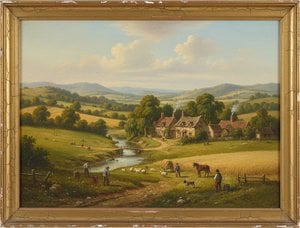
Evocations of Rural Life: A Historical Journey Through Landscape Painting
Explore the rich history of rural life in painting! Discover Impressionist masterpieces, Italian Macchiaioli scenes & the enduring appeal of pastoral landscapes. Find your perfect artwork at ArtsDot.



