
- Home

- Riproduzione di dipinto a olio
- hilaire-germain-edgar degas
- Coastal Landscape
 Acquista stampa Acquista download
 Invia
Invia
 Condividi
 Dettagli
 Aggiungi ai preferiti

 Scarica
 Simili
 Radiografia
 Slideshow
Coastal Landscape

 Scopri di più
Riproduzione a olio fatta a mano
Olio su tela dipinto a mano nelle tue dimensioni e con la tua cornice, realizzato su ordinazione dai nostri artisti.




P118B $10

P118H $10

P118W $10

P438Z $10

P508JH $12

P508YH $12

P805H $10

P805Z $10

P919BZ $10

P919G $10

P919XJ $10

P959ZH $10

P968JZ $12

W106C $8

W218G $10

W218JH $8

W218Y $10

W307PJ $10

W316G $10

W316PJ $8

W316Y $10

W398PJ $8

W4111J $10

W500HY $15

W500JH $15

W692G $12

W849H $8

W940BG $15

W953PJ $8




Scegli tra le nostre dimensioni predefinite, che rispettano le proporzioni originali dell'opera d'arte.

È possibile inserire dimensioni personalizzate per adattare l'opera a una cornice o a uno spazio specifico. Se la dimensione selezionata non corrisponde alle proporzioni dell'immagine originale, provvederemo a ritagliare l'opera o a estendere il dipinto con elementi aggiuntivi dipinti a mano. Un mockup digitale ti sarà inviato per approvazione prima dell'inizio della produzione.
Si prega di notare che l'anteprima a schermo non riflette il ritaglio o l'estensione effettivi. Solo il mockup mostrerà accuratamente la composizione finale.
Sebbene siano disponibili dimensioni personalizzate, consigliamo di selezionare una dimensione dall'elenco predefinito per preservare le proporzioni originali.
Dopo l'ordine, il team di ArtsDot.com invierà un'e-mail al cliente per le istruzioni e fornirà un'anteprima del mockup
Consegna in tutto il mondo () in 3/4 settimane anziché nelle normali 5 settimane. (2 Luglio). Nessun compromesso sulla qualità.

Spedizione espressa gratuita in tutto il mondo

Tela in lino di alta qualità

Assicurazione completa sulla spedizione

Garanzia di rimborso dei dazi doganali

Garanzia di fedeltà cromatica

Politica di reso entro 60 giorni (solo per difetti)

Garanzia di rimborso al 100%

Sconto per acquisti multipli
 L'opzione vetro è disponibile solo per dimensioni inferiori a 110 cm

Coastal Landscape
Tecnica di riproduzione
Dimensioni riproduzione
-


Prezzo totale finale
-
Descrizione dell'opera
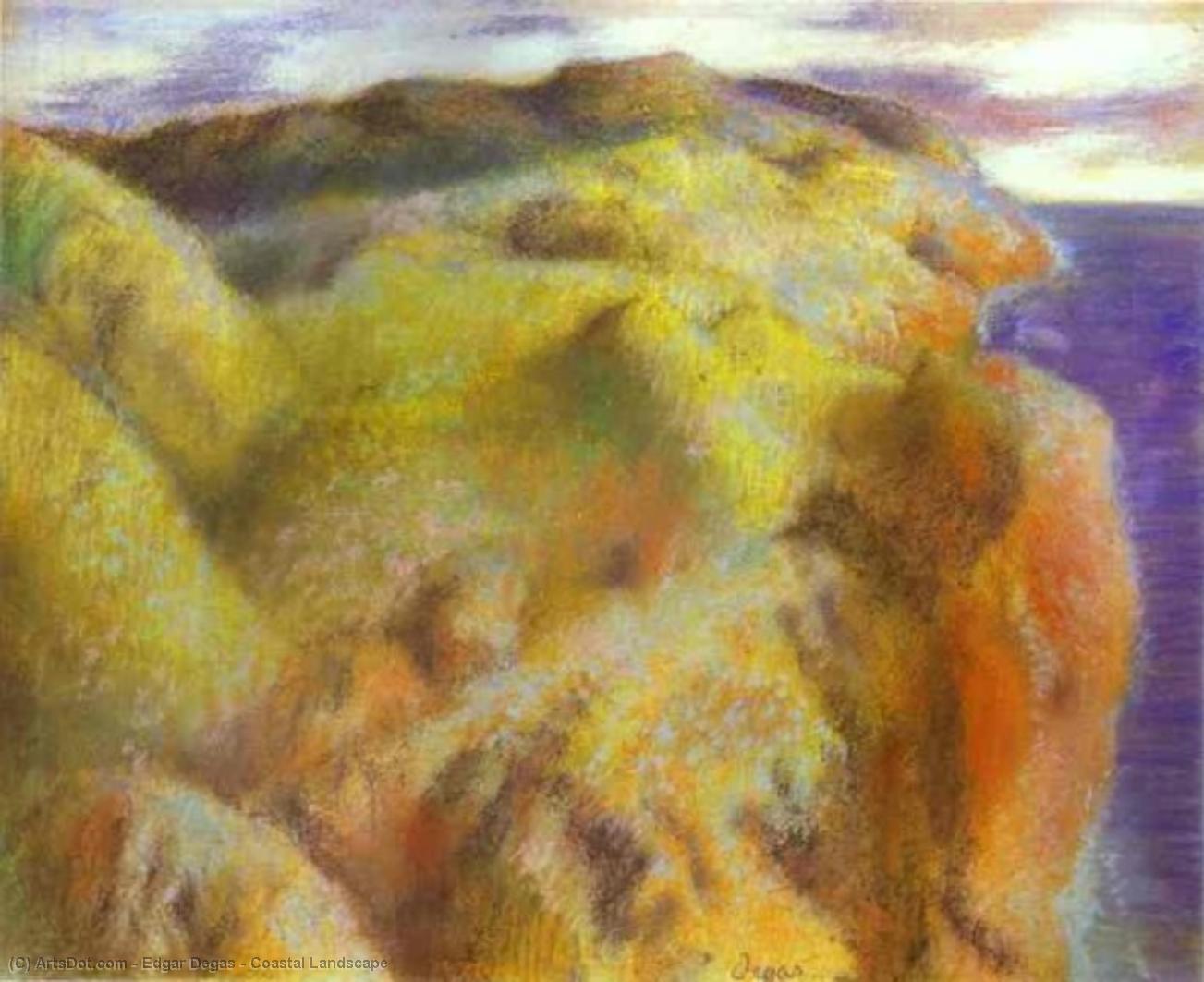
Coastal Landscape: A Moment Frozen in Impressionistic Tranquility
Edgar Degas, a name synonymous with movement and observation, produced “Coastal Landscape” between 1890 and 1892—a pastel on monotype masterpiece that transcends mere depiction to embody the very spirit of Impressionism. Unlike many artists of his era who sought grand narratives or heroic figures, Degas focused intently on capturing fleeting impressions of everyday life, prioritizing nuance and subtlety above all else.
The painting presents a deceptively simple vista: a rocky cliff face overlooking the ocean. Yet, within this serene expanse lies a wealth of artistic consideration. Two individuals—likely dancers—are positioned strategically at opposite ends of the composition, adding a human element to the natural scene. Scattered amongst them are three birds, perched atop the cliff, symbolizing freedom and harmony – motifs frequently explored by Degas in his depictions of ballet dancers.
Technique and Artistic Vision
Degas’s masterful use of pastel on monotype distinguishes “Coastal Landscape” from conventional painting methods. Monotype printing involves applying pigment to a surface—typically paper—and transferring it onto another surface without any additional layering or blending. This technique demanded extraordinary precision and patience, requiring Degas to meticulously build up texture and tonal variations with each successive application of pastel.
- Layered Texture: The pastel medium lends itself beautifully to creating rich, textured surfaces that capture the nuances of light and shadow—a hallmark of Impressionist aesthetics.
- Monotype Process: This method ensured that each print was unique, preserving the artist’s original vision and resisting the uniformity often associated with mass production.
- Color Palette: Degas employed muted hues – predominantly blues, greens, and browns – reflecting the subdued tones of a coastal landscape at dusk or dawn.
Historical Context and Artistic Significance
"Coastal Landscape" emerged during Degas’s formative years as an Impressionist, aligning with the movement's fascination for capturing transient moments and prioritizing sensory experience over academic idealism. Like many Impressionists, Degas rejected the rigid conventions of Salon art, advocating instead for a more spontaneous and truthful representation of reality.
The painting exemplifies Degas’s unwavering commitment to portraying dancers—a recurring theme in his oeuvre—and underscores his ability to distill complex emotions into visual form. “Coastal Landscape” isn't merely a beautiful image; it’s a testament to Degas’s artistic genius and a cornerstone of Impressionist art history.
A Reflection of Tranquility
Ultimately, "Coastal Landscape" invites contemplation—a quiet appreciation for the beauty of nature and the grace of human movement. Its soft colors, loose brushwork, and careful composition evoke a feeling of serenity and stillness, mirroring Degas’s own artistic philosophy: to observe keenly and to render faithfully what one sees.
Opere simili




Biografia dell'artista
A Life Immersed in Movement: The World of Edgar Degas
Hilaire-Germain Edgar De Gas was born July 19, 1834, Paris, France—died September 27, 1917, Paris (aged 83), and is considered one of the most complex and innovative figures of his generation. He was the eldest son of Célestine Musson De Gas, a Creole from New Orleans, and he reinforced his formal academic art training by copying Old Master paintings both in Italy, where he spent three years (1856–1859), and at the Louvre. Degas early on developed a rigorous drawing style and a respect for line that he would maintain throughout his career. His first independent works were portraits and history paintings but in the early 1860s he began to paint scenes from modern life. He started with the world of horse racing and by the end of the decade, he was already experimenting with new techniques and exploring unconventional compositions—a departure from the traditional academic art favored by many of his contemporaries.Beyond Impressionism: A Unique Artistic Vision
While contemporaries like Monet chased the fleeting effects of light outdoors, Degas largely worked within the confines of his studio, meticulously constructing scenes from observation and memory. His subject matter was decidedly modern—a departure from the historical or mythological themes favored by many academic painters. He found inspiration in the everyday lives of Parisians: laundresses, cabaret singers, milliners, and, most famously, dancers. It is this fascination with ballet that defines much of his oeuvre. Degas didn’t simply paint beautiful ballerinas; he captured the grueling reality of their profession—the endless rehearsals, the physical strain, the fleeting moments of grace amidst a world of hard work. His compositions are often unconventional, cropping figures in unexpected ways and utilizing asymmetrical arrangements that create a sense of dynamism and immediacy. He was a master of capturing movement, not through blurred lines or hazy effects, but through precise observation and careful rendering of form. Dancer, A Group of Dancers, and Women Combing Their Hair are prime examples of this dedication to portraying the human figure in motion and revealing the complexities of modern life.Influences and Artistic Development
Degas’s artistic journey was shaped by a diverse range of influences. His early training emphasized classical principles, particularly the work of Jean-Auguste-Dominique Ingres, whose emphasis on draftsmanship and precise form left a lasting impression. However, Degas also admired the Realists, such as Gustave Courbet, who challenged academic conventions and championed the depiction of contemporary life. A pivotal moment in his development came through his association with Camille Pissarro, a leading Impressionist who introduced him to other artists and encouraged him to experiment with new techniques. He was captivated by Japanese prints—Ukiyo-e—which influenced his use of asymmetrical compositions, flattened perspectives, and bold patterns. He also embraced photography, recognizing its potential as a tool for studying movement and capturing fleeting moments in time. This willingness to incorporate diverse influences into his work is what sets Degas apart and contributes to the unique character of his art.Major Achievements & Legacy
Degas’s prolific output spanned painting, sculpture, printmaking, and drawing—demonstrating an unparalleled mastery across multiple mediums. He achieved renown for his portraits of prominent figures—including artists, writers, and intellectuals—capturing their psychological depth with remarkable sensitivity. His ballet paintings revolutionized the genre, portraying dancers not as idealized beauties but as human beings grappling with physical exertion and emotional vulnerability. Furthermore, Degas’s exploration of horse racing and jockeying offered a fresh perspective on sport and social life. He was recognized as one of the most influential artists of his time, shaping the trajectory of modern art and inspiring generations of subsequent painters. His legacy continues to resonate today, celebrated for its innovation, honesty, and profound understanding of human experience. Museums worldwide—including the Musée d'Orsay and the Musée de l’Orangerie in Paris—house significant collections of his paintings, pastels, sculptures, and prints, ensuring that his artistic vision will endure for centuries to come.
hilaire-germain-edgar degas
1834 - 1917 , Francia
Dati rapidi
- Artistic Movement Or Style: Impressionismo, Realismo
- Artists Or Movements Influenced By This Artist:
- Pablo Picasso
- Henri Matisse
- Artists Who Influenced This Artist:
- Jean-Auguste-Dominique Ingres
- Camillo Pissarro
- Date Of Birth: 1834
- Full Name: Hilaire-Germain Edgar De Gas
- Nationality: Francese
- Notable Artworks:
- Danzatori
- Due ballerine con gonne verdi
- Place Of Birth: Paris, France
Articoli correlati

The Evocation of Tranquility: Exploring Serenity in Visual Art Across Movements & Media
Explore the history of serenity in art with ArtsDot. Discover calming landscapes by Cole, Corot & Van Gogh. Find paintings that evoke peace and create a tranquil atmosphere in your home. Expert guidance & handmade reproductions.

The Subdued Radiance of Pastel Palettes: Exploring Emotional Resonance in Art History
Explore the emotional power of pastel palettes in art history! Discover Impressionism, Post-Impressionism & color psychology insights. Find museum-quality reproductions at ArtsDot.

Evoking Tranquility: A Comprehensive Exploration of Serene Landscapes in Art History
Explore the history of serene landscapes in art! Discover renowned artists like Monet & Munch, movements from Impressionism to Tonalism, and find the perfect piece to bring tranquility to your home. Expert insights at ArtsDot.

I 10 Capolavori Impressionisti che Hanno Rivoluzionato la Pittura | ArtsDot
Esplora i 10 capolavori impressionisti di Monet, Renoir e Degas che hanno rivoluzionato la pittura. Scopri storie, tecniche e colori iconici. Trova riproduzioni d'arte di alta qualità per decorare casa su ArtsDot.com!

The Subdued Radiance of Pastel: Exploring Nuance & Emotion in Art
Explore the nuanced world of pastel art! Discover its history, techniques & emotional power with expert insights from ArtsDot.com. Find museum-quality reproductions and learn about collecting this delicate medium.



