
- Home

- Riproduzione di dipinto a olio
- Georgia O'Keeffe
- Mesa and Road East

 Acquista stampa Acquista download
 Invia
Invia
 Condividi
 Dettagli
 Aggiungi ai preferiti

 Scarica
 Simili
 Radiografia
 Slideshow
Mesa and Road East


 Scopri di più
Riproduzione a olio fatta a mano
Olio su tela dipinto a mano nelle tue dimensioni e con la tua cornice, realizzato su ordinazione dai nostri artisti.




P118B $10

P118H $10

P118W $10

P438Z $10

P508JH $12

P508YH $12

P805H $10

P805Z $10

P919BZ $10

P919G $10

P919XJ $10

P959ZH $10

P968JZ $12

W106C $8

W218G $10

W218JH $8

W218Y $10

W307PJ $10

W316G $10

W316PJ $8

W316Y $10

W398PJ $8

W4111J $10

W500HY $15

W500JH $15

W692G $12

W849H $8

W940BG $15

W953PJ $8




Scegli tra le nostre dimensioni predefinite, che rispettano le proporzioni originali dell'opera d'arte.

È possibile inserire dimensioni personalizzate per adattare l'opera a una cornice o a uno spazio specifico. Se la dimensione selezionata non corrisponde alle proporzioni dell'immagine originale, provvederemo a ritagliare l'opera o a estendere il dipinto con elementi aggiuntivi dipinti a mano. Un mockup digitale ti sarà inviato per approvazione prima dell'inizio della produzione.
Si prega di notare che l'anteprima a schermo non riflette il ritaglio o l'estensione effettivi. Solo il mockup mostrerà accuratamente la composizione finale.
Sebbene siano disponibili dimensioni personalizzate, consigliamo di selezionare una dimensione dall'elenco predefinito per preservare le proporzioni originali.
Dopo l'ordine, il team di ArtsDot.com invierà un'e-mail al cliente per le istruzioni e fornirà un'anteprima del mockup
Consegna in tutto il mondo () in 3/4 settimane anziché nelle normali 5 settimane. (2 Luglio). Nessun compromesso sulla qualità.

Spedizione espressa gratuita in tutto il mondo

Tela in lino di alta qualità

Assicurazione completa sulla spedizione

Garanzia di rimborso dei dazi doganali

Garanzia di fedeltà cromatica

Politica di reso entro 60 giorni (solo per difetti)

Garanzia di rimborso al 100%

Sconto per acquisti multipli
 L'opzione vetro è disponibile solo per dimensioni inferiori a 110 cm

Mesa and Road East
Tecnica di riproduzione
Dimensioni riproduzione
-


Prezzo totale finale
-
Descrizione dell'opera
Mesa and Road East: A Desert Reverie by Georgia O’Keeffe
Georgia O'Keeffe’s “Mesa and Road East,” painted in 1952, isn’t merely a landscape; it’s an immersion into the stark beauty and profound solitude of the New Mexico desert. This iconic work, residing within the Georgia O’Keeffe Museum’s collection, captures a pivotal moment in the artist's career – a shift towards distilling her observations into their purest essence, stripping away extraneous detail to reveal the fundamental geometry and emotional resonance of the environment.
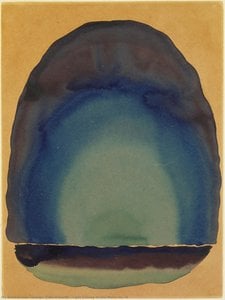
The painting immediately commands attention with its deceptively simple palette: a creamy white dominating the sky, punctuated by subtle washes of brown. This restrained color scheme isn’t limiting; rather, it amplifies the drama of the scene. The mesa, rendered in deep, earthy tones, rises powerfully from the right side of the canvas, anchoring the composition while simultaneously receding into the distance. A winding road, a thin black line against the vast expanse, snakes its way across the lower portion of the painting, drawing the eye towards an unseen horizon. The trees are almost entirely absent, their presence suggested only by faint, dark brushstrokes that contribute to the overall sense of scale and depth.
A Masterclass in Abstraction
O’Keeffe's approach here is a masterful demonstration of abstraction. She wasn’t interested in replicating the visual reality of the landscape; instead, she sought to capture its *feeling*, its inherent energy. The road isn’t simply a road—it’s a dynamic line, suggesting movement and distance. The mesa isn’t just a rock formation—it's a monumental presence, dominating the view with its sheer scale. This reduction of form is characteristic of O’Keeffe’s mature style, developed after her initial explorations of Southwestern landscapes. She moved away from detailed representation, favoring instead bold shapes and suggestive colors that evoked mood and atmosphere.
The technique employed is equally significant. Notice the loose, expressive brushstrokes—a deliberate departure from the more controlled techniques she used earlier in her career. These strokes aren’t meant to create a smooth surface; they are intended to convey texture and movement. The layering of paint creates a sense of depth and luminosity, as if the desert light itself is radiating from the canvas.
Symbolism and the Desert Psyche
“Mesa and Road East” resonates with layers of symbolism deeply rooted in O’Keeffe's personal experiences and her fascination with the American Southwest. The mesa, a recurring motif in her work, represents strength, permanence, and the enduring spirit of the land. The road symbolizes journey, exploration, and perhaps even the search for meaning—a theme that permeated much of O’Keeffe’s life and art. The vastness of the desert itself speaks to themes of isolation, introspection, and the sublime.
Furthermore, the painting can be interpreted as a meditation on time and space. The receding road suggests an endless horizon, while the monumental mesa anchors the scene in the present moment. It’s a visual representation of the tension between the finite and the infinite, the individual and the landscape.
Emotional Resonance and Timeless Appeal
Beyond its symbolic layers, “Mesa and Road East” possesses a profound emotional resonance. The painting evokes a sense of quiet contemplation, inviting the viewer to slow down and immerse themselves in the stillness of the desert. There’s a palpable feeling of solitude—not necessarily loneliness, but rather a deep connection with the natural world. The muted colors and simplified forms create a mood of serene melancholy, suggesting both beauty and vulnerability.
This work remains one of O'Keeffe's most beloved paintings, continuing to captivate audiences with its stark beauty, evocative symbolism, and timeless appeal. It’s a testament to the artist’s ability to transform the ordinary into something extraordinary—a desert landscape elevated to an enduring symbol of American art.
Opere simili



Biografia dell'artista
Primi anni e formazione (1887–1916)
Georgia Totto O'Keeffe, figura chiave del modernismo americano, nacque il 15 novembre 1887 a Sun Prairie, Wisconsin. I suoi genitori, Francis Calyxtus O’Keeffe e Ida (Totto) O’Keeffe, erano agricoltori lattiero-caseari di origine irlandese e ungherese, rispettivamente. Già all'età di 10 anni, Georgia decise di diventare un'artista. Ricevette istruzioni artistiche dalla pittrice locale di acquerelli Sara Mann e successivamente frequentò la School of the Art Institute of Chicago dal 1905 al 1906, studiando sotto John Vanderpoel. Il suo stile unico cominciò a svilupparsi durante i suoi studi all'Università della Virginia.Carriera artistica (1917–1986)
Nel 1917, Alfred Stieglitz, gallerista e fotografo, tenne una mostra dei lavori di O’Keeffe. Questo segnò l'inizio della sua carriera professionale. Si trasferì a New York su richiesta di Stieglitz e cominciò a lavorare seriamente come artista. La loro relazione professionale si trasformò in un legame personale, che portò al loro matrimonio l'11 dicembre 1924. L’arte astratta di O’Keeffe, inclusi i primi piani dei fiori come *Red Canna*, fu spesso interpretata come rappresentante di vulvi, anche se lei negò costantemente questa intenzione. Il suo lavoro fu influenzato anche dal tempo trascorso nel sud-ovest americano, che ispirò dipinti come *Cow's Skull: Red, White, and Blue (1931)* e *Summer Days (1936)*.Influenze e stile
- Alfred Stieglitz: Il suo mentore e marito, Stieglitz, ebbe un ruolo cruciale nel promuovere il lavoro di O’Keeffe e nel plasmare la sua carriera artistica. La sua visione dell'arte moderna influenzò profondamente il suo approccio alla pittura.
- Impressionismo: Sebbene O’Keeffe sia associata al modernismo, si possono notare influenze impressioniste nella sua attenzione alla luce e ai colori.
- Precisionismo: Alcune delle sue opere, come *Luce di Iris*, mostrano elementi del precisionismo, un movimento artistico che enfatizzava la chiarezza e la precisione della forma.
- Paesaggi del Sud-Ovest: I paesaggi desertici e le ossa degli animali del Nuovo Messico divennero soggetti ricorrenti nel suo lavoro, influenzando il suo stile e i suoi temi.
Riconoscimenti e eredità
Dopo la morte di Stieglitz nel 1946, O’Keeffe visse in Nuovo Messico per i successivi 40 anni. Nel 2014, il suo dipinto del 1932 *Jimson Weed/White Flower No. 1* fu venduto per $44.405.000, stabilendo un record per il prezzo più alto pagato per qualsiasi dipinto di una donna artista. Dopo la sua morte il 6 marzo 1986, fu istituito il Georgia O’Keeffe Museum a Santa Fe. Le sue opere sono esposte anche in numerosi musei, tra cui:- Georgia O'Keeffe Museum: Un museo dedicato esclusivamente alla sua opera.
- Ulteriori informazioni sui musei che espongono le sue opere.
Opere significative
- *Red Canna*: Un celebre dipinto di un fiore rosso, noto per la sua interpretazione simbolica.
- *Cow's Skull: Red, White, and Blue (1931)*: Un’opera iconica che fonde realismo e astrazione, rappresentando il paesaggio del Nuovo Messico.
- *Summer Days (1936)*: Un altro esempio della sua ispirazione dai paesaggi desertici.
- *Jimson Weed/White Flower No. 1*: Un dipinto che ha stabilito un record di prezzo per una donna artista.
- *Luce di Iris*: Un acquerello precisionista che cattura la delicatezza dei fiori.

Georgia O'Keeffe
1887 - 1986 , Stati Uniti d'America
Dati rapidi
- Artisti Influenti: ['Alfred Stieglitz']
- Data Di Nascita: 15 novembre 1887
- Luogo Di Nascita: Sun Prairie, Stati Uniti
- Movimento Artistico: Modernismo americano
- Nazionalità: Americana
- Nome Completo: Georgia O'Keeffe
- Opere Notevoli:
- Luce di Iris
- Gigli Orientali
- Blu e Verde Musica
- Cranio di Mucca Rosso
- Sole Pallido
Articoli correlati

Yi Eungro: Bridging East & West in the Landscape of Korean Modernism
Explore the captivating world of Yi Eungro (Lee Ungno), a pivotal figure in Korean modernism. Discover his unique fusion of Eastern and Western artistic traditions, abstract masterpieces, and lasting legacy. A must-read for discerning art collectors.

William James Müller: Il Sentimento Paesaggistico tra Realismo e Orientalismo nella Pittura Britannica
Esplora la vita e le opere di William James Müller, il più noto artista della Scuola di Bristol. Scopri i suoi paesaggi vividi, le scene orientaliste e l'influenza dell'Egitto sulla sua arte. Analisi storica e approfondimenti.

Aleksey Savrasov: The Poetic Realism That Defined Russian Landscape Painting
Explore the poetic realism of Aleksey Savrasov, founder of Russian lyrical landscape painting. Discover his masterpieces like 'The Rooks Have Returned' and learn about his lasting influence on 19th-century art. ArtsDot offers high-quality reproductions.

Alfred East: Pioneering Plein Air & Evoking Atmospheric Landscapes
Explore the life & work of Alfred East, a pioneer of British plein air painting. Discover his techniques for capturing atmospheric landscapes, Barbizon influences, and lasting legacy. Learn more at ArtsDot.

Kandinsky: I 25 Capolavori che Hanno Rivoluzionato l'Arte Moderna | ArtsDot
Esplora i 25 capolavori di Wassily Kandinsky, pioniere dell'arte astratta. Scopri la storia, il significato e le tecniche dietro ogni dipinto iconico. Trova riproduzioni d'arte di alta qualità per decorare la tua casa su ArtsDot.com.



