
- Home

- Riproduzione di dipinto a olio
- Fernand Léger
- String Constructors
 Acquista stampa Acquista download
 Invia
Invia
 Condividi
 Dettagli
 Aggiungi ai preferiti

 Scarica
 Simili
 Radiografia
 Slideshow
String Constructors

 Scopri di più
Riproduzione a olio fatta a mano
Olio su tela dipinto a mano nelle tue dimensioni e con la tua cornice, realizzato su ordinazione dai nostri artisti.




P118B $10

P118H $10

P118W $10

P438Z $10

P508JH $12

P508YH $12

P805H $10

P805Z $10

P919BZ $10

P919G $10

P919XJ $10

P959ZH $10

P968JZ $12

W106C $8

W218G $10

W218JH $8

W218Y $10

W307PJ $10

W316G $10

W316PJ $8

W316Y $10

W398PJ $8

W4111J $10

W500HY $15

W500JH $15

W692G $12

W849H $8

W940BG $15

W953PJ $8




Scegli tra le nostre dimensioni predefinite, che rispettano le proporzioni originali dell'opera d'arte.

È possibile inserire dimensioni personalizzate per adattare l'opera a una cornice o a uno spazio specifico. Se la dimensione selezionata non corrisponde alle proporzioni dell'immagine originale, provvederemo a ritagliare l'opera o a estendere il dipinto con elementi aggiuntivi dipinti a mano. Un mockup digitale ti sarà inviato per approvazione prima dell'inizio della produzione.
Si prega di notare che l'anteprima a schermo non riflette il ritaglio o l'estensione effettivi. Solo il mockup mostrerà accuratamente la composizione finale.
Sebbene siano disponibili dimensioni personalizzate, consigliamo di selezionare una dimensione dall'elenco predefinito per preservare le proporzioni originali.
Dopo l'ordine, il team di ArtsDot.com invierà un'e-mail al cliente per le istruzioni e fornirà un'anteprima del mockup
Consegna in tutto il mondo () in 3/4 settimane anziché nelle normali 5 settimane. (2 Luglio). Nessun compromesso sulla qualità.

Spedizione espressa gratuita in tutto il mondo

Tela in lino di alta qualità

Assicurazione completa sulla spedizione

Garanzia di rimborso dei dazi doganali

Garanzia di fedeltà cromatica

Politica di reso entro 60 giorni (solo per difetti)

Garanzia di rimborso al 100%

Sconto per acquisti multipli
 L'opzione vetro è disponibile solo per dimensioni inferiori a 110 cm

String Constructors
Tecnica di riproduzione
Dimensioni riproduzione
-


Prezzo totale finale
-
Descrizione dell'opera
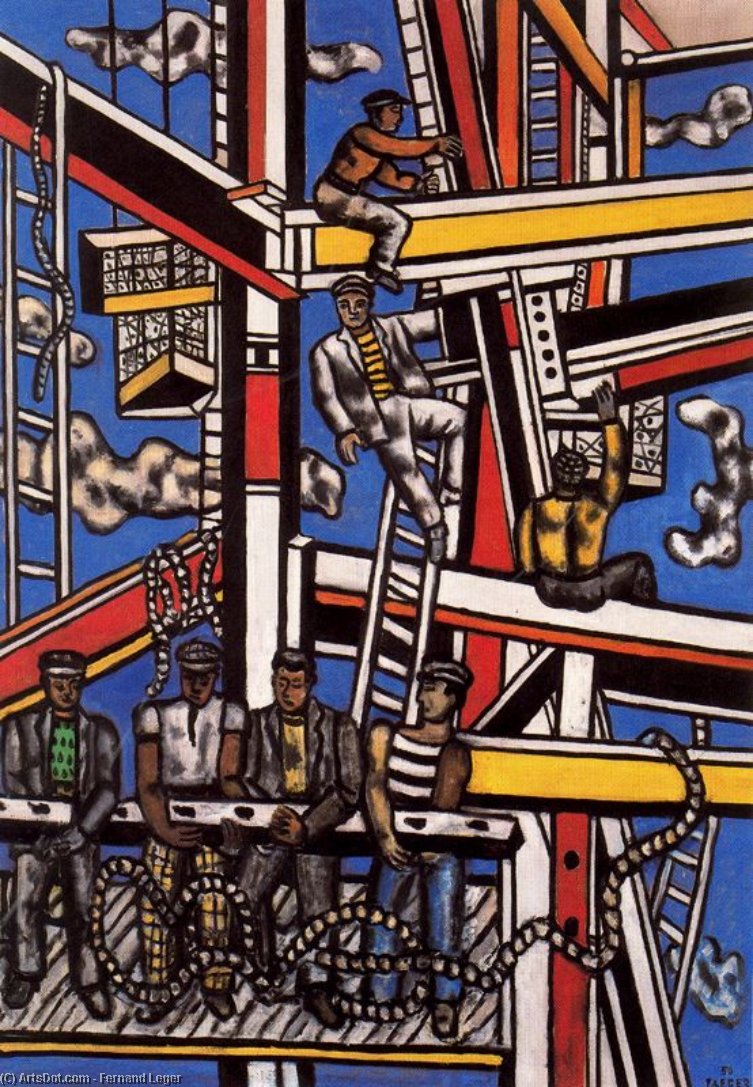
Fernand Léger’s “String Constructors”: A Symphony of Steel and Soul
The painting "String Constructors" by Fernand Léger isn't merely an image; it’s a declaration—a bold assertion that the anxieties and exhilarations of industrial progress could be rendered in terms of pure visual form. Completed in 1923, during the height of Léger’s engagement with Cubism and Surrealism, this monumental canvas embodies the artist’s fascination with both geometric abstraction and the burgeoning influence of technology on human experience. It resides within a broader artistic movement grappling with questions of perception and representation, rejecting traditional illusionistic techniques in favor of fractured planes and overlapping perspectives—a stylistic choice that mirrors the fragmented reality of the era.- Style & Technique: Léger’s Cubist approach is evident in the deliberate dismantling of objects into constituent geometric shapes – cubes, cylinders, spheres – which are then recomposed in a manner that simultaneously suggests solidity and instability. The painting utilizes a predominantly monochromatic palette dominated by shades of blue, punctuated by flashes of yellow and red, creating an arresting visual rhythm. Léger’s distinctive technique involves applying paint thickly—sometimes almost sculptural—to the canvas surface, resulting in textured brushstrokes that convey both physicality and dynamism.
- Historical Context: The painting emerged from a period marked by rapid industrial expansion and growing apprehension about the dehumanizing effects of urbanization. Léger’s artistic concerns mirrored those prevalent in intellectual circles of his time—a preoccupation with the impact of machines on human consciousness and social life. He actively sought to capture the energy and rhythm of the factory floor, translating its visual vocabulary into a new aesthetic language.
Symbolism & Conceptual Depth
Beyond its formal qualities, “String Constructors” is laden with symbolic significance. Léger deliberately avoids depicting recognizable figures or objects—instead opting for abstracted forms that represent not individuals but rather the collective experience of labor and construction. The repetitive geometric shapes symbolize the relentless cycle of production and transformation inherent in industrial society. Furthermore, the bold colors – particularly yellow and red – convey a sense of urgency and excitement, reflecting the optimism associated with technological advancement during the interwar years. Léger’s intention wasn't simply to depict what he saw; it was to communicate an underlying philosophical proposition about the relationship between humanity and machinery.- Emotional Impact: The painting evokes a complex emotional response—a mixture of fascination, apprehension, and perhaps even melancholy. Léger’s masterful use of texture and color creates a palpable sense of movement and energy, mirroring the frenetic pace of the industrial landscape. Yet, beneath the surface dynamism lies an underlying feeling of isolation and fragmentation—a reflection of the psychological toll exacted by modernity.
Legacy & Influence
“String Constructors” stands as a cornerstone of Léger’s oeuvre and exerted considerable influence on subsequent generations of artists. Its pioneering exploration of geometric abstraction paved the way for developments in Surrealist painting and sculpture, demonstrating that artistic innovation could arise from confronting seemingly disparate influences—the rigor of Cubism and the dreamlike imagery of Surrealism. Léger's unwavering commitment to translating the visual language of industrial society into a new aesthetic idiom continues to inspire artists today who grapple with questions of representation and perception in an increasingly technologically mediated world.Opere simili





Biografia dell'artista
vitae e formazione
Fernand Léger, pittore, scultore e filmmaker francese, nacque il 4 febbraio 1881 ad Argentan, Orne, nella bassa Normandia. Suo padre allevava bovini e Léger iniziò la sua formazione come architetto nel 1897-1899. Successivamente si trasferì a Parigi nel 1900, sostenendosi con il lavoro di disegnatore architettonico.sviluppo artistico
Le prime opere di Léger furono influenzate dall'impressionismo, come visto in Le jardin de ma mère (Il giardino di mia madre) (1905). Dopo aver frequentato la scuola d'arte decorativa e l'Académie Julian, iniziò a lavorare seriamente come pittore a 25 anni. Il suo stile si evolse in una forma personale di cubismo, che i critici definirono "tubismo" per la sua enfasi su forme cilindriche.Cubismo e il gruppo dei Puteaux
Nel 1910, Léger espose al Salon d'automne insieme a Jean Metzinger e Henri Le Fauconnier. Entrò nel gruppo dei Puteaux, noto anche come la sezione d'or (la sezione aurea), insieme ad altri artisti come Francis Picabia e Marcel Duchamp.Guerra e la sua influenza sull'opera di Léger
Le esperienze di Léger nella Prima Guerra Mondiale ebbero un impatto significativo sulla sua opera. Durante il suo tempo al fronte, produsse schizzi di pezzi d'artiglieria, aerei e soldati. Il suo dipinto Soldier with a Pipe (1916) riflette questo periodo.Lavoro successivo e eredità
Il lavoro post-bellico di Léger, caratterizzato da forme meccaniche lisce, lo legò alla tradizione della pittura figurativa francese. I suoi paesaggi animati del 1921 mostrarono figure e animali in forme armoniose e razionalizzate.- visualizza le opere di Fernand Léger su ArtsDot
- altro sul Fernand Léger su Wikipedia
- scopri il Musée National Fernand Légère (Francia) con ArtsDot
- La donna seduta (100 x 81 cm, tubismo)
- Elemento macchina (cubismo)

Fernand Léger
1881 - 1955 , Francia
Dati rapidi
- Artisti Influenti:
- Cézanne
- Impressionismo
- Artisti Influenzati: ['Pop Art']
- Data Di Nascita: 4 febbraio 1881
- Luogo Di Nascita: Argentan, Francia
- Movimento Artistico: Cubismo, Tubismo
- Nazionalità: Francese
- Nome Completo: Fernand Léger
- Opere Notevoli:
- La Grande Parata
- L'Elemento Macchina
- Donna Seduta
- The City
Articoli correlati

L'Eleganza Essenziale: L'Uso dell'Astrazione Monocromatica per Esaltare Luce, Texture e Architettura Moderna nell'Interior Design
Scopri come l'astrazione monocromatica trasforma gli interni con eleganza e funzionalità. Guide esperte su luce, materiali e colori neutri per spazi armoniosi e di design. Consulenza gratuita!
Geometric Design in Art: A Historical Survey & Contemporary Appeal for Collectors
Explore the enduring legacy of geometric abstraction! Discover key artists, historical movements & investment insights for discerning art collectors. Expert guidance from ArtsDot.

Cubismo: I 10 Capolavori Che Hanno Rivoluzionato l'Arte Moderna | ArtsDot
Esplora i 10 capolavori del Cubismo con ArtsDot. Scopri Picasso, Braque e Gris e la rivoluzione artistica delle forme geometriche e dei colori audaci. Quadri iconici per decorare casa con stile! Esplora la collezione online.

Precisionism: A Study of Industrial Aesthetics & Modern American Art
Explore Precisionism, a pivotal American art movement celebrating the Machine Age. Discover key artists like Sheeler & O'Keeffe, its European roots, and lasting influence on modern aesthetics. Expert analysis for collectors.

Arte Industriale: 10 Capolavori che Rivoluzionano l'Estetica e Decorano la Casa
Esplora 10 capolavori di Monet, Manet e altri maestri che catturano l'essenza dell'arte industriale. Scopri storie, tecniche e colori unici per decorare la tua casa con stampe su tela di alta qualità. ArtsDot.com: arte collezione online.



