


 Anteprima in scala reale
 Condividi
 Condividi
 Dettagli

 Scarica immagine
 Articoli simili
 Radiografia
 Slideshow
Roofs


 Leggi tutto
Giclée / Stampe d'arte
Stampa giclée o su tela di qualità museale, con produzione rapida e diverse opzioni di finitura. ( Passa alla versione dipinta a mano Passa all'immagine)




P118B $10

P118H $10

P118W $10

P438Z $10

P508JH $12

P508YH $12

P805H $10

P805Z $10

P919BZ $10

P919G $10

P919XJ $10

P959ZH $10

P968JZ $12

W106C $8

W218G $10

W218JH $8

W218Y $10

W307PJ $10

W316G $10

W316PJ $8

W316Y $10

W398PJ $8

W4111J $10

W500HY $15

W500JH $15

W692G $12

W849H $8

W940BG $15

W953PJ $8




Scegli tra le nostre dimensioni predefinite, che rispettano le proporzioni originali dell'opera d'arte.

È possibile inserire dimensioni personalizzate per adattare l'opera a una cornice o a uno spazio specifico. Se la dimensione selezionata non corrisponde alle proporzioni dell'immagine originale, procederemo al ritaglio dell'opera o all'estensione dell'immagine con un bordo specchiato o a tinta unita. Un mockup digitale ti verrà inviato per approvazione prima dell'inizio della produzione.
Si prega di notare che l'anteprima a schermo non riflette il ritaglio o l'estensione effettivi. Solo il mockup mostrerà accuratamente la composizione finale.
Sebbene siano disponibili dimensioni personalizzate, si raccomanda di selezionare una dimensione dall'elenco predefinito per preservare le proporzioni originali.
Consegna in tutto il mondo () in 2 settimane invece delle normali 4/5 settimane. (11 Agosto)

Spedizione espressa gratuita in tutto il mondo

Tela in lino di alta qualità

Assicurazione completa sulla spedizione

Garanzia di rimborso dei dazi doganali

Garanzia di fedeltà cromatica dell'originale

Politica di reso entro 60 giorni (solo per difetti di fabbricazione)

Garanzia di rimborso al 100%

Sconto per acquisti multipli
 L'opzione vetro è disponibile solo per dimensioni inferiori a 110 cm

Roofs
Giclée / Stampe d'arte
Dimensioni della riproduzione
-


Prezzo totale
$ 63
Descrizione del pezzo
A Symphony of Smoke and Steel: Exploring Fernand Léger’s “Roofs”
Fernand Léger's "Roofs," painted during a period of profound societal transformation, is more than just a depiction of a city scene; it’s a visceral embodiment of the anxieties and aspirations surrounding the rise of industrial modernity. The painting immediately commands attention with its dramatic composition – buildings choked by billowing smoke, figures scattered amidst the chaos, and two birds seemingly adrift in this turbulent landscape. Léger, born Joseph Fernand Henri Léger in 1881 in Argentan, Normandy, was a key figure in the development of Cubism, yet his work transcends simple geometric abstraction. He sought to translate the impact of the machine age – its raw power, its fragmented forms, and its unsettling influence on human life – into a powerfully expressive visual language.
Cubist Vision: Integrating Modernity
Léger’s artistic journey began with an interest in architecture, but his relocation to Paris around 1900 proved transformative. He quickly immersed himself in the burgeoning avant-garde scene, rejecting purely abstract approaches that distanced art from reality. Instead, he embraced a method of “analytical cubism,” meticulously dissecting objects and figures into geometric components – cylinders, cones, and planes – before reassembling them in a fragmented yet dynamic composition. In "Roofs," this technique is evident in the angular forms of the buildings, rendered with a deliberate sense of distortion that reflects their mechanical nature. The smoke itself isn’t merely atmospheric; it's a visual representation of the industrial processes churning at the heart of the city, a tangible manifestation of its relentless energy.
Symbolism and Emotional Impact
The inclusion of two birds within the composition is particularly significant. Often interpreted as symbols of freedom and escape, their presence amidst the urban turmoil suggests a yearning for respite from the pressures of modern life. The scattered figures, rendered with varying degrees of detail, contribute to the painting’s sense of unease and urgency. They are not heroic or idealized; rather, they represent ordinary individuals grappling with the consequences of rapid industrialization – perhaps overwhelmed by its scale, or searching for meaning within its disorienting landscape. Léger masterfully evokes a feeling of both fascination and apprehension, inviting the viewer to contemplate the complex relationship between humanity and technology.
Technique and Materiality
Léger’s technique in “Roofs” is characterized by bold brushstrokes and a deliberate use of color. While the palette leans towards muted tones – grays, browns, and ochres – punctuated by flashes of red and yellow within the smoke, this restraint amplifies the painting's dramatic impact. The artist employed a layering technique, building up the composition through multiple applications of paint, creating a textured surface that adds to the sense of depth and dynamism. This meticulous approach is characteristic of Léger’s commitment to capturing the essence of form and texture, reflecting his fascination with the physicality of industrial materials.
A Legacy of Modernity
"Roofs" stands as a powerful testament to Fernand Léger's pioneering vision. It is a painting that speaks directly to our contemporary concerns about urbanization, technological advancement, and the human condition in an age of rapid change. Its enduring appeal lies not only in its formal qualities – its masterful use of cubist principles – but also in its profound emotional resonance. A hand-painted reproduction of this artwork offers a unique opportunity to experience Léger’s artistic genius firsthand, bringing a touch of modernist drama and intellectual depth to any interior space.
Opere correlate


Biografia dell'artista
vitae e formazione
Fernand Léger, pittore, scultore e filmmaker francese, nacque il 4 febbraio 1881 ad Argentan, Orne, nella bassa Normandia. Suo padre allevava bovini e Léger iniziò la sua formazione come architetto nel 1897-1899. Successivamente si trasferì a Parigi nel 1900, sostenendosi con il lavoro di disegnatore architettonico.sviluppo artistico
Le prime opere di Léger furono influenzate dall'impressionismo, come visto in Le jardin de ma mère (Il giardino di mia madre) (1905). Dopo aver frequentato la scuola d'arte decorativa e l'Académie Julian, iniziò a lavorare seriamente come pittore a 25 anni. Il suo stile si evolse in una forma personale di cubismo, che i critici definirono "tubismo" per la sua enfasi su forme cilindriche.Cubismo e il gruppo dei Puteaux
Nel 1910, Léger espose al Salon d'automne insieme a Jean Metzinger e Henri Le Fauconnier. Entrò nel gruppo dei Puteaux, noto anche come la sezione d'or (la sezione aurea), insieme ad altri artisti come Francis Picabia e Marcel Duchamp.Guerra e la sua influenza sull'opera di Léger
Le esperienze di Léger nella Prima Guerra Mondiale ebbero un impatto significativo sulla sua opera. Durante il suo tempo al fronte, produsse schizzi di pezzi d'artiglieria, aerei e soldati. Il suo dipinto Soldier with a Pipe (1916) riflette questo periodo.Lavoro successivo e eredità
Il lavoro post-bellico di Léger, caratterizzato da forme meccaniche lisce, lo legò alla tradizione della pittura figurativa francese. I suoi paesaggi animati del 1921 mostrarono figure e animali in forme armoniose e razionalizzate.- visualizza le opere di Fernand Léger su ArtsDot
- altro sul Fernand Léger su Wikipedia
- scopri il Musée National Fernand Légère (Francia) con ArtsDot
- La donna seduta (100 x 81 cm, tubismo)
- Elemento macchina (cubismo)

Fernand Léger
1881 - 1955 , Francia
Informazioni rapide
- Artisti Influenti:
- Cézanne
- Impressionismo
- Artisti Influenzati: ['Pop Art']
- Data Di Nascita: 4 febbraio 1881
- Luogo Di Nascita: Argentan, Francia
- Movimento Artistico: Cubismo, Tubismo
- Nazionalità: Francese
- Nome Completo: Fernand Léger
- Opere Notevoli:
- La Grande Parata
- L'Elemento Macchina
- Donna Seduta
- The City
Articoli correlati
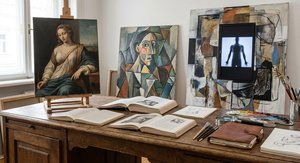
The Eloquent Body: A Historical Survey of Figure Painting & Representation
Explore the rich history of figure painting from antiquity to the Renaissance! Discover iconic artworks, masterful techniques & enduring symbolism. Find museum-quality reproductions at ArtsDot.

The Gritty Muse: Industrial Vibe as Defining Aesthetic in Modern Artwork
Explore the captivating world of industrial aesthetics in modern art. Discover key movements, influential artists & collecting insights at ArtsDot.com – your source for museum-quality reproductions and expert art guidance.

Arte Industriale: 10 Capolavori che Rivoluzionano l'Estetica e Decorano la Casa
Esplora 10 capolavori di Monet, Manet e altri maestri che catturano l'essenza dell'arte industriale. Scopri storie, tecniche e colori unici per decorare la tua casa con stampe su tela di alta qualità. ArtsDot.com: arte collezione online.

Cubismo: I 10 Capolavori che Hanno Rivoluzionato l'Arte Moderna |
Esplora i 10 capolavori del Cubismo con ! Scopri Picasso, Braque e Gris e la rivoluzione dell'arte moderna. Quadri iconici, storie affascinanti e riproduzioni di alta qualità per decorare la tua casa. Esplora la collezione online!

Fernand Léger: I 25 Capolavori che Hanno Definito l'Arte Moderna | ArtsDot
Esplora i 25 capolavori di Fernand Léger, pioniere del cubismo e del tubismo. Scopri la storia, le tecniche e l'impatto dell'arte moderna francese. Stampe d'arte e riproduzioni su ArtsDot.com.



