


 Anteprima in scala reale
 Condividi
 Condividi
 Dettagli
 Guida
Guida

 Scarica
 Articoli simili
 Radiografia
 Slideshow
 Statistiche
Woman with a Mirror
 Acrylic On Canvas
- WallArt
- Cubist Modernity
 1929
1929- Modern
 127.0 x 96.0 cm
 Leggi tutto
Riproduzione a olio fatta a mano
Olio su tela dipinto a mano nelle tue dimensioni e con la tua cornice, realizzato su ordinazione dai nostri artisti. ( Passa alle stampe Passa all'immagine digitale)




P118B $10

P118H $10

P118W $10

P438Z $10

P508JH $12

P508YH $12

P805H $10

P805Z $10

P919BZ $10

P919G $10

P919XJ $10

P959ZH $10

P968JZ $12

W106C $8

W218G $10

W218JH $8

W218Y $10

W307PJ $10

W316G $10

W316PJ $8

W316Y $10

W398PJ $8

W4111J $10

W500HY $15

W500JH $15

W692G $12

W849H $8

W940BG $15

W953PJ $8




Scegli tra le nostre dimensioni predefinite, che rispettano le proporzioni originali dell'opera d'arte.

È possibile inserire dimensioni personalizzate per adattare l'opera a una cornice o a uno spazio specifico. Se la dimensione selezionata non corrisponde alle proporzioni dell'immagine originale, provvederemo a ritagliare l'opera o a estendere il dipinto con elementi aggiuntivi dipinti a mano. Un mockup digitale ti sarà inviato per approvazione prima dell'inizio della produzione.
Si prega di notare che l'anteprima a schermo non riflette il ritaglio o l'estensione effettivi. Solo il mockup mostrerà accuratamente la composizione finale.
Sebbene siano disponibili dimensioni personalizzate, consigliamo di selezionare una dimensione dall'elenco predefinito per preservare le proporzioni originali.
Dopo l'ordine, il team di ArtsDot.com contatterà il cliente via e-mail per ricevere le istruzioni e fornirà un'anteprima del mockup
Consegna in tutto il mondo () in 3/4 settimane anziché nelle normali 5 settimane. (21 Settembre). Nessun compromesso sulla qualità.

Spedizione espressa gratuita in tutto il mondo

Tela in lino di alta qualità

Assicurazione completa sulla spedizione

Garanzia di rimborso dei dazi doganali

Garanzia di perfetta fedeltà cromatica

Politica di reso entro 100 giorni (solo per difetti di fabbricazione)

Garanzia di rimborso al 100%

Sconto per acquisti multipli
 L'opzione vetro è disponibile solo per dimensioni inferiori a 110 cm

Woman with a Mirror
Tecnica di riproduzione
Dimensioni della riproduzione
-


Prezzo totale
$ 263
A Surreal Portrait of Industrial Echoes: Fernand Léger’s “Woman with a Mirror”
Fernand Léger's "Woman with a Mirror," painted in 1929, is more than just a portrait; it’s a potent distillation of the anxieties and aspirations surrounding modernity. Measuring 127 x 96 cm, this work offers a compelling glimpse into the artist’s unique vision – one that sought to reconcile the burgeoning industrial world with the enduring human form. Léger, born Joseph Fernand Henri Léger in Argentan, France, in 1881, was deeply influenced by his rural upbringing juxtaposed against the rapid transformations of Paris at the turn of the century. This duality is powerfully expressed here, creating a visual paradox that continues to fascinate viewers.
- Subject and Composition: The central figure, a woman holding a tennis racket seemingly embedded in her chest, immediately commands attention. The inclusion of a clock – both large and small – adds layers of temporal complexity, hinting at the relentless march of time and the pressures of industrial progress. A chair provides a grounding element, yet its placement subtly disrupts any sense of conventional domesticity.
- Style and Technique: Léger’s signature “Tubism,” developed in collaboration with Pablo Picasso, is vividly present. The woman's form is fractured and reconstructed, reflecting the fragmented nature of modern experience. Bold, geometric shapes dominate the composition, creating a dynamic tension between organic and mechanical forms. The application of paint – thick impasto strokes – adds to the work’s textural richness and sense of movement.
Decoding the Symbolism: Machine Age Reverie
"Woman with a Mirror" is rife with symbolic meaning, reflecting Léger's engagement with the philosophical currents of his time. The tennis racket, an unexpected element, can be interpreted as representing both sport and industry – the pursuit of efficiency and skill within a mechanized world. The clocks are not merely decorative; they symbolize the anxieties surrounding time’s passage in an era defined by rapid technological advancement. The mirror itself is perhaps the most significant symbol, reflecting not just the woman's image but also the viewer's own engagement with the complexities of modernity. Léger was deeply concerned with how humans would adapt to a world increasingly dominated by machines and factories.
- Tubism’s Influence: The fractured forms are directly linked to Tubism, an artistic movement that sought to represent objects as they appear in multiple perspectives simultaneously – a hallmark of the machine age.
- Industrial Anxiety: The painting can be seen as a visual meditation on the anxieties surrounding industrialization and its impact on human identity.
Historical Context and Léger’s Vision
Painted in 1929, just before the onset of the Great Depression, “Woman with a Mirror” reflects a broader cultural mood of uncertainty and transformation. Léger was part of a generation grappling with the consequences of unprecedented technological change. His work anticipated many of the concerns that would become central to art and thought in the decades that followed – questions about alienation, identity, and the relationship between humanity and technology. Léger’s artistic trajectory was marked by a desire to find beauty and meaning within the seemingly chaotic world of the machine age, ultimately forging a unique path for himself within the avant-garde.
Emotional Impact and Artistic Value
“Woman with a Mirror” possesses a haunting beauty that transcends its technical complexities. The painting’s unsettling juxtaposition of elements evokes a sense of unease and wonder, prompting viewers to contemplate the nature of time, identity, and the human condition in an increasingly mechanized world. This piece represents a pivotal moment in Léger's career and stands as a testament to his innovative approach to modern art. A hand-painted reproduction offers a remarkable opportunity to experience this iconic work firsthand, bringing its powerful symbolism and artistic brilliance into your space.
Opere correlate


Biografia dell'artista
vitae e formazione
Fernand Léger, pittore, scultore e filmmaker francese, nacque il 4 febbraio 1881 ad Argentan, Orne, nella bassa Normandia. Suo padre allevava bovini e Léger iniziò la sua formazione come architetto nel 1897-1899. Successivamente si trasferì a Parigi nel 1900, sostenendosi con il lavoro di disegnatore architettonico.sviluppo artistico
Le prime opere di Léger furono influenzate dall'impressionismo, come visto in Le jardin de ma mère (Il giardino di mia madre) (1905). Dopo aver frequentato la scuola d'arte decorativa e l'Académie Julian, iniziò a lavorare seriamente come pittore a 25 anni. Il suo stile si evolse in una forma personale di cubismo, che i critici definirono "tubismo" per la sua enfasi su forme cilindriche.Cubismo e il gruppo dei Puteaux
Nel 1910, Léger espose al Salon d'automne insieme a Jean Metzinger e Henri Le Fauconnier. Entrò nel gruppo dei Puteaux, noto anche come la sezione d'or (la sezione aurea), insieme ad altri artisti come Francis Picabia e Marcel Duchamp.Guerra e la sua influenza sull'opera di Léger
Le esperienze di Léger nella Prima Guerra Mondiale ebbero un impatto significativo sulla sua opera. Durante il suo tempo al fronte, produsse schizzi di pezzi d'artiglieria, aerei e soldati. Il suo dipinto Soldier with a Pipe (1916) riflette questo periodo.Lavoro successivo e eredità
Il lavoro post-bellico di Léger, caratterizzato da forme meccaniche lisce, lo legò alla tradizione della pittura figurativa francese. I suoi paesaggi animati del 1921 mostrarono figure e animali in forme armoniose e razionalizzate.- visualizza le opere di Fernand Léger su ArtsDot
- altro sul Fernand Léger su Wikipedia
- scopri il Musée National Fernand Légère (Francia) con ArtsDot
- La donna seduta (100 x 81 cm, tubismo)
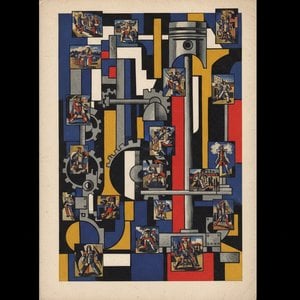
- Elemento macchina (cubismo)

Fernand Léger
1881 - 1955 , Francia
Informazioni rapide
- Artisti Influenti:
- Cézanne
- Impressionismo
- Artisti Influenzati: ['Pop Art']
- Data Di Nascita: 4 febbraio 1881
- Luogo Di Nascita: Argentan, Francia
- Movimento Artistico: Cubismo, Tubismo
- Nazionalità: Francese
- Nome Completo: Fernand Léger
- Opere Notevoli:
- La Grande Parata
- L'Elemento Macchina
- Donna Seduta
- The City
Articoli correlati

Astrazione Geometrica: 10 Capolavori che Hanno Definito un Movimento Artistico
Esplora i 10 capolavori dell'Astrazione Geometrica: Mondrian, Malevich e Kandinsky rivoluzionano l'arte moderna. Scopri la storia, i colori e le tecniche di questi movimenti iconici. Stampe d'arte di alta qualità su ArtsDot.com!

Espressionismo Astratto: I 10 Capolavori che Hanno Definito un Movimento Artistico Rivoluzionario
Esplora i 10 capolavori dell'Espressionismo Astratto con ! Scopri Pollock, Rothko e De Kooning: storia, tecnica e significato di opere iconiche per arredare la tua casa con arte di alta qualità. Esplora la collezione online!
Fernand Léger: I 25 Capolavori che Hanno Definito l'Arte Moderna | ArtsDot
Esplora i 25 capolavori di Fernand Léger, pioniere del cubismo e del tubismo. Scopri la storia, le tecniche e l'impatto dell'arte moderna francese. Stampe d'arte e riproduzioni su ArtsDot.com.

Kandinsky: I 25 Capolavori che Hanno Rivoluzionato l'Arte Moderna | ArtsDot
Esplora i 25 capolavori di Wassily Kandinsky, pioniere dell'arte astratta. Scopri la storia, il significato e le tecniche dietro ogni dipinto iconico. Trova riproduzioni d'arte di alta qualità per decorare la tua casa su ArtsDot.com.

Designing Your Forever Space: An Expert Guide to Elevating Your New Home with Neo-Abstract Art
Elevate your first home with the bold energy of Neo-Abstract Art. Our expert guide helps newlyweds master modern geometric compositions, textures, and color palettes. Discover how custom hand-painted oils and multi-panel designs can transform your new space into a curated masterpiece.


