
- Home

- Stampa su tela
- Ferdinand Hodler
- Lumberjack, study

 Ordina la riproduzione Acquista download
 Invia
Invia
 Condividi
 Details
 Aggiungi ai preferiti

 Scarica
 Simili
 X-Ray
X-Ray
 Slideshow
Lumberjack, study
 Acrylic On Canvas
- WallArt
- Symbolism
 1910
1910- 19th Century
 43.0 x 44.0 cm
 Galleria Nazionale della Bosnia ed Erzegovina
 Scopri di più
Giclée / Stampa d'arte
Stampa giclée o su tela di qualità museale, con produzione rapida e diverse opzioni di finitura.




P118B $10

P118H $10

P118W $10

P438Z $10

P508JH $12

P508YH $12

P805H $10

P805Z $10

P919BZ $10

P919G $10

P919XJ $10

P959ZH $10

P968JZ $12

W106C $8

W218G $10

W218JH $8

W218Y $10

W307PJ $10

W316G $10

W316PJ $8

W316Y $10

W398PJ $8

W4111J $10

W500HY $15

W500JH $15

W692G $12

W849H $8

W940BG $15

W953PJ $8




Scegli tra le nostre dimensioni predefinite, che rispettano le proporzioni originali dell'opera d'arte.

È possibile inserire dimensioni personalizzate per adattare l'opera a una cornice o a uno spazio specifico. Se la dimensione selezionata non corrisponde alle proporzioni dell'immagine originale, procederemo al ritaglio dell'opera o all'estensione dell'immagine con un bordo specchiato o a tinta unita. Un mockup digitale ti verrà inviato per approvazione prima dell'inizio della produzione.
Si prega di notare che l'anteprima a schermo non riflette il ritaglio o l'estensione effettivi. Solo il mockup mostrerà accuratamente la composizione finale.
Sebbene siano disponibili dimensioni personalizzate, si raccomanda di selezionare una dimensione dall'elenco predefinito per preservare le proporzioni originali.
Consegna in tutto il mondo () in 2 settimane invece delle normali 4/5 settimane. (2 Luglio)

Spedizione espressa gratuita in tutto il mondo

Tela in lino di alta qualità

Assicurazione completa sulla spedizione

Garanzia di rimborso dei dazi doganali

Garanzia di fedeltà cromatica

Politica di reso entro 60 giorni (solo per difetti)

Garanzia di rimborso al 100%

Sconto per acquisti multipli
 L'opzione vetro è disponibile solo per dimensioni inferiori a 110 cm

Lumberjack, study
Giclée / Stampa d'arte
Dimensioni riproduzione
-


Prezzo totale finale
-
Descrizione dell'opera
The Raw Essence of Labor: Ferdinand Hodler’s “Lumberjack, Study”
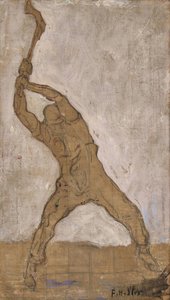
Ferdinand Hodler's "Lumberjack, Study," painted in 1910, isn’t merely a depiction of a man wielding an axe; it’s a profound meditation on the human condition, rendered with the characteristic Symbolist precision that defined the artist’s career. Born in Bern, Switzerland, Hodler’s life was deeply intertwined with themes of loss and mortality – experiences he channeled into his art through a lens of quiet observation and evocative symbolism. This particular work, executed during a period of intense artistic experimentation for Hodler, captures a moment of potent physicality alongside an underlying sense of melancholy, inviting the viewer to contemplate the dignity and inherent struggle within everyday labor.
- Subject Matter: The central figure is a powerfully built lumberjack, poised in the act of swinging his axe. The focus isn’t on heroic action, but rather on the concentrated effort and raw physicality of the task at hand.
- Style & Technique: Hodler employs a distinctive “parallelism” technique – a simultaneous depiction of multiple viewpoints within a single composition. Here, we see the lumberjack from several angles simultaneously, creating a sense of dynamism and capturing the essence of his movement. The brushstrokes are loose and expressive, contributing to the work’s immediate impact.
A Window into Symbolist Thought
Hodler was a key figure in the Swiss Symbolist movement, an artistic current that sought to express inner emotions and ideas rather than simply representing external reality. Symbolism rejected academic realism, favoring suggestive imagery and evocative color palettes. In “Lumberjack, Study,” this is evident in the muted tones of the landscape – a hazy sky and indistinct trees – which serve not as literal representations but as symbolic anchors for the figure’s emotional state. The darkness surrounding the lumberjack hints at the hardships and uncertainties of his life, while the upward swing of the axe can be interpreted as an aspiration towards something beyond the immediate toil.
The choice of a lumberjack as subject is itself significant. It represents a connection to the land, to physical labor, and to a fundamental human need for survival – themes that resonated deeply with Symbolist artists grappling with questions of identity and purpose in a rapidly changing world.Historical Context & The Bernese Landscape
Bern, Hodler’s birthplace, provided a constant source of inspiration. The rolling hills and forests surrounding the city were frequently depicted in his work, imbued with a sense of timelessness and spiritual resonance. “Lumberjack, Study” reflects this connection to the landscape, grounding the figure within a recognizable yet subtly idealized Bernese setting. The painting was created during a period of significant social change in Switzerland – the rise of industrialization and urbanization were challenging traditional ways of life. Hodler’s work can be seen as both a reflection of these changes and a nostalgic yearning for simpler times.
Emotional Resonance & A Legacy of Quiet Intensity
Despite its seemingly straightforward subject matter, “Lumberjack, Study” possesses a remarkable emotional depth. The lumberjack's face is largely obscured, inviting the viewer to project their own feelings and interpretations onto the figure. There’s a palpable sense of solitude and resilience in his posture – a quiet dignity born from hard work and perhaps, a touch of melancholy. Hodler masterfully captures this complex interplay of strength and vulnerability, creating an image that continues to resonate with viewers today. Reproductions of this powerful study offer a glimpse into the soul of a remarkable artist and a poignant reflection on the human experience.
Opere simili



Biografia dell'artista
La Vita e la Carriera di Ferdinand Hodler
Ferdinand Hodler, pittore svizzero, nacque il 14 marzo 1853 a Berna, in Svizzera. I suoi primi lavori furono caratterizzati da ritratti, paesaggi e dipinti di genere in uno stile realistico. Successivamente, adottò una forma personale di simbolismo, che definì "parallelismo".L'Evoluzione dello Stile di Hodler
Man mano che la carriera di Hodler progrediva, il suo lavoro si evolse per combinare influenze da vari generi, tra cui il simbolismo e l'Art Nouveau. Nel 1890, completò "Notte", un dipinto che segnò la sua svolta verso immagini simboliste. Quest’opera, che presenta diverse figure coricate, fu inizialmente accolta con controversie ma alla fine ottenne attenzione favorevole a Parigi.Opere Notabili e Collezioni
- "Il Giorno" (1893), un dipinto storico su larga scala, è un esempio notevole del lavoro di Hodler. Quest'opera, esposta al Kunsthaus di Zurigo, dimostra il suo unico connubio tra simbolismo e realismo.
- Il Museo Kunsthaus di Zurigo, in Svizzera, presenta una collezione impressionante delle opere di Hodler, tra cui "Verità II" (1897), che può essere visualizzata su https://ArtsDot.com/art.nsf/o/a@d3b4gt.
Influenza e Significato Storico
L'adozione del simbolismo da parte di Hodler e lo sviluppo del "parallelismo" hanno avuto un impatto duraturo sul mondo dell'arte. Il suo lavoro può essere visto come un precursore dell'espressionismo, con la sua enfasi sulle figure fortemente colorate e geometriche.- La biografia di Ferdinand Hodler è disponibile su ArtsDot, fornendo uno sguardo approfondito sulla sua vita ed evoluzione artistica.
- La storia della nudità nell'arte, che è stata un tema di interesse durante tutta la carriera di Hodler, può essere esplorata ulteriormente su https://en.wikipedia.org/wiki/history_of_the_nude_in_art.
Date Chiave
- 1853: nato a Berna, Svizzera
- 1890: completata "Notte", segnando la sua svolta verso immagini simboliste
- 1918: deceduto il 19 maggio
- https://ArtsDot.com/@@/d3xnx9-ferdinand-hodler-the-day per visualizzare "Il Giorno" (1893)
- https://en.wikipedia.org/wiki/ferdinand_hodler per una biografia completa di Ferdinand Hodler
- https://ArtsDot.com/@/ferdinand-hodler per un'ampia collezione dei suoi lavori e una biografia dettagliata.

Ferdinand Hodler
1853 - 1918 , Svizzera
Dati rapidi
- Artistic Movement Or Style: Simbolismo, Art Nouveau
- Artists Or Movements Influenced By This Artist: ['Espressionismo']
- Artists Who Influenced This Artist:
- Albrecht Dürer
- Diego Velázquez
- Date Of Birth: 14 marzo 1853
- Date Of Death: 19 maggio 1918
- Full Name: Ferdinand Hodler
- Nationality: Svizzero
- Notable Artworks:
- Notte
- Il Giorno
- Verità II
- Place Of Birth: Berna, Svizzera
Articoli correlati

L'Eleganza Essenziale: L'Uso dell'Astrazione Monocromatica per Esaltare Luce, Texture e Architettura Moderna nell'Interior Design
Scopri come l'astrazione monocromatica trasforma gli interni con eleganza e funzionalità. Guide esperte su luce, materiali e colori neutri per spazi armoniosi e di design. Consulenza gratuita!

Ferdinand Hodler: Simbolismo, Parallelismo e la Ricerca di un'Armonia Universale
Esplora il simbolismo di Ferdinand Hodler, maestro svizzero e pioniere del 'parallelismo'. Analisi approfondita della sua arte, temi ricorrenti e influenze artistiche. Scopri la sua eredità.

I Maestri del Nero: I 10 Dipinti Più Famosi Dominati dall'Avorio Scuro |
Esplora i 10 dipinti più iconici dominati dal nero avorio! Da Rembrandt a Goya, scopri la storia, le tecniche e l'impatto di capolavori senza tempo. Trova riproduzioni d'arte di alta qualità per decorare casa con .

I 10 Dipinti Più Famosi Dominati dal Nero Mars: Arte e Decorazioni di Lusso
Esplora i 10 dipinti più iconici dominati dal nero Mars Black. Scopri la storia, gli artisti e il simbolismo di capolavori oscuri. Trova riproduzioni d'arte di lusso per decorare casa su .

Monochrome Visions: Exploring the Aesthetic & Historical Significance of Black & White Photography
Explore the rich history & artistic power of black and white photography. From early techniques to iconic masters like Ansel Adams, discover why monochrome continues to captivate art lovers today. Expert insights for collectors.



