 Acquista stampa Acquista download
 Invia
Invia
 Condividi
 Details
 Aggiungi ai preferiti

 Scarica
 Simili
 X-Ray
X-Ray
 Slideshow
Dodrecht
 Oil On Canvas
- WallArt
- Impressionism
 61.0 x 50.0 cm
 Galleria Regionale di Liberec
Riproduzione a olio fatta a mano
Olio su tela dipinto a mano nelle tue dimensioni e con la tua cornice, realizzato su ordinazione dai nostri artisti.




P118B $10

P118H $10

P118W $10

P438Z $10

P508JH $12

P508YH $12

P805H $10

P805Z $10

P919BZ $10

P919G $10

P919XJ $10

P959ZH $10

P968JZ $12

W106C $8

W218G $10

W218JH $8

W218Y $10

W307PJ $10

W316G $10

W316PJ $8

W316Y $10

W398PJ $8

W4111J $10

W500HY $15

W500JH $15

W692G $12

W849H $8

W940BG $15

W953PJ $8




 Scopri di più
Scegli tra le nostre dimensioni predefinite, che rispettano le proporzioni originali dell'opera d'arte.

È possibile inserire dimensioni personalizzate per adattare l'opera a una cornice o a uno spazio specifico. Se la dimensione selezionata non corrisponde alle proporzioni dell'immagine originale, provvederemo a ritagliare l'opera o a estendere il dipinto con elementi aggiuntivi dipinti a mano. Un mockup digitale ti sarà inviato per approvazione prima dell'inizio della produzione.
Si prega di notare che l'anteprima a schermo non riflette il ritaglio o l'estensione effettivi. Solo il mockup mostrerà accuratamente la composizione finale.
Sebbene siano disponibili dimensioni personalizzate, consigliamo di selezionare una dimensione dall'elenco predefinito per preservare le proporzioni originali.
Dopo l'ordine, il team di ArtsDot.com invierà un'e-mail al cliente per le istruzioni e fornirà un'anteprima del mockup
Consegna in tutto il mondo () in 3/4 settimane anziché nelle normali 5 settimane. (1 Luglio). Nessun compromesso sulla qualità.

Spedizione espressa gratuita in tutto il mondo

Tela in lino di alta qualità

Assicurazione completa sulla spedizione

Garanzia di rimborso dei dazi doganali

Garanzia di fedeltà cromatica

Politica di reso entro 60 giorni (solo per difetti)

Garanzia di rimborso al 100%

Sconto per acquisti multipli
 L'opzione vetro è disponibile solo per dimensioni inferiori a 110 cm

Dodrecht
Tecnica di riproduzione
Dimensioni riproduzione
-


Prezzo totale finale
-
Descrizione dell'opera
A Moment in Normandy: Eugène Boudin’s “Dodrecht”
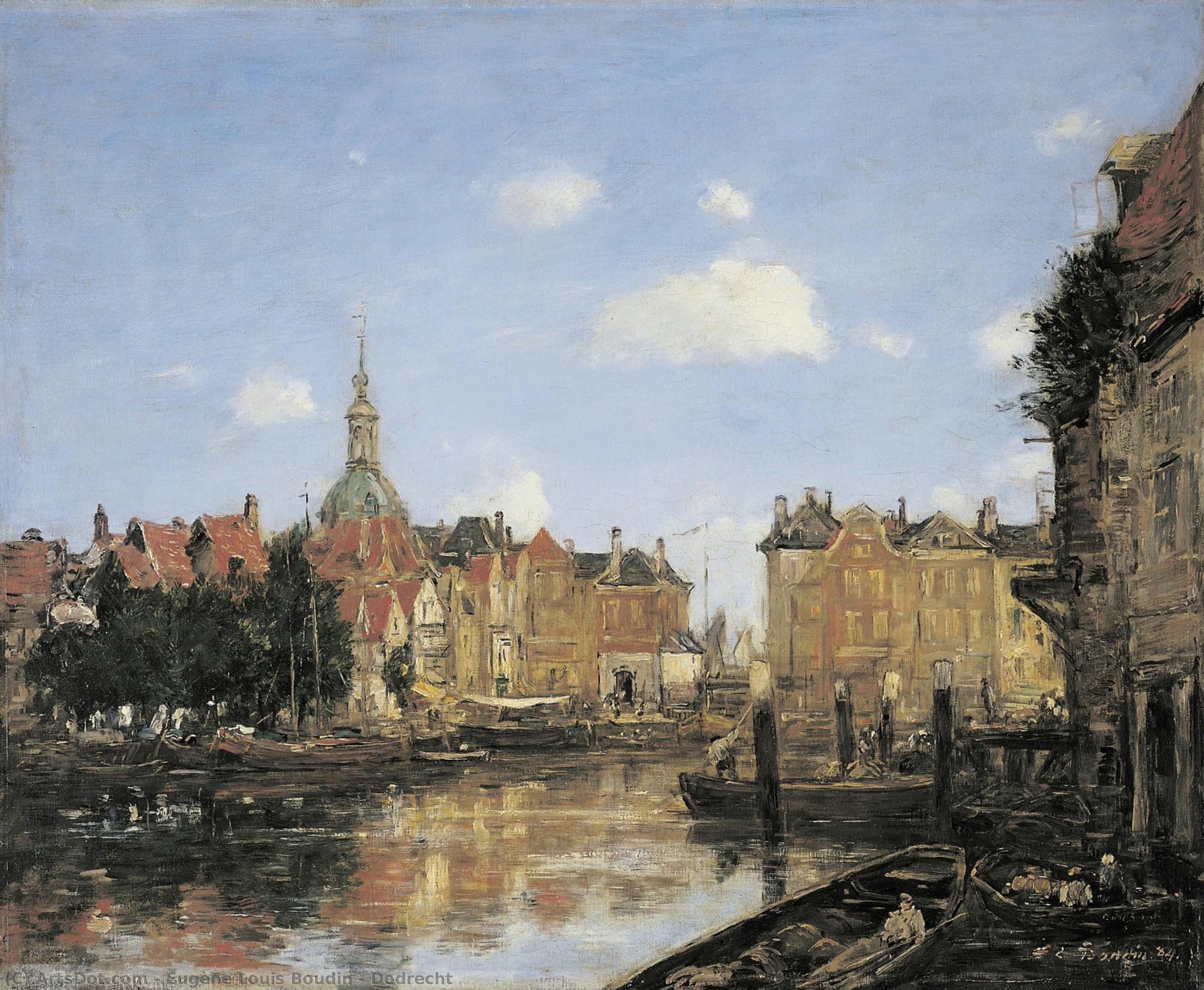
Eugène Louis Boudin's "Dodrecht," painted circa 1874, isn’t merely a depiction of a canal scene; it’s an immersion into the very essence of late 19th-century French Impressionism. This evocative landscape captures a fleeting moment along the waterways of Dordrecht, a city nestled within the Netherlands, and speaks to Boudin's profound connection with light, atmosphere, and the transient beauty of everyday life. The painting immediately draws the viewer in with its soft, hazy palette—muted blues, greens, and ochres dominate, creating an almost dreamlike quality that belies the meticulous observation at play.
Boudin’s approach to capturing this scene is profoundly characteristic of his style. He eschews sharp detail in favor of a loose, broken brushstroke technique, applying paint in short, vibrant dashes that seem to dance across the canvas. This deliberate lack of precision isn't a flaw; rather, it’s the very heart of Impressionism – an attempt to convey not just what is seen, but how it *feels* to be present within that moment. The texture itself becomes a key element, with visible brushwork adding depth and dynamism to the scene. Notice how the reflections shimmer on the water's surface, created by these individual strokes, lending an almost palpable sense of movement.
The Painter’s Philosophy: Plein Air and the Capture of Light
Boudin was a pioneer in the practice of *plein air* painting – working directly outdoors. This commitment to observing nature firsthand profoundly shaped his artistic vision. He wasn't interested in creating photographic reproductions; instead, he sought to capture the ephemeral qualities of light and atmosphere as they shifted with each passing moment. “Dodrecht” exemplifies this philosophy perfectly. The artist meticulously studied how sunlight interacts with water, buildings, and vegetation, translating these observations onto canvas with remarkable sensitivity. His early exposure to Dutch masters like Jongkind, who championed painting outdoors, undoubtedly influenced his approach.
The historical context of the late 19th century is crucial to understanding Boudin’s work. France was undergoing rapid industrialization and urbanization, leading many artists to seek refuge in the countryside and to explore themes of rural life and natural beauty. Boudin's focus on these subjects resonated with a growing public yearning for connection with nature – a sentiment that would become central to the Impressionist movement. The painting subtly evokes the tranquility of a slower pace of life, a stark contrast to the bustling industrial centers of Europe.
Symbolism and Emotional Resonance
Beyond its technical brilliance, “Dodrecht” carries a quiet emotional resonance. The composition—with the canal as the dominant element—creates a sense of enclosure and intimacy, drawing the viewer into the scene. The church steeple rising above the rooftops provides a vertical anchor, grounding the image while simultaneously suggesting a connection to faith and tradition. The boats navigating the waterway hint at human activity and interaction, yet the overall mood remains one of peaceful contemplation.
The painting’s muted color palette contributes significantly to its emotional impact. The soft hues evoke feelings of serenity, nostalgia, and perhaps even melancholy—a subtle reminder of the passage of time. It's a scene that invites reflection on the beauty of the natural world and the simple pleasures of everyday life. “Dodrecht” isn’t just a landscape; it’s an invitation to slow down, observe, and appreciate the fleeting moments of grace that surround us.
A Reproduction Worthy of Display
Reproductions of Boudin's "Dodrecht" offer a remarkable opportunity to bring this evocative masterpiece into your home or office. The delicate balance between light, color, and brushwork is beautifully preserved in high-quality reproductions, allowing you to experience the artist’s vision firsthand. Whether displayed as a focal point on a wall or incorporated into a larger interior design scheme, “Dodrecht” will undoubtedly add a touch of timeless elegance and artistic depth to any space.
Opere simili


Biografia dell'artista
La Vita e la Carriera di Eugène Louis Boudin
Eugène Louis Boudin, nato il 12 luglio 1824 a Honfleur, in Francia, fu un pittore francese pioniere del paesaggio en plein air. Figlio di un pilota portuale, sviluppò fin da giovane una profonda affinità con il mare. La sua carriera artistica iniziò precocemente, lavorando su una steamboat tra Le Havre e Honfleur all'età di 10 anni. Questo ambiente marittimo influenzò profondamente la sua arte, che si concentrò spesso sulle scene marine e costiere.Influenze Artistiche e Stile
Lo stile di Boudin fu fortemente influenzato dai maestri olandesi del XVII secolo, un'influenza accentuata dopo aver incontrato Johan Jongkind, che lo introdusse alla pittura en plein air. Questa tecnica gli permise di catturare la luce mutevole e i colori del mondo naturale con una freschezza senza precedenti. Boudin era noto per le sue pastels, caratterizzate da un approccio sommario ed economico, che attirarono l'attenzione di Charles Baudelaire e Corot, quest’ultimo che lo definì "il re dei cieli". La sua capacità di rendere l'atmosfera e la luce divenne il suo marchio distintivo.Opere Principali e Riconoscimenti
Tra le opere più significative di Boudin si annovera Nature morte au homard sur un nappe blanche (Natura morta con aragosta su una tovaglia bianca), conservata al High Museum of Art ad Atlanta, che dimostra il suo approccio sobrio e nobile alla pittura di nature morte. La sua partecipazione alla prima mostra impressionista nel 1873, insieme a Claude Monet e altri giovani artisti, consolidò la sua influenza nel mondo dell'arte. Le sue opere sono presenti in importanti musei come il Musée d’Orsay a Parigi, che ospita diverse sue tele, tra cui un suggestivo paesaggio con tramonto. Boudin ricevette numerosi riconoscimenti durante la sua carriera, tra cui una medaglia di terzo grado al Salon di Parigi del 1881 e una medaglia d'oro all'Esposizione Universale del 1889. Nel 1892 fu nominato Cavaliere della Legion d’Onore.Eredità e Influenza
L'eredità di Eugène Louis Boudin va oltre la sua produzione artistica, poiché svolse un ruolo cruciale nella formazione di giovani artisti come Claude Monet. La sua influenza è testimoniata dal Premio Eugène Boudin, assegnato dalla Société Nationale des Beaux-Arts. Boudin non fu solo un pittore talentuoso, ma anche un mentore e un ispiratore per la generazione impressionista successiva, contribuendo in modo significativo all'evoluzione della pittura moderna. Il suo approccio innovativo alla pittura en plein air aprì nuove strade per gli artisti che cercavano di catturare l’effimero splendore del mondo naturale.
Eugène Louis Boudin
1824 - 1898 , Francia
Dati rapidi
- Artisti Influenti:
- Johan Jongkind
- Corot
- Artisti Influenzati: ['Claude Monet']
- Data Di Nascita: 12 luglio 1824
- Luogo Di Nascita: Honfleur, Francia
- Movimento Artistico: Impressionismo
- Nazionalità: Francese
- Nome Completo: Eugène Louis Boudin
- Opere Notevoli:
- Natura morta con aragosta
- Paesaggio al tramonto
- Marina
- Fecamp, il porto
Articoli correlati

The Enduring Legacy of 18th & 19th Century Art: Movements, Masters & Societal Reflections
Explore the rich history of 18th & 19th-century art! Discover Romanticism, Realism, and iconic masters like Delacroix & Courbet. Expert insights & high-quality reproductions at ArtsDot.


I 10 Capolavori Impressionisti che Hanno Rivoluzionato il Paesaggio Pittorico
Esplora i 10 capolavori impressionisti che hanno rivoluzionato il paesaggio pittorico! Monet, Renoir e altri maestri catturati in stampe su tela di alta qualità. Scopri la storia dell'arte e trova l'opera perfetta per arredare casa tua con ArtsDot.com.

John Frederick Lewis: Orientalismo, Dettaglio e Pittura di Genere nell'Arte Britannica del XIX Secolo
Esplora l'opera di John Frederick Lewis, maestro dell'Orientalismo vittoriano. Analisi dettagliata del suo stile unico, il realismo pittorico e l'influenza sulla pittura britannica del XIX secolo.

Fritz von Uhde: Bridging Realism & Symbolism in Late 19th-Century German Painting
Explore the captivating world of Fritz von Uhde, a pivotal German painter bridging Realism & Symbolism. Discover his plein-air techniques, religious themes, and influence on modern art. Learn about this fascinating artist at ArtsDot.

Thomas Baines: Pioneering Landscape Art & Visual Documentation of 19th-Century Southern Africa
Explore the life & art of Thomas Baines, a pioneering British explorer and artist who documented 19th-century Southern Africa & Australia. Discover his stunning landscapes, war paintings, and invaluable cartographic contributions.