


 Acquista stampa Acquista download
 Invia
Invia
 Condividi
 Details
 Aggiungi ai preferiti

 Scarica
 Simili
 X-Ray
X-Ray
 Slideshow
Delos
 Acrylic On Canvas
- WallArt
- Modernism
 1971
1971 76.0 x 54.0 cm
 The Hepworth Wakefield
Riproduzione a olio fatta a mano
Olio su tela dipinto a mano nelle tue dimensioni e con la tua cornice, realizzato su ordinazione dai nostri artisti.




P118B $10

P118H $10

P118W $10

P438Z $10

P508JH $12

P508YH $12

P805H $10

P805Z $10

P919BZ $10

P919G $10

P919XJ $10

P959ZH $10

P968JZ $12

W106C $8

W218G $10

W218JH $8

W218Y $10

W307PJ $10

W316G $10

W316PJ $8

W316Y $10

W398PJ $8

W4111J $10

W500HY $15

W500JH $15

W692G $12

W849H $8

W940BG $15

W953PJ $8




 Scopri di più
Scegli tra le nostre dimensioni predefinite, che rispettano le proporzioni originali dell'opera d'arte.

È possibile inserire dimensioni personalizzate per adattare l'opera a una cornice o a uno spazio specifico. Se la dimensione selezionata non corrisponde alle proporzioni dell'immagine originale, provvederemo a ritagliare l'opera o a estendere il dipinto con elementi aggiuntivi dipinti a mano. Un mockup digitale ti sarà inviato per approvazione prima dell'inizio della produzione.
Si prega di notare che l'anteprima a schermo non riflette il ritaglio o l'estensione effettivi. Solo il mockup mostrerà accuratamente la composizione finale.
Sebbene siano disponibili dimensioni personalizzate, consigliamo di selezionare una dimensione dall'elenco predefinito per preservare le proporzioni originali.
Dopo l'ordine, il team di ArtsDot.com invierà un'e-mail al cliente per le istruzioni e fornirà un'anteprima del mockup
Consegna in tutto il mondo () in 3/4 settimane anziché nelle normali 5 settimane. (1 Luglio). Nessun compromesso sulla qualità.

Spedizione espressa gratuita in tutto il mondo

Tela in lino di alta qualità

Assicurazione completa sulla spedizione

Garanzia di rimborso dei dazi doganali

Garanzia di fedeltà cromatica

Politica di reso entro 60 giorni (solo per difetti)

Garanzia di rimborso al 100%

Sconto per acquisti multipli
 L'opzione vetro è disponibile solo per dimensioni inferiori a 110 cm

Delos
Tecnica di riproduzione
Dimensioni riproduzione
-


Prezzo totale finale
-
Descrizione dell'opera
Delos: A Meditation on Form and Void by Barbara Hepworth
Barbara Hepworth’s “Delos,” created in 1971, is more than just a painting; it's an invitation to contemplate the relationship between solidity and emptiness, form and space. The work immediately draws the eye with its striking palette of yellows and blacks – a deliberate contrast that speaks volumes about the artist’s core concerns. The dominant yellow, reminiscent of sun-drenched stone or aged parchment, provides a warm, almost luminous backdrop for the carefully sculpted voids represented by the stark black circles. These aren't merely decorative elements; they are crucial to understanding Hepworth’s intention – to suggest a profound sense of absence and the inherent tension within any form.
Hepworth, a pivotal figure in 20th-century British art, was deeply influenced by both European modernism and her own experiences with sculpture. Her work moved beyond representational imagery, seeking instead to capture essential qualities – weight, texture, and the dynamic interplay of positive and negative space. “Delos” echoes this approach, translating the tactile experience of three-dimensional form into a two-dimensional plane. The painting’s genesis lies partly in Hepworth's fascination with Greek mythology, particularly the island of Delos, sacred to Apollo and Artemis and renowned for its ancient ruins. The title itself acts as a direct reference to this historical and symbolic significance, grounding the abstract composition within a rich cultural context.
Technique and Composition: A Study in Contrasts
The painting’s technique is deceptively simple yet remarkably sophisticated. Hepworth employed a layered approach, building up the yellow ground with thin washes of color to create subtle tonal variations. The black circles are not painted directly onto the surface; rather, they appear as carefully applied areas of concentrated pigment, suggesting a deliberate process of carving or subtraction. This technique reinforces the idea of form emerging from void – a central theme in Hepworth’s oeuvre. The placement of the circles is equally important. The largest circle dominates the center of the composition, acting as a visual anchor and drawing the eye inward. Smaller circles are strategically positioned around it, creating a dynamic balance between stability and movement.
Hepworth's use of color is particularly noteworthy. The yellow isn’t a bright, cheerful hue; it possesses a muted quality, hinting at age and weathering – qualities that resonate with the ancient ruins of Delos itself. The black circles, conversely, are intensely dark, creating a powerful contrast that demands attention. This interplay of light and shadow generates a sense of depth and volume, inviting the viewer to explore the painting’s surface and contemplate its hidden dimensions.
Symbolism and Emotional Resonance
Beyond its formal qualities, “Delos” is imbued with a profound sense of symbolism. The circles can be interpreted as representing the absence of something – perhaps loss, memory, or the unknowable mysteries of the universe. They also evoke the idea of holes or voids within forms, suggesting that even the most solid and substantial objects are ultimately defined by their emptiness. This concept aligns with Hepworth’s broader exploration of the relationship between form and space, a theme she consistently revisited throughout her career.
The painting's emotional impact is subtle yet deeply affecting. It doesn’t offer easy answers or explicit narratives; instead, it invites contemplation and introspection. There’s a sense of quiet melancholy, a recognition of the transient nature of existence, and a profound appreciation for the beauty that can be found in emptiness. “Delos” ultimately serves as a reminder that true understanding often arises not from filling every space with detail, but from embracing the power of suggestion and allowing the mind to complete the picture.
A Legacy of Form and Space
Barbara Hepworth’s “Delos” stands as a testament to her pioneering spirit and her profound insights into the nature of art. It's a work that transcends its simple composition, offering viewers a glimpse into the artist’s inner world and inviting them to engage in a dialogue with timeless themes of form, space, and existence. Reproductions of this piece offer an accessible way to experience Hepworth’s vision, bringing her evocative exploration of emptiness and solidity into any interior space – a reminder that sometimes, the most powerful art is found not in what is shown, but in what is left unsaid.
Opere simili


Biografia dell'artista
Primi anni e formazione
Dame Barbara Hepworth, rinomata artista e scultrice inglese, nacque il 10 gennaio 1903 a Wakefield, nello Yorkshire. Suo padre, Herbert Hepworth, era un ingegnere civile per il West Riding County Council, che nel 1921 divenne County Surveyor. Da bambina, accompagnava il padre nei viaggi in auto che faceva in tutta la contea del West Riding. Frequentò la Wakefield Girls' High School e ottenne una borsa di studio aperta nel 1917. Le estati le furono trascorse a Robin Hood's Bay, vicino a Whitby, North Yorkshire.Carriera artistica
- Dal 1920 al 1921 frequentò la Leeds School of Art; Henry Moore era un compagno di studi.
- Dal 1921 al 1924 studiò scultura alla Royal College of Art di Londra.
Opere significative ed esposizioni
- Oval Form (Trezion), una scultura in bronzo, fa parte della collezione del Kimbell Art Museum a Fort Worth, negli Stati Uniti. (visualizza su ArtsDot)
- Two Forms, una scultura, è esposta al The Hepworth Wakefield a Wakefield, nel Regno Unito. (visualizza su ArtsDot)
- Totem, una scultura in marmo, fa anche parte della collezione al The Hepworth Wakefield. (visualizza su ArtsDot)
Evoluzione artistica e influenze
Hepworth scoprì la sua passione per la scultura da bambina. Nel corso della sua carriera, sperimentò con diverse tecniche e materiali, evolvendo dal naturalismo semplificato all'astrazione pura. Fu influenzata dai movimenti artistici europei come il surrealismo e il costruttivismo, e collaborò con artisti come Ben Nicholson, Paul Nash e Henry Moore. La sua sensibilità per i materiali era notevole e praticava spesso la scultura a diretto taglio. A volte incorporava stringhe, fili e vernice colorata nelle sue sculture. Era affascinata dal gioco tra massa e spazio, e il suo approccio creava una tensione tra uno spazio aperto e interno e la massa materiale circostante.Eredità e collezioni museali
Il lavoro di Barbara Hepworth è ampiamente riconosciuto, con le sue sculture e dipinti che fanno parte di varie collezioni museali in tutto il mondo. Il The Hepworth Wakefield, intitolato all'artista, ospita numerosi capolavori di artisti rinomati, tra cui le opere stesse di Hepworth. (scopri di più su The Hepworth Wakefield su ArtsDot)Significato storico
Il lavoro pionieristico di Dame Barbara Hepworth nella scultura britannica moderna ha lasciato un segno indelebile nel mondo dell'arte. La sua eredità continua a ispirare artisti e appassionati d'arte, con le sue opere che rimangono una testimonianza del suo spirito innovativo e del genio artistico. Ulteriori informazioni su Barbara Hepworth su Wikipedia
Barbara Hepworth
1903 - 1975 , Regno Unito
Dati rapidi
- Artisti Influenti:
- Henry Moore
- Brancusi
- Arp
- Data Di Nascita: 10 gennaio 1903
- Luogo Di Nascita: Wakefield, Regno Unito
- Movimento Artistico: Modernismo, Scultura astratta
- Nazionalità: Britannica
- Nome Completo: Barbara Hepworth
- Opere Notevoli:
- Oval Form (Trezion)
- Two Forms
- Totem
Articoli correlati

Barbara Hepworth: Un Dialogo Scultoreo con Forma, Spazio e la Condizione Umana
Esplora l'universo scultoreo di Barbara Hepworth: un viaggio attraverso forma, spazio e la condizione umana. Analisi approfondite, contesto storico e l'eredità di una maestra dell'arte moderna.


Orphism: A Symphony of Color and Form – Exploring the Abstract Roots of Modern Art
Explore Orphism, the vibrant abstract art movement pioneered by Robert & Sonia Delaunay. Discover its unique color theory, lasting influence on modern art, and how to bring this 'symphony of color' into your home with ArtsDot.

Hiro Yamagata: Abstraction, Materiality & Spatial Dynamics in Contemporary Sculpture
Explore the captivating world of Hiro Yamagata’s innovative sculptures & paintings. Discover his pioneering use of laser technology, immersive installations, and abstract forms – a must-read for discerning art collectors.
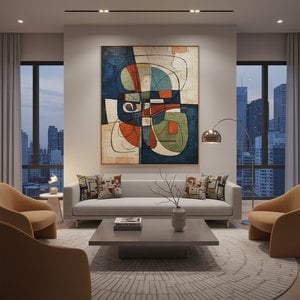
L'Affascinante Astrazione: Perché Risulta Perfetta negli Spazi Moderni
Scopri perché l'arte astratta è perfetta per gli spazi moderni. Guida esperta per interior designer su stili, artisti e come integrare queste opere con .

Oltre la Rappresentazione: Decodificare Emozione e Significato nell'Arte Astratta Moderna
Esplora il mondo dell'arte astratta moderna con ArtsDot. Scopri le radici, i maestri e come scegliere l'opera perfetta per la tua casa o collezione. Guide esperte e acquisti sicuri.



