

 Anteprima in scala reale
 Invia
Invia Condividi
 Dettagli opera
 Guida
Guida

 Scarica
 Simili
 Radiografia
 Slideshow
 Domande e risposte
 Statistiche
Plaza, Twilight

- 19.0 x 18.0 cm

 Espandi i dettagli
L'opera d'arte visualizzata in questa pagina è protetta dalle leggi sul diritto d'autore, il che significa che non possiamo legalmente creare o vendere una riproduzione identica. Tale protezione è garantita da accordi internazionali quali la Convenzione di Berna e dalle leggi nazionali, incluse quelle stabilite da Legge sul copyright degli Stati Uniti - Titolo 17. Tutti i diritti riservati. Le immagini presenti su questo sito sono protette da copyright e non possono essere riprodotte o utilizzate senza l'autorizzazione scritta di WahooArt.com o dei rispettivi proprietari del copyright.
Questo metodo è pienamente conforme alle normative sul diritto d'autore poiché non prevede la copia o la duplicazione dell'opera protetta. Si tratta invece di una rielaborazione creativa: un nuovo dipinto che trae ispirazione dall'originale, senza tuttavia esserne identico.
Giclée / Stampe d'arte
Stampa giclée o su tela di qualità museale, con produzione rapida e diverse opzioni di finitura. ( Acquista il dipinto realizzato a mano Passa all'immagine digitale)




P118B €10

P118H €10

P118W €10

P438Z €10

P508JH €12

P508YH €12

P805H €10

P805Z €10

P919BZ €10

P919G €10

P919XJ €10

P959ZH €10

P968JZ €12

W106C €8

W218G €10

W218JH €8

W218Y €10

W307PJ €10

W316G €10

W316PJ €8

W316Y €10

W398PJ €8

W4111J €10

W500HY €15

W500JH €15

W692G €12

W849H €8

W940BG €15

W953PJ €8




Scegli tra le nostre dimensioni predefinite, che rispettano le proporzioni originali dell'opera d'arte.

Inserisci la larghezza e l'altezza desiderate, per adattarle alla tua cornice o alla tua parete. Una stampa può essere solo ritagliata, mai resa più grande dell'immagine originale; pertanto, un formato con una forma differente comporterà la perdita di una parte dell'opera. Ti invieremo un mockup digitale da approvare prima di procedere con la stampa. L'immagine mostrata in questa pagina non rappresenta il ritaglio reale — solo il mockup lo mostra.
Consegna in tutto il mondo () in 2 settimane invece delle normali 4/5 settimane. (4 Novembre)

Spedizione espressa gratuita in tutto il mondo

Tela in lino di alta qualità

Assicurazione completa sulla spedizione

Garanzia di rimborso dei dazi doganali

Garanzia di fedeltà cromatica assoluta

Politica di reso entro 100 giorni (solo per difetti di fabbricazione)

Garanzia di rimborso al 100%

Offerta per acquisti multipli
 L'opzione vetro è disponibile solo per dimensioni inferiori a 110 cm

Plaza, Twilight
Giclée / Stampe d'arte
Dimensioni riproduzione
-


Prezzo finale calcolato
€ 56
Opere simili


Biografia dell'artista
A Life Bridging Worlds: The Artistic Journey of Arthur Millier
Arthur Millier, born in the coastal town of Weston-super-Mare, Somerset, England in 1893, embarked on a remarkable artistic path that spanned continents and disciplines. His story is one of adaptation, resilience, and a deep commitment to capturing the beauty of the American landscape through both his art and his insightful writing. Immigrating with his family to Los Angeles in 1908, Millier initially pursued commercial art, a pragmatic choice for a young newcomer navigating a new world. However, this early foray into applied design would soon give way to a more profound exploration of artistic expression, fueled by experiences that shaped both his aesthetic vision and his critical voice. The shadow of the First World War loomed large over his formative years; sources differ on whether he served in the Canadian or American Army in France, but it’s clear this period profoundly impacted him, leading to a renewed focus on art upon his return to California in 1919 and enrollment at the prestigious California School of Fine Arts in San Francisco.From Etchings to Eloquent Criticism
Millier quickly distinguished himself as a gifted printmaker, particularly excelling in etching and drypoint. His early work focused on the bustling urban scenes of San Francisco, capturing the energy and dynamism of city life with a keen eye for detail. However, it was his growing fascination with the California landscape that would become the defining characteristic of his artistic output. He wasn’t merely documenting scenery; he sought to evoke its atmosphere, its light, and its inherent tranquility. This sensitivity earned him recognition from the California Society of Etchers in both 1922 and 1928, establishing him as a rising talent within the regional art community. But Millier possessed a unique gift that extended beyond his technical skill with a burin or brush – he was an exceptional writer. In 1926, he transitioned into a career as an art critic for the *Los Angeles Times*, a position he held for an impressive thirty-five years. This role allowed him to not only share his own artistic sensibilities but also to shape public discourse around art in Southern California and beyond. He became known as “the Dean of American Art Critics,” receiving the first Frank Jewett Mather Citation from the College Art Association for outstanding newspaper criticism, a testament to his insightful analyses and eloquent prose.Capturing Twilight and Rural Beauty
Millier’s paintings are characterized by their evocative depictions of twilight plazas, serene willows, and quiet rural scenes. He masterfully captured the subtle nuances of light and shadow, creating an atmosphere of timeless beauty and peaceful contemplation. His work often features a sense of solitude, inviting viewers to immerse themselves in the tranquility of the natural world. While he worked in watercolor primarily during his later years in San Luis Obispo, California, the influence of his earlier printmaking training is evident in the precision of his lines and the careful attention to detail. He wasn’t interested in grand, sweeping vistas; instead, he focused on intimate moments—a quiet street corner bathed in golden light, a lone tree silhouetted against a darkening sky. These scenes resonate with a sense of nostalgia and longing, evoking a simpler time and a deeper connection to the land.Legacy and Lasting Influence
Arthur Millier’s contributions extend beyond his own artistic creations. As an educator at institutions like Chouinard Art Institute, Otis Art Institute, the University of Southern California, and the Pasadena Art Institute from 1922 to 1926, he mentored a generation of artists, fostering their creativity and encouraging them to explore their own unique voices. His work is now held in the permanent collections of numerous museums across the United States, including the Dallas Museum of Art, the Los Angeles County Museum of Art, the Philadelphia Museum of Art, and the Art Institute of Chicago—a testament to his enduring legacy as a significant figure in American art history. He was an active member of several prestigious art societies, including the Chicago Society of Etchers, The California Society of Etchers, and the California Art Club, further solidifying his position within the artistic community. Millier’s life, which concluded in Hackensack, New Jersey, in 1975 at the age of 81, represents a fascinating intersection of artistic practice, critical analysis, and educational leadership—a bridge between worlds that continues to inspire artists and art lovers today.Themes and Techniques
- Landscape as Emotional Space: Millier’s landscapes are not simply representations of places; they are imbued with emotion, reflecting a sense of peace, solitude, and nostalgia.
- Mastery of Light and Shadow: His paintings demonstrate a remarkable sensitivity to the subtle nuances of light and shadow, creating an atmosphere of depth and tranquility.
- Printmaking Influence: The precision of his lines and attention to detail in his watercolors are directly influenced by his earlier training as an etcher and drypoint artist.
- The Power of Eloquent Criticism: Millier’s career as an art critic for the *Los Angeles Times* shaped public discourse around art and established him as a leading voice in American art commentary.
- Rural vs. Urban Dichotomy: His artistic journey reflects a shift from capturing the energy of city life to finding solace and beauty in the quietude of the California countryside.

Arthur Millier
1893 - 1975
Dettagli rapidi
- Full Name: Arthur Henry Thomas Millier
- Nationality: British
- Date Of Birth: 1893
- Date Of Death: 1975
- Place Of Birth: Weston-super-Mare, England
- Notable Artworks:
- Plaza, Twilight
- North Main Street
- Tarquitz Wall
- Artistic Movement Or Style: American Landscape
- Artists Who Influenced This Artist:
- Hugo Friedhofer
- Edward Weston
- Millard Sheets
Articoli correlati

The Eloquent Line: Exploring the Artistic Significance of Sketches Across Movements and Media
Explore the profound artistic significance of sketches throughout history. From Renaissance masters to modern innovators like Van Gogh & Guston, discover how these foundational works reveal technique, emotion, and vision. Learn more at ArtsDot.

I Maestri del Nero: I 10 Dipinti Più Famosi Dominati dall'Avorio Scuro |
Esplora i 10 dipinti più iconici dominati dal nero avorio! Da Rembrandt a Goya, scopri la storia, le tecniche e l'impatto di capolavori senza tempo. Trova riproduzioni d'arte di alta qualità per decorare casa con .

I 10 Dipinti Più Famosi Dominati dal Nero: Maestri e Storie d'Arte
Esplora i 10 dipinti più iconici dominati dal nero, da Caravaggio a Munch. Scopri storie, tecniche e il potere espressivo di artisti come Rembrandt e Goya. Trova stampe d'arte di alta qualità per la tua casa su .
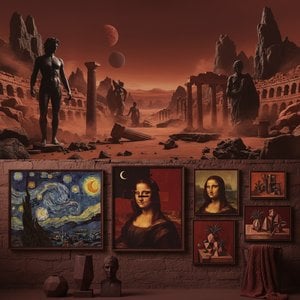
I 10 Dipinti Più Famosi Dominati dal Nero Mars: Arte e Decorazioni di Lusso
Esplora i 10 dipinti più iconici dominati dal nero Mars Black. Scopri la storia, gli artisti e il simbolismo di capolavori oscuri. Trova riproduzioni d'arte di lusso per decorare casa su .

I 10 Capolavori Più Famosi Dominati dal Nero Lampada: Arte e Decorazioni Raffinate
Esplora i 10 dipinti più iconici dominati dal nero lampada! Scopri la storia di Rembrandt, Caravaggio e altri maestri. Trova riproduzioni d'arte di alta qualità per decorare casa con stile su .