


 Előnézet
 Megosztás
 Megosztás
 Részletek

 Letöltés
 Hasonló alkotások
 X-ray felvétel
 Diavetítés
Stylites


 Tovább olvasom
Giclée / Műnyomat
Múzeumi minőségű giclée vagy vászonnyomat, gyors gyártással és rugalmas finomítási lehetőségekkel. ( Áttérés a kézzel festett másolatra Képváltás)




P118B $10

P118H $10

P118W $10

P438Z $10

P508JH $12

P508YH $12

P805H $10

P805Z $10

P919BZ $10

P919G $10

P919XJ $10

P959ZH $10

P968JZ $12

W106C $8

W218G $10

W218JH $8

W218Y $10

W307PJ $10

W316G $10

W316PJ $8

W316Y $10

W398PJ $8

W4111J $10

W500HY $15

W500JH $15

W692G $12

W849H $8

W940BG $15

W953PJ $8




Válasszon előre meghatározott méreteink közül, amelyek megfelelnek a műalkotás eredeti arányainak.

Megadhat saját méreteket is egy konkrét kerethez vagy helyszínhez igazítva. Amennyiben a kiválasztott méret nem egyezik az eredeti kép arányokkal, a műalkotást le fogjuk vágni, vagy kiegészítjük a képet tükrözött vagy egyszínű szélekkel. A gyártás megkezdése előtt egy digitális tervezetet küldünk jóváhagyásra.
Kérjük, vegye figyelembe, hogy a képernyőn látható előnézet nem tükrözi a tényleges levágást vagy kiegészítést. Csak a tervezet mutatja pontosan a végső kompozíciót.
Bár az egyedi méretek is elérhetőek, az eredeti arányok megőrzése érdekében azt javasoljuk, hogy válasszon a előre meghatározott listából származó méretet.
Világszerte történő kiszállítás területére 2 hét alatt, a szokásos 4-5 hét helyett. 10 augusztus

Ingyenes globális expressz szállítás

Prémium minőségű len vászon

Teljes szállítási biztosítás

Vámvisszatérítési Garancia

Tökéletes színpontosság garancia

60 napos visszaküldési lehetőség (csak gyártási hibák esetén)

100%-os pénzvisszatérítési garancia

Kedvezmény több termény esetén
 Az üvegkeretes opció csak 110 cm alatti méretben érhető el

Stylites
Giclée / Műnyomat
A reprodukció mérete
-


Összesített ár
$ 62
Termékinformációk
The Silent Sentinel – An Exploration of “Stylites” by Nicholas Roerich
Nicholas Roerich’s “Stylites,” painted in 1917, isn't merely a depiction of a solitary figure; it’s an invitation to contemplate the profound intersection of spirituality, isolation, and the enduring human quest for connection. This arresting image, rendered in a palette of evocative blues and purples – colors often associated with introspection and the ethereal – immediately draws the viewer into a scene both starkly simple and deeply resonant. The central figure, seated before a monumental rock formation that dominates the landscape, embodies a quiet dignity and an almost unnerving stillness. He’s not gazing outward, but inward, suggesting a journey of profound self-reflection.
Roerich's artistic lineage is complex and fascinating. Initially influenced by Russian Symbolism – a movement characterized by its exploration of the mystical and spiritual realms through art – he evolved into an artist deeply connected to Eastern philosophies, particularly Theosophy and Vedanta. This confluence of influences profoundly shaped his work, imbuing it with layers of symbolism and a sense of timelessness. “Stylites” exemplifies this evolution; the figure’s posture and the surrounding landscape evoke ancient ascetic traditions, hinting at a deliberate detachment from worldly concerns in pursuit of enlightenment.
The Pillar – A Symbol of Perseverance and Spiritual Ascent
The most striking element of the painting is undoubtedly the pillar itself. It's not simply a geological feature; it’s a potent symbol of endurance, sacrifice, and spiritual ascent. The legend of Simeon Stylites, the Syrian monk who spent nearly four decades standing atop a pillar in the desert, served as a powerful inspiration for Roerich. This historical figure became a metaphor within his work for those who choose to dedicate their lives to a singular pursuit – whether it be artistic creation, philosophical inquiry, or spiritual practice. The painting subtly references this legend, prompting us to consider what it means to commit oneself fully to a path of self-discipline and inner transformation.
Roerich’s technique is notable for its expressive brushwork and masterful use of color. He employs loose, gestural strokes that convey both the solidity of the rock formation and the ethereal quality of the figure's presence. The blues and purples are not applied uniformly; they shift and blend, creating a sense of depth and atmosphere. Notice how he uses light to sculpt the form of the pillar, suggesting its immense weight and the challenges it represents. The subtle details – the bird in flight, the trees – add layers of narrative without overwhelming the central theme.
Historical Context & Roerich’s Vision
“Stylites” was created during a period of tremendous upheaval in Russia—the aftermath of World War I and the tumultuous events surrounding the Bolshevik Revolution. Roerich, deeply concerned with preserving cultural heritage and promoting peace, saw art as a powerful tool for spiritual renewal. He believed that through artistic expression, one could transcend the limitations of the material world and connect with something larger than oneself. This conviction is evident in his work’s emphasis on symbolism, mythology, and the exploration of universal themes.
The painting's connection to Simeon Stylites reflects Roerich’s fascination with Eastern asceticism and its potential for spiritual growth. He saw in the monk’s solitary existence a model for those seeking to overcome ego and achieve enlightenment. Furthermore, Roerich was deeply interested in the Himalayas, viewing them as a sacred landscape imbued with ancient wisdom. “Stylites” can be interpreted as an attempt to capture the essence of this mystical realm – a place where the boundaries between the earthly and the divine blur.
A Timeless Reflection - The Emotional Resonance
Ultimately, "Stylites" is a profoundly moving work that invites contemplation. It’s not simply a portrait; it's an allegory of the human condition—a testament to the enduring power of faith, perseverance, and the search for meaning in a world often characterized by chaos and uncertainty. The painting’s quiet intensity and symbolic richness resonate with viewers on a deep emotional level, prompting us to reflect on our own journeys of self-discovery and the choices we make along the way. It serves as a reminder that even in solitude, there is an opportunity for profound connection – not just with others, but with something far greater than ourselves.


A művész életrajza
A Life Immersed in Art and Spirit
Nicholas Roerich, born October 9, 1874, in the vibrant cultural heart of Saint Petersburg, Russia, was a figure whose life transcended the boundaries of artistic expression. He wasn’t merely a painter; he was an archaeologist, a writer, a philosopher, and a tireless advocate for peace and cultural preservation. His upbringing, steeped in both intellectual rigor – his father was a notary public – and artistic appreciation thanks to his mother, laid the foundation for a remarkably multifaceted career. Roerich simultaneously pursued studies in law and art at St. Petersburg University and the Imperial Academy of Arts beginning in 1893, demonstrating an early commitment to a broad understanding of the world. This dual path wasn’t contradictory for him; rather, it reflected a belief that artistic vision needed grounding in historical context and intellectual discipline. He received his artist designation in 1897 and completed his law degree the following year, setting the stage for a life dedicated to both creative exploration and reasoned action.The Allure of Symbolism and Theatrical Innovation
Roerich’s artistic development was profoundly shaped by the currents of Russian Symbolism, a movement that sought to evoke emotional and spiritual depths through evocative imagery and suggestive forms. He quickly became involved with Sergei Diaghilev's influential “World of Art” society, eventually assuming its presidency from 1910 to 1916. This association proved pivotal, exposing him to a network of innovative artists, composers, and thinkers who were redefining the landscape of Russian art. His early work revealed a fascination with archaeology and stage design, leading to groundbreaking collaborations with Diaghilev’s Ballets Russes. Roerich's designs for productions like Alexander Borodin's *Prince Igor* (1909) and, most famously, Igor Stravinsky’s revolutionary *The Rite of Spring* (1913), were not simply backdrops; they were integral components of the theatrical experience. He blended meticulous historical research with a bold imaginative vision, creating visually stunning environments that amplified the emotional power of the music and choreography. These designs weren't merely decorative; they were attempts to evoke primordial forces and ancient rituals, reflecting the Symbolist interest in myth and spirituality. His work was also influenced by apocrypha and medieval sectarian writings like the Dove Book, adding layers of esoteric meaning to his artistic creations.A Journey Towards Mysticism and Himalayan Visions
As Roerich’s career progressed, his paintings underwent a significant transformation, increasingly embracing mystical and spiritual themes. This shift was fueled by his growing interest in Theosophy and Eastern religions, philosophies that emphasized the interconnectedness of all things and the pursuit of inner wisdom. His *Architectural Studies* series (1904–1905) showcased not only his architectural skill but also a deep commitment to preserving cultural heritage, foreshadowing his later advocacy for protecting art during times of conflict. Recurring motifs began to emerge in his work: majestic landscapes, ancient cities shrouded in mystery, and figures imbued with spiritual significance like St. Panteleimon and Kuan Yin. He embarked on extensive travels throughout Central Asia, conducting archaeological research and documenting ancient cultures, experiences that deeply informed his artistic vision and reinforced his belief in the importance of cultural understanding. The Himalayas became a central subject in his paintings, representing not just a geographical location but a realm of profound spiritual power and enlightenment.Key Works & Continuing Relevance
- Saint Nicholas: A detailed monochrome mural showcasing medieval art and heraldic symbolism.
- City: Evocative depictions of ancient urban landscapes, reflecting his archaeological interests.
- Lake of the Nagas: A tempera painting blending symbolism and nature, exemplifying his unique artistic vision.
A Pioneer of Cultural Preservation
Beyond his artistic achievements, Nicholas Roerich was a passionate advocate for the protection of cultural treasures. Recognizing the devastating impact of war on art and architecture, he dedicated much of his life to promoting international cooperation in safeguarding these invaluable legacies. He spearheaded the creation of the Roerich Pact in 1935 – an international treaty designed to prevent the destruction of cultural objects during armed conflicts. This initiative garnered him widespread recognition and numerous nominations for the Nobel Peace Prize, underscoring his profound humanitarianism and commitment to a world where culture is valued and protected. His tireless efforts stand as a testament to the belief that art and heritage are essential components of human civilization, deserving of our utmost care and respect.
Roerich, Nicholas
1874 - 1947 , Oroszország
Rövid tények
- Artistic Movement Or Style: Szimbolizmus, Spirituális művészet
- Artists Or Movements Influenced By This Artist: ['Orosz szimbolizmus']
- Artists Who Influenced This Artist:
- Diaghilev
- Stasov
- Date Of Birth: 1874. okt. 9.
- Date Of Death: 1947. dec. 13.
- Full Name: Nicholas Roerich
- Nationality: Orosz
- Notable Artworks:
- Szent Miklós
- Város
- Nagas-tavaszi tó
- Place Of Birth: Szentpétervár, Oroszország
Kapcsolódó cikkek

Gustave Moreau: Symbolism's Enigmatic Visionary & Precursors of Modern Fantasy Art
Explore the captivating world of Gustave Moreau, the leading Symbolist painter. Discover his iconic masterpieces, influences, and lasting legacy. Expert analysis for collectors & art enthusiasts.

Navigating Symbolism & Sentiment: A Comprehensive Exploration of Boats in Art History
Explore the rich history of boats in art! Discover symbolism & style from ancient myths to Impressionist masterpieces. Expert insights for collectors at ArtsDot.

Jan van Eyck: Innovation, Symbolism & the Dawn of Early Netherlandish Painting
Explore the revolutionary art of Jan van Eyck! Discover his groundbreaking oil painting techniques, hidden symbolism, and lasting impact on the Early Netherlandish Renaissance. A deep dive for art enthusiasts.

Cultivating Ambiance: A Curatorial Guide to Art Selection for Wine Cellars and Tasting Rooms – Enhancing Oenological Experience Through Landscape, Symbolism, and Interior Harmony
Elevate your wine cellar or tasting room with curated art! Expert guidance on landscape paintings, symbolism & lighting to enhance the oenological experience. Discover how art transforms spaces and tells your winery's story.
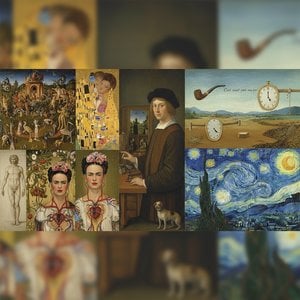
A szimbolizmus 10 mesterműve: Rejtélyek és jelentések a művészetben | ArtsDot.com
Fedezze fel a szimbolizmus 10 legikonikusabb műalkotását! Gustav Klimt, Edvard Munch és más mesterek rejtélyes világa. Vászonképek, reprodukciók – inspiráció otthonába. ArtsDot.com: minőségi művészet online!



