

- 92.0 x 79.0 cm


A kép az Ön választásai alapján készült: , .
A gyűjtemény leírása
Explore Marc Chagall's iconic "Clock with Blue Wing," a surrealist masterpiece symbolizing time and freedom. Discover its rich symbolism, artistic influences & poignant context within his personal life.
 Összes részlet megjelenítése
A művész életrajza
Marc Chagall ikonikus „Szórványos Szélószúró” című alkotása egy szürreális művészeti érték, mely felfedik az artista mélyebb tudatosságát és egyedi képességét a megszokott és fantasztiikus elemök ötvözésére. Mély színekkel és jelképekkel tarkított festmény!
Kézzel készített olajfestmény reprodukció
Kézzel festett olajvastú vászon, az Ön által választott méretben és keretben, művészeink készítik meglévőre. ( Váltás nyomtatványra Áttérés digitális képre)
Ez a műalkotás szerzői jogi védelem alatt áll
Az ezen az oldalon megjelenített műalkotások szerzői jogi védelem alatt állnak, ami azt jelenti, hogy törvényileg nem készíthetünk és nem adhatunk el belőlük pontos másolatokat. Ez a védelem olyan nemzetközi megállapodások alapján érvényesül, mint például a Berni Egyezmény és a nemzeti jogszabályok által, beleértve azokat is, amelyeket meghatározott Az USA szerzői jogi törvénye – 17. cím.
Mint tiszteletes és törvényes alternatívát, olyan egyedi, kézzel festett alkotásokat kínálunk, amelyek az eredetiből merítnek inspirációt. Tapasztalt és professzionális művészeink alaposan tanulmányozzák az eredeti stílusát, hangulatát és művészeti esszenciáját, hogy egy olyan új, egyedi alkotást hozzunk létre, amely ugyanazt az érzést kelti – miközben önálló, eredeti alkotásként létezik.
Ez a módszer teljes mértékben megfelel a szerzői jogi szabályozásnak, mivel nem tartalmazza a védett műalkotás másolását vagy duplikálását. Ehelyett ez egy kreatív újinterpretáció – egy új festmény, amely az eredetivel való összefüggései miatt hatással van rá, de nem az az.
Több információ erről a festményről
 Megtekintés
 Küldés
 Megosztás
 Részletek
 Útmutató

 Letöltés
 Hasonló darabok
 X-ray felvétel
 Diavetítés
 Kérdések és válaszok
 Statisztika
Rendelje meg festményét négy egyszerű lépésben
Ne siessen! Bármely választ módosítható; az rendelési összesítőben megjelenő ár minden egyes döntésre reagál.
1 Az első lépés négyből
Melyik méretet szeretné?
Ezek a méretek megőrzik az eredeti festmény arányait. A rajz bemutatja a választott méretet egy falon, egy kétszáz centiméteres kanapé felett.
Vagy adja meg a saját méreteit
Válasszon előre meghatározott méreteink közül, amelyek megfelelnek a műalkotás eredeti arányainak.

Írja be a kívánt szélességet és magasságot, hogy illeszkedjen a keretéhez vagy a falához. Mivel ez kézzel festett alkotás, egy eltérő formájú méret esetén a művész akár festhet is valamivel többet a kép körül, vagy korolathat is belőle — az Ön döntésének megfelelően. A festés megkezdése előtt küldünk egy digitális tervezetet jóváhagyásra. Az oldalon látható kép nem tartalmazza a végeredményt — csak a tervezet mutatja meg a valódi eredményt.
2 A négy lépésből a második
Hogyan kívánja előkészíteni: feltekercselve, vászonra feszítve vagy keretezve?
Az alábbi árak az első lépésben választott méretre vonatkoznak.
Válaszd ki a feszített vászon széleit
Válassza ki a keretet

Fehér Ft1

Elmosódott szélek Ft1

Kiterjesztett Ft1

P118B Ft10

P118H Ft10

P118W Ft10

P438Z Ft10

P508JH Ft12

P508YH Ft12

P805H Ft10

P805Z Ft10

P919BZ Ft10

P919G Ft10

P919XJ Ft10

P959ZH Ft10

P968JZ Ft12

W106C Ft8

W218G Ft10

W218JH Ft8

W218Y Ft10

W307PJ Ft10

W316G Ft10

W316PJ Ft8

W316Y Ft10

W398PJ Ft8

W4111J Ft10

W500HY Ft15

W500JH Ft15

W692G Ft12

W849H Ft8

W940BG Ft15

W953PJ Ft8

H24-GOLD Ft30

H24-SILVER Ft30

H36-GOLD Ft45

H36-SILVER Ft45
Keretezett
Keretprofil: . A kerettel együtt vett teljes méret: .
3 A négy lépésből a harmadik
Szeretne változtatni valamit a festményen?
A legtöbb ember nemet mond erre. Mivel minden festmény kézzel készül, művészünk képes az Ön igényei szerint is átalakítani azt.
A megrendelést követően a ArtsDot.com csapat e-mailt küld a vásárlónak az instrukciókkal, és biztosítja a tervezeti előnézetet
4 A négy lépés közül a negyedik
Néhány felületfinisz
Mindegyik opcionális. A már kiválasztott válaszok nem jelentnek plusz költséget.
Ki festette?
Világszerte elérhető szállítás () 3-4 hét alatt a szokásos 5 hét helyett. (5 november). A minőség nem kérdőjelezhető.
Egy felirat, mint egy múzeumban?
A gravírozott bronztábla részletei
This elegant plaque features the artist's name and the title of the artwork, finely engraved for a timeless presentation.
It is made from bronze with a refined, elegant finish. The text is precisely laser-engraved for a sharp and permanent result. Measuring 9x2 cm, the plaque is compact yet easy to read. It's built to be durable and scratch-resistant, offering a professional, museum-quality look. Mounting is simple thanks to the included adhesive backing.
Átlátszó akril tábla részletei
The plaque includes essential engraved details such as the artist's name, the title of the artwork, the date it was created, the type of media used-like oil on canvas or watercolor-a brief description of the piece, and a QR code that links to the complete artwork information.
It is crafted from clear acrylic, offering a sleek, modern appearance. The text is UV-engraved in black to ensure strong visual contrast. With a size of 10x15 cm, it ensures optimal readability. It comes equipped with two metal hooks for secure wall mounting. The plaque is designed to be weather-resistant, making it suitable for various environments, and it includes interactive features that work seamlessly with smartphone scanning.
Fekete akril tábla részletei
This elegant plaque includes engraved information such as the artist's name, the title of the artwork, the date it was created, the type of media used (like oil on canvas or watercolor), a short description of the artwork, and a QR code for quick access to more information.
The plaque itself is made from refined black acrylic with a premium finish. The text is laser-engraved in white for high contrast and readability. Its size is 10x15 cm, designed to be easy to read. It comes with two metal hooks for professional mounting. The design is sleek and fits any interior style. It is also weather-resistant and durable, with built-in digital integration for mobile compatibility.
Egy védőréteg?
Mikor lenne szüksége rá?
✓ Ellenőrizés és rendelés
Az Ön által megrendelt festmény

Clock with Blue Wing
Reprodukciós technika
Reprodukció mérete
-

Kiváló mesterművész
Nagyobb részletesség, finomság és bővített gyártási idő
-

Reprodukció keretezése
-
-
A bármely oldalsó méretét túlszálaló 105 cm (kb. 41 hüvelyk) meghaladó műalkotások vagy reprodukciók esetében a keret összeszerelhető készletként, szétszerelve kerül szállításra. Ez a módszer biztosítja a biztonságos szállítást, és megakadályozza a szállítás során fellépő sérüléseket.
Szakmész összeszerelést igényel – ez nem DIY (önösszeszerelhető) termék.
A készletet egy tapasztalt keretező szakembernek kell összeszerelnie és a vásznat feszítenie kell, fa ragasztó (nem tartalmazza a csomag), vásznfeszítő fogó és szorítók használatával, amelyek a ragasztó száradásáig a keretrészeket egymáshoz vuôngjba tartják. A helytelen összeszerelés vagy a nem egyenletes vásznfeszítés maradandó károsíthatja a műalkotást, és ez nem része a garanciánknak.
 A bármely oldalsó méretét túlszálaló 105 cm (kb. 41 hüvelyk) meghaladó műalkotások vagy reprodukciók esetében a keret összeszerelhető készletként, szétszerelve kerül szállításra. Ez a módszer biztosítja a biztonságos szállítást, és megakadályozza a szállítás során fellépő sérüléseket.
A készlet tartalmazza az összes tömörfa rudat, pontosan méretre vágva.
A mellékelt csavarokkal, valamint a sarokszerekhez szükséges faütő ragasztóval kell összeszerelnie (ez nem tartalmazható a csomagban), így a keretrendezőnek külön kell beszereznie.
A csomag nem tartalmazza a szükséges professzionális eszközöket: egy vászonfeszítőt és klipseket a rácsok vízszintes tartásához a ragasztó megszáradásáig.
Fontos:
A sarokcsatlakozásokhoz fánylagra van szükség, a keretrudakat szorítókapcsokkal kell rögzíteni, amíg a rag teljesen meg nem szárad, a kész keretre feszített vászonhoz pedig vászonfeszítő fogat szükséges. Ezek egyike sem található meg a készletben. Kérjük, rendelés előtt győződjön meg róla, hogy rendelkezik tapasztalt keretező szakemberrel.

Névtábla
-
-

Védőréteg (Lakk)
Fényes lakk (intenzívabb színek, védelem a fény és a nedvesség hatása ellen)
-

Műalkotásom egyedi igényre szabása
Példák a módosíthatóságra: az arc kicserélése az ügyfél fotójára; háziállat hozzáadása (pl. macska helyett kutya); rejtett üzenet elhelyezése a háttérben; a háttér tájainak vagy elemeinek megváltoztatása.
-

Sürgős
Világszerte szóló szállítás () mindössze 3-4 hét alatt, a szokásos 5 hét helyett. (5 november). A minőség nem kérdőjelezhető.
-
Express szállítás
Világszerte elérhető szállítás területre 5 héten belül. (12 november).
A szállítás díja tartalmazza
Összesített ár
Ft 86019
Az üvegkeretes opció csak 110 cm alatti méretben érhető el
Minden rendelés mellé tartalmazva
- Ingyenes globális expressz szállítás
- Prémium minőségű len vászon
- Teljes körű szállítási biztosítás
- Vámvisszatérítési Garancia
- Hiteles színarányosság garancia
- 100 napos visszaküldési lehetőség (csak hibás termékek esetén)
- 100% pénzvisszatérítési garancia
- Több darab vásárlásakor kedvezmény


Clock With Blue Wing – A Surrealist Meditation on Time and Memory
Marc Chagall’s “Clock With Blue Wing,” completed in 1949, stands as a cornerstone of his surrealist oeuvre—a luminous testament to the artist's ability to distill profound philosophical concepts into deceptively simple visual forms. Measuring 92 x 79 cm, this oil on canvas painting transcends mere depiction; it invites contemplation and interpretation, mirroring Chagall’s own preoccupation with themes of mortality, joy, and the elusive nature of recollection. The artwork’s genesis lies in the aftermath of Bella Rosenfeld's untimely death, a grief that permeated Chagall’s artistic endeavors during this period—a palpable echo of personal sorrow interwoven into the fabric of his creative vision.Symbolism: A Dialogue Between Eternity and Fleeting Moments
At first glance, “Clock With Blue Wing” presents a straightforward image: a clock face dominating the composition, punctuated by a solitary blue wing perched upon its surface. However, this apparent simplicity belies a complex tapestry of symbolism meticulously crafted by Chagall. The clock itself—a ubiquitous emblem of time’s relentless march—represents the inescapable reality of existence and the inevitability of decay. Yet, juxtaposed against it is the vibrant blue wing, instantly recognizable as a reference to Saint Mark's Clocktower in Venice – an architectural marvel symbolizing Venetian wealth and glory. More importantly, the wing embodies freedom, aspiration, and the enduring spirit of Bella Rosenfeld—a poignant reminder of cherished memories and the desire for transcendence. The rooster, positioned prominently on the right side of the canvas, further reinforces this duality, representing vigilance and rebirth amidst the stillness of time.Artistic Style: Surrealist Fusion – Reality Rendered Dreamlike
Chagall’s stylistic approach in “Clock With Blue Wing” exemplifies the core tenets of surrealism—a movement born from Dada's rejection of rational thought and fueled by Freudian psychoanalysis. He achieves this distinctive aesthetic through a masterful blend of realistic detail and fantastical imagination, mirroring the influence of Cubism and Fauvism. The artist’s use of color is particularly striking: hues are applied with bold confidence, creating an atmosphere of luminous vibrancy that defies conventional representation. Thick impasto—a technique characterized by textured brushstrokes—adds physicality to the canvas, conveying a sense of immediacy and emotional intensity. Chagall's meticulous attention to composition—the careful arrangement of figures and objects within the frame—further enhances the painting’s impact, guiding the viewer’s gaze and fostering contemplation.Historical Context: Grief and Remembrance Amidst Wartime Uncertainty
Painted in 1949, “Clock With Blue Wing” emerged during a period of profound upheaval – the immediate aftermath of World War II and the looming shadow of Soviet occupation. Chagall's personal life was marked by immense sorrow following Bella Rosenfeld’s death—a grief that profoundly shaped his artistic output. The painting serves as an emotional distillation of this experience, reflecting Chagall’s yearning for solace amidst loss and his determination to honor Bella’s memory through art. Furthermore, the inclusion of a snow-covered house in the background evokes images of Vitebsk – Chagall's birthplace—a place imbued with nostalgia and representing the artist’s connection to his roots. The painting is not merely an aesthetic achievement; it is a deeply felt expression of human emotion—a testament to Chagall’s enduring ability to transform personal grief into universal contemplation.Emotional Impact: A Window Into Chagall's Soul
“Clock With Blue Wing” resonates with viewers on an emotional level, inviting them to engage in a dialogue with Chagall’s inner world. The painting’s dreamlike imagery—the juxtaposition of familiar elements rendered in fantastical hues—captures the essence of surrealist art: its capacity to unsettle expectations and provoke introspection. It speaks to the human condition—to our awareness of mortality, our longing for beauty, and our desire to recapture moments of joy. Ultimately, “Clock With Blue Wing” remains a powerful reminder that art can transcend mere representation, achieving instead an enduring connection with the viewer’s soul—a timeless masterpiece embodying Chagall's profound artistic vision.Kérdések és válaszok
Milyen más neveken ismert Marc Chagall?
Marc Chagall más néven is ismert: Moise Zaharovics Sagalov, Moishe Segal, Марк Захарович Шагал, Мойше Хацкелевич Сегалов.
Mikor készült a(z) „Clock with Blue Wing”, Marc Chagall alkotása?
A "Clock with Blue Wing" 1949-ban készült. Ez az időpont meghatározó jelentőséggel bír Marc Chagall pályájában és az adott korszak kontextusában is.
Hogyan tölthetem le a(z) „Clock with Blue Wing”, Marc Chagall alkotása képét?
A „Clock with Blue Wing”, Marc Chagall alkotása képe letölthető a mű Letöltés oldaláról: magas felbontású digitális kép letöltése.
Hasonló műalkotások


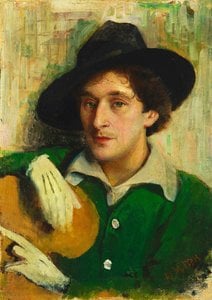
Marc Chagall
1887 - 1985, Білорусь
A művész életrajza
A Life Painted in Dreams: The World of Marc Chagall
Marc Chagall, born Moishe Shagal in 1887 in the small Belarussian town of Liozna near Vitebsk, wasn’t merely a painter; he was a poet of color, a weaver of dreams, and a chronicler of memory. His life, spanning nearly a century, mirrored the tumultuous currents of the 20th century, yet his art remained steadfastly rooted in a deeply personal vision—one infused with the folklore of his Hasidic Jewish upbringing and an unwavering belief in the power of imagination. Vitebsk itself was more than just a birthplace; it became the emotional core of his artistic universe, a recurring motif populated by flying figures, whimsical animals, and the vibrant hues of remembered landscapes. The town’s unique blend of cultures—Russian Orthodox churches alongside bustling Jewish marketplaces—forged an aesthetic sensibility that would defy easy categorization throughout his long career. Though he sought formal training first with a local sign painter and later in St. Petersburg under Léon Bakst, and then in Paris at the Académie de la Grande Chaumière, Chagall never fully embraced any single artistic movement. He absorbed elements of Cubism, Symbolism, and Fauvism, but always filtered them through his own intensely personal lens, creating a style that was uniquely, unmistakably Chagall.Early Years and Artistic Beginnings
Chagall’s formative years were marked by hardship and displacement. Born into a family of impoverished Jewish artisans, he experienced the trauma of pogroms—violent anti-Jewish riots—which instilled in him a lifelong preoccupation with themes of persecution and resilience. Despite these challenges, Chagall possessed an innate talent for drawing and painting from a young age. He initially studied at Vitebsk Art School, where he honed his skills under Léon Bakst, a prominent figure in the Ballets Russes avant-garde movement. This exposure to theatrical art profoundly influenced his visual language, fostering a fascination with dynamism and expressive gesture. However, Chagall’s artistic ambitions extended beyond the confines of academic training; he sought inspiration from folk traditions—particularly Jewish folklore—which would become central to his artistic vision. His early canvases already hinted at the distinctive style that would define his career: bold color palettes, flattened perspectives, and fantastical imagery—elements that defied conventional realism.The Symbolism of Vitebsk
Vitebsk remained an indelible presence in Chagall’s imagination throughout his life. The town served as a constant source of inspiration for his paintings, appearing repeatedly in works such as I and the Village (1911) and *Over Vitebsk* (1920-1922). These canvases aren't merely depictions of place; they are explorations of identity, memory, and the relationship between the individual and community. The village isn’t rendered realistically but as a fragmented collection of recollections, imbued with symbolic meaning. Houses tumble upside down, figures float in midair, and animals mingle seamlessly—creating an otherworldly atmosphere that captures the essence of Vitebsk's cultural landscape. Chagall’s use of color was particularly striking during this period. He employed vibrant hues—blues, yellows, reds—to convey emotion rather than literal representation, reflecting the spiritual fervor of his Jewish upbringing. This stylistic approach wasn’t accidental; it stemmed from a desire to move beyond mere imitation of reality and capture the essence of feeling, the weight of memory, and the power of folklore.The Influence of Cubism and Surrealism
While Chagall rejected strict adherence to any single artistic movement, he absorbed influences from Cubism and Surrealism—particularly from Pablo Picasso and André Breton. He experimented with fragmented perspectives and geometric forms, as seen in works like *The Chapel of Saint Helena* (1927), adapting cubist techniques to express his inner vision. Simultaneously, Chagall embraced the dreamlike logic of Surrealism, incorporating fantastical imagery and irrational juxtapositions into his canvases. This fusion of styles resulted in a distinctive visual language characterized by lyrical abstraction—a hallmark of his artistic oeuvre. He sought inspiration from biblical narratives and Jewish mysticism, translating these themes into emotionally charged paintings that explored profound questions about faith, suffering, and redemption.Major Achievements and Legacy
Throughout his prolific career, Chagall achieved international acclaim for his monumental canvases and innovative stained glass windows. His masterpiece, *White Crucifixion* (1937), stands as a poignant meditation on the horrors of Nazism and Jewish persecution—a testament to his artistic courage and moral conviction. He continued to produce works during World War II, reflecting the anxieties and uncertainties of the time. Following the war, Chagall emigrated to New York City, where he established himself as one of America’s leading artists. His paintings from this period explored themes of exile and displacement, capturing the spirit of a generation grappling with trauma and loss. He received numerous prestigious commissions, including the ceiling of the Paris Opera (1964), a breathtaking explosion of color and form that celebrated musical masterpieces. And his stunning stained glass windows for the Hadassah Hebrew University Medical Center synagogue in Jerusalem—a project undertaken in collaboration with Anatoly Yankilevich—transformed sacred space into an immersive experience of light and color. Marc Chagall’s legacy extends beyond his artistic creations; it resides in the enduring power of his vision—a vision that celebrates love, memory, and the boundless possibilities of the human imagination. He left behind a body of work that is both deeply personal and universally accessible, inviting viewers to lose themselves in a world painted with dreams and illuminated by hope. His art continues to inspire, challenge, and move us, ensuring that his vibrant and imaginative spirit will live on for generations to come.


Kapcsolódó cikkek
The Allure of Azure: Exploring the Symbolic & Aesthetic Depths of Blue in Art History
Explore the rich history of blue in art! Discover its symbolism, from ancient pigments to modern masterpieces by Kandinsky & Seurat. Uncover the psychological impact and cultural meanings behind this captivating hue.

A kék árnyalatai: 10 ikonikus festmény a Slate Blue szín jegyében | ArtsDot.com
Fedezze fel a 10 legikonikusabb festményt, melyeket a Slate Blue szín ural! Monet, Renoir és más mesterek művei inspirálnak. Vászonképek eladás, otthon dekoráció tippek a ArtsDot.com-on. Explore the full collection online!

A Német Expresszionizmus 10 Mesterműve: Érzelmek és Forradalom a Falakon
Fedezze fel a Német Expresszionizmus 10 legikonikusabb műalkotását! Kirchner, Munch és más német mesterek érzelmi festményeinek történetét bemutatva. Vászonképek, faliképek otthonába – ArtsDot.com kínálata.