

- 61.0 x 74.0 cm


A kép az Ön választásai alapján készült: , .
A gyűjtemény leírása
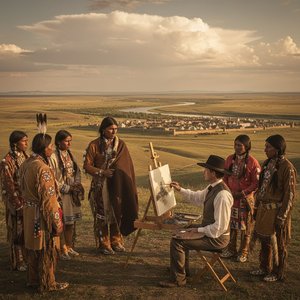
A vibrant gathering of Native American people around a large teepee captures the spirit of 1837 in this George Catlin masterpiece, inviting you to bring this historic frontier scene into your private collection.
 Összes részlet megjelenítése
A művész életrajza
Fedezd fel George Catlin egyedi művészetét! A távoli nyugaton élő őslakosok életének, kultúrájának dokumentálása a 19. században. Kiemelkedő portrék és tájképfestések a vadon élő népekről!
Kézzel készített olajfestmény reprodukció
Kézzel festett olajvastú vászon, az Ön által választott méretben és keretben, művészeink készítik meglévőre. ( Váltás nyomtatványra Áttérés digitális képre)
Több információ erről a festményről
 Megtekintés
 Küldés
 Megosztás
 Részletek
 Útmutató

 Letöltés
 Hasonló darabok
 X-ray felvétel
 Diavetítés
 Kérdések és válaszok
 Statisztika
Rendelje meg festményét négy egyszerű lépésben
Ne siessen! Bármely választ módosítható; az rendelési összesítőben megjelenő ár minden egyes döntésre reagál.
1 Az első lépés négyből
Melyik méretet szeretné?
Ezek a méretek megőrzik az eredeti festmény arányait. A rajz bemutatja a választott méretet egy falon, egy kétszáz centiméteres kanapé felett.
Vagy adja meg a saját méreteit
Válasszon előre meghatározott méreteink közül, amelyek megfelelnek a műalkotás eredeti arányainak.

Írja be a kívánt szélességet és magasságot, hogy illeszkedjen a keretéhez vagy a falához. Mivel ez kézzel festett alkotás, egy eltérő formájú méret esetén a művész akár festhet is valamivel többet a kép körül, vagy korolathat is belőle — az Ön döntésének megfelelően. A festés megkezdése előtt küldünk egy digitális tervezetet jóváhagyásra. Az oldalon látható kép nem tartalmazza a végeredményt — csak a tervezet mutatja meg a valódi eredményt.
2 A négy lépésből a második
Hogyan kívánja előkészíteni: feltekercselve, vászonra feszítve vagy keretezve?
Az alábbi árak az első lépésben választott méretre vonatkoznak.
Válaszd ki a feszített vászon széleit
Válassza ki a keretet

Fehér Ft1

Elmosódott szélek Ft1

Kiterjesztett Ft1

P118B Ft10

P118H Ft10

P118W Ft10

P438Z Ft10

P508JH Ft12

P508YH Ft12

P805H Ft10

P805Z Ft10

P919BZ Ft10

P919G Ft10

P919XJ Ft10

P959ZH Ft10

P968JZ Ft12

W106C Ft8

W218G Ft10

W218JH Ft8

W218Y Ft10

W307PJ Ft10

W316G Ft10

W316PJ Ft8

W316Y Ft10

W398PJ Ft8

W4111J Ft10

W500HY Ft15

W500JH Ft15

W692G Ft12

W849H Ft8

W940BG Ft15

W953PJ Ft8

H24-GOLD Ft30

H24-SILVER Ft30

H36-GOLD Ft45

H36-SILVER Ft45
Keretezett
Keretprofil: . A kerettel együtt vett teljes méret: .
3 A négy lépésből a harmadik
Szeretne változtatni valamit a festményen?
A legtöbb ember nemet mond erre. Mivel minden festmény kézzel készül, művészünk képes az Ön igényei szerint is átalakítani azt.
A megrendelést követően a ArtsDot.com csapat e-mailt küld a vásárlónak az instrukciókkal, és biztosítja a tervezeti előnézetet
4 A négy lépés közül a negyedik
Néhány felületfinisz
Mindegyik opcionális. A már kiválasztott válaszok nem jelentnek plusz költséget.
Ki festette?
Világszerte elérhető szállítás () 3-4 hét alatt a szokásos 5 hét helyett. (3 november). A minőség nem kérdőjelezhető.
Egy felirat, mint egy múzeumban?
A gravírozott bronztábla részletei
This elegant plaque features the artist's name and the title of the artwork, finely engraved for a timeless presentation.
It is made from bronze with a refined, elegant finish. The text is precisely laser-engraved for a sharp and permanent result. Measuring 9x2 cm, the plaque is compact yet easy to read. It's built to be durable and scratch-resistant, offering a professional, museum-quality look. Mounting is simple thanks to the included adhesive backing.
Átlátszó akril tábla részletei
The plaque includes essential engraved details such as the artist's name, the title of the artwork, the date it was created, the type of media used-like oil on canvas or watercolor-a brief description of the piece, and a QR code that links to the complete artwork information.
It is crafted from clear acrylic, offering a sleek, modern appearance. The text is UV-engraved in black to ensure strong visual contrast. With a size of 10x15 cm, it ensures optimal readability. It comes equipped with two metal hooks for secure wall mounting. The plaque is designed to be weather-resistant, making it suitable for various environments, and it includes interactive features that work seamlessly with smartphone scanning.
Fekete akril tábla részletei
This elegant plaque includes engraved information such as the artist's name, the title of the artwork, the date it was created, the type of media used (like oil on canvas or watercolor), a short description of the artwork, and a QR code for quick access to more information.
The plaque itself is made from refined black acrylic with a premium finish. The text is laser-engraved in white for high contrast and readability. Its size is 10x15 cm, designed to be easy to read. It comes with two metal hooks for professional mounting. The design is sleek and fits any interior style. It is also weather-resistant and durable, with built-in digital integration for mobile compatibility.
Egy védőréteg?
Mikor lenne szüksége rá?
✓ Ellenőrizés és rendelés
Az Ön által megrendelt festmény

Sioux Dog Feast
Reprodukciós technika
Reprodukció mérete
-

Kiváló mesterművész
Nagyobb részletesség, finomság és bővített gyártási idő
-

Reprodukció keretezése
-
-
A bármely oldalsó méretét túlszálaló 105 cm (kb. 41 hüvelyk) meghaladó műalkotások vagy reprodukciók esetében a keret összeszerelhető készletként, szétszerelve kerül szállításra. Ez a módszer biztosítja a biztonságos szállítást, és megakadályozza a szállítás során fellépő sérüléseket.
Szakmész összeszerelést igényel – ez nem DIY (önösszeszerelhető) termék.
A készletet egy tapasztalt keretező szakembernek kell összeszerelnie és a vásznat feszítenie kell, fa ragasztó (nem tartalmazza a csomag), vásznfeszítő fogó és szorítók használatával, amelyek a ragasztó száradásáig a keretrészeket egymáshoz vuôngjba tartják. A helytelen összeszerelés vagy a nem egyenletes vásznfeszítés maradandó károsíthatja a műalkotást, és ez nem része a garanciánknak.
 A bármely oldalsó méretét túlszálaló 105 cm (kb. 41 hüvelyk) meghaladó műalkotások vagy reprodukciók esetében a keret összeszerelhető készletként, szétszerelve kerül szállításra. Ez a módszer biztosítja a biztonságos szállítást, és megakadályozza a szállítás során fellépő sérüléseket.
A készlet tartalmazza az összes tömörfa rudat, pontosan méretre vágva.
A mellékelt csavarokkal, valamint a sarokszerekhez szükséges faütő ragasztóval kell összeszerelnie (ez nem tartalmazható a csomagban), így a keretrendezőnek külön kell beszereznie.
A csomag nem tartalmazza a szükséges professzionális eszközöket: egy vászonfeszítőt és klipseket a rácsok vízszintes tartásához a ragasztó megszáradásáig.
Fontos:
A sarokcsatlakozásokhoz fánylagra van szükség, a keretrudakat szorítókapcsokkal kell rögzíteni, amíg a rag teljesen meg nem szárad, a kész keretre feszített vászonhoz pedig vászonfeszítő fogat szükséges. Ezek egyike sem található meg a készletben. Kérjük, rendelés előtt győződjön meg róla, hogy rendelkezik tapasztalt keretező szakemberrel.

Névtábla
-
-

Védőréteg (Lakk)
Fényes lakk (intenzívabb színek, védelem a fény és a nedvesség hatása ellen)
-

Műalkotásom egyedi igényre szabása
Példák a módosíthatóságra: az arc kicserélése az ügyfél fotójára; háziállat hozzáadása (pl. macska helyett kutya); rejtett üzenet elhelyezése a háttérben; a háttér tájainak vagy elemeinek megváltoztatása.
-

Sürgős
Világszerte szóló szállítás () mindössze 3-4 hét alatt, a szokásos 5 hét helyett. (3 november). A minőség nem kérdőjelezhető.
-
Express szállítás
Világszerte elérhető szállítás területre 5 héten belül. (10 november).
A szállítás díja tartalmazza
Összesített ár
Ft 86168
Az üvegkeretes opció csak 110 cm alatti méretben érhető el
Minden rendelés mellé tartalmazva
- Ingyenes globális expressz szállítás
- Prémium minőségű len vászon
- Teljes körű szállítási biztosítás
- Vámvisszatérítési Garancia
- Hiteles színarányosság garancia
- 100 napos visszaküldési lehetőség (csak hibás termékek esetén)
- 100% pénzvisszatérítési garancia
- Több darab vásárlásakor kedvezmény


A Window into a Vanishing World
In the evocative masterpiece Sioux Dog Feast, painted in 1837, the legendary American artist George Catlin invites us to step through a portal of time. This captivating work serves as more than just a landscape; it is a profound ethnographic window into the heart of the Great Plains during a pivotal era of North American history. The scene unfolds around a majestic, towering teepee that dominates the composition, its sturdy poles reaching toward the sky like sentinels of tradition. Within this wilderness setting, Catlin masterfully captures a moment of communal life, where the Native American people are gathered in what feels like a sacred celebration or a vital social ritual. The presence of birds fluttering through the air and a faithful dog resting in the foreground breathes an organic, pulsing vitality into the canvas, suggesting a world where humanity and nature exist in a delicate, rhythmic harmony.
The artistry of George Catlin is defined by his unique ability to blend meticulous documentation with a romantic, almost cinematic sensibility. As a painter who abandoned the law to document the "vanishing" cultures of the West, Catlin employs a technique that emphasizes both the structural grandeur of the encampment and the intimate details of the figures within it. The brushwork, while grounded in the realism required for historical record, possesses an atmospheric quality that captures the shifting light and the rugged textures of the frontier. For the discerning collector or interior designer, this piece offers a rich tapestry of earth tones and naturalistic hues that can anchor a room with a sense of history and groundedness. The composition’s balance—the heavy, central presence of the teepee contrasted by the scattered, lively movement of the people—creates a visual rhythm that is both soothing and intellectually stimulating.
Beyond its aesthetic allure, Sioux Dog Feast carries a deep emotional resonance and historical weight. To gaze upon this painting is to confront the bittersweet beauty of a way of life that Catlin himself feared was slipping into the shadows of history. Every element, from the positioning of the individuals to the quiet companionship of the animals, symbolizes the strength of community and the resilience of culture amidst a changing landscape. For those seeking to adorn their spaces with art that tells a story, this reproduction offers an unparalleled opportunity to possess a fragment of American heritage. It is a piece that does not merely decorate a wall; it provokes conversation, inspires reflection on the passage of time, and brings the untamed spirit of the 19th-century frontier into the modern home.
Kérdések és válaszok
Elérhető diaporáma a(z) „Sioux Dog Feast”, George Catlin alkotása alkotáshoz?
A „Sioux Dog Feast”, George Catlin alkotása diaporámaként tekinthető a mű Diaváltás oldalán.
Hány éves volt George Catlin, amikor megalkotta a "Sioux Dog Feast" című alkotást?
George Catlin 41 éves volt, amikor 1837 évben megalkotta a "Sioux Dog Feast" alkotást. A korúsítás az alkotó születési évéből, 1796 fel основании került kiszámítva.
Milyen méretben és milyen elrendezésben javasolt a(z) "Sioux Dog Feast" kinyomtatása?
A "Sioux Dog Feast" esetében a javasolt nyomtatási beállítás a Medium méret és a Landscape orientáció.
Hasonló műalkotások


George Catlin
1796 - 1872, Egyesült Államok
A művész életrajza
Early Life and the Call of the Frontier
George Catlin, born in Wilkes-Barre, Pennsylvania, in 1796, was destined for a life profoundly shaped by the frontier—a world both alluringly romantic and relentlessly dangerous. His childhood wasn’t one of quiet refinement but rather steeped in tales spun by his mother, Polly Sutton, a woman who herself bore the indelible mark of an Indian raid, vividly recounting her harrowing capture and eventual escape. These stories ignited within young Catlin a deep fascination with the West—a land perceived as simultaneously forbidding and brimming with an untamed beauty he felt compelled to understand and preserve. Initially pursuing a career in law, he found himself drawn not to the courtroom but to the act of capturing fleeting moments and enduring traditions. After only two years, recognizing this inner calling, he abandoned legal practice, driven by an artistic impulse and a growing conviction that the unique cultures of Native American tribes were rapidly disappearing, demanding meticulous documentation for posterity. This wasn’t merely a pursuit of aesthetic appreciation; it was a sense of urgency—a premonition that westward expansion would irrevocably alter these vibrant societies. His early work began with engravings depicting scenes along the Erie Canal, showcasing his developing technical skill and an eye for detail – qualities that would later become hallmarks of his ambitious projects. These initial endeavors served as a crucial foundation, honing his observational abilities and solidifying his commitment to visual storytelling as a means of preserving a vanishing world.Documenting a Vanishing World: The Indian Gallery
Catlin’s most enduring legacy is undoubtedly “The Indian Gallery,” an extraordinary collection comprising over 500 paintings dedicated to portraying the lives, customs, and spiritual beliefs of Native American tribes across North America. Beginning in the 1830s, he embarked on five extensive expeditions into the vast territories of the American West—ascending the Missouri River and venturing deep into lands inhabited by diverse tribes such as the Mandan, Sioux, Blackfeet, and Choctaw. Crucially, Catlin didn’t simply observe from a detached perspective; he immersed himself within these communities, participating in ceremonies, witnessing daily life, and forging genuine relationships with tribal leaders. His paintings are not merely portraits but vibrant windows into a world on the brink of transformation. Consider *Sham Fight, Mandan Boys* (1832-1833), a dynamic depiction of a playful mock battle among young Mandan warriors—a scene brimming with youthful energy and cultural significance. Similarly, *Medicine Buffalo of the Sioux* (1839) captures the dignity and power of a prominent Sioux leader, conveying not just his physical presence but also his spiritual authority. Catlin’s meticulous attention to detail extends beyond mere likeness; he often incorporates elaborate backgrounds—landscapes, tipis, ceremonial objects—that provide crucial context for understanding his subjects and their environments. His work stands as a testament to his belief that accurate representation was essential to preventing the misrepresentation and ultimately, the erasure of Native American cultures.The Journey West: Challenges and Artistic Evolution
Catlin’s expeditions were far from easy. He faced immense logistical challenges—navigating treacherous rivers, enduring harsh weather conditions, and overcoming the skepticism and sometimes hostility of settlers and government officials. Financially, he struggled throughout his career, often relying on the sale of prints and paintings to support himself and his family. Despite these difficulties, Catlin remained steadfast in his commitment to documenting Native American life. He meticulously recorded his observations in a series of detailed letters and books, including *Letters and Notes on the Manners, Customs, and Conditions of North American Indians* (1841) and *Last Rambles Amongst the Indians of the Rocky Mountains and the Andes* (1868). These writings provided invaluable insights into tribal customs, social structures, religious beliefs, and artistic traditions—information that would have been lost to history without his dedicated efforts. His style evolved over time, moving from more literal engravings to increasingly expressive oil paintings. He experimented with color and composition, striving to capture not just the outward appearance of his subjects but also their inner spirit and connection to the land.Recognition and Legacy
Despite facing considerable resistance and a lack of widespread recognition during his lifetime, Catlin’s work eventually gained acclaim in Europe, particularly in London and Paris, where exhibitions of “The Indian Gallery” drew large audiences and sparked significant interest in Native American cultures. His paintings were lauded for their realism, emotional depth, and the way they challenged prevailing stereotypes. However, financial difficulties persisted, leading to a period of hardship and ultimately, the loss of his collection to creditors. In later years, he attempted to recreate over 400 of his most important paintings in a smaller “cartoon collection,” hoping to recoup some of his losses, but this effort proved largely unsuccessful. George Catlin died in 1872, leaving behind a remarkable body of work that continues to be studied and appreciated today. His legacy extends beyond the artistic realm—he is remembered as a passionate advocate for Native American rights and a pioneer in documenting a culture on the brink of extinction. His paintings serve as powerful reminders of the importance of cultural preservation and the need to challenge biased perspectives about indigenous peoples, ensuring that their stories are not forgotten.Key Works
- Sham Fight, Mandan Boys (1832-1833): A lively depiction of a playful mock battle among young Mandan warriors.
- Mrs. George Catlin (Clara Bartlett Gregory) (1850): A portrait showcasing the artist’s wife, offering insight into his personal life.
- Pipestone Quarry, Coteau Des Prairies (1848): Illustrates a sacred site for many tribes and their spiritual connection to the land.
- Medicine Buffalo of the Sioux (1839): A striking portrait capturing the dignity and power of a prominent Sioux leader.
- Prairie Meadows Burning (1832): Depicts a dramatic scene of controlled burning, highlighting the relationship between Native Americans and their environment.
- Little Wolf, A Famos Warrior (1844): A powerful portrait of a Native American warrior, symbolizing strength and resilience.

Kapcsolódó cikkek
George Catlin: Witnessing & Representing Indigenous Life on the American Frontier
Explore the captivating art of George Catlin, renowned for his vivid portraits & landscapes documenting Native American life on the frontier. Discover a vanishing world through stunning paintings and historical context.

Georges Braque Mesterek: A 25 Leglenyűgözőbb Kép, Ami Megváltoztatta a Modern Festészetet
Fedezze fel Georges Braque 25 legikonikusabb műalkotását! Ismerje meg a kubizmus történetét, Picasso hatását és a francia művész lenyűgöző festményeit. Múzeumi minőségű reprodukciók és inspiráló dekorációs ötletek a ArtsDot.com-on.

Georges Seurat 25 Mesterműve: A Pontillizmus Zsenialitása – ArtsDot.com
Fedezze fel Georges Seurat 25 legikonikusabb művét! Ismerje meg a pontillizmus zsenialitását, az impresszionizmus forradalmát és a színek lenyűgöző játékát. Prémium minőségű reprodukciók és inspiráló otthoni dekorációk a ArtsDot.com-on. Fedezze fel a teljes gyűjteményt online!