


 Előnézet
 Megosztás
 Megosztás
 Részletek

 Letöltés
 Hasonló alkotások
 X-ray felvétel
 Diavetítés
Study for 'Under Niagara'

 Tovább olvasom
Giclée / Műnyomat
Múzeumi minőségű giclée vagy vászonnyomat, gyors gyártással és rugalmas finomítási lehetőségekkel. ( Áttérés a kézzel festett másolatra Képváltás)




































Válasszon előre meghatározott méreteink közül, amelyek megfelelnek a műalkotás eredeti arányainak.

Megadhat saját méreteket is egy konkrét kerethez vagy helyszínhez igazítva. Amennyiben a kiválasztott méret nem egyezik az eredeti kép arányokkal, a műalkotást le fogjuk vágni, vagy kiegészítjük a képet tükrözött vagy egyszínű szélekkel. A gyártás megkezdése előtt egy digitális tervezetet küldünk jóváhagyásra.
Kérjük, vegye figyelembe, hogy a képernyőn látható előnézet nem tükrözi a tényleges levágást vagy kiegészítést. Csak a tervezet mutatja pontosan a végső kompozíciót.
Bár az egyedi méretek is elérhetőek, az eredeti arányok megőrzése érdekében azt javasoljuk, hogy válasszon a előre meghatározott listából származó méretet.
Világszerte történő kiszállítás területére 2 hét alatt, a szokásos 4-5 hét helyett. 11 augusztus

Ingyenes globális expressz szállítás

Prémium minőségű len vászon

Teljes szállítási biztosítás

Vámvisszatérítési Garancia

Tökéletes színpontosság garancia

60 napos visszaküldési lehetőség (csak gyártási hibák esetén)

100%-os pénzvisszatérítési garancia

Kedvezmény több termény esetén
 Az üvegkeretes opció csak 110 cm alatti méretben érhető el

Study for 'Under Niagara'
Giclée / Műnyomat
A reprodukció mérete
-


Összesített ár
$ 62
Termékinformációk
A Glimpse into Nature's Majesty: Frederic Edwin Church’s 'Study for 'Under Niagara''
This captivating artwork offers a preparatory glimpse into Frederic Edwin Church’s monumental painting, ‘Niagara.’ More than just a sketch, this study encapsulates the raw power and sublime beauty of one of nature’s most iconic wonders. Created by a leading figure of the Hudson River School, it provides invaluable insight into Church's artistic process while standing as a compelling work in its own right. The piece invites viewers to contemplate the overwhelming force of nature and experience a sense of awe-inspiring grandeur.Hudson River Romanticism & Artistic Technique
Rooted firmly within the Hudson River School, this study exemplifies the movement’s dedication to detailed depictions of American landscapes, blending realism with romantic ideals. Church's technique showcases a masterful command of oil paints on canvas (or panel). Noticeable brushstrokes, skillfully blended, create a surface that is both textured and smooth. The layering evident in the depiction of water and mist demonstrates his meticulous approach to capturing atmospheric effects. While not as expansive as the finished ‘Niagara,’ this study reveals Church’s careful consideration of composition, color, and light – all crucial elements in conveying the scene's emotional impact. It is a testament to his ability to distill complex natural phenomena into a visually arresting image.Color, Composition & The Essence of Niagara
The palette is dominated by cool tones—blues, greens, and whites—effectively representing the cascading water and enveloping mist. Earthy browns and tans ground the scene with the rocky foreground, while subtle yellows and oranges hint at warmth within the spray. Church employs a relatively simple composition, focusing intently on Niagara’s central subject matter. The horizontal format emphasizes the waterfall's width, drawing the eye across the canvas. Rocks in the foreground provide a crucial sense of scale, grounding the immense falls within a tangible landscape. The use of atmospheric perspective—where distant elements appear lighter and less defined—creates depth and enhances the feeling of vastness.Symbolism & Emotional Resonance
Beyond its visual appeal, 'Study for 'Under Niagara'' carries profound symbolic weight. Niagara Falls has long been interpreted as a symbol of nature’s overwhelming power, evoking feelings of awe and even spiritual transcendence. Church's study captures this essence perfectly—a moment of quiet contemplation before the full force of the completed painting is unleashed. The work invites viewers to connect with the natural world on a deeper level, fostering a sense of wonder and respect for its untamed beauty. It’s an invitation to experience, vicariously, the sublime power that captivated artists and audiences alike in 19th-century America.Hasonló műalkotások


A művész életrajza
A Pioneer of American Landscape: The Life and Art of Frederic Edwin Church
Frederic Edwin Church, born in Hartford, Connecticut, on May 4th, 1826, emerged as a pivotal figure in the blossoming landscape tradition of 19th-century America. His lineage was steeped in New England history—a direct descendant of Puritan pioneers—and his family’s prosperity afforded him opportunities rare for aspiring artists of the time. This financial stability allowed Church to dedicate himself wholeheartedly to his artistic pursuits, a path that would ultimately lead him to become one of the most celebrated and influential painters of the Hudson River School. His early training began at the age of eighteen under the tutelage of Thomas Cole, the very founder of this distinctly American art movement. These formative years spent in Catskill, New York, were crucial, instilling in Church a deep reverence for nature and a commitment to capturing its grandeur on canvas. The apprenticeship wasn’t merely technical; it was an immersion into a philosophy that saw landscape not just as scenery, but as a reflection of the divine and a symbol of national identity.The Rise of a Master: Style and Influences
Church quickly distinguished himself from his contemporaries through a remarkable ability to blend meticulous realism with a romantic sensibility. His paintings are characterized by an astonishing level of detail, capturing the textures of foliage, the play of light on water, and the imposing scale of mountains with breathtaking accuracy. However, this wasn’t simply photographic representation; Church infused his work with a dramatic flair, employing sweeping panoramic views, vibrant color palettes, and a masterful command of atmospheric perspective. He was deeply influenced by the scientific explorations of Alexander von Humboldt, whose writings on the interconnectedness of nature resonated profoundly with the artist. Humboldt's emphasis on experiencing nature firsthand, documenting its intricacies, and conveying its grandeur to others directly inspired Church’s own approach to painting. This influence is evident in Church’s later expeditions to South America and his attempts to convey not just the visual beauty of these landscapes but also their underlying geological and botanical complexities. The Oxbow, completed in 1836, stands as an early testament to this synthesis of observation and imagination—a romantic vision of the American wilderness that would become a hallmark of his style. His technique involved “hidden” brushstrokes, creating smooth surfaces that enhanced the realism and luminosity of his paintings.Ventures into the Wild: Travels and Major Works
Church’s ambition extended beyond the familiar landscapes of New England and New York. Driven by a thirst for firsthand experience and inspired by Humboldt's writings, he embarked on daring expeditions to remote corners of the world. These journeys—to South America in 1853 and 1857, and later to the Arctic regions—provided him with an unparalleled wealth of visual material. The Heart of the Andes, completed in 1859, is perhaps his most ambitious undertaking, a monumental canvas that sought to encapsulate the entire ecosystem of the Andean mountains. The painting was exhibited in a specially constructed gallery, illuminated by skylights, creating an immersive experience for viewers and solidifying Church’s reputation as a master showman as well as an artist. He meticulously documented the flora, fauna, and geological formations he encountered, incorporating these observations into his paintings with remarkable accuracy. His later works, such as *Niagara* (1853), showcased his ability to capture the dramatic interplay of light and water, creating scenes that seemed almost alive. Church’s expeditions weren't merely about documenting landscapes; they were about experiencing them fully—a philosophy reflected in his art.A Unique Exhibition Style: The Single-Painting Show
Church revolutionized the way paintings were presented to the public by pioneering the single-painting exhibition. Rather than displaying works within larger group shows, he meticulously constructed elaborate settings – often incorporating special lighting, exotic plants, and even simulated weather conditions – to create an immersive experience for viewers. This approach, exemplified by his 1859 exhibition of *The Heart of the Andes*, transformed a simple art viewing into a theatrical event. The darkened gallery, filled with lush vegetation and strategically placed skylights, transported spectators to the heart of the Andes Mountains, allowing them to feel as though they were truly present in the scene. This innovative approach not only drew massive crowds but also elevated the status of the individual painting, emphasizing its artistic merit and emotional impact. Church’s success demonstrated a keen understanding of audience psychology and established a new standard for art exhibitions that continues to influence artists today.Legacy and Impact on American Art
Frederic Edwin Church’s influence on American landscape painting is undeniable. He elevated the genre to new heights of artistic achievement and popular acclaim, inspiring generations of artists to explore the beauty and majesty of the natural world. His innovative exhibition practices—presenting single paintings in dramatic settings—set a precedent for future art displays and helped to cultivate a broader public appreciation for art. Beyond his painting, Church was also a dedicated conservationist, advocating for the preservation of Niagara Falls and playing a role in the establishment of national parks. He understood that art could be a powerful tool for raising awareness about environmental issues and inspiring action. His home, Olana, designed and built with his own hands overlooking the Hudson River, stands as a testament to his artistic vision and his deep connection to the landscape.- Church’s work bridged the gap between Romanticism and Realism.
- He pioneered immersive exhibition techniques that captivated audiences.
- His advocacy for conservation foreshadowed the modern environmental movement.

Frederic Edwin Church
1826 - 1900 , Egyesült Államok
Rövid tények
- Artistic Movement Or Style: Hudson River School
- Artists Or Movements Influenced By This Artist: ['Amerikai tájképfestők']
- Artists Who Influenced This Artist:
- Thomas Cole
- Alexander von Humboldt
- Date Of Birth: 1826. május 4.
- Date Of Death: 1900. április 7.
- Full Name: Frederic Edwin Church
- Nationality: Amerikai
- Notable Artworks:
- Niagara
- A Hegyek Szíve
- Place Of Birth: Hartford, USA
Kapcsolódó cikkek

William Bradford: Navigating Faith, Landscape & Artistic Innovation in Early American Painting
Explore the captivating world of William Bradford, American Romanticist painter renowned for his dramatic Arctic seascapes & ship portraits. Discover his artistic evolution, influences, and lasting legacy with ArtsDot.

Thomas Hill: Luminosity, Landscape & the American Pastoral Ideal
Explore the luminous landscapes of Thomas Hill, a pivotal figure in the Hudson River School & Luminism movements. Discover his artistic journey, philosophical depth, and enduring legacy with ArtsDot.
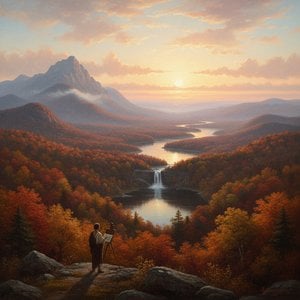
The Sublime Landscape: Exploring the Hudson River School Movement
Explore the captivating world of the Hudson River School! Discover the history, artists, and defining characteristics of this iconic American art movement. Learn about Romanticism's influence & find inspiration for your collection.
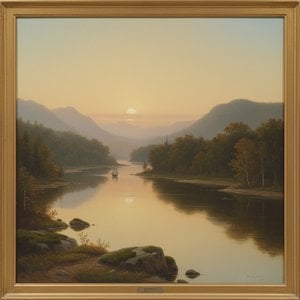
David Johnson: A Luminist Master of the Hudson River School & Beyond
Explore the captivating landscapes of David Johnson, a key figure in the Hudson River School & Luminism movement. Discover his artistic evolution, legacy, and how to collect his works with ArtsDot.

A Hudson River Iskola 10 Mesterműve: Tájképfestészet és Amerika Lelke – ArtsDot
Fedezze fel a Hudson River Iskola 10 legikonikusabb műalkotását! Frederic Church, Thomas Cole és más amerikai festők romantikus tájképei. Vászonkép másolatok, faliképek otthonába – ArtsDot.com kínálatából. Explore the full collection online!



