
- Accueil

- Reproduction de peinture à l'huile
- Pierre-Auguste Renoir
- À Proximité du Lac

 Commander l'impression Acheter l'image haute résolution
 Partager
 Partager
 Détails
 Ajouter aux favoris

 Télécharger
 Articles similaires
 Radiographie
 Diaporama
À Proximité du Lac


 Afficher la suite
Reproduction à l'huile faite à la main
Huile sur toile peinte à la main, avec cadre et dimensions personnalisés, réalisée sur commande par nos artistes.




P118B $10

P118H $10

P118W $10

P438Z $10

P508JH $12

P508YH $12

P805H $10

P805Z $10

P919BZ $10

P919G $10

P919XJ $10

P959ZH $10

P968JZ $12

W106C $8

W218G $10

W218JH $8

W218Y $10

W307PJ $10

W316G $10

W316PJ $8

W316Y $10

W398PJ $8

W4111J $10

W500HY $15

W500JH $15

W692G $12

W849H $8

W940BG $15

W953PJ $8




Choisissez parmi nos formats prédéfinis qui respectent les proportions originales de l’œuvre.

Vous pouvez saisir vos propres dimensions pour l'adapter à un cadre ou à un espace spécifique. Si la taille sélectionnée ne correspond pas aux proportions de l'image d'origine, nous recadrerons l'œuvre ou prolongerons la peinture avec des éléments peints à la main supplémentaires. Une maquette numérique vous sera envoyée pour approbation avant le début de la production.
Veuillez noter que l'aperçu à l'écran ne reflète pas le recadrage ou l'extension réels. Seule la maquette montrera fidèlement la composition finale.
Bien que des tailles personnalisées soient disponibles, nous vous recommandons de sélectionner une dimension dans la liste prédéfinie afin de préserver les proportions d'origine.
Après la commande, l’équipe ArtsDot.com contactera le client par e-mail pour obtenir ses instructions et lui fournira une maquette d’aperçu.
Livraison dans le monde entier () en 3 à 4 semaines au lieu des 5 semaines habituelles. (2 juillet). Aucune concession sur la qualité.

Livraison express gratuite dans le monde entier

Toile de lin de haute qualité

Assurance transport complète

Garantie de remboursement des frais de douane

Garantie de fidélité des couleurs

Politique de retour de 60 jours (uniquement en cas de défaut)

Garantie de remboursement à 100%

Réduction sur les achats groupés
 L'option verre n'est disponible que pour les dimensions inférieures à 110 cm.

À Proximité du Lac
Technique de reproduction
Format de reproduction
-


Prix total final
-
Description de l'œuvre
Introduction : Un Instant de Tranquille à la Côté du Lac
Pierre-Auguste Renoir’s Near the Lake, painted in 1880 and currently residing within the esteemed halls of the Art Institute of Chicago, is more than just a depiction of a lakeside scene; it's a distillation of Impressionist philosophy and a poignant capture of Parisian leisure. The painting immediately draws the eye with its luminous palette – a symphony of soft blues, greens, and ochres that evoke the dappled sunlight filtering through the trees lining the shore. Renoir masterfully employs broken brushstrokes, characteristic of his style, to create an atmosphere of hazy warmth and gentle movement. It’s a scene brimming with quiet intimacy, inviting us into a private moment shared amongst friends.
At its heart, the painting features three figures: a man seated on a weathered bench, seemingly lost in thought; a young woman leaning towards him, her expression hinting at animated conversation; and a dog nestled comfortably nearby. This carefully constructed composition isn’t merely observational; it's imbued with a sense of narrative – a suggestion of connection, companionship, and the simple pleasures of life. The inclusion of the dog adds an element of rustic charm, grounding the scene in a tangible reality while simultaneously elevating it to something more profound.
L'Intimisme et l'Impressionnisme : Un Mélange Raffiné
Near the Lake occupies a fascinating space within Renoir’s oeuvre. While firmly rooted in Impressionism – particularly its focus on capturing fleeting moments of light and color – it also embodies elements of Intimism, an artistic movement that prioritized depicting personal domestic scenes with a heightened sense of emotion and psychological depth. This blending of styles results in a work that is both visually arresting and emotionally resonant. Renoir wasn’t simply recording a landscape; he was conveying the feeling of being *there*, experiencing the warmth of the sun, the murmur of conversation, and the quiet joy of shared companionship.
The artist's technique is particularly noteworthy. He utilizes a loose, almost spontaneous brushstroke to render the figures and foliage, allowing the light to play across their forms and creating an impressionistic effect. The colors are not blended smoothly but rather juxtaposed, adding to the sense of vibrancy and movement. Renoir’s ability to capture the subtle nuances of light and shadow is truly remarkable, transforming a simple lakeside scene into a work of art that is both beautiful and evocative.
La Lumière et la Couleur : Une Danse Visuelle
The masterful use of light is arguably the most striking element of Near the Lake. Renoir’s understanding of how light interacts with color—a principle central to Impressionist painting—is evident in every detail. The dappled sunlight filtering through the trees creates a mosaic of shimmering highlights and deep shadows, giving the scene an almost ethereal quality. He doesn't simply paint *what* he sees; he paints *how* it feels – the warmth on skin, the coolness of shade, the play of light and shadow across the water.
Furthermore, Renoir’s choice of colors is deliberate and evocative. The warm yellows and oranges of the sunlight contrast beautifully with the cool blues and greens of the foliage and water, creating a harmonious balance that is both visually pleasing and emotionally engaging. The subtle shifts in color throughout the painting contribute to its overall sense of movement and dynamism.
Le Contexte Historique : La Belle Époque et l'Éclosion de l'Art Moderne
Near the Lake was created during a period of immense artistic ferment – the Belle Époque in Paris. This era, marked by optimism, prosperity, and cultural innovation, witnessed the rise of Impressionism and other groundbreaking art movements. Renoir’s work reflects this spirit of experimentation and exploration, pushing the boundaries of traditional painting techniques and challenging conventional notions of beauty. The painting captures a slice of Parisian life during this vibrant period, offering us a glimpse into the leisure activities and social customs of the time.
The painting's placement within the Art Institute of Chicago further underscores its significance as a landmark work of art. It stands alongside other masterpieces from the 19th century, providing visitors with a valuable opportunity to appreciate the evolution of artistic styles and techniques. It’s a testament to Renoir’s enduring legacy as one of the most beloved and influential artists of his generation.
Œuvres apparentées


Biographie de l'artiste
jeunesse et carrière
pierre-auguste renoir, un artiste français essentiel, est né le 25 février 1841 à Limoges, en France. Il a joué un rôle crucial dans la formation du mouvement impressionniste, réputé pour sa lumière vibrante et ses couleurs saturées. L'œuvre de Renoir célébrait la beauté, en particulier la sensualité féminine, le plaçant dans une lignée d'artistes allant de Rubens à Watteau.héritage artistique
L'héritage de Renoir s'est étendu au-delà de ses toiles, en tant que patriarche d'une famille où l'art prospérait sous diverses formes. Ses enfants, pierre renoir (1885–1952), le cinéaste jean renoir (1894–1979) et l'artiste céramiste claude renoir (1901–1969), ont chacun apporté des contributions significatives dans leurs domaines respectifs. Son petit-fils, le cinéaste claude renoir (1913–1993), a davantage fait progresser l'héritage artistique de la famille.œuvres notables et musées
* la danse à Bougival, une peinture notable de Renoir, illustre sa maîtrise de la capture de l'essence de l'art impressionniste. * Le musée des collettes, situé à Cagnes-sur-Mer, en France, est une destination incontournable pour les amateurs d'art. Ce musée, autrefois la maison de pierre-auguste renoir, témoigne de sa vie et de son œuvre, abritant quinze de ses peintures. * Le musée maurice denis, une autre perle cachée en France, présente une impressionnante collection de peintures post-impressionnistes françaises du XIXe et début du XXe siècle.explorez l'art de Renoir avec ArtsDot
- découvrez le charme du musée des collettes (France) et de son art impressionniste sur ArtsDot : [https://ArtsDot.com/@@/a@d3aupf](https://ArtsDot.com/@@/a@d3aupf)
- explorez les merveilles du musée maurice denis (France) avec ArtsDot : [https://ArtsDot.com/art.nsf/o/a@d3aue3](https://ArtsDot.com/art.nsf/o/a@d3aue3)
- visualisez les peintures de Renoir, y compris la danse à Bougival, sur ArtsDot : [https://ArtsDot.com/@/pierre-auguste renoir](https://ArtsDot.com/@/pierre-auguste%20renoir)

Pierre-Auguste Renoir
1841 - 1919 , France
En bref
- Artistes Influents:
- Rubens
- Watteau
- Camille Pissarro
- Édouard Manet
- Date De Décès: 3 décembre 1919
- Date De Naissance: 25 février 1841
- Influences Artistiques:
- Impressionnisme
- Post-impressionnisme
- Lieu De Naissance: Limoges, France
- Mouvement Artistique: Impressionnisme
- Nationalité: Française
- Nom Complet: Pierre-Auguste Renoir
- Oeuvres Notables:
- La Danse à Bougival
- Le Déjeuner des canotiers
- Bal au moulin de la Galette
- Après le bain
Articles connexes

The Cultivation of Idleness: Leisure as Subject & Symbol in Western Art History
Explore the fascinating history of leisure in Western art! From Renaissance contemplation to Impressionist moments, discover how artists depicted otium & its cultural significance. Expert insights for collectors & enthusiasts.

Top 10 Chefs-d'œuvre à l'Huile : L'Art qui a Révolutionné le Décor Intérieur
Plongez dans l'histoire de 10 chefs-d'œuvre à l'huile qui ont révolutionné l'art : Monet, Van Gogh, Rembrandt et plus. Découvrez les techniques, les émotions et trouvez l'inspiration déco sur ! Explorez la collection.

The Luminous World of Pierre-Auguste Renoir: An Exploration of Impressionism's Sensuous Embrace
Explore the captivating world of Pierre-Auguste Renoir! Discover his life, iconic Impressionist masterpieces & enduring legacy with our expert guide. High-quality reproductions available.
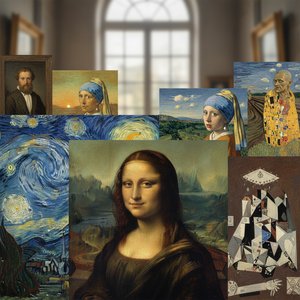
Les 10 Chefs-d'œuvre à l'Huile qui ont Révolutionné l'Art |
Plongez dans l'univers des 10 chefs-d'œuvre à l'huile qui ont marqué l'histoire de l'art ! Découvrez les secrets de Van Gogh, Monet, Rembrandt et autres artistes emblématiques. Trouvez l'inspiration déco & achetez des reproductions de qualité sur .

L'Épanouissement de l'Otium : Représentations du Loisir et de la Contemplation dans l'Art Occidental
Explorez l'histoire fascinante de l'otium dans l'art occidental. Découvrez les représentations du loisir et de la contemplation à travers des chefs-d'œuvre, des villas romaines aux impressionnistes. Un guide pour collectionneurs avertis.



