


 Aperçu en situation
 Partager
 Partager
 Détails
 Guide
Guide

 Télécharger
 Articles similaires
 Radiographie
 Voir le diaporama
 Statistiques
Liebespaar


 Afficher la suite
Reproduction à l'huile faite à la main
Huile sur toile peinte à la main, avec cadre et dimensions personnalisés, réalisée sur commande par nos artistes. ( Passer au format impression Passer au format image numérique)




P118B $10

P118H $10

P118W $10

P438Z $10

P508JH $12

P508YH $12

P805H $10

P805Z $10

P919BZ $10

P919G $10

P919XJ $10

P959ZH $10

P968JZ $12

W106C $8

W218G $10

W218JH $8

W218Y $10

W307PJ $10

W316G $10

W316PJ $8

W316Y $10

W398PJ $8

W4111J $10

W500HY $15

W500JH $15

W692G $12

W849H $8

W940BG $15

W953PJ $8




Choisissez parmi nos formats prédéfinis qui respectent les proportions originales de l’œuvre.

Vous pouvez saisir vos propres dimensions pour l'adapter à un cadre ou à un espace spécifique. Si la taille sélectionnée ne correspond pas aux proportions de l'image d'origine, nous recadrerons l'œuvre ou prolongerons la peinture avec des éléments peints à la main supplémentaires. Une maquette numérique vous sera envoyée pour approbation avant le début de la production.
Veuillez noter que l'aperçu à l'écran ne reflète pas le recadrage ou l'extension réels. Seule la maquette montrera fidèlement la composition finale.
Bien que des tailles personnalisées soient disponibles, nous vous recommandons de sélectionner une dimension dans la liste prédéfinie afin de préserver les proportions d'origine.
Après la commande, l’équipe ArtsDot.com contactera le client par e-mail pour recueillir ses instructions et lui fournira une maquette d’aperçu
Livraison dans le monde entier () en 3 à 4 semaines au lieu des 5 semaines habituelles. (21 septembre). Aucun compromis sur la qualité.

Livraison express gratuite dans le monde entier

Toile de lin de haute qualité

Assurance transport complète

Garantie de remboursement des droits de douane

Garantie de fidélité des couleurs

Garantie de retour de 100 jours (uniquement en cas de défaut)

Garantie de remboursement à 100%

Tarifs dégressifs sur quantité
 L'option verre n'est disponible que pour les dimensions inférieures à 110 cm.

Liebespaar
Technique de reproduction
Format de la reproduction
-


Prix total final
$ 263
A Tender Encounter in the Heart of Expressionism
In the quiet, evocative depths of Otto Mueller’s 1919 masterpiece, Liebespaar (Lovers), we find ourselves transported to a moment of profound intimacy that transcends the boundaries of time. This painting is not merely a depiction of two figures; it is a visceral exploration of human connection captured during one of the most turbulent eras in European history. As the woman leans her head tenderly against the man’s shoulder, there is an unmistakable sense of sanctuary found within their embrace. Their gaze, directed toward something unseen beyond the frame, invites the viewer into a world of mystery and unspoken emotion, suggesting that while the world around them may be in flux, their shared bond remains a steadfast anchor.
The composition is masterfully balanced, utilizing the raw, geometric language characteristic of the Die Brücke movement. Mueller employs subtle triangles and rectangles to structure the scene, placing the couple before a solitary, sentinel-like tree that anchors the landscape. This structural stability is beautifully contrasted by the soft, organic gestures of the lovers—the way she clings to him and the protective manner in which he holds her arm. The presence of two silent onlookers in the background adds a layer of narrative complexity, transforming a private moment into a shared observation of human nature, reminding us that even our most intimate connections exist within a wider social tapestry.
The Texture of Emotion: Technique and Palette
To behold Liebespaar is to experience the unique tactile quality of Mueller’s chosen medium. By employing distemper on hessian canvas, the artist achieved a distinctive matte finish that absorbs light rather than reflecting it, lending the work a grounded, earthy presence. This technique allows for a certain ruggedness in the brushwork, where decisive, urgent strokes convey the raw energy of the Expressionist spirit. The texture of the canvas itself breathes through the paint, adding a layer of organic grit that mirrors the unvarnished truth Mueller sought to portray.
The color palette is a masterclass in atmospheric storytelling. Eschewing the bright, garish tones often associated with modernism, Mueller utilizes a sophisticated arrangement of muted yellows, deep browns, and warm ochres. These hues wrap the subjects in a cloak of melancholy warmth, evoking the feeling of a fading twilight or a memory preserved in amber. The sudden pop of yellow in their jackets serves as a brilliant focal point, drawing the eye to the center of their interaction and injecting a pulse of life into the otherwise somber, earth-toned landscape. It is this careful manipulation of color that allows the painting to resonate with both warmth and a haunting sense of nostalgia.
A Legacy for the Modern Collector
For the discerning collector or interior designer, Liebespaar offers much more than aesthetic beauty; it offers a profound psychological depth that can anchor a room with its contemplative weight. The painting’s ability to evoke both intimacy and mystery makes it a versatile centerpiece, capable of inspiring conversation in a contemporary gallery or adding a layer of historical soul to a sophisticated residential space. It serves as a window into the German Expressionist movement—a period defined by the search for an authentic inner truth amidst external chaos.
Owning a high-quality reproduction of this work allows one to bring the spirit of Otto Mueller’s wanderer’s soul into their own environment. Whether placed in a study filled with books or a minimalist living area, the painting’s muted tones and emotive power provide a sense of calm and intellectual stimulation. It is an invitation to pause, to look beyond the surface, and to find beauty in the quiet, tender moments that define our shared human experience.
Œuvres similaires


Biographie de l'artiste
**Premières années et formation**
Otto Müller, peintre et graveur allemand, est né le 16 octobre 1874 à Liebau (aujourd'hui Lubawka, powiat Kamienna Góra), Silésie, Pologne. Entre 1890 et 1892, il a suivi une formation en lithographie à Görlitz et Breslau. De 1894 à 1896, Müller a étudié à l’Académie des beaux-arts de Dresde et a poursuivi ses études à Munich à partir de 1898.**Évolution artistique et expressionnisme**
Les premières œuvres de Müller ont été influencées par l'impressionnisme, le Jugendstil et le symbolisme. Cependant, après s’être installé à Berlin en 1908, son style est devenu plus expressionniste. Durant cette période, il a côtoyé des figures notables telles que Wilhelm Lehmbruck, Rainer Maria Rilke et Erich Heckel. En 1910, Müller a rejoint le groupe « Die Brücke » basé à Dresde, un moment décisif dans son parcours expressionniste.**Œuvres notables et style**
Les peintures de Müller présentent souvent l'unité des humains et de la nature, caractérisées par une simplification harmonieuse de la forme, de la couleur et des contours. Ses œuvres notables incluent :- Des paysages inspirés de « La Nuit étoilée »
- Des nus expressifs et des femmes romani (tsiganes), ce qui lui a valu le surnom de "Gypsy Müller"
- L'utilisation de tempera sur une toile grossière pour obtenir un fini mat
- Un graveur prolifique avec presque toutes ses gravures étant des lithographies, ainsi que quelques bois-gravures et eaux-fortes.
**Héritage et impact d’après-guerre**
Müller a combattu comme soldat allemand en France et en Russie pendant la Première Guerre mondiale. Après la guerre, il est devenu professeur à l'Akademie der bildenden Künste de Breslau jusqu'à sa mort le 24 septembre 1930. En 1937, les nazis ont saisi 357 de ses œuvres dans des musées allemands, les jugeant comme étant de "l’art dégénéré".**Style et influences**
Le style unique de Müller se caractérise par une palette de couleurs douces et terreuses, souvent utilisées avec la technique de la tempera sur toile grossière. Ses sujets incluent des nus expressifs, des portraits de femmes romani et des paysages harmonieux qui reflètent son intérêt pour l'unité entre l'homme et la nature. Il a été influencé par le Jugendstil dans ses premières années, mais s’est tourné vers l’expressionnisme après avoir rejoint « Die Brücke », adoptant une simplification formelle et une expressivité émotionnelle distinctives. Son travail témoigne d'une sensibilité particulière à la culture romani, capturant leur beauté et leur dignité avec respect et empathie.
Otto Mueller
1874 - 1930 , Pologne
En bref
- Artistes Influents:
- Wilhelm Lehmbruck
- Rainer Maria Rilke
- Erich Heckel
- Date De Décès: 24 septembre 1930
- Date De Naissance: 16 octobre 1874
- Lieu De Naissance: Liebau, Pologne
- Mouvement Artistique: Expressionnisme
- Nationalité: Allemand
- Nom Complet: Otto Mueller
- Oeuvres Notables:
- Paysages inspirés de La Nuit étoilée
- Nus expressifs et femmes romani
Articles similaires

Ernst Ludwig Kirchner : Anxiété urbaine et fragmentation de l'identité moderne dans l'Expressionnisme allemand
Explorez l'œuvre poignante d'Ernst Ludwig Kirchner et l'Expressionnisme allemand. Analyse approfondie de Die Brücke, de la vie urbaine berlinoise et de la fragmentation identitaire. Découvrez des reproductions de haute qualité sur ArtsDot.

Expressionnisme Allemand : 10 Chefs-d'œuvre Révolutionnaires à Découvrir | ArtsDot
Plongez au cœur de l'Expressionnisme Allemand avec ArtsDot. Découvrez 10 chefs-d'œuvre de Kandinsky, Munch et Kirchner. Explorez l'histoire, les couleurs et l'émotion derrière ces tableaux iconiques. Reproductions de qualité muséale disponibles sur ArtsDot.com

The Raw Emotion of Expressionism: A Deep Dive into its History, Characteristics & Enduring Influence
Explore the raw emotion of Expressionism with ArtsDot. Discover its history, key artists like Kirchner & Munch, and lasting influence on modern art. Expert insights for collectors & enthusiasts.
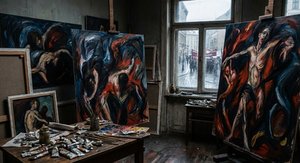
The Visceral Language of Emotion: Exploring Expressionism's Impact on 20th-Century Art
Explore the powerful world of Expressionism! Discover key artists like Kirchner & Nolde, understand its emotional impact, and learn about this revolutionary art movement's lasting legacy. Expert insights for collectors & enthusiasts.

Le Cri Viscéral d'une Nation : Exploration de l'Émotion et de la Distortion dans l'Expressionnisme Allemand
Explorez l'Expressionnisme allemand avec ArtsDot : Kirchner, Die Brücke, Der Blaue Reiter… Analyse approfondie des chefs-d'œuvre et de leur impact émotionnel. Reproductions de haute qualité disponibles.