
- Accueil

- Reproduction de peinture à l'huile
- Jules Dupré
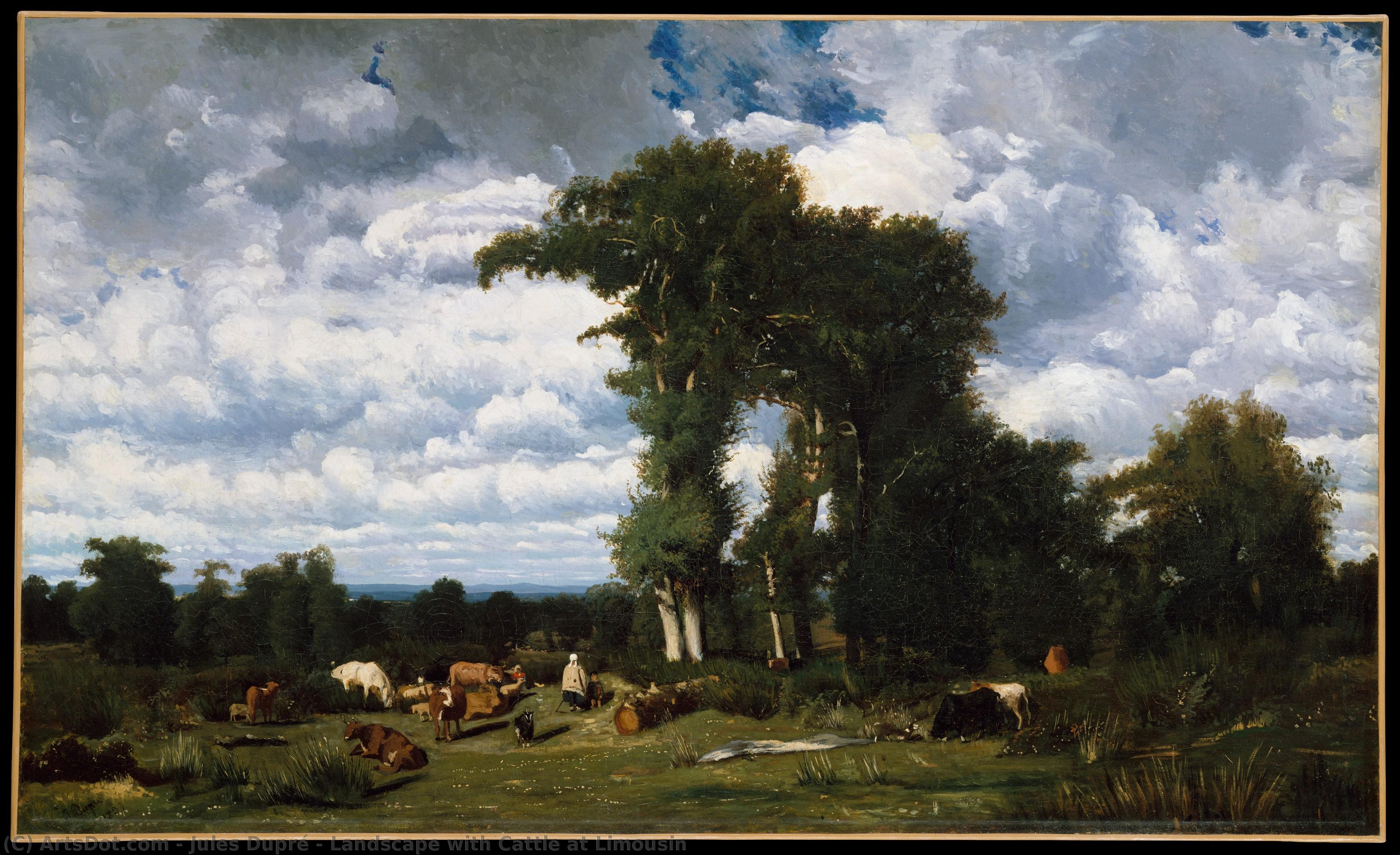
- Landscape with Cattle at Limousin
 Commander l'impression Acheter l'image haute résolution
 Partager
 Partager
 Details
 Ajouter aux favoris

 Télécharger
 Articles similaires
 X-Ray
X-Ray
 Diaporama
Landscape with Cattle at Limousin
 Oil On Canvas
- WallArt
- Barbizon School
 1837
1837- 19th Century
 79.0 x 131.0 cm
 Metropolitan Museum of Art
Reproduction à l'huile faite à la main
Huile sur toile peinte à la main, avec cadre et dimensions personnalisés, réalisée sur commande par nos artistes.




P118B $10

P118H $10

P118W $10

P438Z $10

P508JH $12

P508YH $12

P805H $10

P805Z $10

P919BZ $10

P919G $10

P919XJ $10

P959ZH $10

P968JZ $12

W106C $8

W218G $10

W218JH $8

W218Y $10

W307PJ $10

W316G $10

W316PJ $8

W316Y $10

W398PJ $8

W4111J $10

W500HY $15

W500JH $15

W692G $12

W849H $8

W940BG $15

W953PJ $8




 En savoir plus
Choisissez parmi nos formats prédéfinis qui respectent les proportions originales de l’œuvre.

Vous pouvez saisir vos propres dimensions pour l'adapter à un cadre ou à un espace spécifique. Si la taille sélectionnée ne correspond pas aux proportions de l'image d'origine, nous recadrerons l'œuvre ou prolongerons la peinture avec des éléments peints à la main supplémentaires. Une maquette numérique vous sera envoyée pour approbation avant le début de la production.
Veuillez noter que l'aperçu à l'écran ne reflète pas le recadrage ou l'extension réels. Seule la maquette montrera fidèlement la composition finale.
Bien que des tailles personnalisées soient disponibles, nous vous recommandons de sélectionner une dimension dans la liste prédéfinie afin de préserver les proportions d'origine.
Après la commande, l’équipe ArtsDot.com contactera le client par e-mail pour obtenir ses instructions et lui fournira une maquette d’aperçu.
Livraison dans le monde entier () en 3 à 4 semaines au lieu des 5 semaines habituelles. (1 juillet). Aucune concession sur la qualité.

Livraison express gratuite dans le monde entier

Toile de lin de haute qualité

Assurance transport complète

Garantie de remboursement des frais de douane

Garantie de fidélité des couleurs

Politique de retour de 60 jours (uniquement en cas de défaut)

Garantie de remboursement à 100%

Réduction sur les achats groupés
 L'option verre n'est disponible que pour les dimensions inférieures à 110 cm.

Landscape with Cattle at Limousin
Technique de reproduction
Format de reproduction
-


Prix total final
-
Description de l'œuvre
The Drama of the Pastoral: Capturing Movement in Dupre's Landscape
To stand before Jules Dupré’s Landscape with Cattle at Limousin is to be enveloped by a moment suspended between tranquility and impending drama. This magnificent oil on canvas, dating from 1837, transports the viewer deep into the heart of rural France. It is more than just a depiction of grazing cattle beneath an expansive sky; it is a masterful study in atmospheric tension. Duppré captures that fleeting energy inherent in nature—the subtle stir among the herd, the rustle within the foliage—all orchestrated under a sky that refuses to settle into mere placidity. The composition itself guides the eye across a rich tapestry of greens and browns, anchored by the strong horizontal sweep of the earth meeting the vastness above.
A Study in Light and Shadow: Technique and Chromatic Mastery
Technically, this piece showcases Duppré’s unique ability to manipulate light for maximum emotional effect. While the overall impression suggests a diffused, perhaps overcast day, it is within the interplay of light and shadow that the painting finds its true dynamism. The artist employs a dramatic chromatic structuring, contrasting brilliant highlights against deep, ominous cloud formations. One can almost feel the weight of those encroaching dark clouds pressing down upon the pastoral scene. The visible brushwork speaks to an energetic hand at work; it is not merely smooth illusion but a built-up materiality, particularly noticeable in the thick impasto that gives texture and palpable depth to the foliage and the grazing animals. This commitment to visible technique elevates the painting from mere representation to profound sensory experience.
Echoes of Influence: The Barbizon School Context
Within the context of the Barbizon School, Duppré carved out a distinct niche. While many of his peers explored lyrical beauty, Dupré possessed an almost dramatic soul, drawn instead to nature’s more tempestuous moods. His journey to England and his encounter with Constable are key to understanding this work; he absorbed the sense of raw movement characteristic of British landscape painting, integrating it into his own French sensibility. This synthesis results in a piece that feels both deeply rooted in classical observation and thrillingly modern in its emotional pitch. It is a dialogue between disciplined study and untamed feeling.
Symbolism and Emotional Resonance for the Modern Collector
For the contemporary admirer, this artwork offers more than just decorative beauty; it provides an emotional anchor. The subject matter—the cattle grazing peacefully—symbolizes a deep, enduring connection to the rhythms of rural life, a yearning for simplicity amidst modern complexity. Yet, the sky reminds us that nature is inherently powerful, capable of both sublime calm and sudden fury. Owning a reproduction of Landscape with Cattle at Limousin allows one to bring this carefully balanced tension into your own space. It serves as a constant, evocative reminder of the grandeur found in the natural world, making it a breathtaking focal point for any sophisticated interior design scheme or personal collection.
Œuvres apparentées


Biographie de l'artiste
Jules Dupré: The Dramatic Soul of Barbizon
Jules Dupré (1811-1889) stands as a cornerstone figure within the Barbizon School, an artistic movement that championed raw observation and emotional resonance in landscape painting. Unlike his contemporaries like Corot who sought lyrical beauty, Dupré wrestled with the darker side of nature—the tempestuous fury of storms, the melancholic grandeur of twilight – conveying these experiences with unparalleled intensity. Born in Nantes, France, Dupré’s artistic journey began amidst a burgeoning fascination for the natural world and its capacity to evoke profound feelings.Early Life and Artistic Formation
Dupré's upbringing instilled in him a meticulous attention to detail and an appreciation for craftsmanship honed by his father’s porcelain manufacturing business. This formative experience would later translate into his own artistic endeavors, particularly evident in his early works exploring the intricacies of ceramic decoration. However, it was his encounter with Constable’s groundbreaking canvases that irrevocably shaped his artistic vision. Constable's masterful depiction of atmospheric perspective and dynamic movement ignited Dupré’s desire to capture the essence of nature’s dynamism—the relentless push and pull of wind-driven foliage and the dramatic interplay of light and shadow during sunset hours. He learned from Constable how to express movement in nature; and the districts around Southampton and Plymouth—vast expanses of water reflecting turbulent skies—allowed him to translate his emotional responses into visual narratives. His father’s porcelain manufacturing business instilled a disciplined approach to artistic creation, mirroring the precision demanded by his craft.The Barbizon Style: Embracing Darkness and Emotion
Dupré swiftly embraced the Barbizon aesthetic, prioritizing expressive color palettes and bold brushstrokes over idealized representations. He found particular inspiration in the landscapes surrounding Southampton and Plymouth—vast expanses of water reflecting turbulent skies—allowing him to translate his emotional responses into visual narratives. His paintings aren’t merely depictions of scenery; they are visceral expressions of mood and feeling, imbued with a palpable sense of drama and sorrow. Dupré's signature style is characterized by sonorous color harmonies and masterful handling of paint, prioritizing texture and tonal variation to convey the overwhelming power of natural forces. He rejected the idealized beauty favored by many artists of his time, opting instead for an unflinching portrayal of nature’s turbulent energies—a deliberate departure from prevailing artistic conventions.Notable Works and Influences
Dupré’s artistic output yielded several iconic landscapes that continue to captivate audiences today. “Morning and Evening at the Louvre,” a monumental canvas capturing the ethereal beauty of dawn and dusk, exemplifies his ability to distill complex emotions into simple visual forms. Similarly, “Crossing the Bridge in the Wallace Collection” showcases Dupré's masterful command of atmospheric perspective and compositional balance—elements directly influenced by Constable’s pioneering techniques. His meticulous attention to detail—evident in every brushstroke—demonstrates a profound understanding of how light interacts with surface textures, creating an illusion of depth and realism that distinguishes his work from more decorative styles. He was profoundly impacted by the artistic legacy of Rembrandt and Claude Lorrain, whose masterful use of chiaroscuro – dramatic contrasts between light and dark – served as inspiration for Dupré’s own compositions.Legacy and Historical Significance
Jules Dupré’s contribution to landscape painting transcends mere stylistic innovation; he fundamentally altered perceptions of how artists could communicate emotion and experience. By confronting darkness and embracing dramatic intensity, Dupré elevated the Barbizon School beyond its initial focus on picturesque beauty, establishing it as a powerful force in shaping Romantic art history. His enduring influence can be seen in subsequent generations of painters who sought to capture the sublime—the awe-inspiring grandeur of nature that inspires both terror and reverence—solidifying Dupré’s place as one of France's most emotionally resonant landscape artists. He remains an exemplar of artistic integrity, prioritizing truthfulness to observation over superficial aesthetic considerations, a principle that continues to resonate with art historians and critics today.
Jules Dupré
1811 - 1889 , France
En bref
- Artistic Movement Or Style: Barbizon School
- Artists Who Influenced This Artist: ['John Constable']
- Date Of Birth: Nantes, France (1811)
- Date Of Death: October 6, 1889
- Full Name: Jules Dupré
- Nationality: French
- Notable Artworks:
- Morning and Evening at the Louvre
- Crossing the Bridge in the Wallace Collection
- Place Of Birth: France
Articles connexes

L'École de Barbizon : Réalisme et Vision Pastorale dans la Peinture Française du XIXe Siècle
Explorez l'École de Barbizon : son réalisme révolutionnaire, ses artistes emblématiques (Monet, Rousseau, Millet) et son influence sur l'impressionnisme. Découvrez un mouvement artistique majeur du XIXe siècle avec ArtsDot.


Evoking Nature's Sublime: A Comprehensive Exploration of 19th-Century Landscape Painting
Explore the captivating world of 19th-century landscape painting! Discover renowned artists like Friedrich & Monet, key movements, and find the perfect artwork to bring nature's serenity into your home. Expert insights at ArtsDot.

L'Héritage Durable de l'Art du XVIIIe et XIXe Siècle : Mouvements, Maîtres et Réflexions Sociétales
Explorez l'héritage artistique des XVIIIe et XIXe siècles : du Romantisme au Réalisme, découvrez Courbet, Millet et les maîtres qui ont façonné notre vision du monde. Analyse approfondie & inspiration déco.

Thomas George Webster: Navigating Genre Boundaries & American Identity in 19th-Century Landscape Painting
Explore the captivating genre scenes of Thomas George Webster, a Victorian painter bridging British traditions with American themes. Discover his style, influences & legacy in 19th-century art history.

Le Luminisme Américain du XIXe Siècle : Capturer l'Éphémère et la Transcendence dans le Paysage
Explorez le luminisme américain du XIXe siècle : ses artistes emblématiques, techniques innovantes et l'art de capturer la lumière éphémère. Guide d'acquisition et reproductions haute qualité sur ArtsDot.


