
- Accueil

- Reproduction de peinture à l'huile
- Jan van Eyck
- Portrait de Margaret van Eyck

 Commander l'impression Acheter l'image haute résolution
 Partager
 Partager
 Details
 Ajouter aux favoris

 Télécharger
 Articles similaires
 X-Ray
X-Ray
 Diaporama
Portrait de Margaret van Eyck


Reproduction à l'huile faite à la main
Huile sur toile peinte à la main, avec cadre et dimensions personnalisés, réalisée sur commande par nos artistes.




































 En savoir plus
Choisissez parmi nos formats prédéfinis qui respectent les proportions originales de l’œuvre.

Vous pouvez saisir vos propres dimensions pour l'adapter à un cadre ou à un espace spécifique. Si la taille sélectionnée ne correspond pas aux proportions de l'image d'origine, nous recadrerons l'œuvre ou prolongerons la peinture avec des éléments peints à la main supplémentaires. Une maquette numérique vous sera envoyée pour approbation avant le début de la production.
Veuillez noter que l'aperçu à l'écran ne reflète pas le recadrage ou l'extension réels. Seule la maquette montrera fidèlement la composition finale.
Bien que des tailles personnalisées soient disponibles, nous vous recommandons de sélectionner une dimension dans la liste prédéfinie afin de préserver les proportions d'origine.
Après la commande, l’équipe ArtsDot.com contactera le client par e-mail pour obtenir ses instructions et lui fournira une maquette d’aperçu.
Livraison dans le monde entier () en 3 à 4 semaines au lieu des 5 semaines habituelles. (1 juillet). Aucune concession sur la qualité.

Livraison express gratuite dans le monde entier

Toile de lin de haute qualité

Assurance transport complète

Garantie de remboursement des frais de douane

Garantie de fidélité des couleurs

Politique de retour de 60 jours (uniquement en cas de défaut)

Garantie de remboursement à 100%

Réduction sur les achats groupés
 L'option verre n'est disponible que pour les dimensions inférieures à 110 cm.

Portrait de Margaret van Eyck
Technique de reproduction
Format de reproduction
-


Prix total final
-
Description de l'œuvre
Portrait of Margaret van Eyck: A Window Into Renaissance Intimacy
Jan van Eyck’s 1439 portrait of his wife, Margaret van Eyck, stands as an unparalleled testament to the artistic fervor and humanist ideals blossoming in Northern Europe during the dawn of the Renaissance. More than just a depiction of a woman—it's a meticulously crafted exploration of marriage, faith, and the profound connection between artist and subject, capturing a moment frozen in time with breathtaking precision.
- Subject and Composition: The painting presents Margaret from the waist up against a dark, undefined background, immediately drawing the viewer’s gaze to her face—a deliberate choice that underscores her importance within the composition. Van Eyck skillfully employs symmetry, centering Margaret's figure to convey dignity and composure. Her lowered gaze suggests introspection, hinting at a private contemplation beyond the confines of portraiture.
- Style and Technique: Executed in oil on panel (32 x 25 cm), this masterpiece exemplifies the zenith of Early Netherlandish art—characterized by an obsessive attention to detail and an astonishing mastery of light and texture. Van Eyck’s revolutionary use of oil paint allowed for layering glazes that created an illusionistic depth previously unattainable, resulting in a surface shimmering with luminosity. Each brushstroke is painstakingly rendered, capturing the subtle nuances of fabric folds, skin tones, and individual strands of hair—a testament to his unparalleled skill.
- Historical Context: Created during a pivotal moment in European history, this portrait marks a decisive break from the prevailing Gothic style, signaling the emergence of the Northern Renaissance. Bruges, under Philip the Good’s patronage, became a crucible for artistic innovation, fostering an environment where artists like Van Eyck could push boundaries and redefine aesthetic standards. The painting reflects the humanist preoccupation with human experience and emotion—a departure from medieval religious dogma.
- Symbolism and Interpretation: Beyond its visual splendor, *Portrait of Margaret van Eyck* is laden with symbolic significance. Margaret’s scarlet gown symbolizes wealth and nobility, reflecting her position within Burgundian society. The elaborate horned headdress—a motif frequently found in religious iconography—has sparked scholarly debate regarding its interpretation. Some scholars suggest it represents marital fidelity, while others propose allusions to divine grace or even a subtle nod to contemporary anxieties about demonic influence.
- Emotional Impact: Ultimately, this portrait transcends mere representation; it succeeds in conveying an intimate emotional resonance. It offers a rare glimpse into the relationship between two artists—a heartfelt tribute from Jan to Margaret—capturing her quiet dignity and intelligence with remarkable sensitivity. The painting invites viewers to contemplate not only Margaret’s beauty but also the profound bond between husband and wife, securing its place as one of the most poignant images of the Renaissance.
The image exhibits a muted color palette dominated by earthy tones—primarily reds and browns—accentuated by subtle highlights. The artist's meticulous attention to texture is evident in every surface, from the velvety sheen of Margaret’s gown to the delicate creases of her headdress.
Size: 32 x 25 cm
Date: 1439
Œuvres apparentées


Biographie de l'artiste
jeune vie et carrière
Jan van Eyck, figure prééminente du mouvement pictural néerlandais de début, est né vers 1390 à Maaseik, présent en Belgique. D’ici 1422, il s'était établi comme peintre maître avec un atelier et des assistants à La Haye. Notamment, il a servi Jean III le Cruel et plus tard Philippe le Beau, duc de Bourgogne, en tant que peintre de cour, jouissant d'une haute estime et s’engageant dans des activités diplomatiques.contributions artistiques
Les œuvres de Van Eyck, initialement ancrées dans le style gothique international, ont transcendé ses frontières grâce à son approche naturaliste améliorée et à l'utilisation innovante de la peinture à l'huile. Cela a établi une nouvelle norme en matière d’art, faisant de lui un pionnier du mouvement pictural néerlandais de début. Certaines de ses œuvres notables comprennent :- Le Dieu le Père (212 x 83 cm, renaissance du nord, huile sur panneau, voir sur ArtsDot.com)
- Portrait d'un jeune homme (33 x 19 cm, renaissance du nord, huile sur panneau, voir sur ArtsDot.com)
- Triptyque de Dresde (Vierge à l'enfant avec Saint Michel et Sainte Catherine et une donatrice) (28 x 38 cm, Gemäldegalerie alte meister, Dresde, Allemagne, renaissance du nord, bois, voir sur ArtsDot.com)
- Portrait de Giovanni Arnolfini et de sa femme (détail) (National Gallery, Londres, Royaume-Uni, huile, voir sur ArtsDot.com)
- Homme avec un turban bleu (17 x 23 cm, le musée national d'art de la Roumanie, Bucarest, Roumanie, renaissance du nord, bois, voir sur ArtsDot.com)
héritage et influence
L'influence de Van Eyck a été profonde, jetant les bases du développement de la tradition picturale néerlandaise de début. Son utilisation innovante de la peinture à l’huile a ajouté de la profondeur et du réalisme à ses œuvres, faisant de lui une figure renommée dans le monde de l'art. Pour explorer davantage les œuvres de Jan van Eyck et le mouvement pictural néerlandais de début, visitez la page de Jan van Eyck sur ArtsDot.com.relecture supplémentaire
* Wikipédia : [Jan van Eyck](https://en.wikipedia.org/wiki/jan_van_eyck) * ArtsDot.com : peintre néerlandais du nord * ArtsDot.com : le mouvement artistique néerlandais de début
Jan van Eyck
1390 - 1441 , Pays-Bas
En bref
- Artistes Influents: ['Hubert van Eyck']
- Date De Décès: 1441
- Date De Naissance: c. 1390
- Influence Sur Les Artistes: ['École néerlandaise primitive']
- Lieu De Naissance: Maastricht, Pays-Bas
- Mouvement Artistique: École néerlandaise primitive
- Nationalité: Néerlandais
- Nom Complet: Jan van Eyck
- Oeuvres Notables:
- Retable de Gand
- Portrait d'Arnolfini
- Triptyque de Dresde
- Homme au turban bleu
Articles connexes

Hugo van der Goes: Devotion, Innovation & the Psychological Depth of Early Netherlandish Painting
Explore the revolutionary art of Hugo van der Goes – a master of Early Netherlandish painting renowned for his dramatic realism, psychological depth & profound influence on Renaissance artists. Discover his iconic works and lasting legacy.


Renaissance Néerlandaise : 10 Chefs-d'œuvre Incontournables pour Décorer avec Art et Histoire
Plongez au cœur de la Renaissance néerlandaise avec 10 chefs-d'œuvre incontournables ! Découvrez Jan van Eyck, Robert Campin et les secrets de la peinture flamande. Trouvez l'inspiration déco et achetez des reproductions d'art de qualité muséale sur ArtsDot.com.

Rogier van der Weyden: Emotion, Innovation & the Early Netherlandish Renaissance
Explore the revolutionary art of Rogier van der Weyden, a pivotal figure of the Early Netherlandish Renaissance. Discover his emotional realism, innovative compositions, and lasting impact on painting history.

Jan van Eyck : Innovation technique, symbolisme subtil et aube de la peinture primitive flamande
Explorez le génie de Jan van Eyck et la révolution de la peinture flamande primitive. Découvrez ses techniques innovantes, son symbolisme subtil et l'impact durable de son œuvre sur l'histoire de l'art.
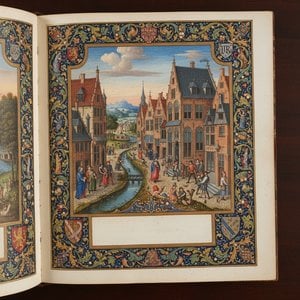
L'Éclosion du Réalisme : Innovation et Spiritualité dans la Peinture des Anciens Pays-Bas (XVe-XVIe siècles)
Explorez l'éclosion du réalisme dans la peinture des Anciens Pays-Bas (XVe-XVIe siècles). Découvrez Jan van Eyck, Hans Memling et le symbolisme fascinant de leurs œuvres. Analyse approfondie par des experts.



