
- Accueil

- Reproduction de peinture à l'huile
- Jan Baptist Weenix
- Landscape with Peasants and Animals

 Commander l'impression Acheter l'image haute résolution
 Partager
 Partager
 Details
 Ajouter aux favoris

 Télécharger
 Articles similaires
 X-Ray
X-Ray
 Diaporama
Landscape with Peasants and Animals

Reproduction à l'huile faite à la main
Huile sur toile peinte à la main, avec cadre et dimensions personnalisés, réalisée sur commande par nos artistes.




































 En savoir plus
Choisissez parmi nos formats prédéfinis qui respectent les proportions originales de l’œuvre.

Vous pouvez saisir vos propres dimensions pour l'adapter à un cadre ou à un espace spécifique. Si la taille sélectionnée ne correspond pas aux proportions de l'image d'origine, nous recadrerons l'œuvre ou prolongerons la peinture avec des éléments peints à la main supplémentaires. Une maquette numérique vous sera envoyée pour approbation avant le début de la production.
Veuillez noter que l'aperçu à l'écran ne reflète pas le recadrage ou l'extension réels. Seule la maquette montrera fidèlement la composition finale.
Bien que des tailles personnalisées soient disponibles, nous vous recommandons de sélectionner une dimension dans la liste prédéfinie afin de préserver les proportions d'origine.
Après la commande, l’équipe ArtsDot.com contactera le client par e-mail pour obtenir ses instructions et lui fournira une maquette d’aperçu.
Livraison dans le monde entier () en 3 à 4 semaines au lieu des 5 semaines habituelles. (1 juillet). Aucune concession sur la qualité.

Livraison express gratuite dans le monde entier

Toile de lin de haute qualité

Assurance transport complète

Garantie de remboursement des frais de douane

Garantie de fidélité des couleurs

Politique de retour de 60 jours (uniquement en cas de défaut)

Garantie de remboursement à 100%

Réduction sur les achats groupés
 L'option verre n'est disponible que pour les dimensions inférieures à 110 cm.

Landscape with Peasants and Animals
Technique de reproduction
Format de reproduction
-


Prix total final
-
Œuvres apparentées


Biographie de l'artiste
Jan Baptist Weenix: Pioneer of Italianate Landscapes and Realistic Still Lifes
Jan Baptist Weenix (1621 – 1661) stands as a singular figure within the Dutch Golden Age, celebrated for his distinctive blend of meticulous observation and imaginative vision. Though his artistic output was relatively modest compared to contemporaries like Rembrandt or Vermeer, Weenix’s contribution to Dutch art history is undeniable—particularly his groundbreaking exploration of Italian landscapes infused with human figures, establishing a stylistic precedent that would resonate throughout subsequent generations. Born in Amsterdam near the bustling harbor, Weenix descended from a family of architects, shaping his formative years amidst the intellectual ferment of the era. Despite difficulties communicating due to a medical condition – accounts suggest he struggled with speech – Weenix possessed an ardent passion for literature fostered by his mother, who proactively arranged for him to apprentice under Jan Micker, Rembrandt’s brother-in-law. This early training instilled in him a disciplined approach to drawing and observation that would become hallmarks of his oeuvre. He further honed his skills at Utrecht under Abraham Bloemaert and returned to Amsterdam to study with Claes Corneliszoon Moeyaert, cementing his grounding in the prevailing artistic currents. His marriage to Josijntje d'Hondecoeter in 1639 marked a significant personal milestone, followed by a journey to Rome in 1643 alongside Nicolaes Pieterszoon Berchem – another student of Moeyaert – where he encountered the vibrant intellectual and artistic milieu of the Bentvueghels guild. This experience profoundly impacted his artistic sensibilities, propelling him towards a more expansive stylistic range. Notably, Weenix secretly departed Amsterdam for four months, tracing his wife’s whereabouts to Rotterdam before gaining permission for extended travel. In Rome, he became affiliated with the guild and gained considerable acclaim, producing works commissioned by Pope Innocent X – a testament to his reputation as a skilled artist. He meticulously studied the techniques of Caravaggio and other Baroque masters, absorbing their dramatic use of light and shadow and incorporating these principles into his own paintings. Returning to Amsterdam after four years, Weenix faced challenges securing his wife’s presence in Italy, highlighting the complexities of domestic life amidst artistic ambition. He ascended to mastership of the St. Luke’s Guild in Utrecht in 1649 and undertook a portrait commission for René Descartes, demonstrating his versatility as a painter and furthering his professional standing. Following the death of his brother-in-law Gijsbert d'Hondecoeter, Weenix mentored his nephew Melchior d'Hondecoeter, ensuring the continuation of artistic tradition within his family. By 1656, he relocated to Castle Ter Mey (nl) at vleuten outside Utrecht, ostensibly for health reasons—though some historians speculate that financial difficulties prompted the sale of his estate in 1659. Weenix succumbed to illness shortly thereafter, leaving behind a legacy characterized by quiet dignity and enduring artistic achievement. Weenix’s artistic style distinguished itself through its meticulous realism combined with an innovative approach to landscape depiction. He pioneered the incorporation of Italian harbor scenes into Dutch painting, presenting figures amidst ruins—a stylistic choice that departed from prevailing conventions and signaled Weenix's willingness to experiment with new visual vocabularies. His still lifes – particularly those featuring deceased animals or dogs – are celebrated for their exquisite detail and evocative portrayal of decay and beauty. These works exemplify his mastery of chiaroscuro, skillfully manipulating light and shadow to convey texture and emotion—a technique that aligns closely with the artistic principles championed by Caravaggio and other Baroque masters. Weenix’s enduring influence can be observed in subsequent generations of Dutch artists who embraced his distinctive vision of the natural world and his unwavering commitment to portraying life with unflinching honesty. His paintings are instantly recognizable for their atmospheric perspective, achieved through subtle gradations of color that create a sense of depth and realism unparalleled by many of his contemporaries. He is remembered as a true innovator—a painter who dared to challenge artistic norms while simultaneously upholding the highest standards of craftsmanship.
Jan Baptist Weenix
1621 - 1661 , Pays-Bas
En bref
- Artistic Movement Or Style: Dutch Golden Age
- Artists Or Movements Influenced By This Artist: ['Italianate painting']
- Artists Who Influenced This Artist:
- Abraham Bloemaert
- Claes Corneliszoon Moeyaert
- Date Of Birth: Amsterdam, Netherlands (1621)
- Date Of Death: 1661
- Full Name: Jan Baptist Weenix
- Nationality: Dutch
- Notable Artworks:
- Après la chasse
- Le serran et son chien
- Un chien et un chat près d'une cervière partiellement démembrée
- Place Of Birth: Amsterdam
Articles connexes

The Pursuit of Power & Prestige: Hunting Scenes in Western Art
Explore the rich history of hunting scenes in Western art, from royal pursuits to powerful allegories. Discover masterpieces & expert insights for discerning collectors. ArtsDot offers museum-quality reproductions.


L'Âge d'Or Néerlandais : Splendeur Baroque et Révolution Artistique
Explorez l'Âge d'Or néerlandais : découvrez les maîtres baroques (Rembrandt, Fabritius) et leur révolution artistique. Analyse approfondie, contexte historique et héritage durable. Un voyage au cœur de la peinture du XVIIe siècle.
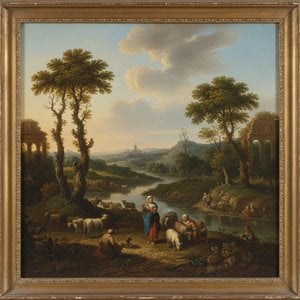
Nicolaes Berchem: Dutch Golden Age Pastoralism & the Evolution of Landscape Painting
Explore the captivating world of Nicolaes Berchem, a leading Dutch Golden Age painter. Discover his idyllic landscapes, masterful technique & lasting influence on art history. Learn more at ArtsDot.
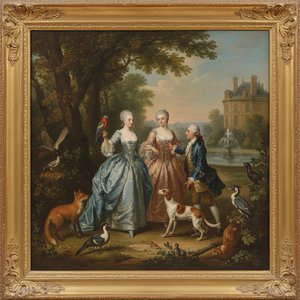
Jean-Baptiste Oudry: Rococo Painter of Aristocratic Life & Naturalistic Detail
Explore the exquisite Rococo paintings of Jean-Baptiste Oudry (1686-1755). Discover his mastery of animal depictions, royal commissions, and tapestry designs. A deep dive into 18th-century French artistry.

L'Âge d'Or Néerlandais : 10 Chefs-d'œuvre Incontournables pour Décorer avec Art et Histoire
Plongez au cœur de l'Âge d'Or néerlandais ! Découvrez 10 chefs-d'œuvre intemporels de Rembrandt, Vermeer et autres maîtres hollandais. Explorez leur histoire, technique & trouvez l'inspiration déco sur

