


 Aperçu en situation
 Envoyer
 Partager
 Détails de l'œuvre

 Télécharger
 Articles similaires
 Radiographie
 Diaporama
Still Life II


 Lire la suite
Giclées et impressions d'art
Impressions giclées ou sur toile de qualité musée, avec une production rapide et des finitions au choix. ( Commander la reproduction peinte à la main Télécharger l'image haute résolution)




P118B $10

P118H $10

P118W $10

P438Z $10

P508JH $12

P508YH $12

P805H $10

P805Z $10

P919BZ $10

P919G $10

P919XJ $10

P959ZH $10

P968JZ $12

W106C $8

W218G $10

W218JH $8

W218Y $10

W307PJ $10

W316G $10

W316PJ $8

W316Y $10

W398PJ $8

W4111J $10

W500HY $15

W500JH $15

W692G $12

W849H $8

W940BG $15

W953PJ $8




Choisissez parmi nos formats prédéfinis qui respectent les proportions originales de l’œuvre.

Vous pouvez saisir vos propres dimensions pour vous adapter à un cadre ou à un espace spécifique. Si la taille sélectionnée ne correspond pas aux proportions de l'image originale, nous recadrerons l'œuvre ou étendrons l'image avec une bordure en miroir ou une couleur unie. Une maquette numérique vous sera envoyée pour approbation avant le début de la production.
Veuillez noter que l'aperçu à l'écran ne reflète pas le recadrage ou l'extension réelle. Seule la maquette montrera avec précision la composition finale.
Bien que des tailles personnalisées soient disponibles, nous vous recommandons de choisir une dimension dans la liste prédéfinie afin de préserver les proportions originales.
Livraison dans le monde entier () en 2 semaines au lieu des 4/5 semaines habituelles. (15 août)

Livraison express gratuite dans le monde entier

Toile de lin de qualité supérieure

Assurance transport complète

Garantie de remboursement des droits de douane

Garantie de fidélité des couleurs

Politique de retour de 60 jours (uniquement en cas de défaut)

Garantie de remboursement à 100%

Offre de tarifs dégressifs
 L'option verre n'est disponible que pour les dimensions inférieures à 110 cm.

Still Life II
Giclées et impressions d'art
Format de la reproduction
-


Prix total
$ 62
Description de la pièce
Deconstructing Perception: An Exploration of Braque’s *Still Life II*
Georges Braque's Still Life II is not merely a depiction of objects; it’s an intellectual and visual dismantling of how we perceive reality. Created during the fervent years of Cubism’s genesis, this striking black and white composition embodies the movement’s revolutionary spirit. It doesn’t offer a straightforward representation of a scene but instead presents a fragmented world reassembled into a complex interplay of planes and angles. Looking at it feels akin to piecing together a puzzle – one where the image remains tantalizingly elusive even as its components become clearer upon sustained observation.
A Symphony in Monochrome: Style and Technique
Braque, alongside Pablo Picasso, spearheaded Analytical Cubism, a style defined by its radical deconstruction of form. In Still Life II, this is powerfully evident. The artwork features an intricate arrangement where recognizable elements – perhaps musical instruments, bottles, or architectural fragments – dissolve into overlapping geometric shapes. This deliberate ambiguity isn’t accidental; it's central to the Cubist project of challenging traditional representation. Braque masterfully restricts his palette to black and white, intensifying the focus on form and structure. The technique is predominantly linear, employing precise lines—likely charcoal or graphite—to define shapes and create a sense of depth through layering. Varying line weights subtly suggest spatial recession, despite the absence of conventional perspective. The overall effect is one of controlled chaos, a dynamic tension between order and fragmentation that captivates the eye and stimulates the mind.
The Birth of a New Vision: Historical Context
To truly appreciate Still Life II, it’s essential to understand its historical context. Early 20th-century Paris was a crucible of artistic innovation, a place where artists actively questioned established norms and sought new ways to capture the complexities of modern experience. Braque and Picasso's collaboration during this period (roughly 1908-1914) fundamentally altered the course of art history. They weren’t simply trying to *represent* reality; they aimed for a more comprehensive understanding by presenting multiple viewpoints simultaneously – an approach profoundly influenced by contemporary advancements in science and philosophy, particularly ideas concerning relativity and perception. This wasn’t just about changing how things looked on canvas; it was about challenging the very foundations of visual representation.
Beyond Representation: Symbolism and Emotional Resonance
While not overtly symbolic in a traditional sense, the fragmented nature of Still Life II can be interpreted as representing a deconstruction of conventional ways of seeing and understanding the world. The overlapping planes suggest a rejection of singular perspectives, embracing instead a more holistic—albeit fractured—view of reality. Some art historians argue that this fragmentation reflects the anxieties and uncertainties inherent in the modern age. It’s also possible to see an exploration of the relationship between space, form, and perception itself unfolding within the artwork's composition. Still Life II isn’t designed for immediate emotional gratification; its power lies in its intellectual rigor and visual complexity. However, beneath the analytical surface, there is a compelling aesthetic appeal. The dynamic composition, subtle interplay of light and shadow, and masterful use of line create a visually engaging experience that evokes a sense of mystery and invites active participation from the viewer. For collectors and interior designers, a reproduction of this piece offers a sophisticated touch of modernism, its monochromatic palette lending itself beautifully to diverse décor styles—from minimalist spaces to more eclectic interiors.
A Legacy of Innovation
Braque’s *Still Life II* stands as a cornerstone of Cubist achievement—a testament to the movement's audacious ambition to redefine artistic expression. Its influence extends far beyond its immediate visual impact, shaping subsequent generations of artists and prompting ongoing debates about representation and perception. Examining this artwork illuminates not only the stylistic innovations of its time but also the broader intellectual currents that propelled European art into a new era.
Œuvres similaires


Biographie de l'artiste
**Jeunesse et formation**
Georges Braque, peintre français renommé, collagiste, dessinateur, graveur et sculpteur, est né le 13 mai 1882 à Argenteuil, dans les Val-d'Oise. Il a grandi à Le Havre et a initialement été formé pour devenir peigneur et décorateur comme son père et son grand-père. Cependant, les inclinations artistiques de Braque l’ont conduit à étudier la peinture à l’École des Beaux-Arts de Le Havre de 1897 à 1899.**Évolution artistique et fauvisme**
En 1902, après avoir terminé son apprentissage auprès d'un décorateur à Paris, Braque a fréquenté l’Académie Humbert jusqu’en 1904. Cette période a marqué son introduction au fauvisme, un style caractérisé par des couleurs vives et des réponses émotionnelles. Influencé par les œuvres de Henri Matisse et André Derain, Braque a adopté une approche fauviste, comme en témoigne son tableau La Patience (fauvisme, huile sur toile).**Contribution au cubisme**
La collaboration de Braque avec Pablo Picasso de 1908 à 1912 a conduit au développement du cubisme. Leurs œuvres cubistes analytiques, telles que Georges Braque: La Patience et Pablo Picasso: Le Clarinette(cubisme analytique, huile sur toile), sont aujourd’hui considérées comme des jalons de l'histoire de l'art.**Héritage et œuvres notables**
* Maisons à l’Estaque : Témoignage de l'utilisation innovante de la géométrie et de la perspective simultanée par Braque. * La Patience(fauvisme, huile sur toile) : démontre le style fauve de Braque. * Le Clarinette(cubisme analytique, huile sur toile) : œuvre cubiste collaborative avec Picasso.**Musées et collections**
* Musée d'Orsay : présente une vaste collection d'art impressionniste et post-impressionniste, incluant des œuvres de Braque. * Musée de l'Orangerie : expose une large gamme d'œuvres d'art, incluant celles de Braque et d'autres artistes notables.- Découvrez-en davantage sur la vie et l’œuvre de Georges Braque sur ArtsDot.com
- Explorez la collection du Musée d'Orsay, présentant des œuvres de Braque et d'autres artistes, sur Musée d'Orsay - Wikipédia
- Apprenez-en davantage sur le fauvisme et son influence sur le développement du cubisme avec le mouvement artistique fauviste sur ArtsDot.com
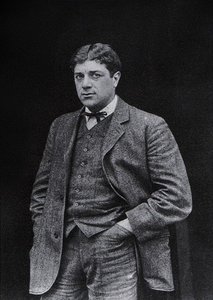
Georges Braque
1882 - 1963 , France
L'essentiel de l'artiste
- Artistes Influents:
- Henri Matisse
- André Derain
- Paul Cézanne
- Date De Décès: 1963
- Date De Naissance: 13 mai 1882
- Influence Sur Les Artistes: ['Pablo Picasso']
- Lieu De Naissance: Argenteuil, France
- Mouvement Artistique: Cubisme, Fauvisme
- Nationalité: Française
- Nom Complet: Georges Braque
- Oeuvres Notables:
- Maisons à L'Estaque
- La Patience
- Le Clarinette
- Nature morte avec cruets
Articles connexes
L'Élégance du Monochrome : Explorer l'Abstraction Noir, Blanc et Gris dans la Décoration Intérieure Contemporaine
Explorez l'élégance du monochrome ! Découvrez comment créer un intérieur sophistiqué et apaisant avec nos conseils d'experts en décoration. Inspirez-vous des dernières tendances et transformez votre espace.
Deconstructing Reality: A Comprehensive Exploration of Cubist Still Life
Explore the revolutionary world of Cubist Still Life with ArtsDot. Discover Picasso & Braque's groundbreaking techniques, its philosophical roots, and lasting impact on modern art. Expert insights for collectors.

Maurice Prendergast: Pioneering Abstraction & the Poetics of Modern American Life
Explore the captivating world of Maurice Brazil Prendergast, a pioneer of American Modernism. Discover his unique mosaic style, influence on abstract art, and investment potential. Expert analysis & collecting guide.

Les 10 Chefs-d'œuvre Cubistes Révolutionnaires : Art, Décor & Histoire
Plongez au cœur du cubisme avec les 10 œuvres révolutionnaires de Picasso, Braque et Gris. Découvrez l'histoire, les techniques et l'impact de ce mouvement artistique majeur. Reproductions d'art de qualité musée sur ArtsDot.com !

De la Nature Morte Classique à l'Abstraction Contemporaine : Élever les Espaces de Réception d'une Villa par la Reproduction Artistique
Découvrez l'histoire de la nature morte et sublimez votre villa avec des reproductions d'art exceptionnelles. Conseils d'experts, personnalisation sur mesure & qualité garantie par ArtsDot.



