


 Aperçu en situation
 Partager
 Partager
 Détails
 Guide
Guide

 Télécharger
 Articles similaires
 Radiographie
 Voir le diaporama
 Statistiques
Rocky Crags at L'Estaque (Rochers à l'Estaque)


 Afficher la suite
Reproduction à l'huile faite à la main
Huile sur toile peinte à la main, avec cadre et dimensions personnalisés, réalisée sur commande par nos artistes. ( Passer au format impression Passer au format image numérique)




P118B $10

P118H $10

P118W $10

P438Z $10

P508JH $12

P508YH $12

P805H $10

P805Z $10

P919BZ $10

P919G $10

P919XJ $10

P959ZH $10

P968JZ $12

W106C $8

W218G $10

W218JH $8

W218Y $10

W307PJ $10

W316G $10

W316PJ $8

W316Y $10

W398PJ $8

W4111J $10

W500HY $15

W500JH $15

W692G $12

W849H $8

W940BG $15

W953PJ $8




Choisissez parmi nos formats prédéfinis qui respectent les proportions originales de l’œuvre.

Vous pouvez saisir vos propres dimensions pour l'adapter à un cadre ou à un espace spécifique. Si la taille sélectionnée ne correspond pas aux proportions de l'image d'origine, nous recadrerons l'œuvre ou prolongerons la peinture avec des éléments peints à la main supplémentaires. Une maquette numérique vous sera envoyée pour approbation avant le début de la production.
Veuillez noter que l'aperçu à l'écran ne reflète pas le recadrage ou l'extension réels. Seule la maquette montrera fidèlement la composition finale.
Bien que des tailles personnalisées soient disponibles, nous vous recommandons de sélectionner une dimension dans la liste prédéfinie afin de préserver les proportions d'origine.
Après la commande, l’équipe ArtsDot.com contactera le client par e-mail pour recueillir ses instructions et lui fournira une maquette d’aperçu
Livraison dans le monde entier () en 3 à 4 semaines au lieu des 5 semaines habituelles. (22 septembre). Aucun compromis sur la qualité.

Livraison express gratuite dans le monde entier

Toile de lin de haute qualité

Assurance transport complète

Garantie de remboursement des droits de douane

Garantie de fidélité des couleurs

Garantie de retour de 100 jours (uniquement en cas de défaut)

Garantie de remboursement à 100%

Tarifs dégressifs sur quantité
 L'option verre n'est disponible que pour les dimensions inférieures à 110 cm.

Rocky Crags at L'Estaque (Rochers à l'Estaque)
Technique de reproduction
Format de la reproduction
-


Prix total final
$ 263
Pierre-Auguste Renoir: A Celebration of Light and Feminine Sensuality
Renoir’s artistic journey began amidst the vibrant intellectual currents of Paris in the mid-1860s, where he encountered fellow Impressionists like Claude Monet and Frédéric Bazille. These formative encounters profoundly influenced his stylistic sensibilities, propelling him toward a distinctive approach that prioritized capturing fleeting moments of beauty—particularly the radiant glow of sunlight on surfaces—and portraying idealized depictions of women. His early works demonstrate an admiration for Rubens and Watteau’s masterful use of color and composition, establishing a foundation for his future explorations into Impressionism's core principles. The Salon system initially rejected Renoir’s innovative vision, forcing him to forge alliances with fellow artists and championing the groundbreaking First Impressionist Exhibition in 1874. Despite initial criticism, this exhibition marked a pivotal moment, securing Renoir’s recognition as a leader of the movement and solidifying his reputation for capturing the essence of Parisian life and artistic experimentation.- Early Influences: Rubens and Watteau instilled in Renoir an appreciation for opulent color palettes and graceful figures—elements that would permeate his oeuvre throughout his career.
- Salon Rejection: The conservative Salon juries initially dismissed Renoir’s Impressionist style, necessitating collaborative efforts to establish the First Impressionist Exhibition as a beacon of artistic innovation.
- The Founding Impressionists: Alongside Monet and Bazille, Renoir formed a core group dedicated to redefining painting's role in conveying emotion and capturing the ephemeral qualities of light—a mission that would define the Impressionist movement’s legacy.
Rocky Crags at L'Estaque (Rochers à l'Estaque): A Landscape Reverie
Renoir’s fascination with Cézanne’s architectural precision inspired him to depict the rugged beauty of L’Estaque, a coastal village near Marseille. Completed in 1882, this painting embodies the Impressionist ethos—a deliberate eschewal of academic conventions in favor of capturing immediate sensory experience. The scene unfolds against a backdrop of towering limestone cliffs bathed in warm sunlight, punctuated by winding dirt roads and populated by figures engaged in everyday activities. Two dogs accompany Renoir’s subjects, adding to the tranquil atmosphere and reinforcing the painting's harmonious blend of observation and emotion.- Subject Matter: The painting captures a quintessential Provençal landscape—a juxtaposition of monumental rock formations and human presence that reflects Cézanne’s influence on Renoir’s artistic vision.
- Technique: Renoir employs loose brushstrokes and vibrant hues to convey the diffused light characteristic of Impressionism, prioritizing texture and color over meticulous detail.
- Composition: The winding road serves as a visual guide through the rocky terrain, drawing the viewer’s eye into the expansive panorama—a compositional strategy that aligns with Cézanne's approach to landscape painting.
Style and Symbolism: Impressionistic Elegance
Renoir’s artistic style is characterized by a masterful manipulation of color—particularly warm tones—to evoke feelings of serenity and warmth. His brushstrokes are soft, blending seamlessly together to create an illusion of depth and luminosity, mirroring the Impressionists' commitment to portraying light as it transforms throughout the day. The painting’s depiction of women embodies Renoir’s fascination with feminine beauty and sensuality—a recurring theme in his artistic output. Furthermore, the inclusion of dogs symbolizes companionship and vitality, enriching the overall narrative of the scene.- Color Palette: Renoir utilizes a palette dominated by yellows, oranges, and reds to capture the radiant warmth of sunlight on the rocky cliffs—a deliberate stylistic choice that underscores Impressionism’s focus on sensory perception.
- Brushwork: Renoir's technique prioritizes blending brushstrokes to achieve an ethereal quality—a hallmark of Impressionist painting that distinguishes it from academic realism.
- Symbolic Elements: The dogs represent loyalty and joy, contributing to the painting’s harmonious portrayal of human interaction with nature—a reflection of Renoir’s broader artistic concerns about capturing beauty and emotion.
Connections to Other Artists: Monet's Influence
Renoir’s stylistic sensibilities resonate deeply with Claude Monet’s approach to landscape painting, particularly his exploration of the effects of light on natural environments. Like Monet, Renoir sought to capture fleeting moments of beauty—emphasizing color and texture over precise representation—a strategy that aligns seamlessly with Impressionism's core tenets. The shared admiration for Cézanne’s architectural precision further underscores the interconnectedness of these artistic figures—demonstrating a collective commitment to redefining painting’s role in conveying emotion and capturing the essence of visual experience.- Monet Comparison: Renoir’s technique mirrors Monet's focus on portraying light as it shifts throughout the day—a stylistic convergence that exemplifies Impressionism’s overarching ambition.
- Shared Inspiration: Both artists were profoundly influenced by Cézanne’s groundbreaking approach to landscape painting—demonstrating a collective pursuit of artistic innovation and expressive depth.
Conclusion: A Legacy of Light and Beauty
Rocky Crags at L'Estaque stands as a testament to Pierre-Auguste Renoir’s artistic genius—a masterpiece that encapsulates the Impressionist movement’s ethos of capturing fleeting moments of beauty and conveying emotion through vibrant color palettes and loose brushstrokes. Its enduring appeal lies in its ability to evoke feelings of tranquility and wonder—reflecting Renoir's unwavering dedication to portraying the sublime grandeur of nature alongside human presence. This exceptional oil painting reproduction, available on ArtsDot.com, allows art enthusiasts worldwide to appreciate the profound beauty and artistic innovation embodied within this iconic artwork.Œuvres similaires


Biographie de l'artiste
jeunesse et carrière
pierre-auguste renoir, un artiste français essentiel, est né le 25 février 1841 à Limoges, en France. Il a joué un rôle crucial dans la formation du mouvement impressionniste, réputé pour sa lumière vibrante et ses couleurs saturées. L'œuvre de Renoir célébrait la beauté, en particulier la sensualité féminine, le plaçant dans une lignée d'artistes allant de Rubens à Watteau.héritage artistique
L'héritage de Renoir s'est étendu au-delà de ses toiles, en tant que patriarche d'une famille où l'art prospérait sous diverses formes. Ses enfants, pierre renoir (1885–1952), le cinéaste jean renoir (1894–1979) et l'artiste céramiste claude renoir (1901–1969), ont chacun apporté des contributions significatives dans leurs domaines respectifs. Son petit-fils, le cinéaste claude renoir (1913–1993), a davantage fait progresser l'héritage artistique de la famille.œuvres notables et musées
* la danse à Bougival, une peinture notable de Renoir, illustre sa maîtrise de la capture de l'essence de l'art impressionniste. * Le musée des collettes, situé à Cagnes-sur-Mer, en France, est une destination incontournable pour les amateurs d'art. Ce musée, autrefois la maison de pierre-auguste renoir, témoigne de sa vie et de son œuvre, abritant quinze de ses peintures. * Le musée maurice denis, une autre perle cachée en France, présente une impressionnante collection de peintures post-impressionnistes françaises du XIXe et début du XXe siècle.explorez l'art de Renoir avec ArtsDot
- découvrez le charme du musée des collettes (France) et de son art impressionniste sur ArtsDot : [https://ArtsDot.com/@@/a@d3aupf](https://ArtsDot.com/@@/a@d3aupf)
- explorez les merveilles du musée maurice denis (France) avec ArtsDot : /fr/art/show/art-d3aue3-fr/
- visualisez les peintures de Renoir, y compris la danse à Bougival, sur ArtsDot : [https://ArtsDot.com/@/pierre-auguste renoir](https://ArtsDot.com/@/pierre-auguste%20renoir)

Pierre-Auguste Renoir
1841 - 1919 , France
En bref
- Artistes Influents:
- Rubens
- Watteau
- Camille Pissarro
- Édouard Manet
- Date De Décès: 3 décembre 1919
- Date De Naissance: 25 février 1841
- Influences Artistiques:
- Impressionnisme
- Post-impressionnisme
- Lieu De Naissance: Limoges, France
- Mouvement Artistique: Impressionnisme
- Nationalité: Française
- Nom Complet: Pierre-Auguste Renoir
- Oeuvres Notables:
- La Danse à Bougival
- Le Déjeuner des canotiers
- Bal au moulin de la Galette
- Après le bain
Articles similaires

Évocations de lieux : Un voyage historique à travers l'art du paysage
Explorez l'histoire fascinante de la peinture de paysage à travers les chefs-d'œuvre du Romantisme. Découvrez Friedrich, Turner et Aivazovski et laissez-vous inspirer par la beauté sauvage et le sublime. Reproduction d'art de qualité chez ArtsDot.

Les 10 Chefs-d'œuvre Impressionnistes qui ont Révolutionné le Paysage
Plongez dans l'univers vibrant de l'impressionnisme ! Découvrez les 10 chefs-d'œuvre de Monet, Renoir et autres maîtres qui ont révolutionné le paysage. Inspirez votre décoration intérieure avec ArtsDot.com : reproductions tableaux de qualité muséale.
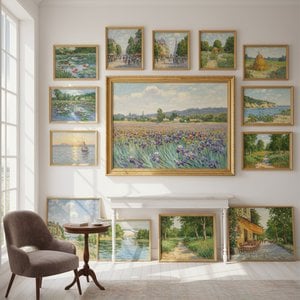
Les 10 Chefs-d'œuvre Impressionnistes qui ont Révolutionné le Paysage
Plongez au cœur de l'Impressionnisme avec les 10 chefs-d'œuvre qui ont révolutionné le paysage. Découvrez Monet, Renoir et plus encore sur ArtsDot.com – reproductions d'art de qualité muséale pour sublimer votre intérieur.

Renoir : 25 Chefs-d'œuvre Incontournables – L’Art de la Lumière
Plongez au cœur de l'univers vibrant de Pierre-Auguste Renoir ! Découvrez 25 chefs-d’œuvre emblématiques, explorant la lumière, les couleurs et la joie de vivre. Reproductions d'art de qualité musée sur ArtsDot.com.

Paul Cézanne : Les 25 Œuvres Maîtresses d'un Génie Révolutionnaire | ArtsDot
Plongez dans l'univers de Paul Cézanne avec les 25 œuvres incontournables du maître post-impressionniste. Découvrez l'histoire, la technique et l'émotion derrière ses tableaux iconiques comme 'Les Baigneuses' ou 'Mont Sainte-Victoire'. Reproductions d'art haute qualité sur ArtsDot.com.


