
- Accueil

- Reproduction de peinture à l'huile
- Frits Thaulow
- Stream through a Village

 Commander l'impression Acheter l'image haute résolution
 Partager
 Partager
 Details
 Ajouter aux favoris

 Télécharger
 Articles similaires
 X-Ray
X-Ray
 Diaporama
Stream through a Village

Reproduction à l'huile faite à la main
Huile sur toile peinte à la main, avec cadre et dimensions personnalisés, réalisée sur commande par nos artistes.




































 En savoir plus
Choisissez parmi nos formats prédéfinis qui respectent les proportions originales de l’œuvre.

Vous pouvez saisir vos propres dimensions pour l'adapter à un cadre ou à un espace spécifique. Si la taille sélectionnée ne correspond pas aux proportions de l'image d'origine, nous recadrerons l'œuvre ou prolongerons la peinture avec des éléments peints à la main supplémentaires. Une maquette numérique vous sera envoyée pour approbation avant le début de la production.
Veuillez noter que l'aperçu à l'écran ne reflète pas le recadrage ou l'extension réels. Seule la maquette montrera fidèlement la composition finale.
Bien que des tailles personnalisées soient disponibles, nous vous recommandons de sélectionner une dimension dans la liste prédéfinie afin de préserver les proportions d'origine.
Après la commande, l’équipe ArtsDot.com contactera le client par e-mail pour obtenir ses instructions et lui fournira une maquette d’aperçu.
Livraison dans le monde entier () en 3 à 4 semaines au lieu des 5 semaines habituelles. (1 juillet). Aucune concession sur la qualité.

Livraison express gratuite dans le monde entier

Toile de lin de haute qualité

Assurance transport complète

Garantie de remboursement des frais de douane

Garantie de fidélité des couleurs

Politique de retour de 60 jours (uniquement en cas de défaut)

Garantie de remboursement à 100%

Réduction sur les achats groupés
 L'option verre n'est disponible que pour les dimensions inférieures à 110 cm.

Stream through a Village
Technique de reproduction
Format de reproduction
-


Prix total final
-
Œuvres apparentées


Biographie de l'artiste
A Norwegian Voice in the Impressionist Chorus
Frits Thaulow, a name perhaps less immediately recognizable than Monet or Renoir, nevertheless occupies a significant and compelling space within the narrative of 19th-century Impressionism. Born Johan Frederik Thaulow in Oslo (then Christiania) in 1847, he wasn’t simply *influenced* by the French movement; he actively participated in it, bringing a distinctly Scandinavian sensibility to its exploration of light, atmosphere, and modern life. His story is one of artistic pilgrimage, bridging the cool, dramatic landscapes of Norway with the burgeoning avant-garde scene of Paris, ultimately forging a style uniquely his own—one deeply rooted in naturalism yet infused with an Impressionistic shimmer. Thaulow’s lineage provided him with both privilege and intellectual stimulation; his father was a prosperous chemist, and his mother came from the respected Munch family (a connection that places him within the orbit of Edvard Munch, though their artistic paths diverged). This background afforded him access to education at the Royal Academy of Drawing in Oslo and later, crucial formative studies in Copenhagen and Karlsruhe under Hans Gude, a pivotal figure in Norwegian landscape painting.Early Influences and Artistic Formation
Thaulow’s early artistic inclinations were nurtured by his family’s intellectual environment—a rare circumstance for young men of his time. Encouraged by his father’s scientific curiosity and inspired by the literary salons of Kristiania, Thaulow developed a keen interest in observation and representation. He enrolled at the Academy of Fine Art in Copenhagen in 1870–1872, where he studied under Hans Gude—a connection that would prove formative for his artistic development. Gude’s emphasis on capturing the fleeting effects of light and color profoundly shaped Thaulow’s approach to painting, introducing him to the principles of Naturalism—a movement championed by Jules Bastien-Lepage and rejecting academic conventions in favor of direct observation. This influence was reinforced during his subsequent studies in Karlsruhe, where he honed his technical skills and experimented with various mediums. The atmosphere of Karlsruhe fostered a spirit of innovation and collaboration among young artists eager to break free from traditional artistic restraints.From Norwegian Landscapes to Parisian Light
The turning point in Thaulow’s artistic trajectory arrived in 1879 when he embarked on a journey to Skagen, Denmark—a coastal village rapidly gaining renown for its unique light conditions and the vibrant artistic community it attracted. Alongside Christian Krohg, Thaulow immersed himself in capturing the essence of Skagen’s landscape—the rugged coastline, the windswept dunes, and the dramatic interplay of sea spray and sunlight. This experience marked a decisive departure from his earlier work, propelling him toward a more expressive style characterized by looser brushstrokes and subtle color harmonies. He wasn't merely attempting to depict a scene; he was striving to convey its emotional impact—the sublime grandeur of nature and the profound sense of solitude that accompanied contemplation. It was here that Thaulow began to truly embrace Impressionism, recognizing its power to capture the ephemeral qualities of light and atmosphere.The Parisian Years: Collaboration and Artistic Exploration
Thaulow’s decision to relocate to Paris in 1892 represented another significant step forward in his artistic evolution. Initially drawn to the city's intellectual vibrancy and eager to engage with the avant-garde movement, he quickly realized that Paris lacked the restorative influence of Norwegian landscapes—a realization that spurred him to seek inspiration in smaller towns and villages across France. He established studios in Montreuil-sur-Mer, Dieppe, Quimperle, and Beaulieu-sur-Dordogne, creating a rich tapestry of artistic experiences. During his time in Paris, Thaulow collaborated closely with fellow artists—most notably Edvard Munch—forming a bond that transcended stylistic differences and fueled mutual inspiration. He participated actively in the Salon du Champ de Mars, showcasing his paintings alongside prominent Impressionists like Monet and Renoir, demonstrating his commitment to engaging with broader artistic currents of the era.A Legacy of Serene Landscapes
Thaulow’s artistic output—approximately fifty paintings annually—is distinguished by its remarkable sensitivity to light and color, as well as its profound engagement with the rhythms of rural life. His canvases depict tranquil rivers, snow-covered streets, and sunlit meadows—scenes imbued with a quiet lyricism that reflects his deep appreciation for the beauty of the natural world. Unlike many of his contemporaries who sought to dramatize emotion or convey grand narratives, Thaulow focused on capturing fleeting moments of contemplation—a woman carrying water, a horse-drawn carriage traversing a snowy lane, sunlight filtering through trees along a riverbank. His technique—characterized by broken brushstrokes and subtle color variations—allowed him to achieve an astonishing degree of realism while simultaneously conveying the ethereal quality of light—a hallmark of Impressionism. Thaulow’s paintings stand as enduring monuments to his artistic vision—works that continue to captivate viewers with their serene beauty and profound emotional resonance. He died unexpectedly in Volendam, Netherlands, in 1906 at the age of 59, leaving behind a legacy that secures his place among Norway’s most celebrated landscape painters.
Frits Thaulow
1847 - 1906 , Norvège
En bref
- Artistic Movement Or Style: Impressionnisme
- Artists Who Influenced This Artist: ['Hans Gude']
- Date Of Birth: 1847
- Date Of Death: 1906
- Full Name: Johan Frederik Thaulow
- Nationality: Norvégien
- Notable Artworks:
- Fra Beaulieu
- Winter at Simoa River
- A Morning River Scene
- Place Of Birth: Oslo, Norway
Articles connexes

From Imagination to Canvas: Commissioning Bespoke Fantasy Art with Traditional Oil Painting Techniques
Commission breathtaking bespoke fantasy art with skilled oil painters. Explore techniques, artist selection & preservation tips. Invest in a unique masterpiece today!


Évocations de Lieux : Un Voyage Historique à Travers l'Art du Paysage
Explorez l'histoire fascinante de la peinture de paysage romantique ! Découvrez les maîtres (Friedrich, Turner) et le concept du sublime. Conseils d'experts pour collectionner et apprécier cet art intemporel.

Top 10 Chefs-d'œuvre à l'Huile : L'Art qui a Révolutionné le Décor Intérieur
Plongez dans l'histoire de 10 chefs-d'œuvre à l'huile qui ont révolutionné l'art : Monet, Van Gogh, Rembrandt et plus. Découvrez les techniques, les émotions et trouvez l'inspiration déco sur ! Explorez la collection.
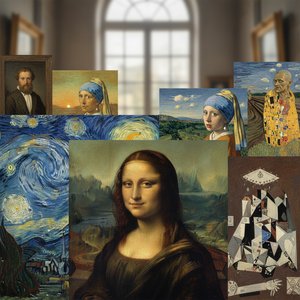
Les 10 Chefs-d'œuvre à l'Huile qui ont Révolutionné l'Art |
Plongez dans l'univers des 10 chefs-d'œuvre à l'huile qui ont marqué l'histoire de l'art ! Découvrez les secrets de Van Gogh, Monet, Rembrandt et autres artistes emblématiques. Trouvez l'inspiration déco & achetez des reproductions de qualité sur .

Les 10 Chefs-d'œuvre à l'Huile sur Panneau qui ont Révolutionné l'Art |
Plongez dans l'histoire des 10 chefs-d'œuvre à l'huile sur panneau qui ont marqué l'art pour toujours. Découvrez Jan van Eyck, Botticelli et les maîtres flamands. Inspirez votre décoration intérieure avec – reproductions d'art de qualité musée.

