
- Accueil

- Impression sur toile
- Fernand Léger
- Untitled

 Commander la reproduction Acheter l'image haute résolution
 Partager
 Partager
 Détails de l'œuvre
 Ajouter aux favoris

 Télécharger
 Articles similaires
 Radiographie
 Diaporama
Untitled

 Afficher la suite
Giclée / Impression d'art
Impression giclée ou sur toile de qualité musée, avec une production rapide et des finitions au choix.




P118B $10

P118H $10

P118W $10

P438Z $10

P508JH $12

P508YH $12

P805H $10

P805Z $10

P919BZ $10

P919G $10

P919XJ $10

P959ZH $10

P968JZ $12

W106C $8

W218G $10

W218JH $8

W218Y $10

W307PJ $10

W316G $10

W316PJ $8

W316Y $10

W398PJ $8

W4111J $10

W500HY $15

W500JH $15

W692G $12

W849H $8

W940BG $15

W953PJ $8




Choisissez parmi nos formats prédéfinis qui respectent les proportions originales de l’œuvre.

Vous pouvez saisir vos propres dimensions pour vous adapter à un cadre ou à un espace spécifique. Si la taille sélectionnée ne correspond pas aux proportions de l'image originale, nous recadrerons l'œuvre ou étendrons l'image avec une bordure en miroir ou une couleur unie. Une maquette numérique vous sera envoyée pour approbation avant le début de la production.
Veuillez noter que l'aperçu à l'écran ne reflète pas le recadrage ou l'extension réelle. Seule la maquette montrera avec précision la composition finale.
Bien que des tailles personnalisées soient disponibles, nous vous recommandons de choisir une dimension dans la liste prédéfinie afin de préserver les proportions originales.
Livraison dans le monde entier () en 2 semaines au lieu des 4/5 semaines habituelles. (18 juillet)

Livraison express gratuite dans le monde entier

Toile de lin de haute qualité

Assurance transport complète

Garantie de remboursement des frais de douane

Garantie de fidélité des couleurs

Politique de retour de 60 jours (uniquement en cas de défaut)

Garantie de remboursement à 100%

Réduction sur les achats groupés
 L'option verre n'est disponible que pour les dimensions inférieures à 110 cm.

Untitled
Giclée / Impression d'art
Format de reproduction
-


Prix total final
-
Description de l'œuvre
A Life Forged in Form: The World of Fernand Léger
Fernand Léger, born Joseph Fernand Henri Léger in 1881 amidst the rural landscapes of Argentan, Normandy, stands as a pivotal figure in the evolution of modern art. His journey from the farmlands of his youth to the forefront of Parisian avant-garde circles is a testament to an unwavering artistic vision and a relentless pursuit of capturing the spirit of the machine age. Unlike many of his contemporaries who embraced abstraction as a retreat from representation, Léger sought to *integrate* modernity – its dynamism, its mechanical forms, its very essence – into a new visual language that was both powerfully abstract and deeply rooted in the observable world. His early life, steeped in the physicality of agricultural labor, provided a grounding contrast to the industrialized future he would so passionately depict. Initially destined for architecture, Léger’s path shifted towards painting after arriving in Paris around 1900, supporting himself through illustration work and absorbing the influences of Impressionism and Cubism before forging his own distinctive style.The Birth of Geometric Abstraction
Léger's artistic breakthrough arrived during the tumultuous years following World War I, coinciding with the burgeoning fascination for industrialization and technological advancement. Rejecting the prevailing trend toward pure abstraction—the fragmentation and simplification championed by Picasso and Braque—Léger embarked on a radical experiment: to represent reality not through illusionistic depiction but through geometric forms – cubes, cylinders, spheres – arranged in bold, contrasting colors. This approach wasn’t merely stylistic; it was fundamentally conceptual. Léger believed that these shapes mirrored the underlying structure of machines and urban environments, reflecting the pervasive influence of industrial logic on human experience. He famously declared, “I want to paint what I see,” but insisted that he saw not what *appeared* but what *was*.Technique and Material Innovation
Léger’s distinctive technique involved applying pigment onto ceramic surfaces using a method known as "polychrome," which allowed for the creation of vibrant, textured murals. This innovative process—developed collaboratively with Georges Bauquier—involved layering multiple coats of glaze over earthenware tiles, resulting in astonishingly luminous and durable artworks. The meticulous preparation of each tile was itself an artistic endeavor, reflecting Léger’s commitment to precision and control. Furthermore, he experimented extensively with color palettes, favoring combinations of primary hues – red, yellow, blue – punctuated by black and white, creating visual compositions that were both visually arresting and intellectually stimulating.Symbolism Within Geometric Form
Despite its apparent simplicity, Léger’s art is laden with symbolic meaning. The geometric shapes themselves represent not just mechanical structures but also concepts of order, stability, and universality. Recurring motifs—such as the human figure rendered in simplified cubes—suggested a reimagining of humanity's relationship to technology and the environment. Léger envisioned humans as inhabiting a world dominated by machines, yet simultaneously retaining their essential human qualities – emotion, vitality, and connection to nature. The artist’s intention was to convey a sense of optimism about the future, portraying it not as a dystopian nightmare but as an opportunity for artistic renewal.Emotional Impact and Legacy
Fernand Léger's paintings resonate with viewers today precisely because they capture a profound emotional truth: the anxiety and exhilaration inherent in confronting the transformative forces of modernity. The bold colors, energetic compositions, and stylized figures evoke a feeling of dynamism and movement—a visual embodiment of the human spirit striving to adapt to an ever-changing world. Léger’s influence extends far beyond his own lifetime, inspiring generations of artists who continue to explore the possibilities of geometric abstraction as a means of expressing complex ideas about humanity's place in history. His enduring legacy serves as a reminder that art can illuminate both the beauty and the challenges of our time.Œuvres apparentées


Biographie de l'artiste
jeune vie et formation
fernand léger, peintre, sculpteur et cinéaste français, est né le 4 février 1881 à Argentan, Orne, en Normandie inférieure. Son père élevait du bétail, et léger a initialement été formé à l'architecture de 1897 à 1899. Il s’est ensuite installé à Paris en 1900, se débrouillant comme dessinateur architectural.développement artistique
Le travail précoce de léger a été influencé par l'impressionnisme, comme le montrent le jardin de ma mère (mon jardin) (1905). Après avoir fréquenté l'école des beaux-arts et l’académie Julian, il a commencé à travailler sérieusement comme peintre à 25 ans. Son style s'est développé en une forme personnelle de cubisme, que les critiques ont qualifié de "tubisme" pour son accent sur les formes cylindriques.cubisme et le groupe des Puteaux
En 1910, léger a exposé au Salon d’automne aux côtés de jean metzinger et henri le fauconnier. Il a rejoint le groupe des Puteaux, également connu sous le nom de section d’or (la section dorée), avec d'autres artistes tels que francis picabia et marcel duchamp.guerre et son influence sur le travail de léger
Les expériences de léger à la Première Guerre mondiale ont eu un impact significatif sur son œuvre. Pendant son séjour au front, il a produit des croquis d'artillerie, d'avions et de soldats. Sa peinture soldier avec un tuyau (1916) reflète cette période.œuvre ultérieure et héritage
L'œuvre post-guerre de léger, caractérisée par des formes machine-like élégantes, le lia à la tradition de la peinture figurative française. Ses paysages animés de 1921 ont présenté des figures et des animaux dans des formes harmonieuses et rationalisées.- voir les œuvres de fernand léger sur ArtsDot
- en savoir plus sur fernand léger sur wikipedia
- découvrez le musée national fernand léger (france) avec ArtsDot
- la femme assise (100 x 81 cm, tubisme)
- élément de machine (cubisme)

Fernand Léger
1881 - 1955 , France
En bref
- Artistes Influents:
- Cézanne
- Impressionnisme
- Date De Décès: 1955
- Date De Naissance: 4 février 1881
- Influences Artistiques: ['Pop Art']
- Lieu De Naissance: Argentan, France
- Mouvement Artistique: Cubisme, Tubisme
- Nationalité: Française
- Nom Complet: Fernand Léger
- Oeuvres Notables:
- La Grande Parade
- Machine Élément
- Femme assise
- Paysages animés
Articles connexes
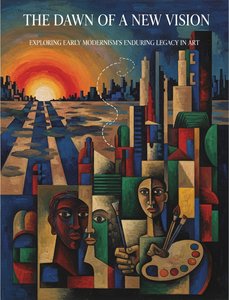
The Dawn of a New Vision: Exploring Early Modernism's Enduring Legacy in Art
Explore the revolutionary world of Early Modernism! Discover key artists like Picasso & Léger, pivotal movements, and lasting philosophical influences. Uncover the seeds of change that shaped 20th-century art.

Cubisme : Les 10 Chefs-d'œuvre Révolutionnaires à Redécouvrir |
Plongez au cœur du cubisme avec ! Découvrez les 10 chefs-d'œuvre de Picasso, Braque et autres artistes révolutionnaires. Reproductions d'art haute qualité pour une décoration intérieure unique. Explorez la collection sur

Top 10 des Chefs-d'œuvre à l'Acrylique qui ont Révolutionné l'Art |
Plongez dans l'univers vibrant des 10 chefs-d'œuvre à l'acrylique qui ont marqué l'histoire de l'art. Découvrez Jackson Pollock, Rothko et autres artistes emblématiques. Reproductions de qualité muséale sur . Explorez la collection !

Abstraction Géométrique : Les 10 Chefs-d'œuvre qui ont Marqué l'Histoire de l'Art
Plongez au cœur de l'abstraction géométrique avec ArtsDot.com ! Découvrez les 10 œuvres majeures de Mondrian, Malevitch et Kandinsky qui ont révolutionné l'art moderne. Inspirez votre décoration intérieure avec des reproductions de tableaux exceptionnelles. Explorez la collection en ligne !

Fernand Léger : Les 25 Œuvres Maîtresses d'un Pionnier du Modernisme | ArtsDot
Plongez dans l'univers vibrant de Fernand Léger ! Découvrez les 25 œuvres majeures du cubisme et du tubisme, explorant formes géométriques et couleurs audacieuses. Retrouvez des reproductions d'art exceptionnelles sur ArtsDot.com.



