
- Accueil

- Impression sur toile
- Fernand Léger
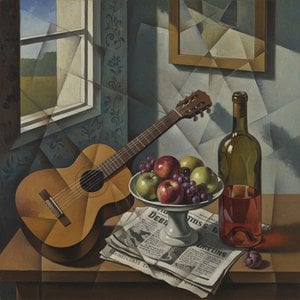
- Still Life

 Commander la reproduction Acheter l'image haute résolution
 Partager
 Partager
 Détails de l'œuvre
 Ajouter aux favoris

 Télécharger
 Articles similaires
 Radiographie
 Diaporama
Still Life


 Afficher la suite
Giclée / Impression d'art
Impression giclée ou sur toile de qualité musée, avec une production rapide et des finitions au choix.




P118B $10

P118H $10

P118W $10

P438Z $10

P508JH $12

P508YH $12

P805H $10

P805Z $10

P919BZ $10

P919G $10

P919XJ $10

P959ZH $10

P968JZ $12

W106C $8

W218G $10

W218JH $8

W218Y $10

W307PJ $10

W316G $10

W316PJ $8

W316Y $10

W398PJ $8

W4111J $10

W500HY $15

W500JH $15

W692G $12

W849H $8

W940BG $15

W953PJ $8




Choisissez parmi nos formats prédéfinis qui respectent les proportions originales de l’œuvre.

Vous pouvez saisir vos propres dimensions pour vous adapter à un cadre ou à un espace spécifique. Si la taille sélectionnée ne correspond pas aux proportions de l'image originale, nous recadrerons l'œuvre ou étendrons l'image avec une bordure en miroir ou une couleur unie. Une maquette numérique vous sera envoyée pour approbation avant le début de la production.
Veuillez noter que l'aperçu à l'écran ne reflète pas le recadrage ou l'extension réelle. Seule la maquette montrera avec précision la composition finale.
Bien que des tailles personnalisées soient disponibles, nous vous recommandons de choisir une dimension dans la liste prédéfinie afin de préserver les proportions originales.
Livraison dans le monde entier () en 2 semaines au lieu des 4/5 semaines habituelles. (22 juillet)

Livraison express gratuite dans le monde entier

Toile de lin de haute qualité

Assurance transport complète

Garantie de remboursement des frais de douane

Garantie de fidélité des couleurs

Politique de retour de 60 jours (uniquement en cas de défaut)

Garantie de remboursement à 100%

Réduction sur les achats groupés
 L'option verre n'est disponible que pour les dimensions inférieures à 110 cm.

Still Life
Giclée / Impression d'art
Format de reproduction
-


Prix total final
-
Description de l'œuvre
Fernand Léger’s Still Life: A Symphony of Geometric Form
The painting “Still Life” by Fernand Léger, completed in 1927, isn't merely an arrangement of objects; it’s a deliberate manifesto of Léger’s artistic philosophy – a fervent embrace of geometric abstraction as a response to the burgeoning influence of industrialization. Examining this artwork reveals not just visual aesthetics but also a profound commentary on the anxieties and aspirations of the era.- Subject Matter: Léger eschews traditional still life conventions, opting instead for a carefully curated selection of commonplace items – a vase brimming with flowers, a bottle radiating light, a bowl holding fruit, utensils meticulously positioned—objects familiar to everyday life yet rendered unrecognizable through Léger’s transformative vision.
- Style: Léger's style is undeniably Cubist-influenced, albeit radically simplified. He dismantles the illusion of three dimensions, fracturing objects into angular planes and intersecting lines that echo the rhythms of machinery. This fragmentation isn’t destructive; it’s liberating—a means of conveying movement and dynamism within a static composition.
- Technique: Léger employs a bold palette dominated by primary colors – scarlet red, cadmium yellow, ultramarine blue – applied with thick impasto strokes that create palpable textural surfaces. The paint itself becomes an active participant in the artwork’s expressive power, mirroring the relentless energy of the industrial landscape.
Historical Context: Embracing the Machine Age
The painting emerged during a period of intense societal upheaval following World War I. Léger was deeply affected by the devastation and disillusionment that gripped Europe, perceiving the war as a symbol of irrational violence and fragmentation. He responded to this crisis not with melancholic introspection but with an urgent desire to forge a new artistic language—one capable of confronting the challenges posed by technological progress without succumbing to despair.Symbolism: Geometric Precision Versus Organic Decay
Despite Léger’s deliberate rejection of naturalistic representation, his artwork is laden with symbolic significance. The geometric forms – cubes, cylinders, cones—represent the dominance of machine logic and the relentless march toward industrial standardization. Simultaneously, however, Léger subtly incorporates elements of organic decay—the drooping petals of flowers, the bruised fruit—serving as a poignant reminder of the fragility of life and the inevitable confrontation between nature and technology.Emotional Impact: A Vision of Controlled Chaos
“Still Life” transcends mere visual depiction; it communicates an emotional state – one characterized by both apprehension and exhilaration. Léger’s masterful manipulation of color, texture, and form generates a sense of controlled chaos—a dynamic equilibrium that captures the paradoxical beauty inherent in embracing modernity while acknowledging its darker side. The painting invites contemplation on themes of transformation, resilience, and the enduring human spirit.- Interior Design Considerations: Léger’s bold geometric style lends itself beautifully to contemporary interior design schemes—particularly those prioritizing minimalist aesthetics and vibrant color accents. Reproductions of “Still Life” can serve as striking focal points within spaces seeking a connection to artistic heritage.
Fernand Léger's "Still Life" remains an enduring testament to the transformative power of art – a captivating exploration of form, color, and symbolism that continues to inspire audiences worldwide.
Œuvres apparentées


Biographie de l'artiste
jeune vie et formation
fernand léger, peintre, sculpteur et cinéaste français, est né le 4 février 1881 à Argentan, Orne, en Normandie inférieure. Son père élevait du bétail, et léger a initialement été formé à l'architecture de 1897 à 1899. Il s’est ensuite installé à Paris en 1900, se débrouillant comme dessinateur architectural.développement artistique
Le travail précoce de léger a été influencé par l'impressionnisme, comme le montrent le jardin de ma mère (mon jardin) (1905). Après avoir fréquenté l'école des beaux-arts et l’académie Julian, il a commencé à travailler sérieusement comme peintre à 25 ans. Son style s'est développé en une forme personnelle de cubisme, que les critiques ont qualifié de "tubisme" pour son accent sur les formes cylindriques.cubisme et le groupe des Puteaux
En 1910, léger a exposé au Salon d’automne aux côtés de jean metzinger et henri le fauconnier. Il a rejoint le groupe des Puteaux, également connu sous le nom de section d’or (la section dorée), avec d'autres artistes tels que francis picabia et marcel duchamp.guerre et son influence sur le travail de léger
Les expériences de léger à la Première Guerre mondiale ont eu un impact significatif sur son œuvre. Pendant son séjour au front, il a produit des croquis d'artillerie, d'avions et de soldats. Sa peinture soldier avec un tuyau (1916) reflète cette période.œuvre ultérieure et héritage
L'œuvre post-guerre de léger, caractérisée par des formes machine-like élégantes, le lia à la tradition de la peinture figurative française. Ses paysages animés de 1921 ont présenté des figures et des animaux dans des formes harmonieuses et rationalisées.- voir les œuvres de fernand léger sur ArtsDot
- en savoir plus sur fernand léger sur wikipedia
- découvrez le musée national fernand léger (france) avec ArtsDot
- la femme assise (100 x 81 cm, tubisme)
- élément de machine (cubisme)

Fernand Léger
1881 - 1955 , France
En bref
- Artistes Influents:
- Cézanne
- Impressionnisme
- Date De Décès: 1955
- Date De Naissance: 4 février 1881
- Influences Artistiques: ['Pop Art']
- Lieu De Naissance: Argentan, France
- Mouvement Artistique: Cubisme, Tubisme
- Nationalité: Française
- Nom Complet: Fernand Léger
- Oeuvres Notables:
- La Grande Parade
- Machine Élément
- Femme assise
- Paysages animés
Articles connexes
Deconstructing Reality: A Comprehensive Exploration of Cubist Still Life
Explore the revolutionary world of Cubist Still Life with ArtsDot. Discover Picasso & Braque's groundbreaking techniques, its philosophical roots, and lasting impact on modern art. Expert insights for collectors.

Immortaliser l'Intime : La Nature Morte Personnalisée, Reflet de Votre Passion et Élégance
Créez une nature morte personnalisée unique pour votre restaurant avec ArtsDot ! Artistes experts, qualité supérieure et processus sur mesure. Immortalisez votre passion culinaire. Commande facile & garantie satisfaction.

Severin Roesen: Evoking National Identity Through American Still Life Painting
Explore the captivating world of Severin Roesen, a major American still life painter influenced by Dutch masters. Discover his lush compositions and the symbolism within his art – a window into 19th-century America.

De la Nature Morte Classique à l'Abstraction Contemporaine : Élever les Espaces de Réception d'une Villa par la Reproduction Artistique
Découvrez l'histoire de la nature morte et sublimez votre villa avec des reproductions d'art exceptionnelles. Conseils d'experts, personnalisation sur mesure & qualité garantie par ArtsDot.

Silent Narratives: Exploring the Enduring Appeal of Still Life Painting Across Centuries
Explore the rich history of still life painting with ArtsDot. Discover Dutch Masters, decode vanitas symbolism & learn about collecting timeless art. Expert insights and museum-quality reproductions.



