
- Accueil

- Impression sur toile
- Edward Hopper
- Five A.M.

 Commander la reproduction Acheter l'image haute résolution
 Partager
 Partager
 Details
 Ajouter aux favoris

 Télécharger
 Articles similaires
 X-Ray
X-Ray
 Diaporama
Five A.M.
 Acrylic On Canvas
- WallArt
- New Realism
 1937
1937 51.0 x 91.0 cm
 Afficher la suite
Giclée / Impression d'art
Impression giclée ou sur toile de qualité musée, avec une production rapide et des finitions au choix.




P118B $10

P118H $10

P118W $10

P438Z $10

P508JH $12

P508YH $12

P805H $10

P805Z $10

P919BZ $10

P919G $10

P919XJ $10

P959ZH $10

P968JZ $12

W106C $8

W218G $10

W218JH $8

W218Y $10

W307PJ $10

W316G $10

W316PJ $8

W316Y $10

W398PJ $8

W4111J $10

W500HY $15

W500JH $15

W692G $12

W849H $8

W940BG $15

W953PJ $8




Choisissez parmi nos formats prédéfinis qui respectent les proportions originales de l’œuvre.

Vous pouvez saisir vos propres dimensions pour vous adapter à un cadre ou à un espace spécifique. Si la taille sélectionnée ne correspond pas aux proportions de l'image originale, nous recadrerons l'œuvre ou étendrons l'image avec une bordure en miroir ou une couleur unie. Une maquette numérique vous sera envoyée pour approbation avant le début de la production.
Veuillez noter que l'aperçu à l'écran ne reflète pas le recadrage ou l'extension réelle. Seule la maquette montrera avec précision la composition finale.
Bien que des tailles personnalisées soient disponibles, nous vous recommandons de choisir une dimension dans la liste prédéfinie afin de préserver les proportions originales.
Livraison dans le monde entier () en 2 semaines au lieu des 4/5 semaines habituelles. (2 juillet)

Livraison express gratuite dans le monde entier

Toile de lin de haute qualité

Assurance transport complète

Garantie de remboursement des frais de douane

Garantie de fidélité des couleurs

Politique de retour de 60 jours (uniquement en cas de défaut)

Garantie de remboursement à 100%

Réduction sur les achats groupés
 L'option verre n'est disponible que pour les dimensions inférieures à 110 cm.

Five A.M.
Giclée / Impression d'art
Format de reproduction
-


Prix total final
-
Description de l'œuvre
A Moment Frozen in Time: Edward Hopper’s “Five A.M.”
Edward Hopper's "Five A.M." (1937) isn’t merely a depiction of a coastal scene; it’s a distilled essence of American solitude, a poignant snapshot of the quiet drama unfolding within the mundane. Painted during a period of profound social and economic change in the United States – the shadow of the Great Depression lingered heavily – the painting captures a sense of isolation and introspection that resonates deeply with viewers even today. Hopper, already establishing his signature style, masterfully employs light and shadow to create an atmosphere thick with unspoken narratives. The scene unfolds on a rocky coastline, dominated by a towering lighthouse standing sentinel against a cloudy sky. This iconic structure, a symbol of guidance and perhaps also confinement, anchors the composition while simultaneously drawing our gaze towards the distant, hazy horizon. The two small buildings nestled amongst the rocks – likely factory or industrial structures – hint at the relentless activity just beyond the frame, contrasting sharply with the stillness of the moment presented.The Language of Light and Color
Hopper’s technique is characterized by a remarkable restraint, a deliberate avoidance of overt sentimentality. He utilizes a predominantly muted palette—grays, blues, and browns—to evoke the cool, damp atmosphere of the coastal morning. The light isn't bright or dramatic; instead, it’s diffused and melancholic, filtering through the clouds to cast long shadows across the rocks and buildings. This subtle illumination is crucial to the painting’s emotional impact, suggesting a world veiled in quiet contemplation. Notice how Hopper builds up layers of paint – often with thin washes – creating a sense of depth and texture that mimics the ruggedness of the coastline. The brushstrokes are loose and expressive, contributing to the overall feeling of immediacy and capturing the fleeting quality of light. The careful rendering of the water’s surface, reflecting the sky above, adds another layer of complexity and visual interest.Symbolism and Narrative Resonance
Beyond its purely observational qualities, “Five A.M.” is rich in symbolic meaning. The lighthouse, a recurring motif in Hopper's work, often represents both hope and isolation – a beacon for lost souls searching for direction. The distant factory buildings speak to the industrialization of America and the displacement of rural life, themes that were increasingly prevalent during this era. The lone boat, positioned near the center-right, could be interpreted as a symbol of escape or perhaps simply a reminder of human presence within this vast, indifferent landscape. Hopper himself famously resisted providing definitive interpretations of his paintings, preferring to allow viewers to project their own experiences and emotions onto the scene. This ambiguity is precisely what makes “Five A.M.” so compelling – it invites us to contemplate our own sense of solitude and connection in a rapidly changing world.Historical Context and Hopper’s Vision
Created in 1937, "Five A.M." reflects the broader artistic trends of the time, particularly the rise of American Realism and Regionalism. Hopper was deeply influenced by artists like George Bellows and Robert Henri, who championed a direct and honest portrayal of American life. However, Hopper’s work transcends mere documentation; he imbues his scenes with a profound psychological depth. He wasn't simply painting what he saw but rather capturing the *feeling* of being alone in America – a feeling that resonated powerfully during the Depression and continued to shape the nation’s identity. The painting’s acquisition by the Wichita Art Museum marked an important step in recognizing Hopper as a significant voice within American art, solidifying his place as one of the most enduring figures of 20th-century realism.Bringing “Five A.M.” Home: High-Quality Reproductions
ArtsDot offers meticulously crafted hand-painted reproductions of Edward Hopper’s "Five A.M.," allowing you to experience the beauty and emotional resonance of this iconic painting in your own space. Our artists replicate Hopper's masterful use of light, color, and texture with exceptional detail, ensuring that every reproduction captures the essence of the original. Whether you are a seasoned art collector or simply seeking to add a touch of timeless elegance to your interior design, our reproductions provide an authentic and affordable way to own a piece of American art history. Explore our selection today and bring the quiet contemplation of “Five A.M.” into your home.Œuvres apparentées


Biographie de l'artiste
**jeunesse et influences**
Edward Hopper, peintre et graveur américain réaliste de premier plan, est né le 22 juillet 1882 à Upper Nyack, New York. Sa famille, d'ascendance principalement néerlandaise, lui a offert une éducation confortable qui lui a permis de poursuivre ses inclinations artistiques dès son plus jeune âge. - **inspirations :** L’œuvre de Hopper a été influencée par les écrits de Ralph Waldo Emerson et des maîtres impressionnistes français Édouard Manet et Edgar Degas. - **formation précoce :** Il a commencé à étudier l'art grâce à un cours par correspondance en 1899, puis est passé à l’École d'Art et de Conception de New York.**style artistique et thèmes**
Edward Hopper's rendus sobres et soigneusement calculés reflétaient sa vision personnelle de la vie américaine moderne. Son travail peut être caractérisé par : - **scènes urbaines et rurales :** Les deux ensembles étaient dépeints avec un mélange unique de réalisme et d’émotion profonde. - **lumière :** Maîtrise de la lumière, souvent utilisée pour évoquer des sentiments d'isolement ou de contemplation. - **figures :** Souvent sans visage ou en arrière-plan, mettant l'accent sur l'environnement plutôt que sur les figures.**œuvres notables et leur signification**
- House by the Railroad (Musée d'Art Moderne, New York, États-Unis), un exemple de la capacité de Hopper à évoquer un sentiment de mélancolie grâce à une composition simple mais puissante. - Reclining Nude (50 x 35 cm, Nouveau Réalisme, aquarelle), mettant en valeur sa versatilité pour capturer la forme humaine.**Héritage et influence**
- **Influence sur les artistes futurs :** Le style unique de Hopper a influencé de nombreux artistes, dont Pierre Sanford Ross, connu pour ses scènes urbaines et rurales. - **Popularité durable :** Ses œuvres continuent de captiver le public par leurs thèmes intemporels de solitude et de la condition humaine.**Explorez davantage sur ArtsDot**
- [https://ArtsDot.com/@/edward-hopper](Œuvres d'Edward Hopper) - [https://ArtsDot.com/art.nsf/buy?open&ra=8xyffg](Achetez de l'art inspiré par les maîtres]- Plongez dans le monde de l'art grâce à la vaste collection de ArtsDot.
- Découvrez comment l'héritage d' Edward Hopper continue d'inspirer les artistes et les amateurs d'art.
**Références**
- [https://ArtsDot.com/@/edward-hopper](Wikipedia : Edward Hopper) - [https://en.wikipedia.org/wiki/edward_hopper](Biographie d'Edward Hopper sur Wikipédia)
Edward Hopper
1931 - 1967 , États-Unis d'Amérique
En bref
- Artistes Influents:
- Ralph Waldo Emerson
- Édouard Manet
- Edgar Degas
- Date De Décès: 1967
- Date De Naissance: 22 juillet 1882
- Influence Sur Les Artistes: ['Pierre Sanford Ross']
- Lieu De Naissance: Upper Nyack, États-Unis
- Nationalité: Américaine
- Nom Complet: Edward Hopper
- Oeuvres Notables:
- House by the Railroad
- Nighthawks
- Gas
- Chop Suey
- Summertime
- Style Artistique: Réalisme américain
Articles connexes
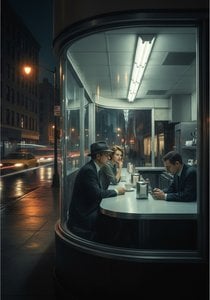
Edward Hopper : Réalisme américain, isolement urbain et poétique de la solitude moderne
Explorez l'univers poignant d'Edward Hopper : réalisme américain, isolement urbain et maîtrise de la lumière. Analyse approfondie de ses œuvres emblématiques et héritage artistique.

Abbott Handerson Thayer: Ethereal Realism & Spiritual Symbolism in American Art
Explore the captivating world of Abbott Handerson Thayer, a pioneer of American realism & Symbolism. Discover his ethereal angel paintings, innovative techniques, and lasting influence on art history. Learn about his scientific pursuits & Transcendentalist spirit.

Echoes of Isolation: Solitude in Western Art from Renaissance to Modernism
Explore the profound representation of solitude in Western art from the Renaissance to Modernism. Discover iconic paintings & artists like Goya, Friedrich, and Rossetti. Handmade oil reproductions available at ArtsDot.

Le Réalisme Américain du XXe siècle : Un commentaire social et artistique poignant
Explorez le Réalisme Américain du XXe siècle : de l'Ashcan School à Hopper. Analyse approfondie des artistes, techniques et l'impact social de ce mouvement artistique puissant. Découvrez son héritage sur ArtsDot.

Edward Hicks’ ‘Peaceable Kingdom’: American Folk Art & the Shaping of a National Identity
Explore the profound symbolism & historical context of Edward Hicks’ ‘Peaceable Kingdom.’ Discover how this iconic American folk art masterpiece reflects Quaker values and shaped a nation's identity. Learn more at ArtsDot.



