

 Aperçu en situation

 Envoyer
 Partager
 Détails de l'œuvre
 Guide


 Télécharger l'image
 Articles similaires
 Radiographie
 Diaporama
 Questions et réponses
 Statistiques
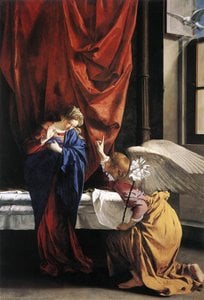
L'Annonciation

- 145.0 x 120.0 cm


 Lire la suite
Giclées et impressions d'art
Impressions giclées ou sur toile de qualité musée, avec une production rapide et des finitions au choix. ( Commander la reproduction peinte à la main Passer au format numérique)




P118B €10

P118H €10

P118W €10

P438Z €10

P508JH €12

P508YH €12

P805H €10

P805Z €10

P919BZ €10

P919G €10

P919XJ €10

P959ZH €10

P968JZ €12

W106C €8

W218G €10

W218JH €8

W218Y €10

W307PJ €10

W316G €10

W316PJ €8

W316Y €10

W398PJ €8

W4111J €10

W500HY €15

W500JH €15

W692G €12

W849H €8

W940BG €15

W953PJ €8




Choisissez parmi nos formats prédéfinis qui respectent les proportions originales de l’œuvre.

Saisissez la largeur et la hauteur souhaitées pour qu'elles s'adaptent à votre cadre ou à votre mur. Une impression peut être recadrée, mais jamais agrandie au-delà de l'image originale ; ainsi, un format de forme différente entraînera la perte d'une partie de l'image. Nous vous envoyons une maquette numérique pour approbation avant toute impression. L'image présentée sur cette page ne montre pas le recadrage réel — seule la maquette le permet.
Livraison dans le monde entier () en 2 semaines au lieu des 4/5 semaines habituelles. (17 novembre)

Livraison express gratuite dans le monde entier

Toile de lin de qualité supérieure

Assurance transport complète

Garantie de remboursement des droits de douane

Garantie de fidélité des couleurs

Politique de retour de 100 jours (uniquement en cas de défaut)

Garantie de remboursement à 100%

Offre de tarifs dégressifs
 L'option verre n'est disponible que pour les dimensions inférieures à 110 cm.

L'Annonciation
Giclées et impressions d'art
Format de la reproduction
-


Prix total
€ 56
La Rencontre Divine : Une Exégèse de l'Annonciation
Se tenir devant cette représentation de l'Annonciation, c'est franchir le seuil d'un instant suspendu entre le terrestre et le divin. Bernardo Strozzi, maître du baroque italien, a capturé bien plus qu'un simple événement ; il a saisi une profonde résonance spirituelle. La scène se déploie avec une tension narrative saisissante : la Vierge Marie, recueillie dans la contemplation, reçoit la nouvelle monumentale qui va bouleverser le cours de l'histoire humaine. L'attention délicate qu'elle porte au livre qu'elle tient suggère une vie déjà imprégnée de savoir sacré, ancrant le miracle dans le domaine de la dévotion intellectuelle.
La composition est richement habitée, plongeant le spectateur au cœur de son drame intime. L'ange, incarnation du messager céleste, tend la main vers Marie avec une grâce palpable. Ce geste dépasse la simple communication ; il est le conduit de la volonté divine, rendu avec le sens du drame caractéristique de Strozzi. Observez les figures environnantes — ces témoins de part et d'autre — dont les regards et les postures variées servent à amplifier la gravité de l'instant, tissant une tapisserie vibrante de réactions humaines face au sublime.
Drame baroque et lumière vénitienne
Peinte en 1643, cette œuvre s'inscrit pleinement au cœur de la période baroque, une ère définie par l'intensité émotionnelle, le mouvement dramatique et une théâtralité exacerbée. Strozzi, dont la carrière l'a mené de Gênes jusqu'à l'épanouissement final à Venise, emploie avec maestria les techniques qui caractérisent ce style. Si sa formation initiale lui a offert une base solide, c'est ici que son traitement mature de l'ombre et de la lumière — l'essence même du drame baroque — éclate avec éclat. Le jeu entre les carnations illuminées et les plis plus profonds et ombragés des draperies confère à la scène une dimension presque tangible.
La technique elle-même témoigne d'un savoir-faire exceptionnel. La capacité de Strozzi à rendre les textures — du tombé délicat des vêtements de Marie au lustre suggéré sur les robes de l'ange — est remarquable. C'est une peinture qui exige un examen attentif, récompensant l'observateur par des détails qui révèlent toute la profondeur de l'intention artistique.
Un symbolisme tissé au cœur de l'espace sacré
Chaque élément de cette toile semble imprégné d'une profonde charge symbolique. Le livre que Marie étudie représente les Écritures et la loi divine, suggérant que son acceptation du dessein de Dieu est un acte à la fois miraculeux et intellectuellement compris. La présence de l'objet décoratif situé dans le coin inférieur droit, qu'il s'agisse d'un vase ou d'un élément d'autel, ancre le récit sacré dans un cadre domestique ou une chapelle richement meublée et reconnaissable. Ces détails empêchent la scène de paraître purement éthérée ; ils enracinent, au contraire, le mystère divin dans une réalité tangible et magnifique.
L'impact émotionnel global est celui d'une crainte révérencieuse et silencieuse. Il ne s'agit pas du tumulte d'une extase pure, mais plutôt de la quiétude profonde qui suit la révélation — un instant où l'âme se recueille face à l'infini. Cet équilibre entre l'action dramatique et la contemplation sereine rend l'œuvre éternellement captivante pour l'œil moderne.
Une pièce maîtresse pour l'espace du collectionneur
Pour ceux qui recherchent une œuvre d'art transcendant la simple décoration, cette reproduction offre une fenêtre ouverte sur la spiritualité de la Contre-Réforme, rendue avec une vigueur artistique inégalée. Ses dimensions (145 x 120 cm) lui permettent de captiver le regard dans un grand hall ou un cabinet de travail richement aménagé, s'imposant comme le point focal de la contemplation. Posséder une œuvre qui fait écho au génie de Strozzi, c'est acquérir bien plus que des pigments sur une toile ; c'est s'approprier un récit de foi, de drame et de maîtrise technique — un sujet de conversation intemporel qui témoigne d'une profonde appréciation pour les plus grands accomplissements artistiques de l'histoire.
Questions et réponses
Quand et avec quels matériaux L'Annonciation a-t-il été réalisé ?
« L'Annonciation » a été réalisé en 1643 selon la technique du Huile sur toile. Le matériau et la date précisent comment et quand l'œuvre originale a été créée.
Qui est l'artiste derrière « L'Annonciation » ?
« L'Annonciation » est attribué à Bernardo Strozzi.
Quelle palette de couleurs utilise "L'Annonciation" ?
Les couleurs de "L'Annonciation" forment une palette Tons terreux. Cette classification décrit les familles de couleurs dominantes.
Œuvres similaires




Biographie de l'artiste
Early Life and Training
Bernardo Strozzi, known as *il Cappuccino* et *le Prete Genovese*, was born in Genoa in 1581, a pivotal figure in the transition between Mannerism and the burgeoning Baroque style. His formative years were spent within the workshop of Cesare Corte, a lesser Genoese painter, where he honed his foundational skills until 1596. This early apprenticeship instilled in him a solid technical base, preparing him for further artistic exploration. A significant turning point arrived with his enrollment in the studio of Pietro Sorri, an innovative painter hailing from Siena. Sorri’s approach, characterized by a heightened naturalism and a move away from rigid academic conventions, profoundly shaped Strozzi's artistic sensibilities, steering him towards a more expressive and dynamic style. This period marked a crucial shift – a departure from the purely formal concerns of earlier training and an embrace of a more emotionally resonant visual language.Artistic Career: Genoa and Venice
Strozzi’s career unfolded across two distinct yet interconnected phases, primarily centered in Genoa and then flourishing in Venice. In Genoa, he undertook numerous commissions, notably contributing to the frescoes adorning the choir of the San Domenico Church, a project commissioned by members of the esteemed Doria family. These early works demonstrate his growing mastery of color and composition, reflecting the influence of both Corte and Sorri. A particularly noteworthy preparatory oil sketch for the vault of the same church, *La Visione di San Domenico nel Paradiso*, now housed at the Museo dell’Accademia Ligustica, offers a valuable glimpse into his creative process. His arrival in Venice around 1631 marked a new chapter, and he quickly established himself as a sought-after artist. His Venetian period was particularly productive, characterized by a vibrant palette and dramatic brushwork—a style that would become synonymous with the Venetian Baroque. Key works from this era include a portrait of Doge Francesco Erizzo, painted shortly after his arrival in Venice, and *San Lorenzo che distribuisce le ostie*, showcasing his ability to convey both religious fervor and human emotion.Influence and Legacy
Strozzi’s artistic vision exerted a considerable impact on the development of art in both Genoa and Venice. He is widely considered one of the principal founders of the Venetian Baroque style, bridging the gap between the Mannerist traditions of the preceding century and the dramatic intensity of Caravaggio. His work demonstrated a masterful command of color, light, and shadow—elements that would become hallmarks of Venetian painting. His influence extended beyond his own creations; he mentored several promising artists, including Giovanni Andrea de Ferrari, Giovanni Bernardo Carbone, and Valerio Castello, shaping the artistic landscape of Genoa and Venice alike. The works of these students bear testament to Strozzi’s profound impact on their development.Notable Patrons and Later Life
Throughout his career, Strozzi benefited from the patronage of influential figures, including Doge Francesco Erizzo, a prominent Catholic cardinal and patriarch of Venice, and Federico Baldissera, a significant Venetian nobleman. His artistic connections extended to other notable artists of the time, such as Claudio Monteverdi (a composer for whom he created portraits) and Barbara Strozzi, his own sister-in-law. Beyond his artistic pursuits, Strozzi also engaged in engineering work, serving as an engineer for the port of Genoa between 1615 and 1621. Despite a brief period of imprisonment following accusations related to his religious life, he ultimately reconciled with the Catholic Church, receiving the title of *monsignore*. Bernardo Strozzi died in Venice in 1644, leaving behind a rich legacy as a versatile and prolific artist whose work continues to captivate viewers today.
Bernardo Strozzi
1581 - 1644 , Italie
L'essentiel de l'artiste
- Artistic Movement Or Style: Baroque
- Artists Or Movements Influenced By This Artist: ['Venice Baroque']
- Artists Who Influenced This Artist:
- Corte
- Sorri
- Date Of Birth: 1581
- Date Of Death: 1644
- Full Name: Bernardo Strozzi
- Nationality: Italien
- Notable Artworks:
- Vision St. Dominique
- Portrait Doge Erizzo
- Place Of Birth: Gênes, Italie
Articles connexes

Sacred Narratives: Decoding the Iconography and Artistry of the Annunciation
Explore the profound symbolism and mastery behind Renaissance Annunciation paintings. Discover the secrets of these sacred masterpieces now.

Les 25 chefs-d'œuvre de Duccio di Buoninsegna : l'éveil de l'art italien
Explorez les 25 chefs-d'œuvre de Duccio di Buoninsegna et l'école siennoise. Découvrez ces trésors sur ArtsDot.com.

Les 10 Chefs-d'œuvre du Baroque Néerlandais : Artistes et Décor Intemporels
Plongez au cœur du Baroque néerlandais avec les 10 œuvres incontournables de Rembrandt, Vermeer et autres maîtres hollandais. Découvrez l'histoire, la lumière et les couleurs qui ont façonné ce mouvement artistique. Reproductions d'art de qualité muséale sur ArtsDot.com

Shadows of Piety: The Artistry of Prayer and Devotion in the Classical Canon
Explore the profound mastery of Baroque religious art through masters like Zurbarán. Journey into the divine with our expert guide.

Les 25 chefs-d'œuvre de Fra Angelico : l'art sacré de la Renaissance
Explorez les 25 chefs-d'œuvre de Fra Angelico et la splendeur de la Renaissance. Découvrez la collection sur ArtsDot.com.


