


 Lähetä
 Jaa
Jaa
 Tarkemmat tiedot
 Opas
Opas

 Lataa kuva
 Samanlaisia kohteita
 Diaesitys
 Tilastot
La Petite Châtelaine


 Lue lisää
Giclée- ja taideprintit
Museolaatuisia giclée- tai kankaitaulun tulosteita nopealla tuotannolla ja joustavilla viimeistelyvaihtoehdoilla. ( Tilaa käsinmaalattu jäljennös Siirry digitaaliseen kuvaan)




































Valitse valmiista mitoistamme sellaiset, jotka vastaavat teoksen alkuperäisiä mittasuhteita.

Voit syöttää omat mitat sopiaksesi tiettyyn kehykseen tai tilaan. Jos valittu koko ei vastaa alkuperäisen kuvan mittasuhteita, rajaamme teosta tai laajennamme kuvaa peilatulla tai yhtenäisellä reunalla. Digitaalinen mallikuva lähetetään hyväksyttäväksi ennen tuotannon aloittamista.
Huomaathan, että näytöllä näkyvä esikatselu ei vastaa lopullista rajausta tai laajennusta. Vain mallikuva näyttää lopullisen sommittelun tarkasti.
Vaikka räätälöityjä kokoja on saatavilla, suosittelemme valitsemaan mitat valmiista listasta alkuperäisten mittasuhteiden säilyttämiseksi.
Maailmanlaajuinen toimitus () 2 viikossa tavallisen 4–5 viikon sijaan. (24 syyskuu)

Ilmainen pikatoimitus ympäri maailman

Korkealaatuinen pellavakangas

Kattava kuljetusvakuutus

Tulliveron palautustakuu

Takuu täydellisestä värien vastaavuudesta

100 päivän palautusoikeus valmistusvirhetapauksissa

100% rahat takaisin -takuu

Määräalennus saatavilla
 Lasivaihtoehto on saatavilla vain alle 110 cm kokoisille teoksille

La Petite Châtelaine
Giclée- ja taideprintit
Replikaatin koko
-


Kokonaishinta
$ 62
A Moment Frozen in Time – Camille Claudel’s La Petite Châtelaine
Camille Claudel's “La Petite Châtelaine,” created in 1892, stands as a testament to the Impressionist fascination with capturing fleeting emotions and natural beauty—a pursuit brilliantly realized in marble. More than just a sculpture of a young girl’s head, it embodies Claudel’s profound understanding of human psychology and her masterful command of sculptural technique.
- Subject Matter: The artwork depicts the serene gaze of a six-year-old granddaughter of Château de l’Islette’s owner. Claudel meticulously observed the child for an astonishing 62 hours, striving to convey not merely physical likeness but also the essence of youthful innocence and contemplative wonder.
- Style & Technique: Claudel's work firmly anchors itself within the Impressionist movement, prioritizing tonal subtlety and capturing the interplay of light on form. Her technique is characterized by painstaking attention to detail—the delicate rendering of skin texture, the precise positioning of hair strands—demonstrating a dedication to realism informed by artistic vision.
- Historical Context: Claudel’s creation coincided with a period of burgeoning artistic experimentation in France, fueled by figures like Claude Debussy and Rodin. Her collaboration with Rodin marked a pivotal moment in sculpture history, challenging prevailing conventions and elevating the role of female artists within the male-dominated art world.
The Musée Rodin’s Reverie
Currently housed at the Musée Rodin in Paris, “La Petite Châtelaine” continues to captivate visitors with its understated elegance and emotional resonance. The museum meticulously preserves the sculpture's original dimensions—H. 34,6 ; W. 28,4 ; D. 22,7 cm—and utilizes marble as its primary material, ensuring that the artwork’s inherent luminosity and textural richness are faithfully reproduced.
- Provenance: The sculpture originated at Château de l’Islette near Azay-le-Rideau in Touraine, where Claudel and Rodin frequently engaged in artistic dialogue. This location underscores the importance of place within Claudel's creative process—a reflection of her connection to the natural world and her desire to capture its transformative power.
- Multiple Versions: Claudel produced four marble replicas of “La Petite Châtelaine,” each subtly differentiated by variations in hair styling. These iterations highlight Claudel’s meticulous approach to craftsmanship and her willingness to explore different expressive possibilities within a single subject.
Symbolism & Emotional Impact
"La Petite Châtelaine" transcends mere representation; it speaks to themes of childhood vulnerability, quiet contemplation, and the beauty of fleeting moments. Claudel’s portrayal captures not just the physical appearance of a young girl but also her inner state—a gaze directed upwards, suggesting an aspiration for knowledge and understanding. The sculpture's serene expression invites viewers to pause and consider the profound simplicity of human experience.
- Material & Texture: Marble’s inherent qualities – coolness, luminosity, and smoothness – contribute significantly to the artwork’s emotional impact. Claudel skillfully exploits these textural elements to convey a sense of stillness and tranquility, mirroring the child’s contemplative demeanor.
- Legacy: Camille Claudel's “La Petite Châtelaine” remains an enduring symbol of Impressionist artistry—a masterpiece that continues to inspire admiration for its technical brilliance and emotional depth. Its rediscovery as a major figure in art history underscores Claudel’s lasting contribution to the canon of sculpture.
Samankaltaisia teoksia


Taiteilijan elämäkerta
Camille Claudel
Camille Claudel, a name now synonymous with artistic brilliance and tragic circumstance, emerged from the French countryside in 1864 to challenge the conventions of sculpture and leave an indelible mark on the art world. Born into a family straddling the worlds of rural tradition and burgeoning intellectualism in Fère-en-Tardenois, Claudel’s early life was marked by both freedom and constraint. Her father, Louis-Prosper Claudel, dealt in mortgages and bank transactions. Her mother, Louise-Athanaïse Cerveaux, came from a family of Champagne farmers and priests, providing a backdrop against which young Camille’s innate artistic inclinations could blossom—though not without societal friction. Even as a child, she displayed an extraordinary affinity for working with natural materials — clay, soil, stone — foreshadowing a destiny inextricably linked to three-dimensional form. This early fascination wasn’t merely playful; it was a fundamental expression of her inner world, a need to give shape to the emotions and observations that stirred within her. The family’s moves—to Villeneuve-sur-Fère, Bar-le-Duc, Nogent-sur-Seine, and Wassy-sur-Blaise—exposed Claudel to diverse landscapes and experiences, subtly informing her artistic sensibility.Early Years and Artistic Beginnings
Camille Claudel was born in Fère-en-Tardenois, Aisne, France, on December 8, 1864, the first child of Louis-Prosper Claudel and Louise Cerveaux. Her father’s profession—mortgage broker—represented a significant departure from the traditional rural occupations of their lineage, while her mother’s heritage stemmed from Champagne’s Catholic farming traditions. This familial duality shaped Claudel's formative years, fostering both intellectual curiosity and a connection to the natural world. From a young age, she demonstrated an exceptional talent for sculpting with clay—a passion that would define her artistic trajectory. Despite considerable resistance from her mother regarding pursuing formal education—particularly art studies—Claudel persevered in her determination to hone her skills under the guidance of Alfred Boucher, a sculptor who recognized her innate aptitude and encouraged her artistic endeavors. This mentorship proved pivotal in establishing Claudel’s foundation for a future distinguished by innovation and emotional depth.Meeting Auguste Rodin
The turning point in Camille Claudel's life arrived with her relocation to Paris in 1881, where she enrolled in Boucher’s studio alongside other aspiring artists—primarily women—seeking access to artistic training unavailable elsewhere at the time. It was during this period that Claudel encountered Auguste Rodin, a sculptor whose monumental works captivated the Parisian public and profoundly influenced Claudel's aesthetic sensibilities. Initially hired as a model for Rodin, Claudel quickly ascended beyond this role, becoming his collaborator, muse, and eventually lover—a relationship characterized by intense passion and intellectual exchange. Their partnership spanned over two decades, during which Claudel assisted Rodin on ambitious projects like *The Burghers of Calais*, skillfully modeling hands and feet with remarkable precision—a testament to her technical mastery. Yet, this connection was fraught with complexities; Rodin’s established career and personal commitments created an imbalance of power that fueled both artistic inspiration and unspoken tensions.Sculptural Style and Major Works
Claudel's sculptural style is instantly recognizable for its distinctive blend of expressive dynamism and psychological nuance—a departure from the prevailing academic conventions of her time. Unlike many sculptors who prioritized idealized forms and technical perfection, Claudel embraced imperfection and asymmetry to convey the profound depths of human emotion—particularly love, longing, despair, and defiance. Her figures pulsate with movement, capturing fleeting expressions of feeling that resonate deeply with viewers. Notable works include *The Waltz* (1893), which exemplifies her ability to distill complex emotions into a single gesture; *Sakuntala*, inspired by Indian mythology, showcases Claudel’s willingness to explore diverse cultural influences while maintaining artistic integrity; and *Young Girl with a Sheaf*, embodying innocence and vulnerability—a poignant portrayal of youthful beauty. Her sculptures stand as powerful embodiments of her inner world—revealing an artist who dared to challenge societal expectations and forge her own path toward creative fulfillment. Claudel’s oeuvre includes monumental sculptures like *The Burghers of Calais* alongside smaller, more intimate pieces that capture the subtleties of human relationships.Tragedy and Legacy
Despite achieving considerable acclaim during her lifetime—particularly for her collaborative work with Rodin—Claudel's personal life was marred by persistent struggles—both emotional and psychological—that ultimately culminated in her involuntary commitment to an asylum in 1913. Circumstances surrounding her institutionalization remain shrouded in mystery, fueled by speculation about familial pressures and societal biases against women artists who pursued unconventional paths. During this period of seclusion, Claudel’s creative output dwindled significantly—though she continued to sculpt sporadically using rudimentary materials—a heartbreaking testament to the devastating impact of mental illness on artistic productivity. The rediscovery of Claudel's work in the late 20th century sparked renewed scholarly interest and critical appreciation—resulting in a reassessment of her artistic contributions and recognizing her as one of France’s most original sculptors. Today, Camille Claudel is celebrated for her unwavering commitment to artistic expression—a beacon of inspiration for generations—and her poignant story serves as both a testament to creative genius and a cautionary tale about the vulnerability inherent in confronting societal prejudices. Her legacy continues to inspire artists and scholars alike, ensuring that her remarkable life and groundbreaking sculptures endure as symbols of artistic courage and enduring beauty.
Camille Claudel
1864 - 1943 , Ranska
Tietoa taiteilijasta
- Artistic Movement Or Style: Expressionisme
- Artists Who Influenced This Artist:
- Auguste Rodin
- Alfred Boucher
- Date Of Birth: 8 décembre 1864
- Date Of Death: 19 octobre 1943
- Full Name: Camille Claudel
- Nationality: Français
- Notable Artworks:
- Sakuntala
- The Waltz
- Giganti
- Place Of Birth: Fère-en-Tardenois, France
Aiheeseen liittyvät artikkelit

The Enduring Form: Sculpture Across History, Technique & Emotional Resonance
Explore the rich history of sculpture with ArtsDot. Discover key techniques, influential artists & investment potential for discerning collectors. Expert insights into valuing and collecting timeless masterpieces.

10 legendaarista pronssiveistosta, jotka mullistivat taiteen – ArtsDot.com
Tutustu 10 legendaariseen pronssiveistokseen, jotka ovat muuttaneet taiteen historiaa! Rodinista Michelangeloon – opi mestareiden tarinat ja löydä täydellinen taideteos kotiisi ArtsDot.com:ssa. Laadukkaat jäljennökset & sisustusideat.

The Enduring Form: Exploring Themes & Techniques in Sculpture Across Historical Periods
Explore the rich history of sculpture from ancient masterpieces to contemporary innovations. Discover key techniques, influential artists & investment potential for discerning art collectors.

10 legendaarista pronssiveistosta, jotka mullistivat taiteen – ArtsDot.com
Tutustu 10 legendaariseen pronssiveistokseen, jotka ovat muokanneet taiteen historiaa! Michelangelo, Rodin ja muut mestarit. Löydä inspiraatiota sisustukseesi ja tutki upeita taideteoksia ArtsDot.com-sivustolta.
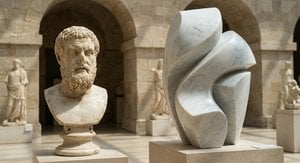
The Enduring Allure of Marble in Art History: From Classical Sculpture to Modern Abstraction
Explore the captivating history of marble sculpture from ancient Greece to modern art. Discover renowned artists like Canova & Michelangelo, carving techniques, and investment insights at ArtsDot.