Una Sinfonía de Luz y Geometría: La Basílica di San Francesco
Adentrarse en la Basilica di San Francesco en Arezzo es similar a entrar en una narrativa sagrada, donde las líneas elegantes de la arquitectura gótica abrazar el floreciente espíritu del Renacimiento. Fundada en el siglo XIII por frailes franciscanos, esta magnífica estructura ha evolucionado desde un humilde lugar de culto hasta convertirse en un impresionante repositorio de logros artísticos. Las piedras mismas de la basílica parecen susurrar relatos de fe, mecenazgo y el cambio revolucionario en la perspectiva que definió el siglo XV. Si bien sus cimientos góticos —caracterizados por bóvedas elevadas, arcos apuntados y un delicado rosetón que filtra la luz del sol toscano— establecen una atmósfera de grandeza reverente, es la presencia de los frescos de Piero della Francesca lo que verdaderamente eleva a San Francesco a un destino para los peregrinos del arte y la belleza.
La arquitectura proporciona un telón de fondo dramático y vertical para las revolucionarias sensibilidades renacentistas que se encuentran en su interior. La nave ascendente dirige la mirada hacia arriba, hacia la aspiración espiritual; sin embargo, esta grandeza inherente se transforma sutilmente por el equilibrio y la armonía presentes en las obras de arte. Los frescos parecen respirar dentro del marco gótico, reflejando el paisaje cultural en evolución de la Italia del siglo XV, donde las tradiciones medievales cedían gradualmente el paso a los ideales humanistas.
La Leyenda de la Vera Cruz
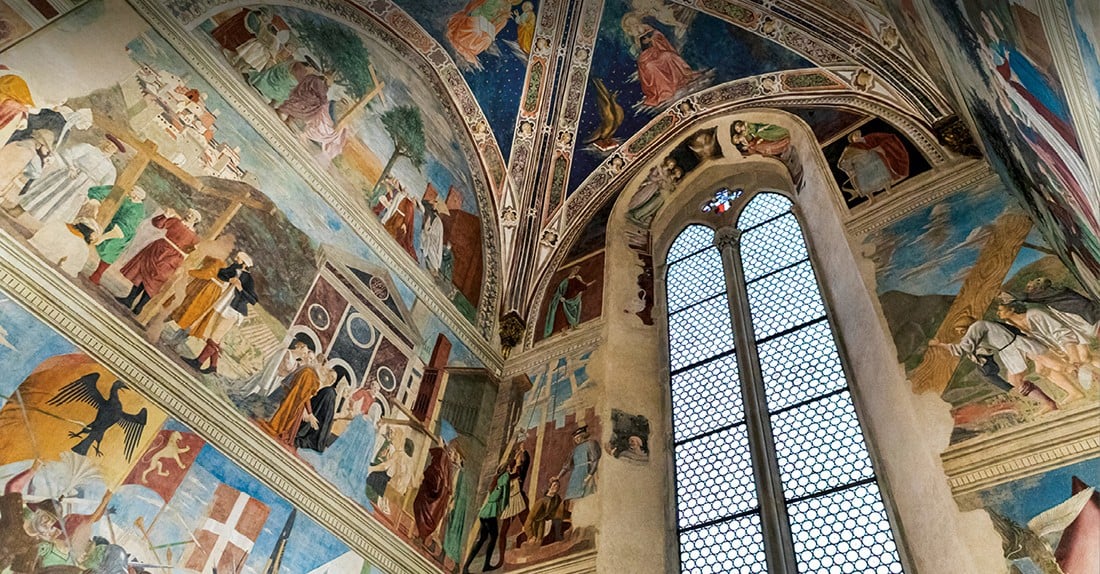
En el corazón de este santuario espiritual se encuentra La Leyenda de la Vera Cruz , un ciclo de frescos considerado una de las obras más importantes del Renacimiento temprano. No se trata simplemente de una serie de pinturas, sino de una historia visual cuidadosamente construida que se despliega a lo largo de las paredes de la Capilla Bacci y más allá. Piero della Francesca no solo representa eventos históricos; los interpreta a través de un uso innovador de la luz, la perspectiva y la emoción humana. El ciclo relata la historia de la madera que se cree fue utilizada en la crucifixión de Cristo, entrelazando las narrativas del Antiguo y Nuevo Testamento con una profunda profundidad teológica.
En obras maestras como La batalla entre Heraclio y Cosroes , se observa un alejamiento radical de las convenciones medievales. Las figuras de Piero poseen una nueva solidez y dignidad, bañadas en una luz clara y etérea que las imbuye de una presencia casi de otro mundo, mientras que su maestría en la precisión geométrica crea una sensación de profundidad espacial que atrae al espectador al corazón mismo de cada escena. La fascinación del artista por la precisio le permite integrar las matemáticas y la geometría en un lenguaje visual que refleja el orden subyacente del cosmos.
Otras escenas notables dentro de este ciclo incluyen:
- El encuentro entre la Reina de Saba y el Rey Salomón: Un momento de solemne diplomacia y respeto mutuo, donde las figuras son representadas con una profunda gravedad.
- La procesión de la Reina de Saba: Una exploración inmersiva de la narrativa bíblica que encarna la curiosidad intelectual de la época.
- Representaciones detalladas de conflictos históricos: Donde el uso de una paleta tenue de ocres, tierras de Siena y sombras crea una atmósfera de solemnidad y fortaleza.
Para el amante del arte o el diseñante de interiores que busca inspiración, San Francesco ofrece una clase magistral sobre cómo la luz, el color y la estructura pueden unirse para crear una atmósfera de serena contemplación y elegancia atemporal. Más allá de sus muros, el legado de la basílica está profundamente entrelazado con el alma de la propia Arezzo, sirviendo como un faro de brillantez renacentista que continúa iluminando nuestra comprensión del arte y la humanidad.