


 Vista previa
 Compartir
 Compartir
 Ver detalles
 Guía
Guía

 Descargar
 Ver artículos similares
 Radiografía
 Presentación de diapositivas
 Estadísticas
Sem título
 Oil On Canvas
- WallArt
- Concrete Art
 1949
1949- Modern
 72.0 x 53.0 cm
 Centro Cultural Banco do Brasil Rio de Janeiro
 Leer más
La obra de arte que se muestra en esta página está protegida por las leyes de propiedad intelectual, lo que significa que no podemos crear ni vender legalmente una reproducción idéntica. Esta protección se hace cumplir en virtud de acuerdos internacionales como el Convenio de Berna y por las leyes nacionales, incluidas aquellas establecidas por el Ley de derechos de autor de los EE. UU. - Título 17.
Este método cumple plenamente con las normativas de derechos de autor, ya que no implica la copia ni la duplicación de la obra protegida. En su lugar, se trata de una reinterpretación creativa: una nueva pintura influenciada por la original, pero que no es idéntica a ella.
Giclée / Impresión de arte
Impresiones giclée o en lienzo de calidad de museo con producción rápida y opciones de acabado flexibles. ( Encargar reproducción pintada a mano Ver versión en imagen digital)




P118B €10

P118H €10

P118W €10

P438Z €10

P508JH €12

P508YH €12

P805H €10

P805Z €10

P919BZ €10

P919G €10

P919XJ €10

P959ZH €10

P968JZ €12

W106C €8

W218G €10

W218JH €8

W218Y €10

W307PJ €10

W316G €10

W316PJ €8

W316Y €10

W398PJ €8

W4111J €10

W500HY €15

W500JH €15

W692G €12

W849H €8

W940BG €15

W953PJ €8




Elija entre nuestros tamaños predefinidos que respetan las proporciones originales de la obra.

Introduzca el ancho y el alto que necesite para adaptarse a su marco o pared. Una impresión solo puede recortarse, nunca hacerse más grande que la imagen original, por lo que un tamaño con una forma distinta perderá parte de la obra. Le enviaremos una maqueta digital para su aprobación antes de realizar cualquier impresión. La imagen que se muestra en esta página no refleja el recorte real; solo la maqueta lo hace.
Envío a todo el mundo () en 2 semanas en lugar de las 4/5 semanas estándar. (21 octubre)

Envío exprés gratuito a todo el mundo

Lienzo de lino de alta calidad

Seguro de envío completo

Garantía de reembolso de impuestos aduaneros

Garantía de fidelidad cromática exacta

Política de devolución de 100 días (solo por defectos)

Garantía de devolución del 100% del dinero

Oferta por volumen
 La opción de vidrio solo está disponible en tamaños inferiores a 110 cm.

Sem título
Giclée / Impresión de arte
Tamaño de la reproducción
-


Precio total
€ 54
The Geometry of Precision: A Visionary Encounter
In the realm of mid-century abstraction, few works command attention with such silent, mathematical authority as Waldemar Cordeiro’s “Sem título”. Created in 1949, this masterpiece serves as a profound window into a pivotal moment in art history, where the chaotic emotions of expressionism began to yield to the disciplined clarity of the Concrete Art movement. At first glance, the viewer is met with a striking, nocturnal void—a deep, expansive black background that provides a stage for a singular, dramatic performance of color and form. A vibrant red triangle commands the upper portion of the canvas, its sharp edges cutting through the darkness with surgical precision. This geometric protagonist is not merely a shape but an architectural event, bisected by a delicate yellow line and anchored by a warm orange circle that pulses like a captured sun within the heart of the triangle.
The composition is further enriched by subtle, rhythmic accents, such as the two blue squares nestled in the lower corner, which provide a sense of weight and structural balance. This careful arrangement of primary and secondary colors—black, red, white, blue, yellow, and orange—creates a visual tension that is both intellectually stimulating and aesthetically harmonious. For the discerning collector or interior designer, this piece offers a sophisticated interplay of light and shadow, making it an ideal focal point for modern spaces that value minimalist elegance and structural depth.
A Pioneer’s Legacy: From Rome to Brazil
To understand the soul of “Sem título,” one must look toward the transformative journey of its creator. Waldemar Cordeiro was a man of dual worlds, born in Rome to an Italian mother and a Brazilian father. His early training at the Accademia di Belle Arti in Rome provided him with a foundation in figurative mastery, yet it was his encounter with the radical abstractions of the international Art Club that ignited his true passion. As he transitioned from the expressive traditions of Europe to the burgeoning avant-garde scene in Brazil, Cordeiro became a central architect of the Grupo Ruptura. This movement sought to liberate art from the burden of representation, striving instead for a purely rational aesthetic inspired by the principles of the Bauhaus and Russian Constructivism.
This painting stands as an early testament to that transition. While Cordeiro would later become a pioneer in the digital frontier through his groundbreaking computer art, this 1949 work captures him at the height of his geometric exploration. It embodies the ethos of Concrete Art: the belief that a painting should not be a window into another world, but an object in its own right—a self-contained reality composed of pure form and color. The meticulous technique required to achieve such crisp, unblemished edges speaks to Cordeiro’s dedication to technical perfection and his desire to eliminate the "hand" of the artist in favor of a universal, objective beauty.
An Invitation to Modern Sophistication
For those looking to curate an environment of intellectual rigor and timeless style, a high-quality reproduction of “Sem título” offers more than mere decoration; it offers a conversation. The painting’s ability to evoke both the cosmic scale of the universe and the intimate precision of a mathematical formula makes it uniquely versatile. In a contemporary living space, its bold geometry can anchor a room, providing a sense of order and calm amidst the complexities of modern life. In a professional gallery or design studio, it serves as a tribute to the historical importance of Latin American abstraction.
Owning a piece that reflects Cordeiro’s mastery is an opportunity to celebrate the intersection of art, science, and history. The vibrant contrast between the deep black field and the luminous primary shapes creates a dynamic energy that remains captivating long after the first encounter. Whether you are an art historian drawn to its role in the Concrete movement or a decorator seeking a striking geometric statement, this work remains a powerful symbol of the beauty found in absolute clarity.
Preguntas y respuestas
¿Los colores de "Sem título" se ven intensos o suaves?
La intensidad cromática de "Sem título" es Balanced. La intensidad describe la fuerza con la que se perciben los colores.
¿Qué edad tenía Waldemar Cordeiro cuando creó "Sem título" en 1949?
Waldemar Cordeiro realizó "Sem título" a la edad de 25. El artista nació en 1924 y la obra data de 1949.
¿De qué tamaño se recomienda "Sem título" para un Living Room?
Para un/a Living Room, el tamaño de impresión recomendado para "Sem título" de Waldemar Cordeiro es Medium.
Obras relacionadas


Biografía del artista
Waldemar Cordeiro: Pionero del Arte Concreto Brasileño
- Nacimiento: Recife, Brasil (1924)
- Fallecimiento: 1973
Waldemar Cordeiro fue una figura significativa en la escena artística brasileña, reconocido tanto como un artista influyente como un crítico de arte convincente. Nacido en Recife, Brasil, en 1924, falleció trágicamente en 1973. Su legado está profundamente entrelazado con el movimiento Arte Concreto en América Latina, donde desempeñó un papel fundamental en la configuración del panorama artístico de su país.
Primeros Años y Carrera: De Arte Informático a Grupo Ruptura
La carrera de Cordeiro comenzó con una incursión innovadora en el arte informático – una búsqueda pionera para su época. Fue uno de los primeros artistas en experimentar con este medio emergente, estableciéndose como un pionero en el campo. Su participación con Grupo Ruptura demostró ser crucial en su desarrollo artístico. Este grupo de artistas buscaba avanzar el arte moderno en Brasil y se convirtió en fundamental para fomentar el movimiento Arte Concreto.
Estilo Artístico y Contribuciones: Geometría, Color y Rigor Conceptual
El estilo artístico de Cordeiro se caracteriza por un uso distintivo de formas geométricas fuertes y colores audaces. Su obra refleja un compromiso con la creación de objetos que existen independientemente de la imaginería representacional, alineándose con los principios fundamentales del Arte Concreto. Colaboró con otros artistas notables como Carlos Alberto Zilio, otra figura destacada en el Arte Concreto brasileño. Algunas de sus obras más reconocidas se exhiben en el Museu de Valores do Banco Central do Brasil en Brasília. Sus pinturas a menudo presentan obras de Amílcar Augusto Pereira de Castro, conocido por sus contribuciones al movimiento neo-constructivista.
El Movimiento Arte Concreto e Influencias Clave
La dedicación de Cordeiro a Grupo Ruptura contribuyó directamente al desarrollo del movimiento Arte Concreto. Este movimiento enfatizaba la creación de obras que existen como objetos en lugar de representaciones de la realidad, priorizando la forma pura y la abstracción geométrica. Sus escritos teóricos moldearon significativamente la filosofía detrás de este movimiento. Estuvo influenciado por los conceptos del Arte Concreto de Max Bill y los principios de la Gestalt Visual. La obra de Cordeiro también refleja una perspectiva política marxista, creyendo que el arte debe ser accesible para todos y rechazando el “arte por el arte”.
Legado e Impacto: Una Influencia Duradera en el Arte Brasileño
El legado de Waldemar Cordeiro continúa resonando en el mundo del arte. Sus contribuciones al Arte Concreto han inspirado a generaciones de artistas, y su obra es un testimonio de la innovación y la experimentación. Instituciones como el Museu de Valores do Banco Central do Brasil y el Museo de Arte Moderno de São Paulo reconocen su impacto significativo. Más allá de la pintura, también fue diseñador paisajista, creando jardines escultóricos y espacios públicos que difundieron la arquitectura y el paisajismo modernos en todo Brasil. Su uso pionero de las computadoras en el arte, conocido como Arteónica, solidificó aún más su lugar como un artista visionario que superó los límites de la expresión artística.

Waldemar Cordeiro
1924 - 1973 , Brasil
Datos clave
- Artistas Influenciados: ['Décio Vieira de Morais']
- Artistas Influyentes: ['Max Bill']
- Fecha De Fallecimiento: 30 de junio de 1973
- Fecha De Nacimiento: 12 de abril de 1924
- Lugar De Nacimiento: Recife, Brasil
- Movimiento Artístico: Arte Concreto, Arte Informático
- Nacionalidad: Brasilera, Italiana
- Nombre Completo: Waldemar Cordeiro
- Obras Notables:
- Sin título
- Pants\nPants
Artículos relacionados

Benedito Calixto: A Brazilian Modernist's Landscape of Memory & National Identity
Explore the captivating world of Benedito Calixto, a pivotal Brazilian Modernist painter. Discover his iconic landscapes, the story behind the famous Bandeirante portrait, and his lasting impact on Brazilian national identity. Learn more at ArtsDot.

Abstracción Geométrica: 10 Obras Maestras que Transformaron el Arte Moderno | ArtsDot
Descubre las 10 obras maestras de la abstracción geométrica que revolucionaron el arte moderno. Explora a Mondrian, Malevich y Kandinsky en ArtsDot.com. Reproducciones de alta calidad para tu hogar.
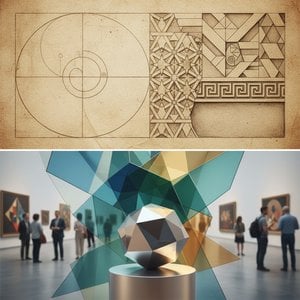
Geometric Design in Art: A Historical Survey & Contemporary Appeal for Collectors
Explore the enduring legacy of geometric abstraction! Discover key artists, historical movements & investment insights for discerning art collectors. Expert guidance from ArtsDot.

Alceu de Paula Penna: A Synthesis of Brazilian Modernism & Poetic Abstraction
Explore the captivating world of Alceu de Paula Penna, a pivotal figure in Brazilian Modernism. Discover his innovative concrete poetry & influence on Latin American art history. Expert insights for collectors.

Beyond Form & Color: Geometric Abstraction's Evolution in 20th/21st Century Art
Explore the evolution of geometric abstraction from Cubism to contemporary art. Discover key artists like Malevich & Mondrian, investment insights, and expert collecting advice at ArtsDot.