

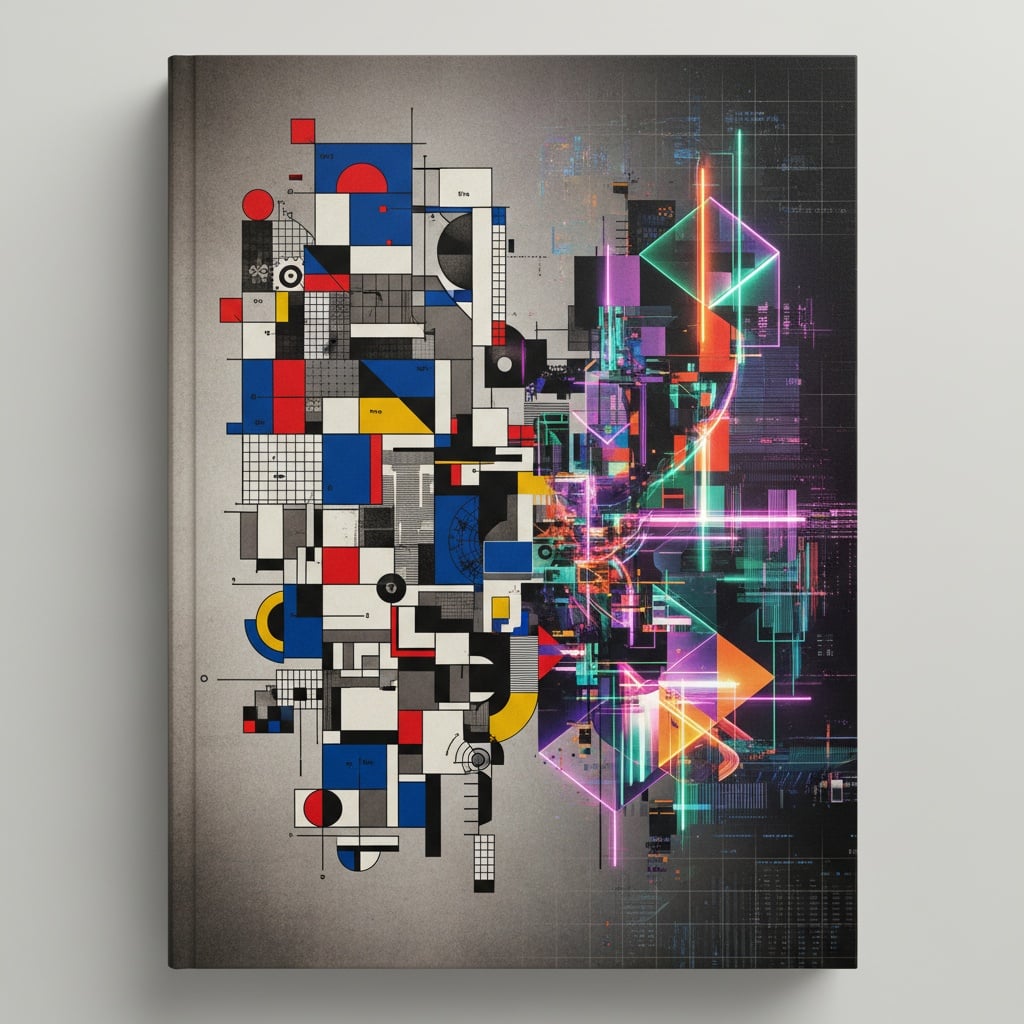
Beyond Form & Color: Geometric Abstraction's Evolution in 20th/21st Century Art
Índice
The Genesis of Geometric Abstraction: From Cubism to Suprematism
 Kazimir Malevich
Kazimir Malevich (1878-1935): Ukrainian founder of Suprematism & pioneer of abstract art. Explore iconic works like Black Square, geometric forms, & pure feeling's impact on 20thC art.
The early 20th century witnessed a radical fracturing of artistic conventions, a deliberate dismantling of representational traditions that had dominated Western painting for centuries. This upheaval wasn’t merely about rejecting realism; it was a quest for a new visual language—one capable of expressing the fundamental forces underlying reality itself. The seeds of geometric abstraction were sown in the fertile ground of Cubism, pioneered by Pablo Picasso and Georges Braque. Their analytical approach, dissecting objects into fragmented forms and presenting multiple perspectives simultaneously, wasn’t an end in itself but rather a crucial step towards eliminating the object altogether. The focus shifted from *what* was depicted to *how* it was depicted – the inherent structure of form and space became paramount.
This pursuit of essential form culminated in the birth of Suprematism, spearheaded by Kazimir Malevich around 1915. Rejecting any reference to the natural world, Malevich sought pure feeling in its most distilled expression. His iconic “Black Square,” a seemingly simple black square on a white background, was not an absence of art but rather the ultimate symbol of non-objectivity—a ‘zero degree’ from which all artistic creation could spring. Malevich believed that true art resided not in depicting objects but in conveying pure sensation through basic geometric shapes and their relationships within space. This wasn't simply about aesthetics; it was a spiritual quest, an attempt to access a higher dimension of consciousness through the language of form.
The influence of these movements extended beyond painting, impacting sculpture and architecture as artists began exploring the possibilities of three-dimensional geometric forms. Early experiments with collage further emphasized the flatness of the canvas and the materiality of art itself, paving the way for a complete rejection of illusionistic space. The initial impetus was philosophical – a desire to move beyond the limitations of perception and access a more fundamental truth—but it quickly evolved into a powerful aesthetic force that would reshape the course of modern art.
Constructivism's Revolutionary Impact: Art as Social Practice
Constructivism may refer to: == Art and architecture == Constructivism (art), an early 20th-century artistic movement that extols art as a practice for social purposes Constructivist architecture, an architectural movement in the Soviet Union in th...
Emerging in Russia following the 1917 revolution, Constructivism represented a distinct departure from the spiritual undercurrents of Suprematism. While sharing an affinity for geometric abstraction, Constructivists like Vladimir Tatlin and Aleksandr Rodchenko believed that art should not be confined to the realm of pure aesthetics but actively serve social purposes. This meant applying artistic principles to practical design—architecture, graphic arts, propaganda—and embracing industrial materials as a means of creating functional objects for the new socialist society.
Tatlin’s Monument to the Third International, though never fully realized, stands as an iconic symbol of Constructivist ambition. Its spiraling steel structure was intended not merely as a building but as a dynamic representation of modern technology and revolutionary ideals. Rodchenko, meanwhile, focused on graphic design and photography, creating bold posters and photomontages that communicated the messages of the revolution with striking clarity. The emphasis shifted from individual expression to collective action, from contemplation to production.
The use of geometric forms in Constructivism wasn’t arbitrary; it reflected a belief in rationality, efficiency, and the power of technology. Artists sought to create a new visual language that was both functional and aesthetically compelling—a language that could inspire and mobilize the masses. This emphasis on practicality and social relevance distinguished Constructivism from other abstract movements and left an indelible mark on 20th-century design.
Piet Mondrian & De Stijl: A Pursuit of Universal Harmony
 Abstract Art's Evolution: A Collector's Guide to Its Impact & Investment Value
Explore the evolution of abstract art with . Discover key movements, influential artists & expert collecting advice. Invest in timeless masterpieces.
In Holland, Piet Mondrian led a parallel but distinct exploration of geometric abstraction through the founding of De Stijl (The Style) in 1917. Like Malevich, Mondrian sought to express universal truths through art, but his approach was less about pure sensation and more about achieving harmony and order through precise mathematical relationships.
Mondrian’s signature style—characterized by black vertical and horizontal lines intersecting against a background of primary colors (red, blue, yellow) and white—was not simply an aesthetic preference but the result of rigorous philosophical inquiry. He believed that these elemental forms represented the underlying structure of reality and that art should strive to reflect this universal order. The reduction to basic geometric shapes and pure color was intended to eliminate subjectivity and create a sense of balance and tranquility.
“Neoplasticism,” as Mondrian termed his style, aimed to transcend the limitations of individual perception and access a higher spiritual realm through art. The movement extended beyond painting to encompass architecture and design, with De Stijl artists seeking to create a total environment—a harmonious synthesis of form, color, and space. The influence of De Stijl can be seen in everything from furniture design to typography, demonstrating the enduring power of Mondrian’s vision.
American Pioneers: Kelpe, Lissitzky and the Expansion of Geometric Forms
 Paul Kelpe
Paul Kelpe (1902-1985) was a German-born American abstract pioneer known for his combine paintings, geometric constructions & the groundbreaking Williamsburg Murals—the first US abstract murals. Explore his Constructivist & Cubist influences.
While Europe served as the initial epicenter of geometric abstraction, the movement quickly gained traction across the Atlantic. Paul Kelpe, a German-born American artist, played a pivotal role in introducing Constructivist principles to the United States. After studying at the Bauhaus, Kelpe brought his expertise in geometric construction and combine painting to New York, becoming a key figure in the development of abstract art in America.
His most significant contribution was arguably the Williamsburg Murals (1936-37), commissioned for the James Monroe Houses public housing project. These large-scale murals—the first US abstract murals—demonstrated the potential of geometric abstraction to transform urban spaces and engage a wider audience. Kelpe’s work, influenced by both Cubism and Constructivism, combined bold colors, dynamic compositions, and a sense of optimism.
El Lissitzky, though primarily associated with Russian Constructivism, also exerted a significant influence on American art through his exhibitions and publications. His “Insert the red and clear on black” (1920) exemplifies the dynamism and graphic power of Constructivist abstraction—a bold interplay of geometric forms that challenged traditional notions of composition and perspective. Lissitzky’s work helped to broaden the scope of abstract art in America, introducing new ideas about space, form, and social function.
Geometric Abstraction Beyond Painting: Sculpture, Mosaic & Murals
The principles of geometric abstraction weren't confined to canvas; they permeated other artistic mediums. Sculptors embraced three-dimensional forms, creating works that explored the interplay of volume, space, and light. Artists like Naum Gabo and Antoine Pevsner developed a new aesthetic language based on pure geometric shapes and transparent materials, challenging traditional notions of sculpture as solid mass.
The use of mosaic also provided a compelling medium for exploring geometric abstraction, particularly in public spaces. Aleksandr Deineka’s stunning mosaics for the Mayakovkskaya metro station in Moscow (1938) exemplify this trend—vibrant designs featuring stylized figures and dynamic geometric patterns that celebrated Soviet ideals. These works demonstrated the potential of mosaic to transform utilitarian spaces into visually engaging environments.
Large-scale murals, as exemplified by Kelpe’s Williamsburg Murals, further expanded the reach of geometric abstraction, bringing abstract art directly to a wider audience. These projects showcased the power of art to shape public perception and create a sense of community. The exploration of these diverse mediums solidified geometric abstraction's position as a dominant force in 20th-century art.
Collecting Geometric Abstraction: Investment Value & Aesthetic Considerations
Today, collecting geometric abstraction offers both aesthetic rewards and potential investment value. Works by pioneers like Malevich, Mondrian, Lissitzky, and Kelpe command significant prices on the art market, reflecting their historical importance and enduring influence.
When considering a purchase, it’s essential to research the artist's provenance—the history of ownership—and condition of the artwork. Authenticity is paramount, particularly with highly sought-after pieces. Understanding the artist’s place within the broader context of art history is also crucial—how does their work relate to other movements and artists? Beyond investment potential, consider your personal aesthetic preferences. Do you appreciate the purity of form, the dynamic interplay of color, or the philosophical underpinnings of the movement?
At ArtsDot, we offer a curated selection of high-quality reproductions of geometric abstract masterpieces, allowing collectors to experience the beauty and power of these works firsthand. Whether you’re seeking a statement piece for your home or an investment opportunity, our team is dedicated to providing expert guidance and exceptional service. Explore our collection today and discover the timeless appeal of geometric abstraction.
Artículos relacionados
Geometric Design in Art: A Historical Survey & Contemporary Appeal for Collectors
Explore the enduring legacy of geometric abstraction! Discover key artists, historical movements & investment insights for discerning art collectors. Expert guidance from ArtsDot.

Más Allá de la Representación: El Suprematismo y su Búsqueda Espiritual en el Arte Abstracto
Descubra el revolucionario movimiento suprematista de Kazimir Malevich. Explore su filosofía, obras clave y legado en el arte abstracto. Reproducciones de museo disponibles.

Beyond Form & Color: Geometric Abstraction's Enduring Legacy in Art History
Explore the captivating world of geometric abstraction! Discover its origins, key artists like Malevich & Mondrian, and why this movement remains highly valued by art collectors today. Expert insights at ArtsDot.

Beyond Form & Function: A History of Geometric Art's Enduring Appeal
Explore the captivating history of geometric abstraction, from its revolutionary origins to contemporary masters. Expert insights for art collectors & investors. Discover key artists and build your collection with ArtsDot.

