


 Vista previa
 Compartir
 Compartir
 Ver detalles
 Guía
Guía

 Descargar
 Ver artículos similares
 Radiografía
 Presentación de diapositivas
 Estadísticas
Untitled (D2WVMH)
 Oil On Canvas
- WallArt
- Contemporary Realism
 1870
1870- 19th Century
 86.0 x 71.0 cm
 Museo Metropolitano de Arte
 Leer más
Giclée / Impresión de arte
Impresiones giclée o en lienzo de calidad de museo con producción rápida y opciones de acabado flexibles. ( Encargar reproducción pintada a mano Ver versión en imagen digital)




P118B €10

P118H €10

P118W €10

P438Z €10

P508JH €12

P508YH €12

P805H €10

P805Z €10

P919BZ €10

P919G €10

P919XJ €10

P959ZH €10

P968JZ €12

W106C €8

W218G €10

W218JH €8

W218Y €10

W307PJ €10

W316G €10

W316PJ €8

W316Y €10

W398PJ €8

W4111J €10

W500HY €15

W500JH €15

W692G €12

W849H €8

W940BG €15

W953PJ €8




Elija entre nuestros tamaños predefinidos que respetan las proporciones originales de la obra.

Introduzca el ancho y el alto que necesite para adaptarse a su marco o pared. Una impresión solo puede recortarse, nunca hacerse más grande que la imagen original, por lo que un tamaño con una forma distinta perderá parte de la obra. Le enviaremos una maqueta digital para su aprobación antes de realizar cualquier impresión. La imagen que se muestra en esta página no refleja el recorte real; solo la maqueta lo hace.
Envío a todo el mundo () en 2 semanas en lugar de las 4/5 semanas estándar. (21 octubre)

Envío exprés gratuito a todo el mundo

Lienzo de lino de alta calidad

Seguro de envío completo

Garantía de reembolso de impuestos aduaneros

Garantía de fidelidad cromática exacta

Política de devolución de 100 días (solo por defectos)

Garantía de devolución del 100% del dinero

Oferta por volumen
 La opción de vidrio solo está disponible en tamaños inferiores a 110 cm.

Untitled (D2WVMH)
Giclée / Impresión de arte
Tamaño de la reproducción
-


Precio total
€ 54
A Tender Moment Captured in Oil
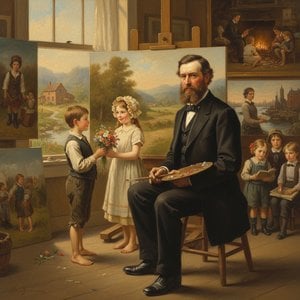
In the quietude of a mid-nineteenth-century bedroom, a profound story of devotion unfolds within the frame of Seymour Joseph Guy’s 1870 masterpiece, Untitled (D2WVMH). This evocative oil painting invites the viewer into an intimate domestic sphere, where the boundaries between the external world and the sanctuary of home dissolve. The composition centers on a poignant interaction between two children: a young girl, poised with gentle gravity, and a boy resting in the stillness of his bed. As she leans toward him, perhaps reading aloud to soothe a fevered mind, the scene transcends mere portraiture to become a universal study of caregiving and childhood innocence. The atmosphere is thick with a sense of quiet intimacy, capturing that fragile moment where concern meets comfort, and the weight of responsibility first touches the heart of a child.
The artist employs a masterful use of light and shadow to breathe life into this domestic tableau. A soft, directional light enters from an unseen window on the left, washing over the scene with a warm, golden glow that suggests the late afternoon sun. This illumination does more than simply reveal the subjects; it sculpts their forms, casting deep, velvety shadows that lend a remarkable sense of volume and three-dimensional presence to the heavy wooden furniture and the soft folds of the bedding. The palette is a rich tapestry of ochres, deep browns, and warm yellows, creating a cozy yet slightly melancholic ambiance that resonates with the viewer’s emotions. Through this careful manipulation of light, Guy transforms a simple bedroom into a stage for profound human connection.
Technical Mastery and Victorian Sentiment
Seymour Joseph Guy, an artist celebrated in his time for his technical prowess, utilizes the traditional medium of oil on canvas to achieve a breathtaking level of detail. His technique is characterized by a seamless blend of smooth, polished surfaces and more pronounced, textured brushstrokes that add tactile depth to the work. One can almost feel the weight of the boy’s heavy blanket and the crispness of the girl’s dress. This meticulous attention to texture—from the organic curves of the rounded pillows to the sturdy grain of the dark wooden frame—demonstrates a scientific precision likely informed by his classical training. The layering of objects creates a shallow yet effective perspective, drawing the eye inward toward the emotional core of the painting and ensuring that the viewer remains anchored in the immediate foreground of this tender narrative.
Beyond its aesthetic beauty, the painting serves as a window into the idealized Victorian vision of childhood. During this era, the concept of the "domestic sanctuary" was paramount, and Guy’s work epitomizes the sentimental values of the age: tenderness, piety, and the sanctity of the family unit. Symbolically, the scene speaks to the resilience of the human spirit through the lens of care; the girl acts as a guardian of peace amidst the vulnerability of illness. For the discerning collector or interior designer, this piece offers more than mere decoration. It provides a sophisticated focal point that brings a sense of history, warmth, and soulful storytelling to any space. Whether placed in a sunlit library or a quiet study, this reproduction serves as a timeless reminder of the enduring power of compassion.
Preguntas y respuestas
¿Qué paleta y qué sentimiento combinan "Untitled (D2WVMH)"?
En "Untitled (D2WVMH)", los colores de Earthy acompañan a un sentimiento Comforting.
¿"Untitled (D2WVMH)" de Seymour Joseph Guy utiliza contrastes fuertes o armonías suaves?
En "Untitled (D2WVMH)", un Gentle contraste se combina con una Unified Palette armonía.
¿Cuántas personas ven "Untitled (D2WVMH)"?
Existe una página de Estadísticas para "Untitled (D2WVMH)". En ella se registran las visitas mensuales de la obra y de otras obras del artista, con desgloses por país e idioma.
Obras relacionadas


Biografía del artista
La conmovedora visión de Seymour Joseph Guy
Seymour Joseph Guy (1824-1910) sigue siendo una figura envuelta en un relativo misterio; sin embargo, sus pinturas poseen un encanto innegable y ofrecen una visión conmovedora de la infancia idealizada en la América de la era victoriana. Tras haber sido ignorada durante décadas después de su muerte, la obra de Guy experimenta ahora un resurgimiento del interés gracias a una meticulosa labor académica y a los avances en la tecnología de imagen —particularmente la microscopía de fluorescencia ultravioleta—, la cual ha revelado niveles asombrosos de detalle que antes eran indetectables al ojo humano. Este renovado aprecio subraya no solo la destreza artística de Guy, sino también el amplio contexto cultural en el que se desarrolló su genio, tendiendo un puente entre la formación clásica europea y el floreciente sentimiento doméstico de los Estados Unidos.
Nacido en Greenwich, Inglaterra, los años formativos de Guy estuvieron marcados por una crianza privilegiada y el acceso a tutores excepcionales. Su padre, un abogado, le inculcó el amor por el aprendizaje clásico y la curiosidad intelectual, rasgos que sin duda moldearían sus sensibilidades artísticas. Aunque los detalles biográficos son escasos, las evidencias sugieren que realizó sus estudios en el Eton College y posteriormente se matriculó en el Christ's College, Cambridge, donde obtuvo un título en Ciencias Naturales. Esta base científica probablemente informó la meticulosa precisión que se encuentra en sus obras posteriores, permitiéndole abordar el lienzo tanto con el ojo de un artista para la belleza como con la devoción de un científico por la exactitud anatómica y ambiental.
Un viaje de ambición y evolución artística
Impulsado por la ambición y el deseo de libertad creativa, Guy emigró a los Estados Unidos en 1853. Se estableció como pintor de retratos en Boston, ganando reconocimiento rápidamente por su capacidad para capturar sutiles expresiones de emoción y matices psicológicos. Sin embargo, fue su incursión en la pintura de género —específicamente las representaciones de niños jugando— lo que consolidó su reputación como uno de los artistas más destacados de su época. Su transición desde la rigidez formal del retrato hacia el mundo fluido y narrativo de las escenas de género le permitió explorar la intersección entre el realismo y el romanticismo.
El estilo artístico de Guy se caracteriza por una notable mezcla de realismo y sentimentalismo. Representaba meticulosamente paisajes e interiores con una precisión minuciosa, empleando técnicas perfeccionadas durante sus años en Cambridge. No obstante, infundía estas escenas con una profundidad emocional que trascendía la mera documentación. En obras como The New Arrival (1881), se puede ser testigo de su maestría de la estética victoriana, capturando los momentos tiernos de la vida doméstica con una calidez que resuena a través de las generaciones. Su habilidad para manipular la luz y la sombra crea una sensación de intimidad, atrayendo al espectador hacia los espacios privados, y a menudo sagrados, del hogar del siglo XIX.
Legado y maestría del detalle
La importancia de la obra de Guy reside en su capacidad para evocar nostalgia mientras mantiene un riguroso estándar técnico. Incluso al explorar temas más oscuros o misteriosos, como en The Haunted Cellar (también conocida como Who's Afraid), logra mantener un equilibrio entre la sutil inquietud y el atractivo romántico. Sus pinturas sirven como ventanas históricas, capturando las texturas de los tejidos victorianos, el suave resplandor de la luz de las velas y las expresiones inocentes, y a veces traviesas, de la juventud.
Hoy en día, el impacto perdurable de sus contribuciones al arte estadounidense puede resumirse a través de varios elementos clave de su maestría:
- Precisión técnica: La aplicación de la observación científica para la representación de la luz, la textura y el detalle anatómico.
- Resonancia emocional: Una capacidad única para capturar la profundidad psicológica de sus sujetos, particularmente en escenas de cuidado infantil y domesticidad.
- Innovación de género: La elevación de la vida cotidiana estadounidense al nivel del gran arte mediante una sofisticada mezcla de realismo y sentimentalismo.
- Preservación histórica: El aporte de un registro visual invaluable de las estructuras sociales, la moda y los entornos domésticos del siglo XIX.
A medida que la tecnología moderna continúa despojando las capas de sus lienzos, revelando complejidades ocultas, Seymour Joseph Guy está siendo justamente reposicionado en el canon del arte victoriano. Sus obras, presentes en importantes museos de EE. UU., continúan encantando tanto a coleccionistas como a historiadores, erigiéndose como un testimonio de una vida dedicada a capturar la belleza fugaz de la experiencia humana.

Seymour Joseph Guy
1824 - 1910 , Reino Unido
Datos clave
- Artistic Movement Or Style: Pintura de género
- Artists Who Influenced This Artist:
- William Holman Hunt
- John Everett Millais
- Date Of Birth: 1824
- Full Name: Seymour Joseph Guy
- Nationality: Británica
- Notable Artworks:
- La pastora
- Un niño jugando con una cometa
- Place Of Birth: Greenwich, Reino Unido
Artículos relacionados

Realismo Estadounidense: 10 Obras Maestras que Cambiaron el Arte y la Decoración
Descubre 10 obras maestras del Realismo Estadounidense: Winslow Homer, Edward Hopper y más. Explora la historia, técnica y emoción de estos icónicos cuadros. Encuentra reproducciones de arte de museo en ArtsDot.com.
John George Brown: Capturing American Life & Sentiment in 19th-Century Genre Painting
Explore the captivating genre paintings of John George Brown, celebrated for his realistic depictions of 19th-century American life. Discover his legacy & find museum-quality reproductions at ArtsDot.

Grant Wood & American Regionalism: Identity, Myth & the Rural Landscape
Explore the world of Grant Wood & American Regionalism with ArtsDot. Discover the symbolism behind 'American Gothic', recurring themes, and the movement's lasting impact on art history. High-quality reproductions available.

El Siglo XIX en el Arte: 10 Obras Maestras para Decorar con Historia y Estilo
Descubre 10 obras maestras del siglo XIX: Monet, Goya y más. Explora el impresionismo, realismo y romanticismo que definieron una época. Encuentra reproducciones de arte exclusivas para decorar tu hogar con estilo en ArtsDot.com.

Thomas George Webster: Navigating Genre Boundaries & American Identity in 19th-Century Landscape Painting
Explore the captivating genre scenes of Thomas George Webster, a Victorian painter bridging British traditions with American themes. Discover his style, influences & legacy in 19th-century art history.