


 Vista previa
 Compartir
 Compartir
 Ver detalles
 Guía
Guía

 Descargar
 Ver artículos similares
 Radiografía
 Presentación de diapositivas
 Estadísticas
Conqueror


 Leer más
Reproducción al óleo hecha a mano
Óleo sobre lienzo pintado a mano en el tamaño y marco de su elección, realizado por encargo por nuestros artistas. ( Cambiar a formato impreso Ver versión en imagen digital)




P118B €10

P118H €10

P118W €10

P438Z €10

P508JH €12

P508YH €12

P805H €10

P805Z €10

P919BZ €10

P919G €10

P919XJ €10

P959ZH €10

P968JZ €12

W106C €8

W218G €10

W218JH €8

W218Y €10

W307PJ €10

W316G €10

W316PJ €8

W316Y €10

W398PJ €8

W4111J €10

W500HY €15

W500JH €15

W692G €12

W849H €8

W940BG €15

W953PJ €8




Elija entre nuestros tamaños predefinidos que respetan las proporciones originales de la obra.

Puede ingresar sus propias dimensiones para adaptarse a un marco o espacio específico. Si el tamaño seleccionado no coincide con las proporciones de la imagen original, recortaremos la obra o extenderemos la pintura con elementos adicionales pintados a mano. Se le enviará una maqueta digital para su aprobación antes de comenzar la producción.
Tenga en cuenta que la vista previa en pantalla no refleja el recorte o la extensión reales. Solo la maqueta mostrará con precisión la composición final.
Si bien existen tamaños personalizados, recomendamos seleccionar una dimensión de la lista predefinida para preservar las proporciones originales.
Tras realizar el pedido, el equipo de ArtsDot.com enviará un correo electrónico al cliente para solicitar instrucciones y proporcionarle una vista previa del boceto.
Envío a todo el mundo () en 3-4 semanas en lugar de las 5 semanas estándar. (10 octubre). Sin comprometer la calidad.

Envío exprés gratuito a todo el mundo

Lienzo de lino de alta calidad

Seguro de envío completo

Garantía de reembolso de impuestos aduaneros

Garantía de fidelidad cromática exacta

Política de devolución de 100 días (solo por defectos)

Garantía de devolución del 100% del dinero

Oferta por volumen
 La opción de vidrio solo está disponible en tamaños inferiores a 110 cm.

Conqueror
Técnica de reproducción
Tamaño de la reproducción
-


Precio total
€ 226
A Symphony of Geometric Forms: The Soul of Paul Klee’s “Conqueror”
In the vast landscape of twentieth-century abstraction, few works possess the rhythmic tension and symbolic depth found in Paul Klee’s 1937 masterpiece, “Conqueror.” To encounter this painting is to step into a realm where the boundaries between music and vision dissolve, leaving behind a visual melody composed of sharp edges and vibrant hues. Klee, a master who viewed the canvas as a stage for cosmic movement, presents us with a narrative that feels both ancient and avant-garde. At its heart, the work depicts a solitary figure poised with a bow and arrow, standing in defiant confrontation against a monumental cube. This is not merely a depiction of a hunter; it is an exploration of the human spirit’s encounter with the overwhelming, structured forces of existence.
The composition is a masterclass in balanced tension. Klee utilizes a tripartite arrangement, placing the central figure before a colossal geometric monolith, flanked by two smaller cubes that anchor the scene. This deliberate structuring creates a sense of contained energy, as if the very air around the figure is vibrating with the potential for action. The figure’s posture, bolstered by a shield visible upon his back, speaks to a profound resilience—a visual metaphor for the courage required to face life's most daunting obstacles. For the collector or interior designer, this piece offers a sophisticated focal point that commands attention through its structural integrity and its ability to anchor a room with both weight and whimsy.
The Alchemy of Color and Expressionist Technique
Klee’s technique in “Conqueror” eschews the sterile precision often associated with geometric abstraction, opting instead for an expressionist vitality that breathes life into every shape. His brushstrokes are bold and textured, defining the contours of the human form and the massive cubes with a dynamism that suggests movement even within static forms. The artist’s palette is a carefully orchestrated clash of primary energies; vibrant yellows, deep reds, and piercing blues interact to create a visual richness that transcends mere decoration. These colors do not simply sit upon the surface; they evoke an emotional temperature, ranging from the warmth of sunlight to the urgent apprehension of a looming shadow.
This interplay of color and texture invites a tactile engagement with the work. The surface of the painting possesses a rhythmic quality, mirroring Klee’s lifelong fascination with musical arrangement. As one observes the way the light seems to catch the layered pigments, the painting reveals itself as a "visual music"—a term often used by scholars to describe Klee's ability to translate auditory harmony into graphic form. For those seeking to adorn a space with art that inspires deep contemplation, “Conqueror” provides an inexhaustible well of detail, rewarding the eye with new discoveries upon every viewing.
A Legacy of Abstraction for the Modern Collector
Understanding “Conqueror” requires acknowledging the historical weight Klee carried during its creation. Painted in 1937, a period of immense global upheaval, the painting’s themes of confrontation and protection resonate with a timeless psychological truth. Klee, a Swiss-born artist who navigated the complex movements of Cubism, Surrealism, and Expressionism, had reached a pinnacle of maturity where he could manipulate the most basic elements of art—line, dot, and plane—to communicate the most complex human emotions. The work stands as a testament to his ability to find the "hidden rhythms of the universe" within the simplest of shapes.
Integrating a high-quality reproduction of this masterpiece into a contemporary interior allows for a bridge between historical significance and modern aesthetic sensibilities. Whether placed in a minimalist gallery setting or a richly textured study, “Conqueror” brings with it an aura of intellectual depth and artistic prestige. It is more than a painting; it is an invitation to witness the triumph of form over chaos, making it an essential acquisition for anyone dedicated to the enduring power of fine art.
Preguntas y respuestas
¿Puedo pedir una reproducción al óleo de "Conqueror"?
Puede solicitar una reproducción pintada a mano de "Conqueror" de Paul Klee directamente en esta página: una reproducción al óleo pintada a mano sobre lienzo de lino, realizada bajo pedido.
¿Qué ubicación se adapta mejor al formato de "Conqueror" de Paul Klee?
El formato (Portrait) y el espacio recomendado (Living Room) son los dos datos de colocación registrados para "Conqueror" de Paul Klee.
¿Quién creó "Conqueror"?
"Conqueror" se atribuye a Paul Klee.
¿Cómo puedo conseguir una lámina de "Conqueror" de Paul Klee?
Puede solicitar una impresión de "Conqueror" de Paul Klee directamente en esta página: una impresión de bellas artes sobre lienzo de algodón o papel de lienzo de archivo.
¿Los colores de "Conqueror" se ven intensos o suaves?
"Conqueror" de Paul Klee muestra una intensidad de color Vivid.
¿De qué manera el estilo de "Conqueror" se relaciona con la época de su creador?
"Conqueror" pertenece al movimiento Expressionist Abstraction, y su creador trabajó en la época Edad Moderna.
¿Cómo se puede utilizar "Conqueror" de Paul Klee en la decoración del hogar?
Se recomienda "Conqueror" de Paul Klee para Accent, idealmente en un/a Living Room. El uso y el espacio juntos orientan dónde encaja una reproducción.
Obras relacionadas


Biografía del artista
Paul Klee: Una Vida en Color y Forma
Primeros Años y Educación
- Paul Klee nació el 18 de diciembre de 1879, en Münchenbuchsee, Suiza.
- Su padre era profesor de música alemán y su madre una cantante suiza, fomentando una temprana apreciación por las artes.
- Inicialmente, Klee se dedicó al dibujo pero finalmente abandonó la representación realista en favor de formas más expresivas.
- Estudió en la Academia de Bellas Artes de Múnich entre 1898 y 1901.
Desarrollo Artístico e Influencias
- La obra temprana de Klee mostraba influencias del Art Nouveau y el Simbolismo, pero rápidamente comenzó a desarrollar su estilo único.
- Un viaje crucial a Túnez en 1914 impactó profundamente su uso del color y la abstracción – la luz y la atmósfera inspiraron un cambio hacia paletas más audaces.
- Estuvo influenciado por movimientos como el Expresionismo, el Cubismo y el Surrealismo, aunque nunca se alineó completamente con ninguno de ellos.
- Su interés en la música informó profundamente su enfoque artístico, a menudo comparando la pintura con la composición musical.
Los Años Bauhaus y Más Allá
- De 1931 a 1933, Klee enseñó en la influyente escuela Bauhaus de arte, diseño y arquitectura junto a Wassily Kandinsky.
- Este período vio florecer su obra abstracta, explorando la teoría del color y las relaciones formales.
- Con el ascenso del nazismo en Alemania, Klee fue despedido de la Bauhaus en 1933 debido a su “arte degenerado”.
- Regresó a Suiza y continuó pintando, pero su salud se deterioró durante este tiempo.
Temas Principales y Estilo Artístico
- La obra de Klee se caracteriza por una exploración juguetona pero profunda del color, la línea y la forma.
- A menudo empleaba imágenes infantiles y composiciones caprichosas, impregnadas de significado simbólico.
- Temas recurrentes incluyen jardines, paisajes, retratos y arreglos abstractos.
- Sus “Cuadernos de Paul Klee”, publicados póstumamente, revelan sus extensas investigaciones teóricas sobre el color y el diseño.
Legado e Importancia Histórica
- Paul Klee murió el 29 de junio de 1940, en Muralto, Suiza.
- Se considera uno de los artistas más importantes del siglo XX, conectando el abismo entre el arte figurativo y el abstracto.
- Su uso innovador del color y sus escritos teóricos continúan inspirando a artistas e diseñadores hoy en día.
- La obra de Klee sigue siendo muy buscada por coleccionistas y museos de todo el mundo, consolidando su lugar como una figura icónica en la historia del arte moderno.

Paul Klee
1879 - 1940 , Suiza
Datos clave
- Fecha De Fallecimiento: 29 de junio de 1940
- Fecha De Nacimiento: 18 de diciembre de 1879
- Lugar De Nacimiento: Münchenbuchsee, Suiza
- Movimiento Artístico:
- Expresionismo
- Cubismo
- Surrealismo
- Nacionalidad: Suizo-alemán
- Nombre Completo: Paul Klee
- Obras Notables:
- Ritmos RojoVerde y VioletaAmarillo
- Contemplación
- En las casas de Saint Germain
- Nubes sobre Bor
- Hermanos
- Carta Fantasma
- Flora sobre rocas Sol
Artículos relacionados

Paul Klee: Las 25 Obras Maestras que Definen un Genio del Arte Moderno | ArtsDot
Descubre las 25 obras maestras de Paul Klee, el genio del arte moderno. Explora su expresionismo único, composiciones abstractas y vibrantes paletas de colores. Reproducciones de alta calidad y decoración con arte en ArtsDot.com.

Paul Cézanne: Las 25 Obras Maestras que Definieron el Arte Moderno | ArtsDot
Descubre las 25 obras maestras de Paul Cézanne que revolucionaron el arte moderno. Explora su técnica, inspiración y significado en paisajes, bodegones y retratos. Reproducciones de alta calidad para decorar tu hogar con arte inolvidable. ¡Explora la colección completa en ArtsDot.com!

Abstracción Geométrica: 10 Obras Maestras que Transformaron el Arte Moderno | ArtsDot
Descubre las 10 obras maestras de la abstracción geométrica que revolucionaron el arte moderno. Explora a Mondrian, Malevich y Kandinsky en ArtsDot.com. Reproducciones de alta calidad para tu hogar.

Beyond Form & Color: Geometric Abstraction's Evolution in 20th/21st Century Art
Explore the evolution of geometric abstraction from Cubism to contemporary art. Discover key artists like Malevich & Mondrian, investment insights, and expert collecting advice at ArtsDot.
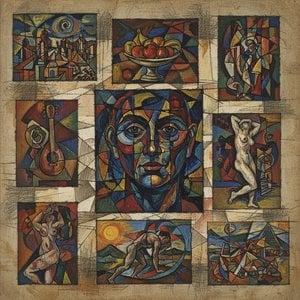
Cubismo Expresionista: 10 Obras Maestras que Transformaron el Arte | ArtsDot
Descubre las 10 obras maestras del Cubismo Expresionista con ArtsDot. Explora la historia de Picasso, Braque y otros artistas clave. Encuentra reproducciones de arte exclusivas para transformar tu hogar. ¡Explora la colección completa en ArtsDot.com!


