


The picture follows your choices: , .
Descripción del objeto
Nicholas Roerich’s "Plafond" showcases a breathtaking celestial scene with a central angel figure amidst swirling stars and planets, reflecting the artist's spiritual vision of 1913. Discover this stunning hand-painted reproduction and bring cosmic beauty into your home.
 Ver más
Biografía del artista
Explora el arte cautivador de Nicolás Roerich (1874-1947): Simbolismo, paisajes himalayos y pinturas místicas. Diseños para los Ballets Russes y defensor de la preservación cultural.
Reproducción al óleo hecha a mano
Óleo sobre lienzo pintado a mano en el tamaño y marco de su elección, realizado por encargo por nuestros artistas. ( Cambiar a impresiones Cambiar a imagen digital)
More about this painting
 Ver en contexto
 Enviar
 Compartir
 Detalles
 Guía
Guía

 Descargar
 Similares
 Radiografía
 Presentación de diapositivas
 Q&A
Q&A Estadísticas
Order your painting in four simple steps
Take your time. You can change any answer; the price in your order card follows each choice.
1 Step one of four
Which size would you like?
These sizes keep the proportions of the original painting. The drawing shows your choice on a wall, above a two-metre sofa.
Or give your own measurements
Elija entre nuestros tamaños predefinidos que respetan las proporciones originales de la obra.

Indique el ancho y el alto que necesite para adaptarse a su marco o pared. Al tratarse de una obra pintada a mano, si requiere un tamaño con una proporción distinta, el artista puede pintar un poco más alrededor de la imagen o recortarla ligeramente; usted elige. Le enviaremos una maqueta digital para su aprobación antes de comenzar la pintura. La imagen que se muestra en esta página no refleja el resultado real; solo la maqueta lo hace.
2 Step two of four
How should it be prepared: rolled, stretched or framed?
The prices below are for the size you chose in step one.
Choose the edges of the stretched canvas
Choose your frame

White €1

Blurside €1

Extended €1

P118B €10

P118H €10

P118W €10

P438Z €10

P508JH €12

P508YH €12

P805H €10

P805Z €10

P919BZ €10

P919G €10

P919XJ €10

P959ZH €10

P968JZ €12

W106C €8

W218G €10

W218JH €8

W218Y €10

W307PJ €10

W316G €10

W316PJ €8

W316Y €10

W398PJ €8

W4111J €10

W500HY €15

W500JH €15

W692G €12

W849H €8

W940BG €15

W953PJ €8

H24-GOLD €30

H24-SILVER €30

H36-GOLD €45

H36-SILVER €45
Con marco
Moulding: . Overall size with the frame: .
3 Step three of four
Would you like anything changed in the painting?
Most people answer no. Because each painting is made by hand, our artist can also adapt it for you.
After order, ArtsDot.com team will email client for instructions and provide a mockup preview
4 Step four of four
A few finishing options
All of them are optional. The answers already selected cost nothing extra.
Who paints it?
Envío a todo el mundo () en 3-4 semanas en lugar de las 5 semanas estándar. (31 octubre). Sin comprometer la calidad.
A nameplate, as in a museum?
Detalles de la placa de bronce grabada
This elegant plaque features the artist's name and the title of the artwork, finely engraved for a timeless presentation.
It is made from bronze with a refined, elegant finish. The text is precisely laser-engraved for a sharp and permanent result. Measuring 9x2 cm, the plaque is compact yet easy to read. It's built to be durable and scratch-resistant, offering a professional, museum-quality look. Mounting is simple thanks to the included adhesive backing.
Detalles de la placa de acrílico transparente
The plaque includes essential engraved details such as the artist's name, the title of the artwork, the date it was created, the type of media used-like oil on canvas or watercolor-a brief description of the piece, and a QR code that links to the complete artwork information.
It is crafted from clear acrylic, offering a sleek, modern appearance. The text is UV-engraved in black to ensure strong visual contrast. With a size of 10x15 cm, it ensures optimal readability. It comes equipped with two metal hooks for secure wall mounting. The plaque is designed to be weather-resistant, making it suitable for various environments, and it includes interactive features that work seamlessly with smartphone scanning.
Detalles de la placa de acrílico negro
This elegant plaque includes engraved information such as the artist's name, the title of the artwork, the date it was created, the type of media used (like oil on canvas or watercolor), a short description of the artwork, and a QR code for quick access to more information.
The plaque itself is made from refined black acrylic with a premium finish. The text is laser-engraved in white for high contrast and readability. Its size is 10x15 cm, designed to be easy to read. It comes with two metal hooks for professional mounting. The design is sleek and fits any interior style. It is also weather-resistant and durable, with built-in digital integration for mobile compatibility.
A protective varnish?
When do you need it?
✓ Check and order
Your painting, as you ordered it

Plafond
Técnica de reproducción
Dimensiones de la reproducción
-

Selección de artistas premium
Mayor nivel de detalle, delicadeza y tiempo de producción adicional
-

Enmarcado de reproducción
-
-
Para obras de arte o reproducciones que midan más de 105 cm (aproximadamente 41 pulgadas) en cualquiera de sus lados, el marco se enviará como un kit desmontado. Este método garantiza una entrega segura y evita daños durante el transporte.
Se requiere montaje profesional: este no es un producto para hacer usted mismo (DIY).
El kit debe ser ensamblado y el lienzo tensado por un enmarcador profesional con experiencia, utilizando cola para madera (no incluida), una tenaza para tensar lienzos y sargentos para mantener los bastidores alineados mientras la cola se seca. Un montaje incorrecto o una tensión desigual del lienzo pueden dañar la obra de arte de forma permanente y no están cubiertos por nuestra garantía.
 Para obras de arte o reproducciones que midan más de 105 cm (aproximadamente 41 pulgadas) en cualquiera de sus lados, el marco se enviará como un kit desmontado. Este método garantiza una entrega segura y evita daños durante el transporte.
Se incluyen todos los listones de madera maciza, cortados con precisión según las medidas.
Se ensambla con los tornillos incluidos, además de cola para madera para las uniones de las esquinas, la cual no se incluye y debe ser proporcionada por su enmarcador.
Se requieren herramientas profesionales que no están incluidas: un alicate para tensar lienzos (tensor) y abrazaderas para mantener los bastidores alineados mientras se seca el pegamento.
Importante:
Las uniones de las esquinas requieren cola para madera, los listones deben sujetarse con prensas hasta que la cola esté completamente seca, y para tensar el lienzo en el bastidor ensamblado se requiere una pinza para tensar lienzos. Ninguno de estos elementos está incluido en el kit. Por favor, contacte con un profesional del enmarcado con experiencia antes de realizar un pedido de este tamaño.

Cartela
-
-

Barniz protector
Barniz brillante (realza los colores y protege contra la luz y la humedad)
-

Personalizar mi obra
Ejemplos de lo que se puede personalizar: sustituir el rostro por una foto del cliente; añadir una mascota (por ejemplo, cambiar un gato por un perro); incluir un mensaje oculto en el fondo; cambiar el paisaje o los elementos del fondo.
-

Envío urgente
Envío a todo el mundo () en 3 o 4 semanas, en lugar de las 5 semanas habituales. (31 octubre). Sin comprometer la calidad.
-
Envío urgente
Envío internacional () en 5 semanas. (7 noviembre).
Incluido
Precio total final
€ 233
La opción de vidrio solo está disponible en tamaños inferiores a 110 cm.
Included with every order
- Envío exprés gratuito a todo el mundo
- Lienzo de lino de alta calidad
- Seguro de envío total
- Garantía de reembolso de aranceles aduaneros
- Garantía de fidelidad cromática exacta
- Política de devolución de 100 días (solo por defectos)
- Garantía de devolución del 100% del dinero
- Descuento por cantidad


A Celestial Embrace: Exploring Roerich’s “Plafond”
Nicholas Roemerich's "Plafond," painted in 1913, is more than just a depiction of the night sky; it’s a profound meditation on humanity’s place within the vastness of the cosmos. This remarkable work, brimming with intricate detail and imbued with a spiritual sensibility, exemplifies Roerich’s unique artistic vision – one that seamlessly blended scientific observation with deeply held philosophical and religious beliefs. The painting immediately draws the eye to its central focus: a luminous circle dominated by a youthful figure, often interpreted as an angelic child or nascent human spirit, surrounded by a swirling tapestry of stars and planets.
- Subject Matter: The primary subject is a meticulously rendered night sky, capturing the beauty and mystery of celestial bodies.
- Central Figure: A prominent baby angel or child figure serves as the focal point, symbolizing innocence, potential, and connection to the divine.
- Composition: The overall composition creates a sense of depth and movement, drawing the viewer into the heart of the universe.
Roerich’s Visionary Style and Technique
Roerich was deeply influenced by both Russian Orthodox spirituality and his extensive travels – particularly to Central Asia and Tibet – where he encountered ancient symbols and beliefs related to the cosmos. “Plafond” reflects this influence through its use of vibrant, almost iridescent colors, achieved through a technique known as ‘verlona,’ which Roerich developed himself. This method involved layering thin glazes of paint, creating an ethereal glow that seems to emanate from within the canvas. The meticulous detail in depicting constellations and planets demonstrates his dedication to scientific accuracy, reflecting his belief that art should be informed by knowledge.
The painting’s texture is rich and tactile, achieved through multiple layers of paint built up over time. This technique not only adds depth but also contributes to the overall sense of wonder and awe evoked by the scene. The brushwork is precise yet fluid, conveying both a scientific understanding of celestial mechanics and an emotional connection to the beauty of the universe.
Symbolism and Historical Context
"Plafond" was created during a period of significant intellectual and spiritual ferment in early 20th-century Russia. Roerich’s work aligns with broader trends of interest in esoteric knowledge, comparative religion, and the search for universal truths. The painting's symbolism is rich with layers of meaning, referencing ancient myths, religious iconography, and philosophical concepts related to creation, humanity’s destiny, and the interconnectedness of all things. The title itself, “Plafond,” suggests a ceiling or dome – a traditional symbol of heaven or the cosmos – further emphasizing the painting's spiritual dimension.
Painted in 1913, just before World War I dramatically reshaped Europe, "Plafond" represents a moment of relative peace and optimism within Roerich’s artistic trajectory. It stands as a testament to his enduring belief in humanity’s potential for harmony and understanding.
Emotional Impact and Artistic Legacy
"Plafond" possesses a powerful emotional impact, inviting viewers to contemplate their place in the universe and to connect with something larger than themselves. The painting's luminous quality and evocative imagery create a sense of serenity and wonder, while its complex symbolism encourages deeper reflection. Nicholas Roerich’s work continues to resonate today, demonstrating his mastery of technique, his profound spiritual vision, and his enduring legacy as one of the 20th century’s most important artists.
Preguntas y respuestas
¿Qué orientación tiene "Plafond" de Nicolás Roerich?
El formato de "Plafond" es Landscape, un dato útil para planificar la ubicación de una reproducción.
¿Es "Plafond" de Nicolás Roerich de dominio público y por qué?
"Plafond" de Nicolás Roerich es de en el dominio público: sus derechos de autor han expirado. La vigencia de los derechos de autor se cuenta a partir del fallecimiento del artista, que tuvo lugar en 1947.
¿Qué edad tenía Nicolás Roerich cuando creó "Plafond" en 1913?
Nicolás Roerich creó "Plafond" a la edad de 39. El artista nació en 1874 y la obra data de 1913.
Obras relacionadas


Nicolás Roerich
1874 - 1947, Rusia
Biografía del artista
Nicholas Roerich: Vida, Arte y Legado
Primeros Años y Educación
- Nikolai Konstantinovich Roerich nació el 9 de octubre de 1874 en San Petersburgo, Rusia.
- Su padre, un notario alemán del Báltico, y su madre, una mujer rusa, fomentaron una temprana apreciación por las artes en él.
- Roerich estudió tanto derecho como arte simultáneamente, matriculándose en la Universidad de San Petersburgo y la Academia Imperial de Artes en 1893.
- Recibió el título de “Artista” en 1897 y un título de abogado al año siguiente.
Deseos Artísticos e Influencias
- El desarrollo artístico de Roerich fue significativamente influenciado por el Simbolismo Ruso, un movimiento que enfatizaba la espiritualidad y la profundidad emocional.
- Se involucró con la sociedad “Arte del Mundo” de Serguéi Diáguilev, eventualmente convirtiéndose en su presidente desde 1910 hasta 1916.
- Su trabajo temprano mostró una fascinación por la arqueología y el diseño teatral, lo que llevó a colaboraciones en producciones para los Ballets Russes.
- También se vio influenciado por apócrifos y escrituras secretistas medievales como el Libro de la Paloma.
Colaboración con los Ballets Russes
- Los diseños de Roerich para los Ballets Russes fueron muy elogiados, particularmente su trabajo en Príncipe Igor de Alexander Borodin (1909) e El Ritual de la Primavera de Igor Stravinsky (1913).
- Sus diseños escénicos combinaban la investigación histórica con el arte imaginativo, creando producciones visualmente impresionantes.
- Esta colaboración lo estableció como una figura destacada en el diseño teatral a principios del siglo XX.
Desarrollo Artístico y Temas
- Las pinturas de Roerich evolucionaron para incorporar temas cada vez más místicos y espirituales, reflejando su creciente interés en la Teosofía y las religiones orientales.
- Su serie Estudios Arquitectónicos (1904–1905) demostró su destreza arquitectónica y su compromiso con la preservación del patrimonio cultural.
- Motivos recurrentes en su obra incluyen paisajes majestuosos, ciudades antiguas y figuras religiosas como San Panteleimon y Kuan Yin.
- A menudo representaba el Himalaya, una región que tenía un profundo significado espiritual para él.
Logros y Reconocimientos Principales
- Roerich fue un defensor dedicado de la protección del arte y la arquitectura durante los tiempos de guerra.
- Sus esfuerzos llevaron a la creación del Pacto Roerich (1935), un tratado internacional para la preservación de objetos culturales, lo que le valió múltiples nominaciones al Premio Nobel de la Paz.
- Viajó extensamente por Asia Central, realizando investigaciones arqueológicas y documentando culturas antiguas.
- Su obra se exhibe en importantes colecciones museísticas en todo el mundo, incluida la Galería de Pinturas Estatal de Astrakhan.
Significado Histórico y Legado
- El impacto de Nicholas Roerich en el arte y la cultura rusos es inmensurable.
- Puenteó la brecha entre la expresión artística y la exploración espiritual, influyendo a generaciones de artistas e intelectuales.
- Su compromiso con la preservación cultural sigue siendo relevante hoy en día, destacando la importancia de proteger nuestro patrimonio compartido.
- El legado de Roerich se extiende más allá de sus pinturas; es recordado como un artista visionario, erudito y humanitario.


Artículos relacionados

Celestial Messengers: Angels in Painting – A Historical & Artistic Exploration
Explore the captivating history of angels in painting! Discover symbolism, iconic Renaissance & Byzantine masterpieces, and renowned artists. Expert insights for art lovers & collectors at ArtsDot.

Echoes of Time: Exploring the Enduring Appeal & Historical Context of Vintage Art Prints
Explore the captivating world of vintage art prints! Discover their history, collecting tips & enduring appeal. Expert insights on chromolithography and building a legacy collection with ArtsDot.
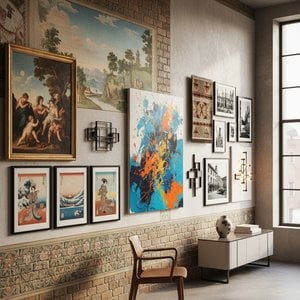
Transforming Spaces: A Comprehensive Exploration of Wall Decor Through Art History & Contemporary Practice
Explore the art of transforming spaces with our comprehensive guide to wall decor. From historical movements to contemporary trends, discover how to curate impactful interiors and commission bespoke artwork for a truly personalized aesthetic.