

Celestial Messengers: Angels in Painting – A Historical & Artistic Exploration

Índice
The Genesis of Angelic Representation: From Ancient Roots to Early Christian Art
Angels have appeared in works of art since early Christian art, and they have been a popular subject for Byzantine and European paintings and sculpture. Normally given wings in art, angels are usually intended, in both Christian and Islamic art, to ...
For millennia, humanity has sought to visualize the unseen realm, to give form to the messengers bridging the earthly and divine. While our contemporary image of angels – winged figures radiating serenity – is a relatively recent development, the impulse to depict these celestial beings stretches back far beyond the advent of Christianity. The earliest precursors weren’t necessarily conceived as ‘angels’ in the strict theological sense, but rather as powerful intermediaries, protective spirits embodying strength and grace. In ancient Assyria, the lamassu – colossal winged bulls with human heads – guarded palace entrances, their imposing presence intended to ward off evil and bestow blessings. These hybrid creatures, though rooted in mythology, foreshadowed the role of angels as protectors and divine representatives. Similarly, in classical Greece, figures like Eros (Cupid) and Nike possessed wings, signifying their ability to traverse realms and deliver messages – albeit those of love and victory rather than spiritual guidance.
The true genesis of angelic representation within a specifically religious context emerges with the rise of early Christianity. Initially, depictions were deliberately symbolic and understated. Within the Catacombs of Priscilla in Rome, dating back to the mid-third century, we find the earliest known Christian image of an angel – a figure announcing the Annunciation, remarkably devoid of wings. This absence wasn’t due to artistic limitation but rather a theological understanding of angels as pure spirits, unbound by physical form. Early representations often favored anthropomorphic depictions—angels appearing as young men, echoing biblical descriptions like Gabriel in Daniel 8:15. Sarcophagi and lamps from this period continued this trend, portraying angels without wings, focusing instead on their role as messengers delivering divine news. The dove frequently substituted the archangel in early frescoes, while the Hand of God represented celestial intervention, highlighting the abstract nature of these spiritual entities.
However, a shift began to occur in the fourth century with the appearance of winged angels on the Prince’s Sarcophagus, unearthed near Istanbul. These relief carvings mark a pivotal moment – the visual adoption of wings as a symbol of angelic transcendence. Inspired by classical depictions of winged Victories, these early winged figures weren't merely aesthetic choices; they were deliberate attempts to convey the idea of beings departing from the heavens to interact with humanity. Saint John Chrysostom eloquently explained this symbolism: “They manifest nature’s sublimity…Not that angels have wings, but that you may know that they leave the heights and the most elevated dwelling to approach human nature.” This understanding solidified the association between wings and angelic form, paving the way for the iconic imagery we recognize today.
Byzantine Angels: A Golden Age of Spiritual Imagery
The Byzantine Empire became a crucible for the development of angel iconography. Building upon the foundations laid in early Christian art, Byzantine artists refined the depiction of angels into a highly stylized and spiritually resonant form. Mosaics and icons flourished, transforming churches into shimmering realms populated by celestial beings. Artists drew inspiration from classical precedents – particularly winged Greek figures – but infused them with a distinctly religious character. Interestingly, court officials, specifically eunuchs, also influenced angelic depictions. Byzantine legislation reveals that many came from the Caucasus, possessing light eyes, hair, and skin—features considered desirable in imperial circles. This aesthetic preference subtly shaped the appearance of angels, often portraying them as youthful, fair-skinned figures with refined features.
Angels within Byzantine art weren’t simply decorative elements; they were integral to theological narratives. They frequently appeared flanking central figures in mosaics, emphasizing their role as attendants and witnesses to divine events. The archangel Michael, a powerful protector of Christendom, was often depicted in elaborate detail, embodying strength and authority. Multi-winged angels, borrowed from Persian art, became common in heavenly settings – adorning the pendentives of church domes, representing higher orders of angelic beings like cherubim and seraphim. These weren’t earthly tasks but rather representations of pure spiritual presence. The use of gold leaf further enhanced their ethereal quality, symbolizing divine light and transcendence. The Byzantine aesthetic prioritized symbolism over realism, creating a visual language that aimed to evoke spiritual contemplation rather than literal representation.
Renaissance Transformations: Humanism, Realism & the Angel in Italian Painting
Renaissance art (1350 – 1620) is the painting, sculpture, and decorative arts of the period of European history known as the Renaissance, which emerged as a distinct style in Italy in about AD 1400, in parallel with developments which occurred in phi...
The Renaissance witnessed a profound shift in artistic sensibilities, profoundly impacting the depiction of angels. Driven by a renewed interest in classical antiquity and the burgeoning humanist philosophy, artists sought to reconcile religious themes with a more naturalistic representation of the human form. This wasn’t a rejection of spirituality but rather an attempt to imbue it with greater emotional depth and relatable humanity. Angels were no longer solely symbols of divine power; they became figures capable of expressing tenderness, compassion, and even sorrow. Artists like Fra Angelico, while remaining deeply devout, infused his angels with a gentle grace and delicate beauty, evident in masterpieces such as the *Annunciation* (1443).
Sandro Botticelli’s *Madonna & Child with an Angel* exemplifies this Renaissance transformation. The serene composition, rich colors, and elegant figures convey a sense of peaceful devotion. The angel, though still possessing wings, is rendered with a more humanistic sensibility – its expression conveying a quiet reverence rather than awe-inspiring power. This focus on emotional nuance extended to other artists like Leonardo da Vinci, whose angels in *The Virgin of the Rocks* exhibit subtle psychological depth. The Renaissance also saw a greater emphasis on anatomical accuracy and perspective, resulting in more realistic depictions of angelic form. Artists meticulously studied human anatomy to create figures that were both beautiful and believable. This pursuit of realism wasn’t merely technical; it was driven by a desire to elevate religious themes through artistic mastery.
Symbolism and Attributes: Decoding the Language of Angels in Art
A halo (from Ancient Greek ἅλως, hálōs, 'threshing floor, disk'), also called a nimbus, aureole, glory or gloriole (Latin: gloriola, lit. 'little glory'), is a crown of light rays, circle or disk of light that surrounds a person in works of art. Th...
Beyond their physical appearance, angels in art are laden with symbolism, each attribute conveying specific theological meanings. Wings, as previously discussed, represent transcendence and the ability to traverse realms. Halos – circular glows surrounding the head – signify holiness and divine grace, originating from ancient Greek depictions of light radiating from sacred figures. The halo’s evolution is fascinating; early Christian art often depicted angels without halos, while later representations adopted them as a standard attribute. The garments worn by angels also carry symbolic weight. White robes typically represent purity and innocence, while gold-trimmed vestments signify their celestial status.
Specific objects held by angels further enrich their meaning. Lilies symbolize purity and the Virgin Mary’s virtue, frequently appearing in Annunciation scenes. Trumpets announce divine pronouncements or herald momentous events, as seen in depictions of the Last Judgment. Scepters represent authority and power, often associated with archangels like Michael. The very posture of an angel can convey meaning – kneeling figures express reverence, while outstretched arms signify blessing or protection. Even the number of wings can be significant; six-winged seraphim represent higher orders of angelic beings, embodying greater spiritual intensity. Understanding these symbolic attributes is crucial to fully appreciating the depth and complexity of angelic representations in art.
Famous Angel Paintings: Masterpieces and Their Enduring Appeal
Throughout art history, certain angel paintings have achieved iconic status, captivating audiences for centuries with their beauty and spiritual power. Fra Angelico’s *Crucifixion* (1420) stands as a poignant example of Early Renaissance artistry, its detailed composition and symbolic richness evoking profound emotional resonance. Duccio di Buoninsegna’s *La Maestà 12*, part of a larger altarpiece, showcases the artist's mastery of color and form, with angelic figures radiating celestial grace. William-Adolphe Bouguereau’s *Song of the Angels* (1881) exemplifies the academic style of the 19th century, its idealized figures embodying ethereal beauty.
These masterpieces aren't merely aesthetically pleasing; they reflect the cultural and theological beliefs of their time. They offer a glimpse into humanity’s enduring fascination with the divine realm and our desire to visualize the unseen forces that shape our world. The continued popularity of these paintings speaks to their timeless appeal – their ability to evoke spiritual contemplation and inspire awe. Whether it's the delicate grace of Botticelli’s angels or the dramatic power of Michelangelo’s, these artworks continue to resonate with audiences today.
Angels Beyond Tradition: Modern Interpretations and Contemporary Visions
While rooted in historical tradition, the depiction of angels hasn’t remained static. Modern and contemporary artists have reinterpreted angelic imagery, exploring new themes and challenging conventional representations. Some artists embrace abstract forms, conveying the ethereal nature of angels through color and texture rather than literal depictions. Others explore darker aspects of angelic mythology – fallen angels or ambiguous figures that question traditional notions of good and evil. This willingness to experiment reflects a broader shift in artistic sensibilities, embracing subjectivity and individual expression.
Contemporary angel paintings often feature bold colors, unusual poses, and surreal elements, reflecting the complexities of the modern world. Guardian angel paintings remain popular, but are frequently rendered with a more personal and intimate style. The enduring appeal of angels lies in their ability to embody hope, faith, and protection – themes that resonate across cultures and generations. At ArtsDot, we celebrate this rich artistic heritage by offering high-quality reproductions of both classic masterpieces and contemporary works, allowing you to bring the beauty and spiritual power of angelic art into your
Artículos relacionados

Illuminating Belief: Faith & Symbolism Across Art History's Canvas
Explore the rich history of faith through art! Discover religious symbolism, Renaissance masterpieces & iconic artists. Expert analysis for collectors & enthusiasts. Learn more at ArtsDot.

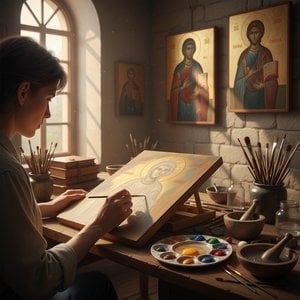
El Resplandor del Tiempo: Explorando la Técnica y el Legado de la Témpera sobre Tabla
Descubra la fascinante historia y técnica de la témpera sobre tabla. Explore los materiales, el simbolismo y la conservación de esta antigua forma de arte con ArtsDot.
Los 25 Tesoros de la Alte Pinakothek: Arte Renacentista y Barroco en Munich
Descubre los 25 tesoros de la Alte Pinakothek en Munich. Explora obras maestras de Dürer, Rembrandt y Rubens. Historia del arte renacentista y barroco para inspirar tu hogar. Reproducciones de alta calidad en ArtsDot.com.

