

 Vista previa
 Compartir
 Compartir
 Ver detalles
 Guía
Guía

 Descargar
 Ver artículos similares
 Radiografía
 Presentación de diapositivas
 Estadísticas
Número 9


 Leer más
La obra de arte que se muestra en esta página está protegida por las leyes de propiedad intelectual, lo que significa que no podemos crear ni vender legalmente una reproducción idéntica. Esta protección se hace cumplir en virtud de acuerdos internacionales como el Convenio de Berna y por las leyes nacionales, incluidas aquellas establecidas por el Ley de derechos de autor de los EE. UU. - Título 17.
Este método cumple plenamente con las normativas de derechos de autor, ya que no implica la copia ni la duplicación de la obra protegida. En su lugar, se trata de una reinterpretación creativa: una nueva pintura influenciada por la original, pero que no es idéntica a ella.
Giclée / Impresión de arte
Impresiones giclée o en lienzo de calidad de museo con producción rápida y opciones de acabado flexibles. ( Encargar reproducción pintada a mano Ver versión en imagen digital)




P118B €10

P118H €10

P118W €10

P438Z €10

P508JH €12

P508YH €12

P805H €10

P805Z €10

P919BZ €10

P919G €10

P919XJ €10

P959ZH €10

P968JZ €12

W106C €8

W218G €10

W218JH €8

W218Y €10

W307PJ €10

W316G €10

W316PJ €8

W316Y €10

W398PJ €8

W4111J €10

W500HY €15

W500JH €15

W692G €12

W849H €8

W940BG €15

W953PJ €8




Elija entre nuestros tamaños predefinidos que respetan las proporciones originales de la obra.

Puede introducir sus propias dimensiones para adaptarse a un marco o espacio específico. Si el tamaño seleccionado no coincide con las proporciones de la imagen original, recortaremos la obra de arte o extenderemos la imagen con un borde con efecto espejo o de color sólido. Se enviará una maqueta digital para su aprobación antes de que comience la producción.
Tenga en cuenta que la vista previa en pantalla no refleja el recorte o la extensión real. Solo la maqueta mostrará con precisión la composición final.
Aunque existen tamaños personalizados, recomendamos seleccionar una dimensión de la lista predefinida para preservar las proporciones originales.
Envío a todo el mundo () en 2 semanas en lugar de las 4/5 semanas estándar. (10 octubre)

Envío exprés gratuito a todo el mundo

Lienzo de lino de alta calidad

Seguro de envío completo

Garantía de reembolso de impuestos aduaneros

Garantía de fidelidad cromática exacta

Política de devolución de 100 días (solo por defectos)

Garantía de devolución del 100% del dinero

Oferta por volumen
 La opción de vidrio solo está disponible en tamaños inferiores a 110 cm.

Número 9
Giclée / Impresión de arte
Tamaño de la reproducción
-


Precio total
€ 53
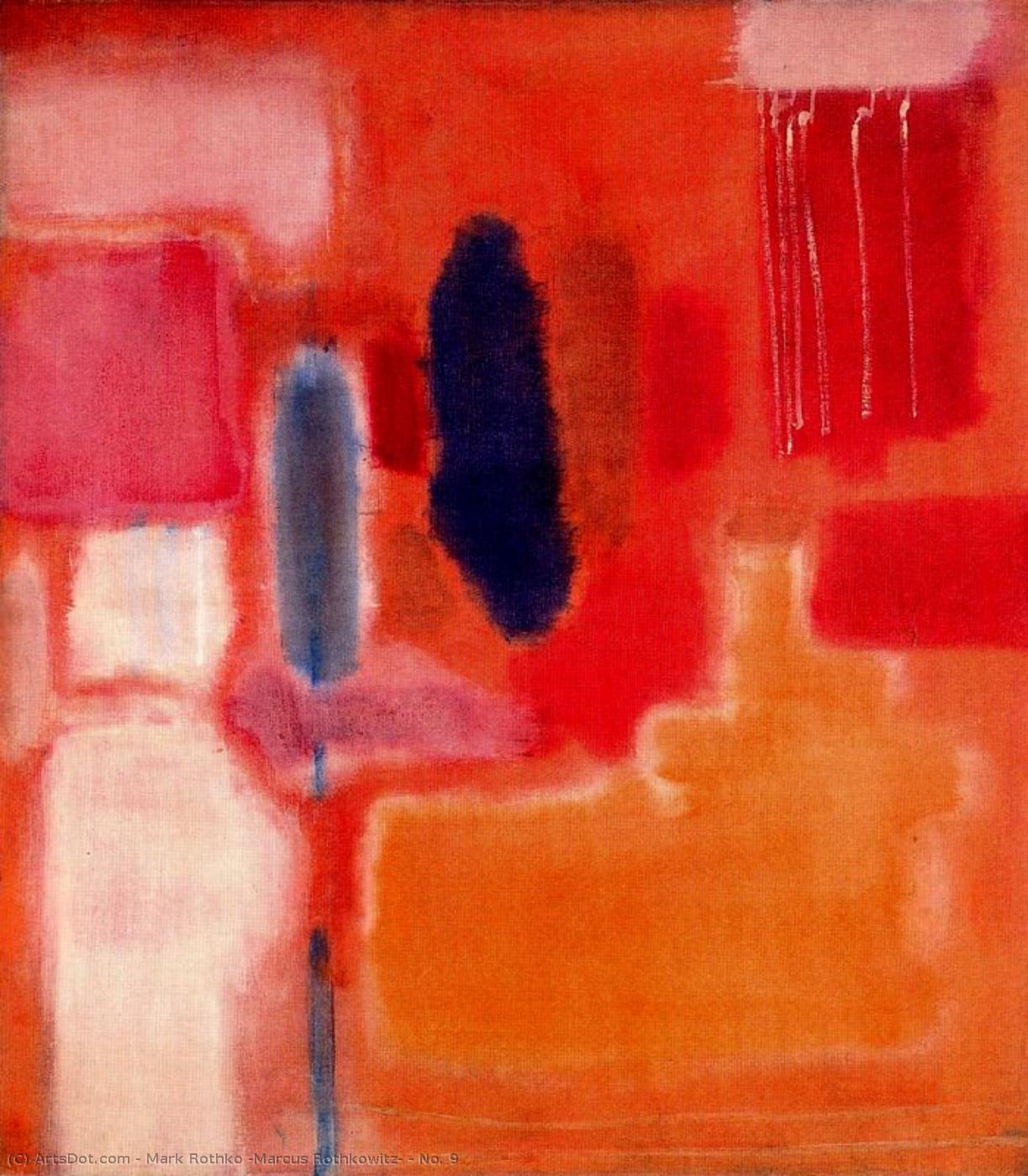
A Meditation on Color and Absence: Examining Mark Rothko’s “No. 9”
“No. 9,” painted in 1948, stands as a cornerstone of Abstract Expressionism and embodies the profound emotional resonance that characterizes Mark Rothko's oeuvre. More than just pigment on canvas, it represents an attempt to distill experience into its purest form—a deliberate stripping away of detail to reveal the underlying essence of feeling. The artwork’s deceptively simple composition consists of stacked rectangles of crimson and tangerine hues, punctuated by subtle bands of azure. These shapes aren't merely decorative; they are carefully calibrated to create a visual rhythm that draws the viewer inward, fostering contemplation rather than active observation.The Genesis of Color Field Painting
Rothko’s approach to painting—often termed “Color Field”—was revolutionary for its time. Rejecting traditional representational art, he sought to bypass intellectual analysis and tap directly into primal emotions. Influenced by Zen Buddhism and Eastern philosophy, Rothko believed that color itself could convey spiritual truths. He meticulously layered thin washes of pigment onto the canvas, achieving a velvety surface texture that seemed to absorb light rather than reflect it. This technique—a deliberate departure from brushstrokes—was painstakingly developed over years of experimentation, prioritizing tonal harmony and luminosity above all else. The resulting canvases are less about depicting a scene or subject matter and more about presenting an immersive experience for the viewer.Symbolism Within Minimalism
Despite its apparent lack of visual complexity, “No. 9” is laden with symbolic significance. Rothko himself famously described his paintings as "windows onto eternity," suggesting that they aspire to transcend the limitations of human perception and access a realm beyond the tangible world. The dominant reds and oranges evoke feelings of warmth, passion, and vitality—colors associated with life force and primal instinct. Simultaneously, the blues introduce an element of melancholy and introspection, representing sorrow, contemplation, and perhaps even transcendence. These contrasting hues coexist in equilibrium, mirroring the complexities of human experience itself.Historical Context: The Postwar Landscape
“No. 9” emerged from the aftermath of World War II, a period marked by disillusionment and uncertainty. Artists like Rothko responded to the trauma of the conflict with an earnest desire for spiritual renewal. Color Field painting arose as a reaction against the anxieties of Surrealism and Cubism, offering solace in its quiet contemplation and prioritizing emotional expression over intellectual precision. The canvas embodies the spirit of this era—a yearning for beauty amidst darkness, a belief in the transformative power of art to communicate profound truths about human existence.Emotional Resonance: An Invitation to Reflection
Ultimately, “No. 9” succeeds in eliciting an emotional response that transcends mere visual stimulation. Its subtle gradations of color invite viewers to linger before it, allowing them to immerse themselves in its contemplative atmosphere. The absence of discernible form encourages a surrender to feeling—a recognition that art can communicate truths beyond the realm of rational thought. Like many of Rothko’s paintings, “No. 9” remains an enduring testament to the power of color and silence to provoke introspection and inspire awe. It serves as a poignant reminder that beauty can reside in simplicity and that profound emotion can be conveyed without resorting to elaborate imagery.Preguntas y respuestas
¿A qué artista se le atribuye "Número 9"?
El artista detrás de "Número 9" es Mark Rothko. La obra está catalogada bajo el nombre de Mark Rothko.
¿Qué edad tenía Mark Rothko cuando creó "Número 9" en 1948?
Cuando se creó "Número 9" en 1948, Mark Rothko —nacido/a en 1903— tenía 45 años.
¿En qué año se creó "Número 9" de Mark Rothko?
"Número 9" data de 1948. La fecha sitúa la obra dentro de la trayectoria de Mark Rothko y de su época.
¿Cómo puedo descubrir obras de arte similares a "Número 9" de Mark Rothko?
Las obras similares a "Número 9" se encuentran listadas en la página de Similares de la obra.
¿Cómo se describe la paleta de "Número 9" de Mark Rothko?
"Número 9" de Mark Rothko utiliza una paleta de colores Tonos oscuros. La paleta resume el carácter cromático general de la obra.
¿Cuál es la luminosidad percibida de "Número 9" de Mark Rothko?
En cuanto a la luminosidad percibida, "Número 9" de Mark Rothko es brillante.
¿Dónde puedo ver una vista previa de "Número 9"?
La página de Vista previa de "Número 9" le permite previsualizar la obra antes de realizar su pedido.


Biografía del artista
vida temprana e influencias
Mark Rothko (Marcus Rothkowitz), un reconocido artista estadounidense, nació el 25 de septiembre de 1903 en Dvinsk, Letonia. Su familia emigró a los Estados Unidos cuando tenía solo diez años. Este cambio cultural influyó más tarde en su estilo artístico.evolución artística
La obra temprana de Rothko se caracterizó por el **expresionismo abstracto**, un estilo que enfatizaba el proceso de creación del arte más que el producto final. Sus pinturas, como No. 18 (1948) y Untitled (1948), mostraban su enfoque único del color y la forma.- **Campo de color:** El uso de campos de color rectangulares audaces por Rothko, a menudo en marcado contraste entre sí, creó una sensación de profundidad y emoción.
- **Estructura orgánica:** Sus pinturas parecían respirar vida, como si los colores fueran entidades vivientes.
obras notables y exposiciones
- No. 10 (1950), una pintura que marcó un cambio significativo en el estilo de Rothko, ahora forma parte de la colección del Museo de Arte Moderno.
- Las murales de Seagram, una serie de pinturas encargadas para el restaurante Four Seasons, mostraron la capacidad de Rothko para adaptar su estilo a diferentes entornos.
- No. 3 (1950), una pintura que ejemplifica el uso de campos de color rectangulares audaces por Rothko.
vida tardía y legado
La vida de Rothko estuvo marcada por las luchas con la salud mental y un matrimonio tumultuoso. Falleció el 25 de febrero de 1970, a los 66 años. A pesar de sus desafíos, Rothko dejó una huella imborrable en el mundo del arte. Ocre y rojo sobre rojo (campo de color), una pintura que muestra el enfoque único del color de Rothko, se puede encontrar en la colección ArtsDot.com. La página de Wikipedia de Mark Rothko proporciona más información sobre su vida y estilo artístico.
Mark Rothko
1903 - 1970 , Letonia
Datos clave
- Artistas Que Influyeron:
- Edward Hopper
- Pablo Picasso
- Fecha De Muerte: 25 de febrero de 1970
- Fecha De Nacimiento: 25 de septiembre de 1903
- Influencia En Artistas:
- Minimalismo
- Arte contemporáneo
- Lugar De Nacimiento: Daugavpils, Letonia
- Movimiento Artístico: Expresionismo Abstracto
- Nacionalidad: Estadounidense
- Nombre Completo: Mark Rothko (Marcus Rothkowitz)
- Obras Notables:
- No. 18 (1948)
- No. 10 (1950)
- Murales Seagram
- No. 3 (1950)
Artículos relacionados

Kandinsky: Las 25 Obras Maestras del Pionero de la Abstracción | ArtsDot
Descubre las 25 obras maestras de Wassily Kandinsky, pionero del arte abstracto. Explora su expresionismo, composiciones únicas y la historia detrás de cada cuadro. Reproducciones de alta calidad para decorar tu hogar con arte moderno en ArtsDot.com.

Atmósferas Cromáticas: Explorando los Fundamentos Filosóficos de la Pintura Color Field
Descubra la profunda filosofía y técnica detrás de la pintura Color Field. Explore las obras maestras de Rothko, Newman, Frankenthaler y más. Guía experta para coleccionistas.

Expresionismo Abstracto: 10 Obras Maestras que Transformaron el Arte |
Descubre las 10 obras maestras del Expresionismo Abstracto: Pollock, Rothko y más. Explora la historia, técnica y significado de estos lienzos icónicos. Reproducciones de arte exclusivas en .

The Sublimity of Color: Exploring the Emotional Landscapes of Mark Rothko's Abstract Expressionism
Explore the profound emotional depth of Mark Rothko's abstract expressionism. Discover the history, techniques & lasting impact of this pivotal Color Field painter. Expert insights for collectors and art enthusiasts.
Mark Rothko: Las 25 Obras Maestras que Definen la Expresión Abstracta | ArtsDot
Descubre las 25 obras maestras de Mark Rothko, pionero del expresionismo abstracto. Explora la historia, el significado y los colores vibrantes que definen su arte emocional. Reproducciones de alta calidad en ArtsDot.com.


