
- Inicio

- Reproducción al óleo
- jan josefz van goyen
- Landscape with Cabin

 Comprar impresión Comprar imagen en alta resolución
 Enviar
 Compartir
 Details
 Añadir a favoritos

 Descargar
 Similares
 X-Ray
X-Ray
 Presentación de diapositivas
Landscape with Cabin
 Dutch Golden Age
 1631
1631 32.0 x 42.0 cm
 Musée des Beaux-Arts de Caen
Reproducción al óleo hecha a mano
Óleo sobre lienzo pintado a mano en el tamaño y marco de su elección, realizado por encargo por nuestros artistas.




































 Leer más información
Elija entre nuestros tamaños predefinidos que respetan las proporciones originales de la obra.

Puede ingresar sus propias dimensiones para adaptarse a un marco o espacio específico. Si el tamaño seleccionado no coincide con las proporciones de la imagen original, recortaremos la obra o extenderemos la pintura con elementos adicionales pintados a mano. Se le enviará una maqueta digital para su aprobación antes de comenzar la producción.
Tenga en cuenta que la vista previa en pantalla no refleja el recorte o la extensión reales. Solo la maqueta mostrará con precisión la composición final.
Si bien existen tamaños personalizados, recomendamos seleccionar una dimensión de la lista predefinida para preservar las proporciones originales.
Tras realizar el pedido, el equipo de ArtsDot.com enviará un correo electrónico al cliente para solicitar instrucciones y proporcionarle una vista previa del boceto.
Entrega mundial () en 3-4 semanas en lugar de las 5 semanas estándar. (1 julio). Sin compromisos con la calidad.

Envío exprés gratuito a todo el mundo

Lienzo de lino de alta calidad

Seguro de envío total

Garantía de reembolso de impuestos aduaneros

Garantía de fidelidad de color

Política de devolución de 60 días (solo por defectos)

Garantía de devolución del 100% del dinero

Descuento por pedido múltiple
 La opción de vidrio solo está disponible en tamaños inferiores a 110 cm.

Landscape with Cabin
Técnica de reproducción
Tamaño de la reproducción
-


Precio total final
-
Obras similares


Biografía del artista
Jan van Goyen: The Poet of the Dutch Landscape
Jan Josephszoon van Goyen, a name synonymous with serene beauty and masterful realism in 17th-century Dutch painting, was more than just a landscape artist; he was a meticulous observer of nature, a skilled technician, and ultimately, a pivotal figure in establishing the tonal landscape as a dominant style. Born on January 13, 1596, in Leiden, Netherlands, his early life offered little indication of the artistic destiny that awaited him. His father was a shoemaker, and young Jan initially apprenticed in the trade before discovering his passion for art – a path largely shaped by the influence of Isaac van Swanenburgh, a respected painter who served as his first teacher. This initial training laid the groundwork for Van Goyen’s distinctive approach, characterized by an acute awareness of light, shadow, and atmospheric perspective. Van Goyen's artistic journey took him through Haarlem, where he studied under Esaias van de Velde, a master known for his detailed depictions of Dutch scenes. This period proved crucial in refining Van Goyen’s technique and solidifying his commitment to capturing the essence of the natural world. However, it was in The Hague, beginning around 1632, that he established his permanent studio and truly blossomed as an artist. This move wasn't merely a change of location; it represented a strategic decision to secure a stable income – Van Goyen supplemented his artistic endeavors with roles as an auctioneer, art appraiser, and even a speculative investor in the burgeoning tulip market. This diverse portfolio, however, ultimately proved unsustainable, leading to significant financial difficulties later in life. His struggles with debt are a poignant reminder of the precariousness faced by many artists during this era, despite their artistic renown.The Development of a Distinct Style
Van Goyen’s early works, dating from around 1620, bear the clear imprint of his Haarlem teacher, Van de Velde – characterized by intricate detail and vibrant local color. However, as he matured, his style underwent a significant transformation. He began to simplify his compositions, employing broader brushstrokes and a more restrained palette. This shift resulted in landscapes imbued with a remarkable sense of atmosphere and depth, achieved through the subtle manipulation of tonal values—a technique that would become hallmarks of his oeuvre. He skillfully utilized low horizons, creating an expansive feeling that drew the viewer into the scene. His subjects were remarkably varied: from tranquil river scenes and bustling harbors to idyllic countryside vistas and dramatic winter landscapes. He frequently depicted scenes of everyday life – peasants working in fields, boats navigating waterways, and village gatherings—adding a layer of social commentary to his naturalistic observations. Notably, Van Goyen’s work was not merely about replicating what he saw; it was about conveying the *feeling* of a place, its mood, and its inherent beauty.Influences and Techniques
Van Goyen's artistic lineage is complex, drawing inspiration from a diverse range of sources. While undeniably influenced by Esaias van de Velde, he also absorbed elements from other masters, including the pioneering landscape painter Isaac van Swanenburgh. His meticulous attention to detail, evident in his preparatory drawings and studies, reveals a deep understanding of anatomy, perspective, and light. He was particularly adept at capturing the effects of atmospheric conditions – mist, fog, rain, and sunlight filtering through clouds—creating an illusion of depth and distance that was remarkably convincing. Van Goyen’s use of *grisaille*, a monochrome underpainting technique, allowed him to establish the tonal structure of his compositions before adding color, ensuring a harmonious balance of light and shadow. Furthermore, he employed a limited palette of earthy tones – browns, greens, blues, and grays—to create a sense of unity and tranquility in his landscapes.Legacy and Historical Significance
Jan van Goyen’s impact on the development of Dutch landscape painting is undeniable. He played a crucial role in establishing the tonal landscape as a dominant style, influencing generations of artists who followed. His meticulous observation of nature, combined with his masterful technique, produced works that continue to resonate with viewers today. He wasn't considered a revolutionary artist in terms of groundbreaking innovation, but rather a master craftsman who perfected and refined existing techniques, elevating the genre to new heights of realism and atmospheric beauty. Despite facing financial hardship towards the end of his life, Van Goyen left behind an impressive body of work – approximately twelve hundred paintings and over one thousand drawings—a testament to his dedication and skill. His legacy is secured not only through his artistic achievements but also as a symbol of the industrious spirit and artistic talent that flourished during the Dutch Golden Age. He remains a beloved figure in Dutch art history, celebrated for his ability to capture the serenity and beauty of the natural world with remarkable precision and sensitivity.
jan josefz van goyen
1596 - 1665
Datos clave
- Artistic Movement Or Style: Dutch Golden Age Landscape
- Artists Or Movements Influenced By This Artist: ['Salomon van Ruysdael']
- Artists Who Influenced This Artist: ['Esaias van de Velde']
- Date Of Birth: January 13, 1596
- Date Of Death: April 27, 1656
- Full Name: Jan Josephszoon van Goyen
- Nationality: Dutch
- Notable Artworks:
- View of Dordrecht
- Ice Scene near a Tower
- Village Fair
- Foreshore Scene
- Place Of Birth: Leiden, Netherlands
Artículos relacionados
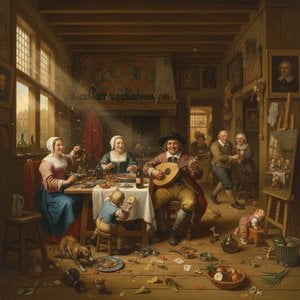
Jan Steen: A Master of Dutch Genre Painting & the Golden Age
Explore the life & art of Jan Steen, a leading Dutch Golden Age painter renowned for his humorous genre scenes & insightful social commentary. Discover his techniques, legacy, and collecting tips.


Rosa Bonheur: Realism, Rural Life & Redefining Women's Roles in 19th-Century Art
Explore the life & art of Rosa Bonheur, a pioneering Realist painter who redefined women's roles in 19th-century France. Discover her iconic animal paintings and lasting influence on art history. Learn more at ArtsDot.

El Siglo XVII en el Arte: 10 Obras Maestras para Decorar con Historia y Elegancia
Descubre 10 obras maestras del siglo XVII: Rembrandt, Vermeer, Caravaggio y más. Explora la historia, el arte barroco y encuentra reproducciones de alta calidad para decorar tu hogar con elegancia en ArtsDot.com.

Idyllic Visions: Exploring the Pastoral Tradition in Western Art – Themes, Techniques & Enduring Appeal
Explore the rich history of pastoral art from classical Arcadia to contemporary interpretations. Discover key artists, themes & collecting tips at ArtsDot.

Jan van Eyck: Innovation, Symbolism & the Dawn of Early Netherlandish Painting
Explore the revolutionary art of Jan van Eyck! Discover his groundbreaking oil painting techniques, hidden symbolism, and lasting impact on the Early Netherlandish Renaissance. A deep dive for art enthusiasts.

