


 Ver en contexto
 Enviar
 Compartir
 Detalles

 Descargar
 Similares
 Radiografía
 Presentación de diapositivas
Tea
 Oil On Canvas
- WallArt
- Realism
 1872
1872- 19th Century
 66.0 x 48.0 cm
 Museo Metropolitano de Arte
 Ver más
Giclée / Impresión de arte
Impresiones giclée o en lienzo de calidad de museo con producción rápida y opciones de acabado flexibles. ( Comprar pintura hecha a mano Comprar imagen)




P118B $10

P118H $10

P118W $10

P438Z $10

P508JH $12

P508YH $12

P805H $10

P805Z $10

P919BZ $10

P919G $10

P919XJ $10

P959ZH $10

P968JZ $12

W106C $8

W218G $10

W218JH $8

W218Y $10

W307PJ $10

W316G $10

W316PJ $8

W316Y $10

W398PJ $8

W4111J $10

W500HY $15

W500JH $15

W692G $12

W849H $8

W940BG $15

W953PJ $8




Elija entre nuestros tamaños predefinidos que respetan las proporciones originales de la obra.

Puede introducir sus propias dimensiones para adaptarse a un marco o espacio específico. Si el tamaño seleccionado no coincide con las proporciones de la imagen original, recortaremos la obra de arte o extenderemos la imagen con un borde con efecto espejo o de color sólido. Se enviará una maqueta digital para su aprobación antes de que comience la producción.
Tenga en cuenta que la vista previa en pantalla no refleja el recorte o la extensión real. Solo la maqueta mostrará con precisión la composición final.
Aunque existen tamaños personalizados, recomendamos seleccionar una dimensión de la lista predefinida para preservar las proporciones originales.
Envío a todo el mundo () en 2 semanas en lugar de las 4/5 semanas estándar. (7 septiembre)

Envío exprés gratuito a todo el mundo

Lienzo de lino de alta calidad

Seguro de envío total

Garantía de reembolso de impuestos aduaneros

Garantía de fidelidad cromática exacta

Política de devolución de 100 días (solo por defectos)

Garantía de devolución del 100% del dinero

Descuento por cantidad
 La opción de vidrio solo está disponible en tamaños inferiores a 110 cm.

Tea
Giclée / Impresión de arte
Dimensiones de la reproducción
-


Precio total final
$ 62
A Moment Frozen in Victorian Elegance
In the quiet, sun-dappled atmosphere of James Jacques Joseph Tissot’s Tea, we are invited into a private sanctuary of nineteenth-century refinement. This exquisite oil painting, dating from 1872, serves as more than just a depiction of a domestic ritual; it is a window into the soul of the Victorian era. The scene centers on a woman poised with grace in a tea room, her presence commanding yet serene. Clad in a sophisticated black dress accented by a delicate yellow ribbon at her throat, she embodies the meticulous fashion and social etiquette of her time. As she tends to the teapot, surrounded by the fine porcelain of cups and bowls, there is an intimate sense of stillness, as if the bustling world outside has momentarily ceased to exist.
The composition masterfully balances the intimacy of the interior with a breathtaking glimpse of the wider world. Beyond the immediate warmth of the tea service, the eye is drawn through the window to the dense, sprawling cityscape and the shimmering waters of the Thames. This juxtaposition between the sheltered, domestic sphere and the industrial vitality of London creates a profound narrative tension. It reminds the viewer that even in our most private moments of repose, the pulse of the modern city beats just beyond the glass. The inclusion of a distant boat on the river adds a layer of movement and life, grounding this elegant portrait within the real, breathing geography of Tissot’s adopted home.
Mastery of Realism and Light
Tissot, a painter who bridged the gap between the meticulous detail of Realism and the atmospheric light of Impressionism, demonstrates his technical prowess through the textures present in this work. Every element—from the reflective surface of the tea service to the heavy, luxurious fabric of the woman’s gown—is rendered with an almost tactile precision. His ability to capture the play of light across different surfaces creates a sense of depth that draws the collector into the room. The artist uses light not merely to illuminate, but to sculpt the scene, highlighting the delicate contours of the porcelain and the soft shadows that dance within the tea room.
For the discerning art lover or interior designer, Tea offers a versatile emotional resonance. It possesses a quiet dignity that can anchor a sophisticated living space, providing a focal point of calm and historical depth. The painting’s palette, rich with deep blacks, warm yellows, and the soft blues of the distant London sky, makes it an ideal piece for those looking to introduce a sense of timeless luxury and narrative complexity into a room. To possess a reproduction of this work is to hold a fragment of history—a beautifully preserved moment of Victorian grace that continues to inspire awe and contemplation in the modern age.
Obras relacionadas


Biografía del artista
James Jacques Joseph Tissot (1836-1902): Un visionario victoriano que unió el realismo y el impresionismo
James Jacques Joseph Tissot, nacido el 15 de octubre de 1836 en París, Francia, fue un pintor prolífico cuya carrera se extendió durante décadas, consolidando su lugar como uno de los artistas más celebrados de la era victoriana. Aunque inicialmente se formó como arquitecto, Tissot abandonó rápidamente este camino por el cautivador encanto de la pintura, dedicándose a capturar la grandeza y las complejidades de la sociedad parisina junto a profundas narrativas bíblicas. Su estilo distintivo —una magistral mezcla de realismo y técnicas impresionistas— continúa fascinando tanto a historiadores del arte como a coleccionistas por igual.- Primeros años y formación artística: Los años formativos de Tissot estuvieron marcados por una crianza privilegiada dentro de una familia adinerada, lo que le permitió acceder a una instrucción artística excepcional. Estudió arquitectura en la École Polytechnique antes de transicionar al dibujo bajo la tutela de Alexandre Cabanel y Jean-Léon Gérôme, absorbiendo las influencias estilísticas del realismo académico predominante en su época. Estas experiencias fundacionales le inculcaron una atención meticulosa al detalle y un enfoque disciplinado de la composición, rasgos que caracterizarían toda su obra.
- París victoriano y el retrato social: El gran salto artístico de Tissot llegó con sus representaciones de la vida parisina durante la Belle Époque. Documentó meticulosamente escenas de teatros, casas de ópera y reuniones elegantes, capturando no solo el esplendor visual, sino también los sutiles matices del comportamiento social. Sus lienzos —como “El sombrero de Rubens” y “La hora del té”— se convirtieron en representaciones icónicas de la elegancia y sofisticación victoriana, reflejando las ansiedades y aspiraciones de una sociedad en rápido cambio.
- Narrativas bíblicas y composición dramática: Más allá de los paisajes urbanos, Tissot destacó en la representación de historias bíblicas con una teatralidad notable. Abordó estas narrativas con un compromiso inquebrantable hacia la precisión histórica, combinado con una pincelada expresiva —sello distintivo del impresionismo—, creando imágenes emocionalmente resonantes que cautivaron al público. Entre sus obras más destacadas se encuentran “El hallazgo del Santo Grial” y “La última cena”, que demuestran su capacidad para transmitir profundidad espiritual junto a un dinamismo visual asombroso.
- Técnica y evolución artística: La técnica artística de Tissot evolucionó considerablemente a lo largo de su carrera. Aunque inicialmente favorecía el realismo académico, adoptó gradualmente las influencias impresionistas, experimentando con pinceladas más sueltas y capturando momentos fugaces de luz y color. Este cambio estilístico le permitió dotar a sus pinturas de una sensación palpable de atmósfera y emoción, alejándose de la formalidad estática de sus primeros trabajos.
- Legado y trascendencia histórica: Jacques Joseph Tissot falleció el 8 de agosto de 1902, dejando tras de sí un impresionante cuerpo de obra que sigue inspirando admiración. Sus pinturas se encuentran en destacados museos de todo el mundo, incluyendo la Bibliothèque Nationale Centrale y el Museo Getty, testimonio de su perdurable legado artístico. Más allá de simplemente documentar su época, Tissot elevó la pintura a una forma de narración: una poderosa mezcla de observación e imaginación que consolidó su posición como uno de los artistas más influyentes del periodo victoriano.
Exploración adicional
Puede profundizar en el viaje artístico de Tissot visitando estos recursos:- James Tissot - Wikipedia:https://en.wikipedia.org/wiki/James_Tissot
- Jacques Joseph Tissot - Museo Getty:https://www.getty.edu/art/collection/person/103KY1
- Jacques Joseph Tissot: Una crónica de la vida parisina y evolución narrativa:/en/articles/jacques-joseph-tissot-a-chronicle-of-parisian-life-narrative-evolution-en/
- James Tissot (1836-1902), Ambiguamente moderno | Musée d’Orsay:https://www.musee-orsay.fr/en/whats-on/exhibitions/presentation/james-tissot-1836-1902-ambiguously-modern

Jacques Joseph Tissot
1836 - 1902 , Francia
Datos clave
- Artistic Movement Or Style: Realismo y Impresionismo
- Artists Or Movements Influenced By This Artist: ['Impressionismo']
- Artists Who Influenced This Artist:
- Gustave Courbet
- Jean-Léon Gérôme
- Date Of Birth: October 15, 1836
- Date Of Death: August 8, 1902
- Full Name: Jacques Joseph Tissot
- Nationality: Francés
- Notable Artworks:
- El Rubens Hat
- La Té
- Place Of Birth: Paris, France
Artículos relacionados

James Abbott McNeill Whistler: Las 25 Obras Maestras del Maestro del Arte y la Atmósfera | ArtsDot
Descubre las 25 obras maestras de James Abbott McNeill Whistler, el maestro del impresionismo y la armonía en arte. Explora retratos icónicos, nocturnos evocadores y su innovadora paleta de colores. Reproducciones de arte exclusivas en ArtsDot.com.

Alfred Munnings: Las 25 Obras Maestras del Pintor de Caballos | ArtsDot
Descubre las 25 obras maestras de Alfred Munnings, el pintor británico de caballos por excelencia. Explora su impresionismo inglés, escenas campestres y técnica única. Encuentra reproducciones de arte de alta calidad en ArtsDot.com.

Romantic Realism's Finest: 10 Masterpieces for Your Home | ArtsDot
Explore 10 defining masterpieces of Romantic Realism! Discover Courbet, Millet & Daumier's powerful paintings—capturing emotion and social realities. Find museum-quality reproductions for your home at ArtsDot.com.
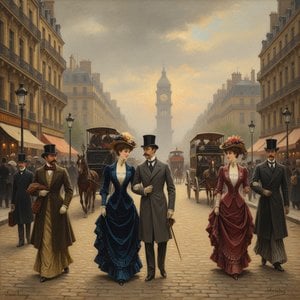
Jacques Joseph Tissot: A Chronicle of Parisian Life & Narrative Evolution
Explore the captivating world of Jacques Joseph Tissot, a master painter of Belle Époque society. Discover his realism, Impressionistic style, and lasting influence on art history. Learn more at ArtsDot.

The Gaze of a Changing World: Victorian Realism & Modern Life
Explore the captivating world of Victorian Realism! Discover genre painting's rise, social commentary in art, & masters like Fedotov and Wilkie. Expert analysis & high-quality reproductions at ArtsDot.
