


 Vista previa
 Compartir
 Compartir
 Ver detalles

 Descargar
 Ver similares
 Radiografía
 Presentación de diapositivas
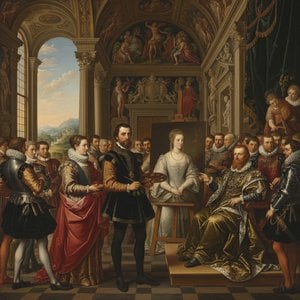
Joking Couple
 Acrylic On Canvas
- WallArt
- Mannerist Painting
 25.0 x 20.0 cm
 Kunsthistorisches Museum
 Leer más
Giclée / Impresión de arte
Impresiones giclée o en lienzo de calidad de museo con producción rápida y opciones de acabado flexibles. ( Encargar reproducción pintada a mano Comprar descarga)




P118B $10

P118H $10

P118W $10

P438Z $10

P508JH $12

P508YH $12

P805H $10

P805Z $10

P919BZ $10

P919G $10

P919XJ $10

P959ZH $10

P968JZ $12

W106C $8

W218G $10

W218JH $8

W218Y $10

W307PJ $10

W316G $10

W316PJ $8

W316Y $10

W398PJ $8

W4111J $10

W500HY $15

W500JH $15

W692G $12

W849H $8

W940BG $15

W953PJ $8




Elija entre nuestros tamaños predefinidos que respetan las proporciones originales de la obra.

Puede introducir sus propias dimensiones para adaptarse a un marco o espacio específico. Si el tamaño seleccionado no coincide con las proporciones de la imagen original, recortaremos la obra de arte o extenderemos la imagen con un borde con efecto espejo o de color sólido. Se enviará una maqueta digital para su aprobación antes de que comience la producción.
Tenga en cuenta que la vista previa en pantalla no refleja el recorte o la extensión real. Solo la maqueta mostrará con precisión la composición final.
Aunque existen tamaños personalizados, recomendamos seleccionar una dimensión de la lista predefinida para preservar las proporciones originales.
Envío a todo el mundo () en 2 semanas en lugar de las 4/5 semanas estándar. (17 agosto)

Envío exprés gratuito a todo el mundo

Lienzo de lino de alta calidad

Seguro de envío completo

Garantía de reembolso de aranceles aduaneros

Garantía de fidelidad cromática exacta

Política de devolución de 60 días (solo por defectos)

Garantía de devolución del 100% del dinero

Oferta por volumen
 La opción de vidrio solo está disponible en tamaños inferiores a 110 cm.

Joking Couple
Giclée / Impresión de arte
Tamaño de la reproducción
-


Precio total
$ 62
Descripción de la pieza
The Enigmatic Charm of “Joking Couple”
Hans von Aachen’s “Joking Couple,” a captivating painting from the late 16th century, isn't merely a portrait; it’s a carefully constructed tableau brimming with subtle humor and an undercurrent of aristocratic intrigue. Executed in the vibrant style characteristic of Mannerism – a movement that prized elegance, artificiality, and psychological complexity over strict realism – this work offers a glimpse into the refined world of the Habsburg court at Prague, where Emperor Rudolf II fostered a remarkable confluence of artistic talent.
The painting depicts a man and woman standing close together, their postures suggesting an intimate yet playful exchange. The man, dressed in richly embroidered velvet and adorned with a jeweled belt, holds aloft a small mirror, reflecting the woman’s image back at herself. Her expression is one of amused contemplation as she observes her reflection, while the man appears to be enjoying his role as a mischievous observer. A single, elegant bird perches near the top left corner, adding a touch of unexpected detail and perhaps hinting at themes of fidelity or observation.
Mannerist Techniques: A Dance of Illusion
Von Aachen’s mastery lies in his skillful deployment of Mannerist techniques. Notice the elongated figures, a hallmark of the style, which contribute to an air of heightened drama and theatricality. The composition is deliberately unbalanced, creating a sense of dynamism and movement – the mirror's reflection pulling the viewer into the scene. The use of color is particularly noteworthy; rich reds, deep blues, and shimmering golds dominate the palette, reflecting the opulence associated with the imperial court. Von Aachen employs a technique known as *sfumato*, subtly blurring lines and edges to create an atmospheric haze, adding depth and mystery to the figures.
The painting’s surface is rendered with meticulous detail, particularly in the rendering of fabrics and jewelry – evidence of the artist's training in Venice, where he spent a significant portion of his career. Von Aachen’s style was influenced by Italian masters like El Greco, incorporating dramatic lighting and expressive gestures to convey emotion and psychological states.
Symbolism and Courtly Context
Beyond its immediate visual appeal, “Joking Couple” is laden with symbolic meaning. The mirror itself represents vanity, self-reflection, and perhaps even the complexities of relationships. The man’s gesture – holding up the mirror – can be interpreted as a playful challenge or an invitation to engage in witty banter. The woman's amused expression suggests she is aware of this dynamic, adding another layer of intrigue to the scene.
Considering the historical context, it’s important to remember that Rudolf II’s court was renowned for its patronage of the arts and its embrace of unconventional ideas. The painting reflects this atmosphere of intellectual curiosity and artistic experimentation. Von Aachen's work served as a visual representation of the courtly life – filled with elaborate rituals, witty conversation, and subtle power plays.
A Timeless Portrait of Human Connection
“Joking Couple” endures not simply as a beautiful painting but as a poignant meditation on human connection, vanity, and the art of social interaction. Its skillful composition, vibrant colors, and nuanced symbolism continue to captivate viewers centuries after its creation. Reproductions offer an accessible way to appreciate this remarkable work of Mannerist art, bringing its enigmatic charm into any space.
Obras relacionadas


Biografía del artista
Hans von Aachen
Hans von Aachen (1552 – 4 March 1615) was a German painter who stood as one of the foremost representatives of Northern Mannerism, an artistic movement that flourished in the Low Countries and Germany during the late sixteenth century. Little is known about his early life; however, it’s believed he received his formative artistic training within the workshop of Leonardus Sievenhoven, a prominent Cologne painter whose influence undoubtedly shaped von Aachen's stylistic trajectory.Artistic Style and Influences
Von Aachen’s oeuvre is characterized by a distinctive Mannerist aesthetic—a style marked by bold colors, dramatic compositions, and an unsettling tension that resonated deeply with the sensibilities of his time. His paintings frequently employed elongated figures, meticulously rendered details, and a palpable sense of dynamism, mirroring the stylistic innovations championed by El Greco (domenikos theotokopoulos), whose monumental canvases captivated audiences across Europe. This connection to El Greco’s expressive grandeur is particularly evident in works like “The Crucifixion” (1585), where von Aachen masterfully utilized luminous hues and theatrical lighting to convey profound spiritual emotion. Similarly, "The Last Judgment" (1590) showcases his ability to orchestrate multiple figures within a single frame—a technique that exemplifies the Mannerist preoccupation with complex visual narratives. Furthermore, “Portrait of an Unknown Lady” (1595) demonstrates von Aachen’s exceptional skill in capturing subtle nuances of human expression, reflecting the humanist ideals prevalent during Rudolf II's reign.Notable Collections and Exhibitions
Von Aachen’s artistic legacy continues to inspire admiration and scholarly investigation. His paintings are housed in prestigious institutions across Germany, notably Gemäldegalerie Alte Meister in Dresden—which boasts an expansive collection of European art spanning from the fifteenth to the eighteenth centuries—and Museum Ostdeutsche Galerie in Regensburg, presenting a singular panorama of eastern German artistic heritage. Exploring these collections offers invaluable insight into the dissemination and reception of von Aachen’s groundbreaking vision.Historical Significance
Hans von Aachen's contribution to Northern Mannerism cemented his place as a pivotal figure within European art history. His innovative stylistic choices—particularly his masterful manipulation of color, form, and composition—challenged conventional artistic conventions and propelled the movement toward unprecedented expressive depth. He served as court painter for Emperor Rudolf II, fostering a vibrant cultural environment that nurtured artistic experimentation and celebrated humanist ideals. Today, von Aachen’s paintings stand as enduring symbols of Mannerist grandeur and continue to captivate viewers with their evocative beauty and profound psychological insight—a testament to his enduring influence on subsequent generations of artists.
Hans von Aachen
1552 - 1615 , Alemania
Datos clave
- Artistic Movement Or Style: Mannerismo
- Artists Or Movements Influenced By This Artist: ['Renacimiento']
- Artists Who Influenced This Artist: ['El Greco']
- Date Of Birth: Cologne, Alemania 1552
- Date Of Death: Praga 1615
- Full Name: Hans von Aachen
- Nationality: Germano
- Notable Artworks:
- La Crucifixión
- El Último Juicio
- Retrato de una dama desconocida
- Place Of Birth: Alemania Cologne
Artículos relacionados
Hans von Aachen: Mannerism's Courtly Visionary & Imperial Portraiture
Explore the captivating world of Hans von Aachen, a leading Mannerist painter renowned for his exquisite imperial portraits & mythological scenes. Discover his legacy and influence on 16th-century European art.

El Crepúsculo del Clasicismo Renacentista: Un Estudio del Estilo y la Afectación en el Manierismo
Descubre el Manierismo: un análisis profundo de este fascinante estilo artístico del Renacimiento tardío. Explora sus características, artistas clave y legado con ArtsDot.

Mannerismo: 10 Obras Maestras que Definieron un Estilo Revolucionario | ArtsDot.com
Descubre las 10 obras maestras del Mannerismo: Pontormo, El Greco y más. Explora la elegancia renacentista, figuras alargadas y paletas vibrantes de este movimiento artístico único. Reproducciones de arte exclusivas en ArtsDot.com.

The Mirror Stage of Art History: Exploring Reflection & Identity in Painting
Explore the captivating history of reflection in art! Discover symbolism, technique & psychological depth in masterpieces from Renaissance self-portraits to modern works. Expert insights for discerning collectors.

Eugen von Blaas: Capturing Alpine Life & Sentiment in 19th-Century Austrian Painting
Discover the captivating world of Eugen von Blaas! Explore his exquisite 19th-century paintings capturing Venetian life & Alpine beauty. Learn about his Academic Classicism style and find museum-quality reproductions at ArtsDot.

