

 Ver en contexto
 Enviar
 Compartir
 Detalles
 Guía
Guía

 Descargar
 Similares
 Radiografía
 Presentación de diapositivas
 Q&A
Q&A Estadísticas
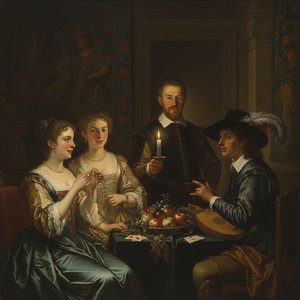
The lute player

 Ver más
Giclée / Impresión de arte
Impresiones giclée o en lienzo de calidad de museo con producción rápida y opciones de acabado flexibles. ( Comprar pintura hecha a mano Cambiar a imagen digital)




P118B €10

P118H €10

P118W €10

P438Z €10

P508JH €12

P508YH €12

P805H €10

P805Z €10

P919BZ €10

P919G €10

P919XJ €10

P959ZH €10

P968JZ €12

W106C €8

W218G €10

W218JH €8

W218Y €10

W307PJ €10

W316G €10

W316PJ €8

W316Y €10

W398PJ €8

W4111J €10

W500HY €15

W500JH €15

W692G €12

W849H €8

W940BG €15

W953PJ €8




Elija entre nuestros tamaños predefinidos que respetan las proporciones originales de la obra.

Introduzca el ancho y el alto que necesite para adaptarse a su marco o pared. Una impresión solo puede recortarse, nunca hacerse más grande que la imagen original, por lo que un tamaño con una forma distinta perderá parte de la obra. Le enviaremos una maqueta digital para su aprobación antes de realizar cualquier impresión. La imagen que se muestra en esta página no refleja el recorte real; solo la maqueta lo hace.
Envío a todo el mundo () en 2 semanas en lugar de las 4/5 semanas estándar. (2 noviembre)

Envío exprés gratuito a todo el mundo

Lienzo de lino de alta calidad

Seguro de envío total

Garantía de reembolso de aranceles aduaneros

Garantía de fidelidad cromática exacta

Política de devolución de 100 días (solo por defectos)

Garantía de devolución del 100% del dinero

Descuento por cantidad
 La opción de vidrio solo está disponible en tamaños inferiores a 110 cm.

The lute player
Giclée / Impresión de arte
Dimensiones de la reproducción
-


Precio total final
€ 55
A Symphony of Light and Shadow: Gerard van Honthorst's "Lute Player"
Gerard van Honthorst’s “Lute Player,” painted circa 1624, is more than a simple portrait; it’s a carefully constructed tableau brimming with Baroque drama. This captivating scene depicts a young woman, elegantly dressed and poised, lost in the melody of her lute. The painting immediately draws the eye to the central figure – a study in relaxed grace and quiet contemplation – while the surrounding details contribute to an atmosphere of refined leisure and subtle social commentary. Honthorst’s masterful use of light and shadow, a hallmark of the Baroque period, elevates this work beyond mere representation, imbuing it with a palpable sense of movement and emotion.
The Influence of Caravaggio
Honthorst's artistic journey was profoundly shaped by his encounter with the revolutionary techniques of Caravaggio. Like Caravaggio’s celebrated “Lute Player,” this piece employs *tenebrism* – a dramatic contrast between intensely bright highlights and deep, almost impenetrable shadows. This technique isn’t simply about visual effect; it serves to heighten the emotional impact of the scene. The strong light focuses attention on the woman's face and hands, drawing us into her world while the surrounding darkness creates an air of mystery and intrigue. Notice how the folds of her dress are sculpted by the light, adding a tactile quality to the image and reinforcing the sense of realism that was so revolutionary for its time.
A Portrait of Social Grace
Beyond its technical brilliance, “Lute Player” offers a glimpse into the social customs of 17th-century Netherlands. The lute itself was a symbol of refinement and musical education, typically associated with the upper classes. The woman’s attire – rich fabrics and delicate jewelry – further emphasizes her status. The inclusion of the card she holds suggests an invitation to join her in music or conversation, subtly highlighting the importance of social interaction and patronage within this era. The carefully arranged background—the chair, the couch, the clock—adds to the sense of a comfortable, well-appointed domestic space, reflecting the values of wealth and status.
Symbolism and Emotional Resonance
The painting’s enduring appeal lies not only in its technical skill but also in its ability to evoke a range of emotions. The woman's serene expression and focused gaze invite us to share her moment of quiet contemplation. The lute, a symbol of harmony and beauty, suggests a desire for peace and tranquility. Honthorst skillfully captures the essence of human experience – the pursuit of pleasure, the appreciation of art, and the importance of social connection. This reproduction allows you to bring this timeless piece into your own space, experiencing its captivating beauty and profound emotional resonance firsthand.
Preguntas y respuestas
¿Qué espacio armoniza con los colores de "The lute player" de Gerard van Honthorst?
Con su paleta de Dark, "The lute player" de Gerard van Honthorst es ideal para una Living Room. Sus colores son parte de la razón de esta sugerencia.
¿Qué estado de ánimo y emoción se entrelazan en "The lute player"?
"The lute player" de Gerard van Honthorst transmite una sensación Dramatic dentro de un ambiente general Dramatic.
¿Es "The lute player" representativo de la temática habitual de Gerard van Honthorst?
"The lute player" representa gerard van honthorst, baroque, portrait, baroque, lute, music, drama, light & shadow, mientras que los temas recurrentes de Gerard van Honthorst son gerard van honthorst, caravaggio influence, baroque drama, courtly entertainment, social scene, religious themes, festive gatherings, honthorst’s signature light & shadow. Al comparar ambos, se observa cómo la obra se relaciona con los temas habituales del artista.
Obras relacionadas


Biografía del artista
Primeros años y formación
Gerrit van Honthorst, un destacado pintor del Siglo de Oro neerlandés, nació el 4 de noviembre de 1590 en Utrecht, Países Bajos. Era hijo de un pintor decorativo y inicialmente se formó bajo la tutela de su padre. Posteriormente, continuó su educación artística con Abraham Bloemaert.Carrera e influencias
La carrera temprana de Van Honthorst incluyó una visita a Roma, donde fue fuertemente influenciado por el estilo de Caravaggio. Esta influencia es evidente en sus obras posteriores, particularmente en su uso de escenas iluminadas artificialmente, lo que le valió el apodo de "Gherardo delle Notti" o "Gerard de las noches". Tras su regreso a los Países Bajos, Van Honthorst se convirtió en un retratista líder.Patronazgo y encargos notables
El trabajo de Van Honthorst tuvo una gran demanda, con notables patronos que incluyen a Vincenzo Giustiniani, quien lo encargó para pintar "Cristo ante el sumo sacerdote", ahora alojado en la National Gallery de Londres. También trabajó para Cosimo II de' Medici, Gran Duque de Toscana, y fue un favorito entre la República Neerlandesa y en el extranjero.Legado y vida posterior
En 1620, Van Honthorst regresó a Utrecht, donde construyó una considerable reputación. Para 1623, el año de su matrimonio, se había convertido en presidente del gremio de San Lucas en Utrecht. Su éxito llevó a recomendaciones por parte de Sir Dudley Carleton para el Conde de Arundel y Lord Dorchester.Obras clave y colaboraciones
- "La toma de Cristo", una obra colaborativa inicialmente atribuida a Van Honthorst, ahora reconocida como obra de otro artista.
- "Cristo ante el sumo sacerdote", encargado por Vincenzo Giustiniani, muestra la habilidad de Van Honthorst para capturar escenas iluminadas artificialmente.
- Colaboraciones con otros artistas, como Peter Paul Rubens, demuestran su influencia en el estilo barroco flamenco.
Movimiento artístico y estilo
Van Honthorst formó parte del movimiento de los utrecht caravaggisti, caracterizado por su uso de una iluminación dramática y una profundidad emocional intensa. Su obra refleja la influencia del barroco italiano, al mismo tiempo que contribuye al desarrollo del Siglo de Oro neerlandés.
Gerard van Honthorst
1590 - 1656 , Países Bajos
Datos clave
- Artistas Influenciados:
- Rembrandt van Rijn
- Georges de la Tour
- Artistas Que Influyeron:
- Caravaggio
- Abraham Bloemaert
- Fecha De Nacimiento: 4 de noviembre de 1590
- Lugar De Nacimiento: Utrecht, Países Bajos
- Movimiento Artístico: Caravaggismo Utrechtano
- Nacionalidad: Neerlandés
- Nombre Completo: Gerard van Honthorst
- Obras Notables:
- Cristo ante el sumo sacerdote
- La toma de Cristo
- Escenas nocturnas iluminadas
Artículos relacionados

Barroco Sublime: 10 Obras Maestras que Definieron una Época |
Descubre las 10 obras maestras del Barroco que marcaron una época. Caravaggio, Bernini y Velázquez cobran vida en . Reproducciones de arte de calidad museo para decorar tu hogar con elegancia. ¡Explora la colección online!

The Visceral Stage: Exploring Dramatic Narratives & Emotional Intensity in Baroque Art
Explore the dramatic world of Baroque art! Discover iconic masters like Caravaggio & Rembrandt, their techniques, and the movement's lasting impact. Expert insights for collectors & enthusiasts at ArtsDot.

The Dramatic Flourish: Exploring the Baroque Movement's Enduring Legacy in Art History
Explore the dramatic world of Baroque art! Discover iconic artists like Caravaggio & Rubens, defining techniques, and its lasting impact on art history. Expert insights for collectors & enthusiasts at ArtsDot.
Gerard van Honthorst: Illuminating the Dutch Golden Age with Caravaggism & Courtly Grace
Explore the captivating world of Gerard van Honthorst, a Dutch Golden Age master renowned for his dramatic chiaroscuro & courtly portraits. Discover his life, art, and lasting influence on Baroque painting.

Luz y Sombra: Las 25 Mejores Obras Maestras de Rembrandt van Rijn
Explora las 25 obras maestras de Rembrandt y su claroscuro. Encuentra reproducciones de museo en ArtsDot.com.


