

The Dramatic Flourish: Exploring the Baroque Movement's Enduring Legacy in Art History
Índice
The Genesis of Grandeur: Historical Context & The Counter-Reformation
 Wikipedia: Counter-Reformation
The Counter-Reformation (Latin: Contrareformatio), also sometimes called the Catholic Revival, was the period of Catholic resurgence that was initiated in response to, and as an alternative to or from similar insights as, the Protestant Reformations ...
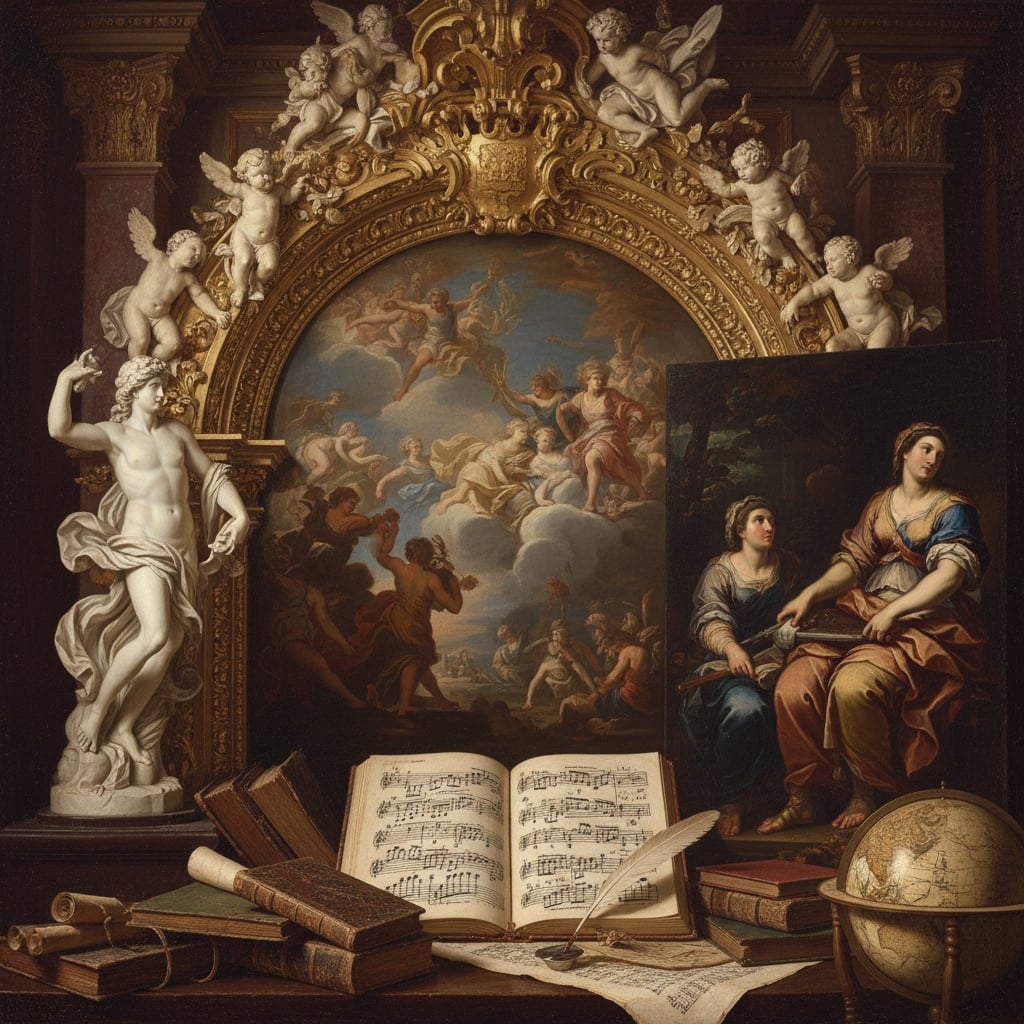
The Baroque period, erupting from the heart of 17th-century Rome, wasn’t merely a stylistic shift; it was an artistic earthquake born from profound religious and political upheaval. Following the Renaissance's emphasis on balance and harmony, and the subsequent Mannerist explorations of artifice, Europe found itself fractured by the Protestant Reformation. The Catholic Church, reeling from this challenge to its authority, recognized the potent power of art as a tool for reaffirmation – a visual counter-offensive designed to inspire awe, devotion, and ultimately, loyalty. This period, known as the Counter-Reformation, fueled an unprecedented demand for artworks that were not simply beautiful, but emotionally charged and dramatically persuasive. The Church sought to re-engage the faithful through spectacle, employing artists who could translate complex theological concepts into visceral experiences. It was a time of intense spiritual fervor, reflected in the dynamic compositions, rich colors, and theatrical lighting that would come to define the Baroque aesthetic.
The rise of absolute monarchies across Europe further contributed to this artistic flourishing. Kings like Louis XIV of France weren’t simply patrons; they were self-proclaimed embodiments of power, commissioning lavish palaces and artworks to project an image of divine right and unyielding authority. This convergence of religious zeal and royal ambition created a fertile ground for artists who dared to break from convention and embrace a new level of grandeur.
Illusion and Emotion: Defining Characteristics of Baroque Art
 Baroque Realism: Illusion, Emotion & the Dramatic Transformation of 17th-Century Art
Explore the dramatic world of Baroque Realism! Discover iconic artists like Caravaggio & Rubens, their techniques, and the movement's lasting impact on art history. Expert insights for collectors & enthusiasts.
At its core, Baroque art is about movement – not just the depiction of physical action, but an emotional current that sweeps through the composition. Where Renaissance paintings often presented static scenes with idealized figures, Baroque artists sought to capture moments of intense drama, vulnerability, and spiritual ecstasy. This was achieved through a masterful manipulation of light and shadow, most notably through the technique of chiaroscuro, where stark contrasts heighten the emotional impact and draw the viewer’s eye to key focal points. Tenebrism, an even more extreme form popularized by Caravaggio, plunged figures into near-darkness, creating a sense of mystery and psychological tension.
Beyond light, Baroque artists employed dynamic compositions filled with swirling drapery, twisting bodies, and diagonal lines to create a feeling of energy and instability. Optical illusions played a significant role; ceilings were painted to appear limitless, blurring the boundaries between reality and illusion. The goal wasn’t simply to represent the world as it was seen, but to transport the viewer into another realm – one filled with divine presence and overwhelming emotion. This pursuit of emotional resonance extended beyond religious subjects, influencing portraiture, still life, and even landscape painting.
Masters of the Baroque: Caravaggio, Rubens, and Beyond
Few artists embody the spirit of the Baroque quite like Caravaggio. His revolutionary approach to realism – depicting biblical figures as ordinary people in everyday settings – shocked and captivated audiences. Paintings like “The Calling of Saint Matthew” are not just depictions of a religious event; they’re intimate, gritty portrayals of human experience, illuminated by his signature tenebrism. His influence reverberated throughout Europe, inspiring a generation of artists to embrace naturalism and dramatic lighting.
Peter Paul Rubens, on the other hand, represented a different facet of the Baroque – one characterized by exuberance, dynamism, and opulent color. His paintings are filled with fleshy figures, swirling compositions, and allegorical narratives that celebrate life, love, and mythology. Rubens’ mastery of anatomy and his ability to convey movement made him one of the most sought-after artists of his time.
Beyond these giants, artists like Gian Lorenzo Bernini in sculpture – whose “Ecstasy of Saint Teresa” is a breathtaking example of Baroque theatricality – and Rembrandt van Rijn, with his profound psychological portraits and masterful use of light, further defined the movement. Each artist brought their unique vision to the Baroque aesthetic, contributing to its rich diversity.
Spanish Baroque: A Unique Expression of Religious Zeal
 The Golden Age Reforged: Dramatic Realism & Religious Zeal in Spanish Baroque Art
Explore the dramatic world of Spanish Baroque art! Discover masters like Zurbarán & the powerful influence of religious zeal on painting techniques – a guide for collectors and enthusiasts.
While the Baroque flourished across Europe, Spain developed a particularly intense and austere expression of the style deeply intertwined with the fervor of the Counter-Reformation. Artists like Francisco de Zurbarán focused almost exclusively on religious subjects, depicting monks, saints, and scenes from the life of Christ with stark realism and profound spiritual intensity. His paintings often feature dark backgrounds and dramatic lighting, emphasizing the humility and devotion of his subjects. “The Holy Family” exemplifies this aesthetic – a quiet moment of tenderness rendered with remarkable detail and emotional depth.
Spanish Baroque art wasn’t about opulent displays of wealth or power; it was about conveying the raw emotion and spiritual struggle of faith. This emphasis on realism, combined with a deep sense of religious piety, created a unique and powerful artistic tradition that continues to resonate today.
Beyond Painting: Baroque’s Influence on Sculpture, Architecture & Music
The Baroque wasn't confined to the canvas; it permeated all aspects of art and culture. In sculpture, Gian Lorenzo Bernini revolutionized the medium with his dynamic compositions and theatrical flair. His “Ecstasy of Saint Teresa” is a prime example – a breathtaking depiction of religious ecstasy that seamlessly blends sculpture, architecture, and lighting to create an immersive experience.
Baroque architecture embraced grandeur, ornamentation, and dramatic effects. Churches were designed to overwhelm the senses with their soaring ceilings, intricate carvings, and opulent decorations. Andrea Pozzo’s quadratura paintings – illusionistic frescoes that created the impression of limitless space – are a testament to this architectural ambition.
Even music embraced the Baroque aesthetic, characterized by complex harmonies, dramatic contrasts, and elaborate ornamentation. Composers like Bach and Handel created works that were designed to evoke strong emotions and inspire awe. The interconnectedness of these artistic disciplines—painting, sculpture, architecture, and music—created a holistic experience that defined the Baroque era.
The Enduring Legacy: How Baroque Principles Continue to Inspire
Though the Baroque period eventually gave way to Rococo and Neoclassicism, its influence continues to be felt today. The emphasis on emotion, drama, and realism paved the way for Romanticism and subsequent artistic movements. Filmmakers often employ Baroque lighting techniques – chiaroscuro and tenebrism – to create mood and atmosphere. The principles of dynamic composition and theatricality continue to inspire artists across various disciplines.
At ArtsDot
com, we believe in making the masterpieces of history accessible to everyone. Whether you’re captivated by Caravaggio’s realism, Rubens’ exuberance, or Zurbarán’s spiritual intensity, our handmade oil paintings and museum-quality prints allow you to experience the drama and grandeur of the Baroque period firsthand. Explore our collection today and discover the enduring legacy of this remarkable artistic movement – and perhaps even commission a custom reproduction to bring a touch of Baroque splendor into your own home.
Artículos relacionados
The Golden Age Reforged: Dramatic Realism & Religious Zeal in Spanish Baroque Art
Explore the dramatic world of Spanish Baroque art! Discover masters like Zurbarán & the powerful influence of religious zeal on painting techniques – a guide for collectors and enthusiasts.


The Visceral Stage: Exploring Dramatic Narratives & Emotional Intensity in Baroque Art
Explore the dramatic world of Baroque art! Discover iconic masters like Caravaggio & Rembrandt, their techniques, and the movement's lasting impact. Expert insights for collectors & enthusiasts at ArtsDot.

