


 Vista previa
 Compartir
 Compartir
 Ver detalles
 Guía
Guía

 Descargar
 Ver artículos similares
 Radiografía
 Presentación de diapositivas
 Estadísticas
Gambit #1
 Oil On Canvas
- WallArt
- Geometric Abstraction
 1945
1945- Modern
 60.0 x 76.0 cm
 Colección de Arte McMichael Canadiense
 Leer más
Giclée / Impresión de arte
Impresiones giclée o en lienzo de calidad de museo con producción rápida y opciones de acabado flexibles. ( Encargar reproducción pintada a mano Ver versión en imagen digital)




P118B €10

P118H €10

P118W €10

P438Z €10

P508JH €12

P508YH €12

P805H €10

P805Z €10

P919BZ €10

P919G €10

P919XJ €10

P959ZH €10

P968JZ €12

W106C €8

W218G €10

W218JH €8

W218Y €10

W307PJ €10

W316G €10

W316PJ €8

W316Y €10

W398PJ €8

W4111J €10

W500HY €15

W500JH €15

W692G €12

W849H €8

W940BG €15

W953PJ €8




Elija entre nuestros tamaños predefinidos que respetan las proporciones originales de la obra.

Puede introducir sus propias dimensiones para adaptarse a un marco o espacio específico. Si el tamaño seleccionado no coincide con las proporciones de la imagen original, recortaremos la obra de arte o extenderemos la imagen con un borde con efecto espejo o de color sólido. Se enviará una maqueta digital para su aprobación antes de que comience la producción.
Tenga en cuenta que la vista previa en pantalla no refleja el recorte o la extensión real. Solo la maqueta mostrará con precisión la composición final.
Aunque existen tamaños personalizados, recomendamos seleccionar una dimensión de la lista predefinida para preservar las proporciones originales.
Envío a todo el mundo () en 2 semanas en lugar de las 4/5 semanas estándar. (13 octubre)

Envío exprés gratuito a todo el mundo

Lienzo de lino de alta calidad

Seguro de envío completo

Garantía de reembolso de impuestos aduaneros

Garantía de fidelidad cromática exacta

Política de devolución de 100 días (solo por defectos)

Garantía de devolución del 100% del dinero

Oferta por volumen
 La opción de vidrio solo está disponible en tamaños inferiores a 110 cm.

Gambit #1
Giclée / Impresión de arte
Tamaño de la reproducción
-


Precio total
€ 53
A Geometric Departure: The Abstract Vision of Gambit #1
In the twilight of his prolific career, in 1945, Franklin Carmichael delivered a work that stands as a profound departure from the serene, pastoral landscapes for which he is most famously celebrated. Gambit #1 is not merely a painting; it is a complex architectural feat of the mind, a dynamic geometric abstraction that challenges the viewer to find order within fragmentation. While much of Carmichael’s legacy is rooted in the soft, watercolor vistas of the Ontario wilderness, this oil on canvas reveals an artist grappling with the structural tensions of the modern age. The composition is a sophisticated tapestry of layered planes and intersecting lines, where the eye is led through a labyrinth of sharp edges and unexpected curves, creating a sense of depth that feels both infinite and intensely contained.
The technique employed in Gambit #1 speaks to a masterful command of oil paint, utilizing a heavy, tactile application that breathes life into its abstract forms. Through the deliberate layering of pigments, Carmichael achieves a rhythmic movement across the canvas. The palette is grounded in an earthy, contemplative spectrum—rich browns, muted greens, and ochre yellows—which provides a somber, organic foundation. Yet, this stability is punctuated by sudden, brilliant interventions of cerulean blue and crisp white. These brighter accents act as focal points, drawing the gaze toward a central circular element that serves as a quiet nucleus amidst the surrounding angularity. The visible brushstrokes add a layer of human touch to the mathematical precision, ensuring that the work remains emotionally resonant rather than purely clinical.
Structural Harmony and Emotional Resonance
To understand the gravity of this piece, one must consider its place within the broader movement of geometric abstraction and the artist's own evolution. The painting is divided into distinct planes with intersecting lines creating a complex network, where strong, angular lines dominate to create sharp edges and geometric shapes. This non-traditional perspective, created through converging lines, contributes to an illusion of space that feels both structured and fluid. There is a fascinating interplay between the triangles, rectangles, and curved forms that suggests a sense of movement and exploration of spatial relationships.
For the collector or interior designer, Gambit #1 offers a sophisticated intellectual depth. The artwork feels somewhat contemplative due to its geometric nature, making it an ideal centerpiece for spaces that value modernism and structural elegance. It provides a window into a moment of intense artistic transition, where the artist moved away from representational imagery toward a purely abstract focus on form and color. Whether viewed as a study in mathematical precision or an emotional exploration of fragmentation, this piece remains a captivating testament to Carmichael's ability to reinvent his visual language.
Preguntas y respuestas
¿De qué está hecho "Gambit #1" y en qué estilo se encuentra?
"Gambit #1" está realizada en Oil On Canvas, con el estilo Geometric Abstraction.
¿Dónde puedo comprar una lámina de "Gambit #1" de Franklin Carmichael?
Puede solicitar una impresión de "Gambit #1" de Franklin Carmichael directamente en esta página: una impresión de bellas artes sobre lienzo de algodón o papel de lienzo de archivo.
¿A qué estilo pertenece "Gambit #1"?
"Gambit #1" es una obra de Geometric Abstraction. El movimiento indica la tradición artística de la que forma parte la obra.
¿Qué dimensiones tiene la obra original "Gambit #1"?
Las dimensiones registradas de "Gambit #1" de Franklin Carmichael son 60 x 76 cm. Se pueden solicitar reproducciones en otros tamaños manteniendo las mismas proporciones.
¿Está disponible una descarga en alta resolución de "Gambit #1"?
Puede adquirir una imagen digital de "Gambit #1" de Franklin Carmichael en esta página: descarga de una imagen digital en alta resolución.
¿Cómo equilibra la luz y la sombra "Gambit #1"?
"Gambit #1" tiene un brillo general de balanced y su luminancia es Soft Shadow.
¿Qué tema y atmósfera combina "Gambit #1" de Franklin Carmichael?
"Gambit #1" muestra abstract forms, geometric design, layered planes, linear perspective, earthy palette, spatial depth, dynamic composition, y su atmósfera es Modern.
¿Qué tamaño debería elegir para imprimir "Gambit #1" en mi habitación?
La combinación recomendada para "Gambit #1" de Franklin Carmichael: una impresión de Medium en un/a Office.
Obras relacionadas


Biografía del artista
early life and career
Franklin Carmichael, nacido el 4 de mayo de 1890 en Orillia, Ontario, fue un artista canadiense cuyo viaje artístico comenzó a los veinte años cuando ingresó al Ontario College of Art en Toronto. Como miembro fundador del Grupo de los Siete, su trayectoria artística estuvo marcada por una profunda conexión con la naturaleza y una habilidad excepcional para capturar la esencia de paisajes ontarios impresionistas. Desde temprana edad mostró interés por el dibujo y la pintura, estableciendo raíces sólidas en las tradiciones artísticas canadiense. Su formación académica proporcionó un fundamento esencial para desarrollar posteriormente su estilo distintivo.artistic influences and style
Carmichael fue profundamente influenciado por Tom Thomson, con quien compartió espacio estudiantil en 1914. Esta colaboración fue crucial para el desarrollo de su sensibilidad artística y marcó el inicio de una amistad que perduraría hasta la muerte de Thomson. La estética thomsoniana, caracterizada por colores vibrantes y pinceladas expresivas, ejerció un impacto significativo en Carmichael, quien adoptó una visión similar del mundo natural. Como Emily Carr señaló con precisión, el trabajo de Carmichael era "un poco bonito y demasiado suave, pero agradable", reflejando la búsqueda constante de belleza y armonía que impulsaría toda su producción artística. Su estilo predominante fue la pintura al agua, un medio elegido por su capacidad para transmitir la atmósfera delicada y los efectos luminosos del paisaje canadiense.notable achievements and exhibitions
Carmichael desempeñó un papel activo en el desarrollo del arte canadiense contemporáneo, estableciendo organizaciones como la Sociedad Ontario de Pintura al Agua en 1925 junto con A.J. Casson y F.H. Brigden. Esta iniciativa fomentó la colaboración entre artistas jóvenes y promovió una nueva visión estética del paisaje canadiense. Además, fue fundador del Grupo de Pintores Canadienses en 1933, donde varios miembros originales del Grupo de los Siete posteriormente ingresaron, consolidando así su liderazgo en el movimiento artístico canadiense. Sus obras fueron exhibidas en importantes galerías y museos internacionales, contribuyendo a difundir la belleza del arte canadiense entre públicos diversos.legacy and museum collections
El legado artístico de Franklin Carmichael sigue vivo en numerosas colecciones públicas y privadas, incluyendo la Colección McMichael de Arte Canadiense en Vaughan, Ontario. Entre sus obras más destacadas se encuentra "Lone Lake" (1929), una pintura que captura magistralmente la tranquilidad de un lago ontario bajo la luz del sol invernal y que fue adquirida por el Museo McMichael como testimonio de su importancia histórica. También es reconocido por pinturas como "Tanoo", una representación evocadora de la naturaleza selvática canadiense, y "Hillside near Nashville", Ontario, donde Carmichael logró transmitir la sensación de movimiento y profundidad característica del paisaje montañoso norteamericano. Estas obras representan ejemplos emblemáticos del estilo impresionista canadiense y siguen inspirando artistas y amantes del arte en todo el mundo.
Franklin Carmichael
1890 - 1945 , Canadá
Datos clave
- Artistic Movement Or Style: Grupo de siete
- Artists Who Influenced This Artist: ['Tom Thomson']
- Date Of Birth: 4 mayo 1890
- Date Of Death: 24 octubre 1945
- Full Name: Franklin Carmichael
- Nationality: Canadiense
- Notable Artworks:
- Lago único
- Tanoo
- Pendiente cerca Nashville
- Place Of Birth: Orillia, Canadá
Artículos relacionados

Abstracción Geométrica: 10 Obras Maestras que Transformaron el Arte Moderno | ArtsDot
Descubre las 10 obras maestras de la abstracción geométrica que revolucionaron el arte moderno. Explora a Mondrian, Malevich y Kandinsky en ArtsDot.com. Reproducciones de alta calidad para tu hogar.

Beyond Form & Color: Geometric Abstraction's Enduring Legacy in Art History
Explore the captivating world of geometric abstraction! Discover its origins, key artists like Malevich & Mondrian, and why this movement remains highly valued by art collectors today. Expert insights at ArtsDot.

Beyond Form & Color: Geometric Abstraction's Evolution in 20th/21st Century Art
Explore the evolution of geometric abstraction from Cubism to contemporary art. Discover key artists like Malevich & Mondrian, investment insights, and expert collecting advice at ArtsDot.

Kandinsky: Las 25 Obras Maestras del Pionero de la Abstracción | ArtsDot
Descubre las 25 obras maestras de Wassily Kandinsky, pionero del arte abstracto. Explora su expresionismo, composiciones únicas y la historia detrás de cada cuadro. Reproducciones de alta calidad para decorar tu hogar con arte moderno en ArtsDot.com.
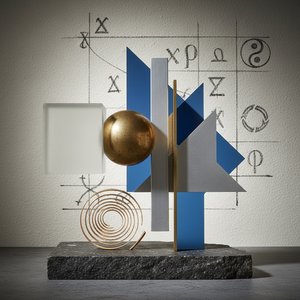
Más Allá de la Forma: Explorando los Fundamentos Filosóficos de la Abstracción Geométrica
Descubre los fundamentos filosóficos de la abstracción geométrica. Explora el suprematismo de Malévich y el neoplasticismo de Mondrian, su impacto en el arte moderno y su legado perdurable. Análisis experto.
