- Inicio

- Impresión en lienzo
- Eugène Louis Boudin
- Dodrecht
 Encargar reproducción Comprar imagen en alta resolución
 Enviar
 Compartir
 Details
 Añadir a favoritos

 Descargar
 Similares
 X-Ray
X-Ray
 Presentación de diapositivas
Dodrecht
 Oil On Canvas
- WallArt
- Impressionism
 61.0 x 50.0 cm
 Galería Regional en Liberec
 Ver más
Giclée / Impresión de arte
Impresión giclée o en lienzo de calidad de museo con producción rápida y opciones de acabado flexibles.




P118B $10

P118H $10

P118W $10

P438Z $10

P508JH $12

P508YH $12

P805H $10

P805Z $10

P919BZ $10

P919G $10

P919XJ $10

P959ZH $10

P968JZ $12

W106C $8

W218G $10

W218JH $8

W218Y $10

W307PJ $10

W316G $10

W316PJ $8

W316Y $10

W398PJ $8

W4111J $10

W500HY $15

W500JH $15

W692G $12

W849H $8

W940BG $15

W953PJ $8




Elija entre nuestros tamaños predefinidos que respetan las proporciones originales de la obra.

Puede introducir sus propias dimensiones para adaptarse a un marco o espacio específico. Si el tamaño seleccionado no coincide con las proporciones de la imagen original, recortaremos la obra de arte o extenderemos la imagen con un borde con efecto espejo o de color sólido. Se enviará una maqueta digital para su aprobación antes de que comience la producción.
Tenga en cuenta que la vista previa en pantalla no refleja el recorte o la extensión real. Solo la maqueta mostrará con precisión la composición final.
Aunque existen tamaños personalizados, recomendamos seleccionar una dimensión de la lista predefinida para preservar las proporciones originales.
Entrega mundial () en 2 semanas en lugar de las 4/5 semanas estándar. (2 julio)

Envío exprés gratuito a todo el mundo

Lienzo de lino de alta calidad

Seguro de envío total

Garantía de reembolso de impuestos aduaneros

Garantía de fidelidad de color

Política de devolución de 60 días (solo por defectos)

Garantía de devolución del 100% del dinero

Descuento por pedido múltiple
 La opción de vidrio solo está disponible en tamaños inferiores a 110 cm.

Dodrecht
Giclée / Impresión de arte
Tamaño de la reproducción
-


Precio total final
-
Descripción de la obra
A Moment in Normandy: Eugène Boudin’s “Dodrecht”
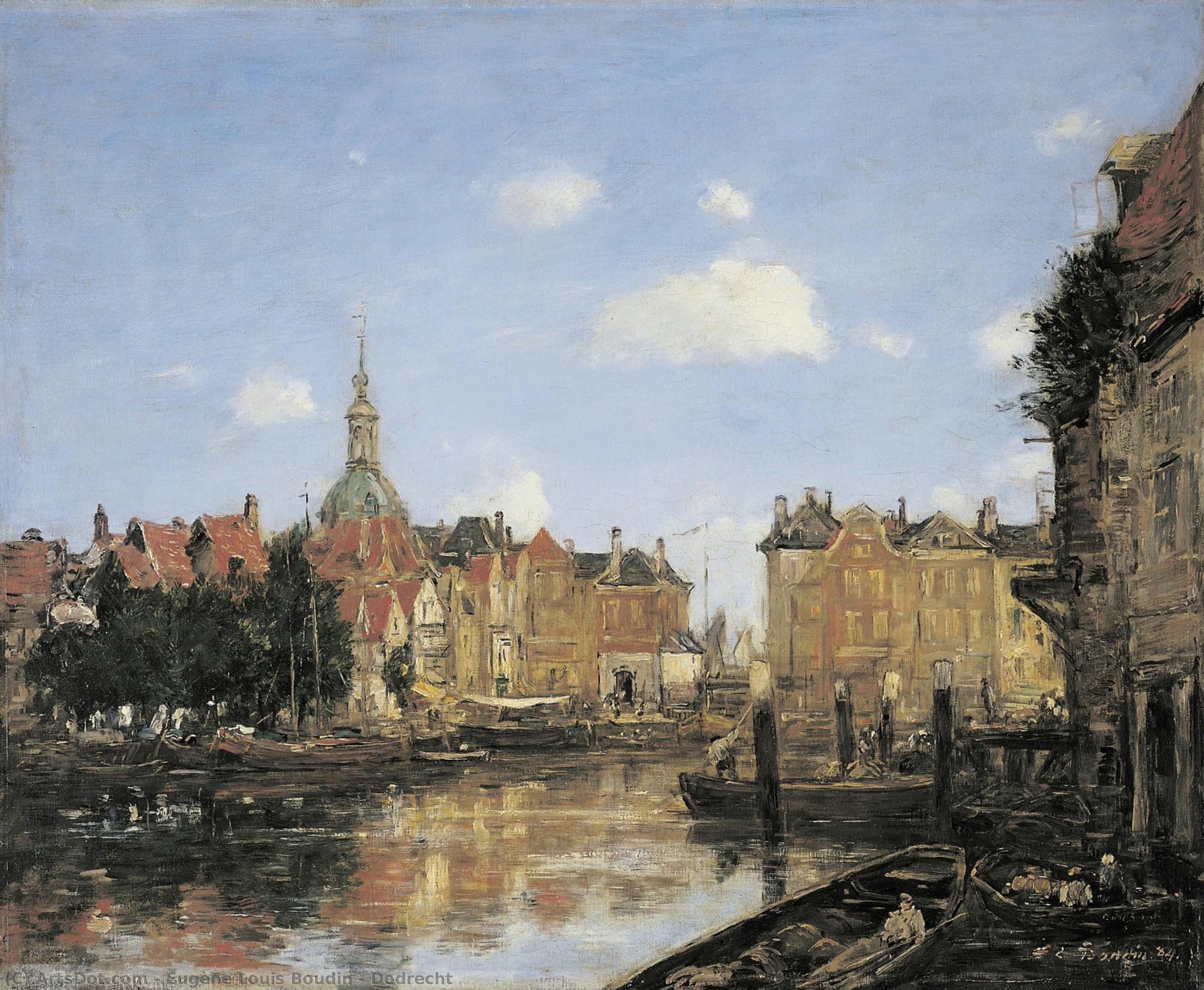
Eugène Louis Boudin's "Dodrecht," painted circa 1874, isn’t merely a depiction of a canal scene; it’s an immersion into the very essence of late 19th-century French Impressionism. This evocative landscape captures a fleeting moment along the waterways of Dordrecht, a city nestled within the Netherlands, and speaks to Boudin's profound connection with light, atmosphere, and the transient beauty of everyday life. The painting immediately draws the viewer in with its soft, hazy palette—muted blues, greens, and ochres dominate, creating an almost dreamlike quality that belies the meticulous observation at play.
Boudin’s approach to capturing this scene is profoundly characteristic of his style. He eschews sharp detail in favor of a loose, broken brushstroke technique, applying paint in short, vibrant dashes that seem to dance across the canvas. This deliberate lack of precision isn't a flaw; rather, it’s the very heart of Impressionism – an attempt to convey not just what is seen, but how it *feels* to be present within that moment. The texture itself becomes a key element, with visible brushwork adding depth and dynamism to the scene. Notice how the reflections shimmer on the water's surface, created by these individual strokes, lending an almost palpable sense of movement.
The Painter’s Philosophy: Plein Air and the Capture of Light
Boudin was a pioneer in the practice of *plein air* painting – working directly outdoors. This commitment to observing nature firsthand profoundly shaped his artistic vision. He wasn't interested in creating photographic reproductions; instead, he sought to capture the ephemeral qualities of light and atmosphere as they shifted with each passing moment. “Dodrecht” exemplifies this philosophy perfectly. The artist meticulously studied how sunlight interacts with water, buildings, and vegetation, translating these observations onto canvas with remarkable sensitivity. His early exposure to Dutch masters like Jongkind, who championed painting outdoors, undoubtedly influenced his approach.
The historical context of the late 19th century is crucial to understanding Boudin’s work. France was undergoing rapid industrialization and urbanization, leading many artists to seek refuge in the countryside and to explore themes of rural life and natural beauty. Boudin's focus on these subjects resonated with a growing public yearning for connection with nature – a sentiment that would become central to the Impressionist movement. The painting subtly evokes the tranquility of a slower pace of life, a stark contrast to the bustling industrial centers of Europe.
Symbolism and Emotional Resonance
Beyond its technical brilliance, “Dodrecht” carries a quiet emotional resonance. The composition—with the canal as the dominant element—creates a sense of enclosure and intimacy, drawing the viewer into the scene. The church steeple rising above the rooftops provides a vertical anchor, grounding the image while simultaneously suggesting a connection to faith and tradition. The boats navigating the waterway hint at human activity and interaction, yet the overall mood remains one of peaceful contemplation.
The painting’s muted color palette contributes significantly to its emotional impact. The soft hues evoke feelings of serenity, nostalgia, and perhaps even melancholy—a subtle reminder of the passage of time. It's a scene that invites reflection on the beauty of the natural world and the simple pleasures of everyday life. “Dodrecht” isn’t just a landscape; it’s an invitation to slow down, observe, and appreciate the fleeting moments of grace that surround us.
A Reproduction Worthy of Display
Reproductions of Boudin's "Dodrecht" offer a remarkable opportunity to bring this evocative masterpiece into your home or office. The delicate balance between light, color, and brushwork is beautifully preserved in high-quality reproductions, allowing you to experience the artist’s vision firsthand. Whether displayed as a focal point on a wall or incorporated into a larger interior design scheme, “Dodrecht” will undoubtedly add a touch of timeless elegance and artistic depth to any space.
Obras similares


Biografía del artista
Vida Temprana y Carrera
Eugène Louis Boudin, un renombrado pintor francés, nació el 12 de julio de 1824 en Honfleur, Francia. Era hijo de un piloto portuario y desarrolló una fuerte afinidad por el mar desde temprana edad. Su viaje artístico comenzó con su trabajo en un barco de vapor entre Le Havre y Honfleur a la edad de 10 años.Influencias Artísticas y Estilo
El estilo de Boudin estuvo fuertemente influenciado por los maestros holandeses del siglo XVII, particularmente después de conocer a Johan Jongkind, quien lo introdujo a la pintura "en plein air" (al aire libre). Este enfoque le permitió capturar la luz cambiante y los colores del mundo natural. Sus pasteles, caracterizados como sumarios y económicos, atrajeron una atención significativa por parte de Charles Baudelaire y Corot, quien lo llamó el “rey de los cielos”.Obras Destacadas y Exposiciones
- Still Life with Lobster on a White Tablecloth (Nature Morte au Homard sur un Nappe Blanche), ahora en el High Museum of Art de Atlanta, muestra el enfoque sobrio pero noble de Boudin hacia las pinturas de bodegón.
- La participación de Boudin en la primera exposición impresionista en 1873, junto con Claude Monet y otros jóvenes artistas, solidificó su influencia en el mundo del arte.
- Su obra se puede encontrar en varios museos, incluyendo el Musée d'Orsay en París, que alberga varias de sus pinturas, como Landscape with Sunset.
Logros y Reconocimiento
A lo largo de su carrera, Boudin recibió numerosos elogios, incluyendo una medalla de tercer lugar en el Salón de París de 1881 y una medalla de oro en la Exposición Universal de 1889. En 1892, fue nombrado Caballero de la Legión de Honor.Legado e Importancia Histórica
El legado de Eugène Louis Boudin se extiende más allá de su propia obra, ya que jugó un papel fundamental en dar forma a las carreras de jóvenes artistas como Claude Monet. El Premio Eugène Boudin, otorgado por la Société Nationale des Beaux-Arts, es un testimonio de su influencia duradera en el mundo del arte. Boudin es considerado una figura clave en la transición hacia el impresionismo y su enfoque "en plein air" sentó las bases para muchos artistas posteriores. Su capacidad para capturar la atmósfera y la luz fugaz lo convierte en un precursor importante del movimiento impresionista, y su influencia se puede ver claramente en el trabajo de Monet y otros artistas que siguieron sus pasos.- Vea más obras de Boudin en https://ArtsDot.com/@/eugene-louis-boudin
- Explore la colección del Musée d'Orsay, que presenta varias pinturas de Boudin, en https://ArtsDot.com/@@/a@d3aulp-discover-the-charm-of-musee-eugene-boudin-(france)-and-its-impressionist-ma..
- Aprenda más sobre el arte francés y su historia en https://en.wikipedia.org/wiki/french_art

Eugène Louis Boudin
1824 - 1898 , Francia
Datos clave
- Artistas Que Influyeron:
- Johan Jongkind
- Charles Baudelaire
- Corot
- Estilo Artístico: Impresionismo temprano
- Fecha De Muerte: 8 de agosto de 1898
- Fecha De Nacimiento: 12 de julio de 1824
- Influenciado A Artistas: ['Claude Monet']
- Lugar De Nacimiento: Honfleur, Francia
- Nacionalidad: Francesa
- Nombre Completo: Eugène Louis Boudin
- Obras Notables:
- Naturaleza muerta con langosta
- Paisaje con atardecer
- Marina
- Fecamp, el puerto
Artículos relacionados

El Legado Perdurable del Arte del Siglo XVIII y XIX: Movimientos, Maestros y Reflexiones Sociales
Descubre el legado perdurable del arte de los siglos XVIII y XIX. Explora los movimientos romántico y realista, sus maestros y la profunda influencia social que marcaron una era. Análisis experto en ArtsDot.

Los 10 Maestros del Paisaje Impresionista: Obras que Cambiaron la Historia del Arte
Descubre los 10 lienzos impresionistas que revolucionaron el arte. Monet, Renoir y más… Explora la historia, técnica y belleza de cada obra maestra. Encuentra reproducciones de alta calidad para tu hogar en ArtsDot.com.

John Frederick Lewis: Orientalism, Detail & Genre Painting in 19th-Century British Art
Explore the captivating Orientalist paintings of John Frederick Lewis! Discover his mastery of detail, genre scenes & influence on 19th-century British art. Learn about his life, techniques & legacy at ArtsDot.

Fritz von Uhde: Bridging Realism & Symbolism in Late 19th-Century German Painting
Explore the captivating world of Fritz von Uhde, a pivotal German painter bridging Realism & Symbolism. Discover his plein-air techniques, religious themes, and influence on modern art. Learn about this fascinating artist at ArtsDot.

Thomas Baines: Pioneering Landscape Art & Visual Documentation of 19th-Century Southern Africa
Explore the life & art of Thomas Baines, a pioneering British explorer and artist who documented 19th-century Southern Africa & Australia. Discover his stunning landscapes, war paintings, and invaluable cartographic contributions.