Ver en contexto
 Enviar
 Compartir
 Detalles
 Guía
Guía

 Descargar
 Similares
 Radiografía
 Presentación de diapositivas
 Preguntas y respuestas
 Estadísticas
Self-Portrait

- 21.0 x 17.0 cm


 Ver más
Giclée / Impresión de arte
Impresiones giclée o en lienzo de calidad de museo con producción rápida y opciones de acabado flexibles. ( Comprar pintura hecha a mano Cambiar a imagen digital)




P118B €10

P118H €10

P118W €10

P438Z €10

P508JH €12

P508YH €12

P805H €10

P805Z €10

P919BZ €10

P919G €10

P919XJ €10

P959ZH €10

P968JZ €12

W106C €8

W218G €10

W218JH €8

W218Y €10

W307PJ €10

W316G €10

W316PJ €8

W316Y €10

W398PJ €8

W4111J €10

W500HY €15

W500JH €15

W692G €12

W849H €8

W940BG €15

W953PJ €8




Elija entre nuestros tamaños predefinidos que respetan las proporciones originales de la obra.

Introduzca el ancho y el alto que necesite para adaptarse a su marco o pared. Una impresión solo puede recortarse, nunca hacerse más grande que la imagen original, por lo que un tamaño con una forma distinta perderá parte de la obra. Le enviaremos una maqueta digital para su aprobación antes de realizar cualquier impresión. La imagen que se muestra en esta página no refleja el recorte real; solo la maqueta lo hace.
Envío a todo el mundo () en 2 semanas en lugar de las 4/5 semanas estándar. (4 noviembre)

Envío exprés gratuito a todo el mundo

Lienzo de lino de alta calidad

Seguro de envío total

Garantía de reembolso de aranceles aduaneros

Garantía de fidelidad cromática exacta

Política de devolución de 100 días (solo por defectos)

Garantía de devolución del 100% del dinero

Descuento por cantidad
 La opción de vidrio solo está disponible en tamaños inferiores a 110 cm.

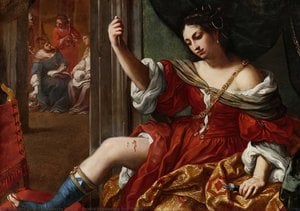
Self-Portrait
Giclée / Impresión de arte
Dimensiones de la reproducción
-


Precio total final
€ 56
A Glimpse of Genius: Elisabetta Sirani’s ‘Self-Portrait’ – A Renaissance Revelation
The charcoal whispers from Elisabetta Sirani's 1664 “Self-Portrait” are more than mere lines on paper; they’re a poignant invitation into the heart and mind of a remarkably talented, yet tragically short-lived, artist. This intimate study, housed within an ornate gilded frame, transcends its humble dimensions – measuring just 21 x 17 centimeters – to reveal a profound depth of emotion and technical mastery that speaks volumes about the burgeoning artistic landscape of 17th-century Bologna. It’s a work not simply *of* a woman, but *by* a woman, boldly asserting her presence within a world largely dominated by male figures.
Sirani's story is inextricably linked to the vibrant and fiercely competitive art scene of her time. Born into an artistic family – her father, Giovanni Andrea Sirani, was himself a respected painter and teacher – she inherited not only technical skill but also a pioneering spirit. Bologna, then a hub for artistic innovation, offered a relative openness to female artists, a circumstance that allowed Sirani to establish herself as one of the era’s most celebrated figures. The portrait itself feels like a deliberate act of self-definition, a conscious assertion of her identity and talent in an environment where women were often relegated to secondary roles.
The Language of Light and Line: Technique and Style
The immediate impression is one of meticulous detail, achieved through a masterful deployment of hatching and cross-hatching – techniques borrowed from the Renaissance masters but imbued with Sirani’s unique sensibility. The artist doesn't simply *draw* her face; she builds it up layer by layer, creating a remarkable sense of volume and texture. Notice how the subtle variations in tone suggest the play of light on skin, the delicate curve of a cheekbone, or the shadowed recesses beneath an eye. This isn’t merely a likeness; it's a carefully constructed illusion of reality.
The choice of red chalk – a favored medium for portraiture at the time – contributes to the work’s subdued palette and velvety texture. The muted browns and beiges create a sense of intimacy, drawing the viewer into the subject’s gaze. Sirani's use of light is particularly noteworthy; it’s not dramatic or theatrical but rather soft and diffused, illuminating the face with a gentle warmth that emphasizes her features and invites contemplation. The composition itself – centered within the frame, with the head occupying most of the vertical space – reinforces this sense of intimacy and directness.
Symbolism and Emotional Resonance
Beyond its technical brilliance, “Self-Portrait” is rich in symbolic meaning. The direct gaze of the subject—a deliberate choice—conveys a remarkable confidence and perhaps even a touch of introspection. She isn’t passively presenting herself; she's engaging with the viewer, inviting them to share in her thoughts and feelings. The slightly off-center placement of her eyes adds to this sense of immediacy and connection.
The frame itself – an ornate gilded border – serves as a powerful reminder of the formality and status associated with portraiture during the Renaissance. It elevates the subject, transforming her into a figure worthy of admiration and respect. However, within this formal setting, Sirani subtly challenges conventions by presenting herself not as a demure model but as an active participant in the act of creation – a painter at work, surrounded by her tools and materials.
A Legacy Preserved: Historical Context and Enduring Appeal
Elisabetta Sirani’s life was tragically cut short at the age of 27, adding a poignant layer to this already compelling portrait. The circumstances surrounding her death – rumored poisoning—have fueled speculation and intrigue for centuries. Regardless of the truth behind her demise, her legacy as one of the most accomplished female artists of the Baroque period endures. Her story is not just about artistic talent; it’s about resilience, determination, and a pioneering spirit that paved the way for future generations of women in the arts.
Today, “Self-Portrait” stands as a testament to Sirani's genius – a captivating glimpse into the mind and soul of an extraordinary artist. Its intimate scale belies its profound emotional depth, offering viewers a rare opportunity to connect with a remarkable woman who defied societal expectations and left an indelible mark on the history of art.
Preguntas y respuestas
¿Puedo ver "Self-Portrait" de Elisabetta Sirani bajo diferentes luces?
La vista de rayos X de "Self-Portrait" de Elisabetta Sirani se encuentra en la página Radiografía de la obra: un examen interactivo de la imagen a través de once capas ópticas.
¿Qué origen nacional sustenta el Baroque de "Self-Portrait"?
La obra de Baroque "Self-Portrait" fue realizada por un artista nacido en Italia.
¿Con qué técnica se realizó "Self-Portrait"?
Elisabetta Sirani utilizó la técnica de Acrylic On Paper para "Self-Portrait". La técnica define la naturaleza material de la obra original.
Obras relacionadas


Biografía del artista
Elisabetta Sirani: Una Vida en la Bologna Barroca
- Nacimiento: Enero de 1638, Bolonia, Italia
- Fallecimiento: Agosto de 1665, Bolonia, Italia (a los 27 años)
Elisabetta Sirani fue una notable pintora y grabadora italiana del Barroco que alcanzó considerable fama a principios del siglo XVII en Bolonia. Su vida, aunque trágicamente corta, se caracterizó por la innovación artística, el espíritu emprendedor y el establecimiento de una academia para artistas femeninas – un testimonio de su visión progresista. Nacida en una familia con inclinaciones artísticas, desafió las expectativas sociales para convertirse en una de las artistas más celebradas de su tiempo.
Primeros Años y Formación
- Heredad Artística: Elisabetta nació en una familia profundamente arraigada en la escena artística boloñesa. Su padre, Giovanni Andrea Sirani, era pintor y comerciante de arte que había estudiado bajo Guido Reni, una figura destacada de la escuela boloñesa.
- Formación Temprana: Recibió su formación artística inicial dentro del taller de su padre, demostrando un talento excepcional desde temprana edad. Los relatos sugieren que su padre inicialmente dudó en aceptarla plenamente como alumna debido a preocupaciones sobre si ella lo superaría, pero Elisabetta rápidamente dominó sus técnicas y desarrolló su propio estilo distintivo.
- Influencia de Guido Reni: Giovanni Andrea Sirani sirvió como maestro en la primera escuela de vida celebrada en la casa de Ettore Ghislieri, continuando el legado de Guido Reni. Esta conexión con Reni influyó profundamente en el desarrollo artístico de Elisabetta, evidente en sus composiciones elegantes y su dominio de la luz y la sombra.
Carrera Artística y Logros
- Prolífica Producción: A pesar de su corta carrera, Elisabetta Sirani produjo una asombrosa cantidad de obras – más de 120 pinturas, numerosos grabados y dibujos incontables. Su productividad fue notable, impulsada tanto por el talento como por las demandas de dirigir un taller exitoso.
- Gestión del Taller Familiar: En 1654, con su padre incapacitado por la gota, Elisabetta asumió la responsabilidad de administrar los negocios artísticos familiares. Equilibristamente gestionó encargos de retratos, tarifas de estudiantes y sus propios esfuerzos creativos, convirtiéndose en el principal sostén económico de su familia.
- Estilo Innovador: El estilo de Sirani se caracterizó por composiciones dinámicas, colores vibrantes y una notable capacidad para capturar emociones y movimiento. Sus obras a menudo representaban escenas religiosas, temas mitológicos y retratos – todos renderizados con excepcional habilidad y originalidad. Los contemporáneos como Carlo Cesare Malvasia la elogiaron por su "originalidad de composición", "estilo de dibujo" y "rápido modo de trabajar".
- Academia para Artistas Femeninas: Un logro significativo fue el establecimiento de una academia para artistas femeninas en Bolonia, brindando oportunidades para que las mujeres recibieran capacitación artística y persiguieran sus ambiciones creativas. Esto demostró su compromiso con la igualdad de género dentro del mundo del arte.
Legado y Significado Histórico
- Seguimiento Devoto: Durante su vida, Elisabetta Sirani cultivó un seguimiento devoto, y algunos estudiosos sugieren que eclipsó tanto a su padre como a sus hermanas en términos de fama y reconocimiento. A menudo fue aclamada como la reencarnación femenina de Guido Reni.
- Muerte Repentina y Controversia: Su muerte repentina a los 27 años bajo circunstancias sospechosas – inicialmente involucrando acusaciones de envenenamiento por parte de una sirvienta – alimentó aún más la fascinación pública por su vida y obra. Si bien las acusaciones finalmente fueron desestimadas, el misterio que rodeaba su fallecimiento contribuyó a su leyenda perdurable. La causa más probable fue peritonitis resultante de una úlcera péptica rota, exacerbada por el estrés.
- Funeral Elaborado: El elaborado funeral que recibió, incluyendo un enorme araque con una escultura a tamaño natural de ella misma y oraciones compuestas en su honor, subrayó la alta estima en la que era tenida por sus contemporáneos.
- Reconocimiento Actual: Las contribuciones artísticas de Elisabetta Sirani son cada vez más reconocidas hoy en día, consolidando su lugar como una figura significativa en la historia del arte barroco. Su historia sirve de inspiración para las artistas femeninas y un testimonio del poder del talento y la determinación para superar las barreras sociales.
Obras Clave
- Judith con la Cabeza de Holofernes
- Autorretrato
- Estudio para el Bautismo de Cristo
- Portia Herida su Muslo
- La Virgen Coronada por el Niño Jesús con Rosas

Elisabetta Sirani
1638 - 1665 , Italia
Datos clave
- Artistas Que Influyeron: ['Guido Reni']
- Fecha De Fallecimiento: Agosto de 1665
- Fecha De Nacimiento: Enero de 1638
- Lugar De Nacimiento: Bolonia, Italia
- Movimiento Artístico: Barroco
- Nacionalidad: Italiana
- Nombre Completo: Elisabetta Sirani
- Obras Notables:
- Judith con la cabeza de Holofernes
- Autorretrato
- Estudio para el Bautismo de Cristo
- Portia Herida en el Muslo
- La Virgen Coronada por Cristo Niño
Artículos relacionados

El Esplendor del Barroco: La Maestría de la Luz, el Drama y la Emoción en el Arte del Siglo XVII
Descubre la maestría del claroscuro y el drama del Barroco con este análisis experto. Explora la historia y técnica del siglo XVII ahora.

Barroco Sublime: 10 Obras Maestras que Definieron una Época |
Descubre las 10 obras maestras del Barroco que marcaron una época. Caravaggio, Bernini y Velázquez cobran vida en . Reproducciones de arte de calidad museo para decorar tu hogar con elegancia. ¡Explora la colección online!

Baroque Classicism: Reconciling Drama & Order in 17th-Century Art
Explore the captivating world of Baroque Classicism! Discover its history, key artists like Caravaggio & Rubens, and defining characteristics. Expert insights & high-quality reproductions at ArtsDot.

The Dramatic Flourish: Exploring the Baroque Movement's Enduring Legacy in Art History
Explore the dramatic world of Baroque art! Discover iconic artists like Caravaggio & Rubens, defining techniques, and its lasting impact on art history. Expert insights for collectors & enthusiasts at ArtsDot.

The Visceral Stage: Exploring Dramatic Narratives & Emotional Intensity in Baroque Art
Explore the dramatic world of Baroque art! Discover iconic masters like Caravaggio & Rembrandt, their techniques, and the movement's lasting impact. Expert insights for collectors & enthusiasts at ArtsDot.