Vista previa
 Compartir
 Compartir
 Ver detalles
 Guía
Guía

 Descargar
 Ver artículos similares
 Radiografía
 Presentación de diapositivas
 Estadísticas
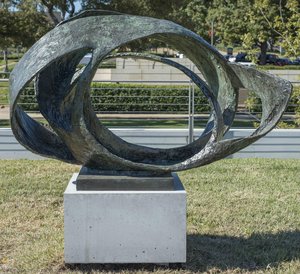
Turning Forms


 Leer más
La obra de arte que se muestra en esta página está protegida por las leyes de propiedad intelectual, lo que significa que no podemos crear ni vender legalmente una reproducción idéntica. Esta protección se hace cumplir en virtud de acuerdos internacionales como el Convenio de Berna y por las leyes nacionales, incluidas aquellas establecidas por el Ley de derechos de autor de los EE. UU. - Título 17.
Como una alternativa respetuosa y legal, ofrecemos obras de arte personalizadas y pintadas a mano inspiradas en la original. Nuestros expertos y profesionales del arte estudian cuidadosamente el estilo, el sentimiento y la esencia artística de la obra original para crear una pieza nueva y única que evoque la misma sensación, siendo al mismo tiempo una creación original por derecho propio.
Este método cumple plenamente con las normativas de derechos de autor, ya que no implica la copia ni la duplicación de la obra protegida. En su lugar, se trata de una reinterpretación creativa: una nueva pintura influenciada por la original, pero que no es idéntica a ella.
Reproducción al óleo hecha a mano
Óleo sobre lienzo pintado a mano en el tamaño y marco de su elección, realizado por encargo por nuestros artistas. ( Cambiar a formato impreso Ver versión en imagen digital)




P118B €10

P118H €10

P118W €10

P438Z €10

P508JH €12

P508YH €12

P805H €10

P805Z €10

P919BZ €10

P919G €10

P919XJ €10

P959ZH €10

P968JZ €12

W106C €8

W218G €10

W218JH €8

W218Y €10

W307PJ €10

W316G €10

W316PJ €8

W316Y €10

W398PJ €8

W4111J €10

W500HY €15

W500JH €15

W692G €12

W849H €8

W940BG €15

W953PJ €8




Elija entre nuestros tamaños predefinidos que respetan las proporciones originales de la obra.

Puede ingresar sus propias dimensiones para adaptarse a un marco o espacio específico. Si el tamaño seleccionado no coincide con las proporciones de la imagen original, recortaremos la obra o extenderemos la pintura con elementos adicionales pintados a mano. Se le enviará una maqueta digital para su aprobación antes de comenzar la producción.
Tenga en cuenta que la vista previa en pantalla no refleja el recorte o la extensión reales. Solo la maqueta mostrará con precisión la composición final.
Si bien existen tamaños personalizados, recomendamos seleccionar una dimensión de la lista predefinida para preservar las proporciones originales.
Tras realizar el pedido, el equipo de ArtsDot.com enviará un correo electrónico al cliente para solicitar instrucciones y proporcionarle una vista previa del boceto.
Envío a todo el mundo () en 3-4 semanas en lugar de las 5 semanas estándar. (11 octubre). Sin comprometer la calidad.

Envío exprés gratuito a todo el mundo

Lienzo de lino de alta calidad

Seguro de envío completo

Garantía de reembolso de impuestos aduaneros

Garantía de fidelidad cromática exacta

Política de devolución de 100 días (solo por defectos)

Garantía de devolución del 100% del dinero

Oferta por volumen
 La opción de vidrio solo está disponible en tamaños inferiores a 110 cm.

Turning Forms
Técnica de reproducción
Tamaño de la reproducción
-


Precio total
€ 226
Turning Form: An Exploration of Barbara Hepworth’s Pioneering Vision
Barbara Hepworth (1903–1975) stands as an undisputed titan amongst British sculptors, her oeuvre embodying the spirit of Modernism and profoundly influencing subsequent generations of artists. Born in Wakefield, Yorkshire, Hepworth's formative years were marked by a deep connection to the rugged landscape of Northern England – a connection that would permeate her artistic explorations throughout her life.
- Early Influences: Hepworth’s initial fascination with sculpture stemmed from encounters with Egyptian antiquities during her travels abroad, sparking an interest in geometric forms and exploring how they could convey emotion.
- Formal Training & Artistic Movement: She honed her skills at Leeds School of Art and subsequently excelled at the Royal College of Art in London, immersing herself in the avant-garde currents of Surrealism and Abstraction – movements that championed intuition over meticulous representation.
The collaboration with Ben Nicholson proved pivotal, establishing a shared aesthetic vision centered on exploring the interplay between organic shapes and geometric abstraction. This partnership cemented Hepworth’s position at the forefront of British artistic innovation during the tumultuous years preceding World War II.
The Sculptural Language of Hepworth
Hepworth's distinctive style is characterized by a masterful manipulation of form—specifically, polished stone and bronze—to achieve an unparalleled sense of dynamism and stillness simultaneously. Her approach rejected traditional modeling techniques in favor of direct carving, prioritizing the inherent qualities of the material itself.
- Material Exploration: Hepworth’s unwavering commitment to exploring the expressive potential of stone – particularly Galway limestone – resulted in monumental sculptures that capture the essence of geological forces and evoke a profound contemplation of nature.
- Technique & Precision: Her meticulous craftsmanship demanded an exacting understanding of material properties, resulting in surfaces that shimmer with light and convey subtle textural nuances—a testament to her dedication to artistic excellence.
Notable works like “Turning Forms” exemplify Hepworth’s ability to distill complex ideas into deceptively simple geometric shapes—circles and planes—that invite viewers to engage in a dialogue about perception, space, and the fundamental relationship between form and substance.
Symbolism & Emotional Resonance
Hepworth's sculptures transcend mere visual aesthetics; they are imbued with symbolic significance rooted in her personal experiences and philosophical convictions. Recurring motifs – such as circles representing wholeness and unity—reflect Hepworth’s belief that art could illuminate the deepest recesses of human consciousness.
- Landscape & Memory: Hepworth frequently referenced the Yorkshire landscape as a source of inspiration, capturing its rugged beauty and conveying a sense of timelessness in her monumental sculptures.
- Emotional Depth: Her work communicates profound emotional resonance—a blend of serenity, contemplation, and an awareness of the forces shaping our existence—leaving an indelible mark on anyone who encounters it.
Conclusion: Hepworth’s Legacy
Barbara Hepworth's enduring influence extends far beyond her own lifetime. Her pioneering vision continues to inspire artists today, demonstrating that true artistic achievement lies in embracing both formal innovation and emotional sincerity. “Turning Forms,” as a symbol of Hepworth’s artistic philosophy—a harmonious fusion of geometric precision and organic materiality—remains a beacon of Modernist creativity.
Preguntas y respuestas
¿A qué edad creó Barbara Hepworth "Turning Forms"?
Barbara Hepworth realizó "Turning Forms" a la edad de 43. El artista nació en 1903 y la obra data de 1946.
¿Dónde puedo ver una vista previa de "Turning Forms"?
Para previsualizar una reproducción de "Turning Forms" de Barbara Hepworth, abra la página de Vista previa de la obra.
¿En qué año se creó "Turning Forms" de Barbara Hepworth?
"Turning Forms" data de 1946. La fecha sitúa la obra dentro de la trayectoria de Barbara Hepworth y de su época.
¿Es "Turning Forms" de Barbara Hepworth de dominio público y por qué?
"Turning Forms" de Barbara Hepworth es de aún protegido por derechos de autor. Los términos de derechos de autor se calculan a partir del fallecimiento del artista, y Barbara Hepworth murió en 1975.
¿Quién creó "Turning Forms"?
"Turning Forms" fue creada por Barbara Hepworth. La información en esta página describe la obra original de Barbara Hepworth.
¿Quién es el autor de "Turning Forms" y a qué movimiento pertenece?
"Turning Forms" fue creada por Barbara Hepworth con el estilo Modern Sculpture. El artista y el movimiento identifican la tradición de la obra.
¿De dónde vienen los visitantes de "Turning Forms" de Barbara Hepworth?
La página Estadísticas de "Turning Forms" de Barbara Hepworth presenta las estadísticas de visitas públicas: visitas mensuales de esta obra, una comparación con las obras más vistas del artista y el origen de sus visitantes.
Obras relacionadas


Biografía del artista
Primeros años y educación
Dame Barbara Hepworth, una reconocida escultora e artista inglesa, nació el 10 de enero de 1903 en Wakefield, Yorkshire. Asistió a la Escuela de Arte de Leeds desde 1920 y posteriormente ganó una beca del condado para estudiar en el Royal College of Art (RCA) en Londres desde 1921 hasta que fue galardonada con el diploma en 1924.Carrera artística
- El trabajo de Dame Barbara Hepworth ejemplifica el modernismo, particularmente la escultura moderna. Fue una de las pocas artistas femeninas en lograr prominencia internacional.
- En 1933, cofundó el movimiento artístico Unit One con Ben Nicholson, Paul Nash y otros, buscando unir el surrealismo y la abstracción en el arte británico.
- El trabajo temprano de Hepworth se caracterizó por la abstracción y su participación con el movimiento artístico parisino, Abstraction-Création.
Obras notables y exposiciones
- Oval Form (Trezion), una escultura de bronce, forma parte de la colección del Museo Kimball de Arte en Fort Worth, Estados Unidos. (ver en ArtsDot)
- Two Forms, una escultura, se exhibe en The Hepworth Wakefield en Wakefield, Reino Unido. (ver en ArtsDot)
- Totem, una escultura de mármol, también forma parte de la colección de The Hepworth Wakefield. (ver en ArtsDot)
Legado y colecciones de museos
Barbara Hepworth's work is widely recognized, with her sculptures and paintings forming part of various museum collections worldwide. The Hepworth Wakefield, named after the artist, houses numerous masterpieces from renowned artists, including Hepworth's own works. (descubra más sobre The Hepworth Wakefield en ArtsDot)Conclusión
Dame Barbara Hepworth's pioneering work in modern British sculpture has left an indelible mark on the art world. Her legacy continues to inspire artists and art enthusiasts alike, with her works remaining a testament to her innovative spirit and artistic genius. más sobre Barbara Hepworth en Wikipedia
Barbara Hepworth
1903 - 1975 , Reino Unido
Datos clave
- Artistas Influyentes: ['Abstracción-Creación']
- Fecha De Nacimiento: 10 de enero de 1903
- Legado Artístico: Inspiró a artistas y entusiastas.
- Lugar De Nacimiento: Wakefield, Reino Unido
- Movimiento Artístico: Modernismo, Escultura moderna
- Nacionalidad: Británica
- Nombre Completo: Barbara Hepworth
- Nombres Alternativos: Dame Barbara Hepworth
- Obras Notables:
- Oval Form (Trezion)
- Two Forms
- Totem
Artículos relacionados

Barbara Hepworth: A Sculptural Dialogue with Form, Space & the Human Condition
Explore the profound world of Barbara Hepworth's sculpture. Discover her artistic evolution, iconic forms, and lasting influence on modern art. A guide for collectors & enthusiasts.

Kandinsky: Las 25 Obras Maestras del Pionero de la Abstracción | ArtsDot
Descubre las 25 obras maestras de Wassily Kandinsky, pionero del arte abstracto. Explora su expresionismo, composiciones únicas y la historia detrás de cada cuadro. Reproducciones de alta calidad para decorar tu hogar con arte moderno en ArtsDot.com.

Fernand Léger: Las 25 Obras Maestras del Tubismo y la Vanguardia Francesa | ArtsDot
Descubre las 25 obras maestras de Fernand Léger, pionero del tubismo y la vanguardia francesa. Explora su estética industrial, composiciones geométricas y vibrantes colores. Reproducciones de arte exclusivas en ArtsDot.com.

Abstracción Geométrica: 10 Obras Maestras que Transformaron el Arte Moderno | ArtsDot
Descubre las 10 obras maestras de la abstracción geométrica que revolucionaron el arte moderno. Explora a Mondrian, Malevich y Kandinsky en ArtsDot.com. Reproducciones de alta calidad para tu hogar.

Beyond Form & Color: Geometric Abstraction's Evolution in 20th/21st Century Art
Explore the evolution of geometric abstraction from Cubism to contemporary art. Discover key artists like Malevich & Mondrian, investment insights, and expert collecting advice at ArtsDot.