


 Vista previa
 Compartir
 Compartir
 Ver detalles
 Guía
Guía

 Descargar
 Ver artículos similares
 Radiografía
 Presentación de diapositivas
 Estadísticas
Study for Dance


 Leer más
Giclée / Impresión de arte
Impresiones giclée o en lienzo de calidad de museo con producción rápida y opciones de acabado flexibles. ( Encargar reproducción pintada a mano Ver versión en imagen digital)




P118B €10

P118H €10

P118W €10

P438Z €10

P508JH €12

P508YH €12

P805H €10

P805Z €10

P919BZ €10

P919G €10

P919XJ €10

P959ZH €10

P968JZ €12

W106C €8

W218G €10

W218JH €8

W218Y €10

W307PJ €10

W316G €10

W316PJ €8

W316Y €10

W398PJ €8

W4111J €10

W500HY €15

W500JH €15

W692G €12

W849H €8

W940BG €15

W953PJ €8




Elija entre nuestros tamaños predefinidos que respetan las proporciones originales de la obra.

Introduzca el ancho y el alto que necesite para adaptarse a su marco o pared. Una impresión solo puede recortarse, nunca hacerse más grande que la imagen original, por lo que un tamaño con una forma distinta perderá parte de la obra. Le enviaremos una maqueta digital para su aprobación antes de realizar cualquier impresión. La imagen que se muestra en esta página no refleja el recorte real; solo la maqueta lo hace.
Envío a todo el mundo () en 2 semanas en lugar de las 4/5 semanas estándar. (20 octubre)

Envío exprés gratuito a todo el mundo

Lienzo de lino de alta calidad

Seguro de envío completo

Garantía de reembolso de impuestos aduaneros

Garantía de fidelidad cromática exacta

Política de devolución de 100 días (solo por defectos)

Garantía de devolución del 100% del dinero

Oferta por volumen
 La opción de vidrio solo está disponible en tamaños inferiores a 110 cm.

Study for Dance
Giclée / Impresión de arte
Tamaño de la reproducción
-


Precio total
€ 54
A Study in Fluidity: Alphonse Mucha’s ‘Study for Dance’
Alphonse Maria Mucha's “Study for Dance,” a pastel drawing of remarkable delicacy and dynamism, offers a captivating glimpse into the heart of Art Nouveau. Dating from around 1900, this piece transcends mere representation; it is an embodiment of movement, beauty, and the spirit of a burgeoning artistic era. The artwork’s immediate impact lies in its depiction of a nude woman – a recurring motif in Mucha's oeuvre – caught in a swirling, almost ecstatic pose, reminiscent of a dancer lost within her own rhythm. This isn’t a study for a grand salon painting; rather, it feels intensely personal, a concentrated exploration of form and emotion.
Style & Technique: The Essence of Art Nouveau
Mucha's distinctive style is immediately recognizable. “Study for Dance” exemplifies the flowing lines, organic forms, and decorative elements that defined Art Nouveau. The composition prioritizes graceful curves over rigid realism, creating a dreamlike atmosphere where perspective is subtly flattened to emphasize the figure’s movement. The pastel technique itself is crucial – layers of color are meticulously built up to achieve a velvety texture and luminous quality. Notice how loose brushstrokes contribute to the ethereal effect, while delicate linework defines the contours of the woman's body and the intricate details of the circular frame. The use of hatching and cross-hatching adds depth and dimension, particularly in rendering the folds of her dress, which appears to ripple with movement.
Symbolism & Composition
Beyond its aesthetic beauty, “Study for Dance” is rich in symbolic meaning. The swirling lines that dominate the composition represent fluidity – not just physical movement but also ideas and emotions. The ornate circular frame, a frequent element in Mucha’s work, suggests eternity or a celestial realm, elevating the figure to something almost divine. The warm color palette—dominated by reds, golds, and muted greens—evokes feelings of sensuality and warmth. Considering Mucha's influences – particularly his admiration for Gustave Moreau – we can see echoes of classical mythology and allegorical themes within this intimate study. The pose itself, with the woman’s arms outstretched, speaks to a yearning for freedom and expression, aligning perfectly with the core values of Art Nouveau.
Historical Context & Mucha's Legacy
Created during a period of immense artistic innovation, “Study for Dance” reflects the broader cultural shift towards embracing beauty, nature, and decorative arts. Mucha’s work was instrumental in establishing Art Nouveau as a dominant style, influencing designers, architects, and artists across Europe. His commissions for Parisian department stores and exhibitions helped to popularize his distinctive aesthetic. As a precursor to Cubism and other modern movements, Mucha's emphasis on flattened perspective and stylized forms paved the way for new approaches to representation. Studying “Study for Dance” allows us to appreciate not only Mucha’s individual genius but also his pivotal role in shaping the course of 20th-century art.
Preguntas y respuestas
¿Cómo se relacionan los colores de "Study for Dance" de Alphonse Maria Mucha con su emoción?
En "Study for Dance", los colores de Pastels acompañan a un sentimiento Ethereal.
¿Cuál es la identidad cromática de "Study for Dance" de Alphonse Maria Mucha?
La identidad cromática de "Study for Dance" de Alphonse Maria Mucha: una paleta Pastels, dominada por el Khaki (#dcd17e).
¿Muestra "Study for Dance" contrastes marcados entre luces y sombras?
El contraste entre luces y sombras de "Study for Dance" se registra como Serene. El contraste describe la intensidad con la que difieren las zonas claras y oscuras.
Obras relacionadas


Biografía del artista
Primeros Años y Educación
- Nacido: 15 de julio de 1860, en Ivanačice, Moravia (ahora parte de la República Checa)
- Mostró talento artístico desde una edad temprana.
- Estudió en la Academia de Bellas Artes de Praga pero se desilusionó con los enfoques tradicionales.
- Se mudó a París en 1887 para perseguir su propio estilo.
Estilo Artístico y Obras Notables
- Conocido por un estilo Art Nouveau distintivo caracterizado por líneas fluidas, formas orgánicas y una sensación de movimiento.
- Influenciado por artistas como Pierre-Auguste Renoir y Gustave Moreau.
- Obras Notables:
- La Insurrección Eslava - Muestra la combinación de motivos checos tradicionales con elementos Art Nouveau modernos.
- Salon des Cent
- Pinturas inspiradas en obras como Las Hijas de Tespio de Gustave Moreau, y La Ribambelle des Gobelins de Piero Dorazio.
- Ilustraciones basadas en Jóvenes Granjeros Rompiendo Lino de Sir Hubert von Herkomer.
- Frecuentemente presentó mujeres idealizadas con túnicas fluidas rodeadas de flores exuberantes.
Hitos Profesionales y Comisiones Importantes
- Colaboración con Sarah Bernhardt: Creó carteles y diseños para la actriz Sarah Bernhardt, comenzando con el cartel de Gismonda (1894), lo que lanzó su carrera.
- Exposición Universal en París (1900): Su estilo Art Nouveau ganó reconocimiento internacional en esta exposición. Decoró el Pabellón de Bosnia y Herzegovina y colaboró en el Pabellón Austriaco.
- Patronazgo de Charles Richard Crane: Recibió apoyo de Charles Richard Crane, lo que le permitió crear la monumental serie El Épico Eslavo (1912-30).
- Checoslovaquia Independiente: Diseñó sellos postales, billetes y documentos gubernamentales para la recién independiente Checoslovaquia.
Influencias y Legado
- Influenciado por las tradiciones artísticas checas y los movimientos de arte europeos modernos.
- Su estilo único allanó el camino para futuras generaciones de artistas en Art Nouveau y Secesión.
- Inspiró a otros artistas como Eva Prokopcová.
- El legado se extiende más allá de su obra de arte hasta influir en el diseño y la estética.
Vida Posterior y Muerte
- Se casó con Maruska (Marie/Maria) Chytilová en 1906.
- Visitó los Estados Unidos desde 1906 hasta 1910, donde nació su hija Jaroslava.
- Murió el 14 de julio de 1939 en Praga, Checoslovaquia.

Alphonse Maria Mucha
1860 - 1939 , República Checa
Datos clave
- Artistas Influenciados: ['Eva Prokopcová']
- Artistas Que Influyeron:
- Pierre-Auguste Renoir
- Gustave Moreau
- Fecha De Fallecimiento: 1939
- Fecha De Nacimiento: 15 de julio de 1860
- Lugar De Nacimiento: Brno, República Checa
- Movimiento Artístico: Art Nouveau
- Nacionalidad: Checo
- Nombre Completo: Alphonse Maria Mucha
- Obras Notables:
- La sublevación eslava
- Salón de los Cien
- Las hijas de Tespio
- La Ribambelle de Gobelins
Artículos relacionados
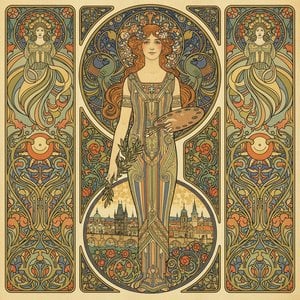
Alphonse Mucha: A Comprehensive Exploration of Art Nouveau's Master of Decorative Symbolism
Explore the life & art of Alphonse Mucha, master of Art Nouveau! Discover his iconic posters, stunning illustrations, and the monumental Slav Epic. A comprehensive guide for collectors & enthusiasts.

The Enduring Allure of the Nude: A Historical & Artistic Exploration of the Human Form
Explore the captivating history of nude art! Discover iconic paintings & artists from classical to modern eras. Uncover symbolism, techniques & find museum-quality reproductions at ArtsDot.

La Sutileza del Pastel: Técnica, Historia y Resonancia Emocional en el Arte
Descubre la sutileza del pastel: técnica, historia y artistas clave como Degas y Renoir. Guías expertas sobre materiales, conservación y cómo expresar emociones a través de este bello arte.

The Eloquent Form: A Historical & Aesthetic Exploration of the Nude in Art
Explore the captivating history of the nude in art! From ancient Greece to modern masters, discover its evolving symbolism, techniques & enduring beauty. Expert insights for collectors and enthusiasts.

The Subdued Radiance of Pastel: Exploring Nuance & Emotion in Art
Explore the nuanced world of pastel art! Discover its history, techniques & emotional power with expert insights from ArtsDot.com. Find museum-quality reproductions and learn about collecting this delicate medium.


