


 Vista previa
 Compartir
 Compartir
 Ver detalles
 Guía
Guía

 Descargar
 Ver artículos similares
 Radiografía
 Presentación de diapositivas
 Estadísticas
(45)

 Leer más
Reproducción al óleo hecha a mano
Óleo sobre lienzo pintado a mano en el tamaño y marco de su elección, realizado por encargo por nuestros artistas. ( Cambiar a formato impreso Ver versión en imagen digital)




P118B €10

P118H €10

P118W €10

P438Z €10

P508JH €12

P508YH €12

P805H €10

P805Z €10

P919BZ €10

P919G €10

P919XJ €10

P959ZH €10

P968JZ €12

W106C €8

W218G €10

W218JH €8

W218Y €10

W307PJ €10

W316G €10

W316PJ €8

W316Y €10

W398PJ €8

W4111J €10

W500HY €15

W500JH €15

W692G €12

W849H €8

W940BG €15

W953PJ €8




Elija entre nuestros tamaños predefinidos que respetan las proporciones originales de la obra.

Escriba el ancho y el alto que necesite para adaptarse a su marco o a su pared. Al ser una obra pintada a mano, para un tamaño con una forma distinta, el artista puede pintar un poco más alrededor de la imagen o recortar un poco; usted elige. Le enviaremos una maqueta digital para su aprobación antes de comenzar la pintura. La imagen que se muestra en esta página no refleja el resultado real; solo la maqueta lo hace.
Tras realizar el pedido, el equipo de ArtsDot.com enviará un correo electrónico al cliente para solicitar instrucciones y proporcionarle una vista previa del boceto.
Envío a todo el mundo () en 3-4 semanas en lugar de las 5 semanas estándar. (20 octubre). Sin comprometer la calidad.

Envío exprés gratuito a todo el mundo

Lienzo de lino de alta calidad

Seguro de envío completo

Garantía de reembolso de impuestos aduaneros

Garantía de fidelidad cromática exacta

Política de devolución de 100 días (solo por defectos)

Garantía de devolución del 100% del dinero

Oferta por volumen
 La opción de vidrio solo está disponible en tamaños inferiores a 110 cm.

(45)
Técnica de reproducción
Tamaño de la reproducción
-


Precio total
€ 229
Alphonse Mucha: The Poet of Decorative Art
Alphonse Maria Mucha (1860 – 1939), born in Ivanačice, Moravia, stands as a towering figure within the Art Nouveau movement—a stylistic revolution that swept across Europe between 1890 and 1910. Rejecting academic conventions, Mucha forged his own path toward an aesthetic rooted in organic forms, flowing lines, and meticulous ornamentation, establishing himself as arguably the most prolific and influential illustrator of his era.
Early Life and Artistic Aspirations
From a young age, Mucha demonstrated exceptional artistic talent. Despite facing challenges securing acceptance into the Academy of Fine Arts in Prague—where he felt stifled by rigid rules—he persevered, honing his skills independently before relocating to Paris in 1887. This decisive move proved pivotal, immersing him in the vibrant intellectual and artistic milieu of the Belle Époque and propelling him toward the realization of his distinctive vision.
The Art Nouveau Style: A Symphony of Line and Form
Mucha’s artistic style is instantly recognizable—a mesmerizing blend of curvilinear lines, stylized floral motifs, and graceful curves that embody the movement's core principles. Heavily influenced by artists like Pierre-Auguste Renoir and Gustave Moreau, Mucha skillfully incorporated elements from Japanese art and Celtic symbolism into his compositions.
Notable Illustrations: Capturing Beauty and Myth
Mucha’s prolific output yielded a remarkable body of work—primarily illustrations for theater posters and advertising campaigns—that cemented his reputation as the “Poet of Decorative Art.” His celebrated images include “The Slavonic Uprising,” which deftly combines Czech nationalistic themes with Art Nouveau aesthetics; “Salon des Cent,” showcasing collaborations with fellow artists like Piero Dorazio; and evocative depictions inspired by works such as Gustave Moreau’s “The Daughters of Tespio” and Sir Hubert von Herkomer's "Young Farmers Breaking Flax." These pieces transcend mere visual representation, conveying profound narratives imbued with mythological references and psychological depth.
Technique and Symbolism: Craftsmanship Meets Imagination
Mucha’s technique involved painstaking hand-painting—primarily utilizing oil paints—with meticulous attention to detail and layering. He embraced innovative printing methods, experimenting with chromolithography and halftone printing to achieve stunning color reproductions. Recurring motifs—such as irises, lilies, and stylized female figures—carried symbolic significance, reflecting themes of femininity, spirituality, and the harmonious relationship between humanity and nature.
Emotional Impact: A Legacy of Elegance and Enchantment
Ultimately, Mucha’s art possesses an enduring emotional resonance—capturing a sense of romanticism, elegance, and enchantment that continues to inspire artists and designers today. His masterful manipulation of line and color creates images that are both visually captivating and psychologically stimulating, transporting viewers into worlds of beauty and wonder. Alphonse Maria Mucha remains not merely an artist but a cultural icon—a testament to the transformative power of artistic vision.
Preguntas y respuestas
¿Dónde y para qué uso se recomienda "(45)"?
El uso de (Accent) y el espacio (Living Room) son las dos recomendaciones registradas para "(45)" de Alphonse Maria Mucha.
¿Se puede reproducir libremente la imagen de "(45)" de Alphonse Maria Mucha?
En cuanto a los derechos de autor, "(45)" es en el dominio público: sus derechos de autor han expirado.
¿Es "(45)" una obra famosa del Art Nouveau?
"(45)" de Alphonse Maria Mucha se clasifica como Iconic y pertenece al movimiento Art Nouveau.
Obras relacionadas


Biografía del artista
Primeros Años y Educación
- Nacido: 15 de julio de 1860, en Ivanačice, Moravia (ahora parte de la República Checa)
- Mostró talento artístico desde una edad temprana.
- Estudió en la Academia de Bellas Artes de Praga pero se desilusionó con los enfoques tradicionales.
- Se mudó a París en 1887 para perseguir su propio estilo.
Estilo Artístico y Obras Notables
- Conocido por un estilo Art Nouveau distintivo caracterizado por líneas fluidas, formas orgánicas y una sensación de movimiento.
- Influenciado por artistas como Pierre-Auguste Renoir y Gustave Moreau.
- Obras Notables:
- La Insurrección Eslava - Muestra la combinación de motivos checos tradicionales con elementos Art Nouveau modernos.
- Salon des Cent
- Pinturas inspiradas en obras como Las Hijas de Tespio de Gustave Moreau, y La Ribambelle des Gobelins de Piero Dorazio.
- Ilustraciones basadas en Jóvenes Granjeros Rompiendo Lino de Sir Hubert von Herkomer.
- Frecuentemente presentó mujeres idealizadas con túnicas fluidas rodeadas de flores exuberantes.
Hitos Profesionales y Comisiones Importantes
- Colaboración con Sarah Bernhardt: Creó carteles y diseños para la actriz Sarah Bernhardt, comenzando con el cartel de Gismonda (1894), lo que lanzó su carrera.
- Exposición Universal en París (1900): Su estilo Art Nouveau ganó reconocimiento internacional en esta exposición. Decoró el Pabellón de Bosnia y Herzegovina y colaboró en el Pabellón Austriaco.
- Patronazgo de Charles Richard Crane: Recibió apoyo de Charles Richard Crane, lo que le permitió crear la monumental serie El Épico Eslavo (1912-30).
- Checoslovaquia Independiente: Diseñó sellos postales, billetes y documentos gubernamentales para la recién independiente Checoslovaquia.
Influencias y Legado
- Influenciado por las tradiciones artísticas checas y los movimientos de arte europeos modernos.
- Su estilo único allanó el camino para futuras generaciones de artistas en Art Nouveau y Secesión.
- Inspiró a otros artistas como Eva Prokopcová.
- El legado se extiende más allá de su obra de arte hasta influir en el diseño y la estética.
Vida Posterior y Muerte
- Se casó con Maruska (Marie/Maria) Chytilová en 1906.
- Visitó los Estados Unidos desde 1906 hasta 1910, donde nació su hija Jaroslava.
- Murió el 14 de julio de 1939 en Praga, Checoslovaquia.

Alphonse Maria Mucha
1860 - 1939 , República Checa
Datos clave
- Artistas Influenciados: ['Eva Prokopcová']
- Artistas Que Influyeron:
- Pierre-Auguste Renoir
- Gustave Moreau
- Fecha De Fallecimiento: 1939
- Fecha De Nacimiento: 15 de julio de 1860
- Lugar De Nacimiento: Brno, República Checa
- Movimiento Artístico: Art Nouveau
- Nacionalidad: Checo
- Nombre Completo: Alphonse Maria Mucha
- Obras Notables:
- La sublevación eslava
- Salón de los Cien
- Las hijas de Tespio
- La Ribambelle de Gobelins
Artículos relacionados
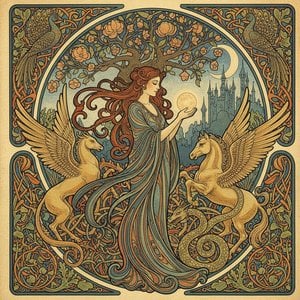
Edmund Dulac: A Master of Golden Age Illustration – Exploring Myth, Symbolism & Art Nouveau Legacy
Explore the captivating world of Edmund Dulac, a master of Golden Age illustration! Discover his enchanting fairy tales, Art Nouveau style, and lasting influence on art & design. Learn about *The Rubaiyat* and more.
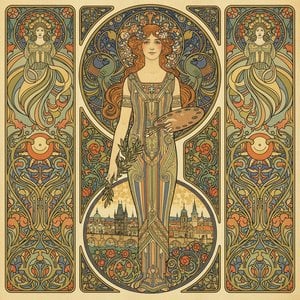
Alphonse Mucha: A Comprehensive Exploration of Art Nouveau's Master of Decorative Symbolism
Explore the life & art of Alphonse Mucha, master of Art Nouveau! Discover his iconic posters, stunning illustrations, and the monumental Slav Epic. A comprehensive guide for collectors & enthusiasts.

The Enduring Power of Illustration: A Historical Survey of Narrative Art & Visual Storytelling
Explore the rich history of illustration! From ancient cave paintings to Art Nouveau masterpieces, discover how visual storytelling has shaped culture. Expert insights & stunning examples.

Kay Rasmus Nielsen: A Golden Age Illustrator's Enchanting Legacy of Symbolism & Narrative
Explore the captivating world of Kay Rasmus Nielsen, a celebrated Golden Age illustrator renowned for his Art Nouveau fairy tale art & Disney contributions. Discover his unique style, enduring legacy, and how to collect his enchanting works.

Angelo Chiacchio: A Mid-Century American Illustration Master & the Rise of Commercial Art
Explore the captivating world of Angelo Chiacchio, a master of mid-century American illustration. Discover his evolution, signature style, and lasting impact on commercial art & design. Learn about his legacy at the Museum of American Illustration.


