

 In echtem Maßstab anzeigen
 Versenden als Grußkarte
 Teilen
 Details anzeigen
 Leitfaden öffnen

 Herunterladen
 Ähnliche Objekte
 Röntgenaufnahme
 Diashow
 Besucherstatistiken
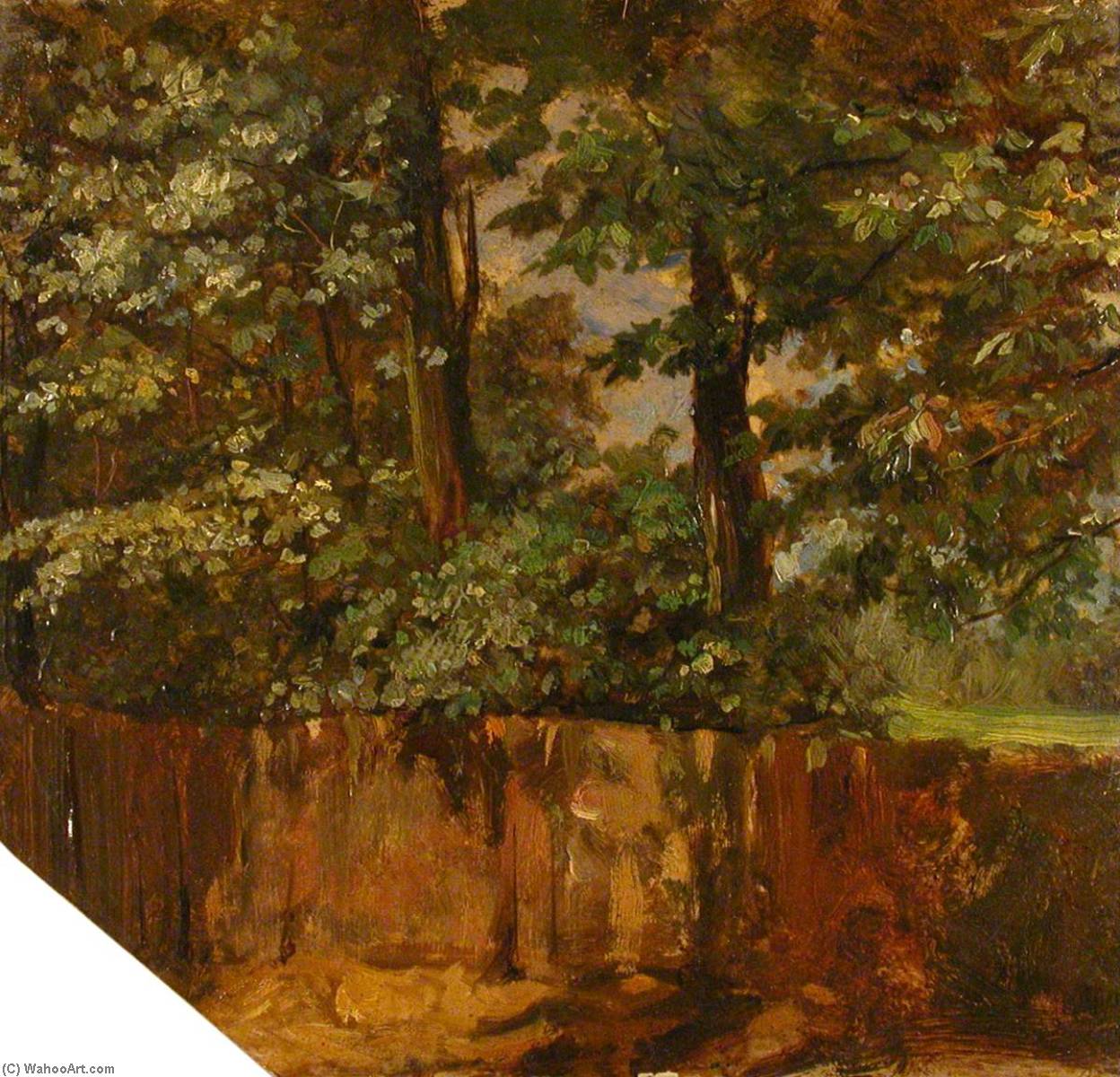
Trees
 Oil On Canvas
- WallArt
- Romanticism
 19th Century
 38.0 x 27.0 cm
 Die Stirling Smith Art Gallery - Museum
 Mehr anzeigen
Erwerben Sie ein hochauflösendes, optimiertes digitales Bild, das der Online-Vorschau weit überlegen ist.
Jede Datei wird von unseren hauseigenen Spezialisten mit modernsten Werkzeugen und fachmännischer manueller Retusche sorgfältig vorbereitet. Wir stellen sicher, dass jedes Bild eine außergewöhnliche Klarheit, präzise Farbgenauigkeit und feinste Details aufweist.
Die endgültige Datei wird innerhalb von 72 Stunden per E-Mail zugestellt und ist für den sofortigen Einsatz in professionellen, redaktionellen und Druckumgebungen optimiert. Es handelt sich um dieselbe Qualität, der führende Designstudios, Verlage und Galerien vertrauen.
Digitales Bild
Laden Sie eine hochauflösende Datei für die persönliche Präsentation, den Druck und kreative Projekte herunter. ( Zum Druck wechseln Handgemalte Reproduktion kaufen)
In jeder Bestellung digitaler Bilder enthalten
Professionelle digitale Bereitstellung, garantiert
Wenn Sie sich für ArtsDot.com entscheiden, erhalten Sie nicht nur ein Bild – Sie erhalten ein professionell aufbereitetes digitales Kunstwerk, das mit höchster Präzision erstellt und durch eine Zufriedenheitsgarantie abgesichert wird. Hier ist alles, was automatisch mit Ihrer Bestellung geliefert wird:

Schnelle E-Mail-Zustellung
Ihre hochauflösende digitale Bilddatei wird Ihnen innerhalb von 72 Stunden nach der Bestellung per E-Mail zugestellt – bereit zur sofortigen Verwendung.

KI-optimierte digitale Datei
Ihre Kunstwerke werden professionell mithilfe fortschrittlicher KI-Tools und manueller Bearbeitung optimiert, um maximale Detailtreue, Klarheit und Farbgenauigkeit zu gewährleisten.

Kostenloser lebenslanger Neudruckservice
Datei versehentlich gelöscht oder verloren? Keine Sorge – wir senden sie Ihnen jederzeit kostenlos erneut zu.

Keine Einfuhrgebühren – jemals
Genießen Sie Ihr Kunstwerk sofort ohne Zollgebühren, Einfuhrabgaben oder Versandkosten – digitale Downloads sind immer steuerfrei.

Garantierte Farbtreue
Wir garantieren, dass Ihr digitales Bild mithilfe professioneller Werkzeuge und Farbmanagement die Originalfarben so präzise wie möglich wiedergibt.

100-Tage-Zufriedenheitsgarantie
Sollten Sie mit Ihrem digitalen Bild nicht zufrieden sein, werden wir es überarbeiten oder 100% innerhalb von 100 Tagen erstatten – ohne Wenn und Aber.

100% Geld-zurück-Garantie
Nicht zufrieden? Erhalten Sie innerhalb von 100 Tagen nach Erhalt Ihrer digitalen Datei eine vollständige Rückerstattung – ohne Wenn und Aber.

Rabatte bei Großbestellungen
3 Bilder kaufen, 10% sparen – 5 Bilder kaufen, 15% sparen – Ab 10 Bildern 20% sparen. Ideal für kreative Projekte, Galerien und Agenturen.
A Verdant Embrace: Exploring Thomas Stuart Smith's "Trees"
To gaze upon Thomas Stuart Smith’s "Trees" is to step through an unseen portal into a moment of profound natural tranquility. This painting is far more than a mere depiction of foliage; it is a carefully composed meditation on the enduring relationship between humanity and the wild, untamed beauty of nature. The scene unfolds within a lush woodland setting, where every leaf seems imbued with the deep, saturated green of life itself. Smith masterfully captures the layered depth of a forest—the immediate intimacy of foreground branches contrasts beautifully with the hazy mystery of trees receding into the background.
The Harmony of Figure and Flora
What elevates this piece beyond simple landscape painting is the subtle inclusion of human presence. Scattered within the verdant tapestry are two figures, positioned thoughtfully to guide the viewer's eye through the composition. They do not dominate the scene; rather, they inhabit it. Their quiet contemplation amidst the towering woods suggests a moment paused—a breath taken by wanderers who have found solace in nature’s embrace. This juxtaposition speaks volumes about the Romantic ideal: man finding his place, and perhaps even his soul, within the grandeur of the natural world. It invites us to consider our own moments of respite.
Technique and the Romantic Gaze
Smith's technique here reveals a painter deeply attuned to both scientific observation and emotional resonance. While the structure is rooted in detailed landscape rendering—the varied textures of bark, the overlapping planes of leaves—there is an undeniable sweep of Romantic idealism guiding the brushwork. The atmosphere itself feels palpable; one can almost hear the rustle of unseen creatures or feel the cool dampness rising from the forest floor. For those who appreciate art that balances meticulous detail with emotional scope, this work offers a perfect study in atmospheric perspective and naturalistic color harmony.
Symbolism of the Woods
Throughout art history, the woods have served as potent symbols—a place of mystery, rebirth, and introspection. In "Trees," the dense foliage acts as both a shelter and a veil, suggesting secrets held just out of sight. The journey into this painted forest mirrors an internal journey; the figures appear to be on a path toward understanding or peace. It is a visual poem about finding clarity away from the clamor of industrialized life, echoing the intellectual currents that shaped Victorian sensibilities while retaining a timeless, pastoral yearning.
Bringing the Woodland Home
For collectors and designers seeking an artwork that whispers serenity into a modern space, this reproduction offers unparalleled depth. The dimensions of 38 x 27 cm allow it to function beautifully as a focal point—whether placed above a console table or nestled within a gallery grouping. Owning "Trees" is not just acquiring art; it is curating an atmosphere of enduring calm, allowing the viewer to reconnect with that primal, restorative feeling found only deep within the heart of nature.
Fragen & Antworten
Was erklärt die urheberrechtliche Situation von "Trees" von Thomas Stuart Smith?
"Trees" von Thomas Stuart Smith ist gemeinfrei – das Urheberrecht ist abgelaufen. Die Dauer des Urheberrechts beginnt mit dem Tod des Künstlers, der im Jahr 1869 verstarb.
Kann ich eine Ölreproduktion von "Trees" bestellen?
Handgemalte Repliken von "Trees" von Thomas Stuart Smith sind auf diese Website erhältlich: eine handgemalte Ölreproduktion auf Leinenleinwand, bestellbar über diese Seite.
Wie intensiv sind die Farben von "Trees"?
Die Farbe von "Trees" weist eine Sättigung von Clear Color Presence und eine Intensität von Balanced auf.
Welche Stimmung und welche Emotion vermittelt "Trees" von Thomas Stuart Smith?
In "Trees" begleitet eine Serene-Stimmung eine Tranquil Emotion.
Wie kann ich einen Druck von "Trees" von Thomas Stuart Smith erwerben?
"Trees" ist als ein Fine Art Print auf Baumwollkanvas oder Archiv-Leinwandpapier erhältlich. Bestellungen können in der von Ihnen gewünschten Größe auf diese Seite aufgegeben werden.
Wer ist der Künstler hinter "Trees"?
"Trees" wurde von Thomas Stuart Smith geschaffen. Die Informationen auf dieser Seite beschreiben das Originalwerk von Thomas Stuart Smith.
In welcher Beziehung stehen die Farben von "Trees" von Thomas Stuart Smith zu dessen emotionaler Wirkung?
"Trees" von Thomas Stuart Smith vereint eine Dark Farbpalette mit einem Tranquil Ton.
Ähnliche Kunstwerke


Künstlerbiografie
Die stille Erhabenheit des Thomas Stuart Smith
Thomas Stuart Smith (1815–1869) bleibt eine einzigartige und evokative Figur im Geflecht der schottischen Kunstgeschichte – ein Maler, der die seltene Gabe besaß, die weitreichenden emotionalen Höhen der Romantik mit der zarten, geerdeten Intimität alltäglicher Beobachtungen zu verbinden. Geboren in ein Leben, das von unkonventionellen Umständen geprägt war – als illegitimer Neffe von Alexander Smith, dessen Anwesen Glassingall bei Dunblane eine Kulisse aus intellektuellem und landwirtschaftlichem Prestige bot –, waren Smiths frühe Jahre von einer kosmopolitischen Weite gezeichnet. Seine prägenden Reisen durch Frankreich und seine anschließende Rückkehr nach England ermöglichten es ihm, die wechselnden Strömungen der europäischen Ästhetik in sich aufzunehmen, wodurch eine Perspektive entstand, die ebenso sehr wissenschaftliche Neugier wie künstlerische Leidenschaft widerspiegelte.
Sein Leben und sein Werk waren tief in der transformativen Atmosphäre der viktorianischen Ära verwurzung. Während viele seiner Zeitgenossen versuchten, die monumentalen Umbrüche der Industrialisierung durch heroische Erzählungen einzufangen, richtete Smith seinen Blick nach innen und auf das häusliche Herdfeuer. Er fand eine tiefe Bedeutung in den subtilen Nuancen des häuslichen Lebens, indem er walisische Interieurs einfing, die in ein weiches, diffuses Licht getaucht waren, sowie Küchen, die vor der lebendigen Textur frischer Erzeugnisse strotzten. Seine Leinwände dienten als Fenster zur menschlichen Erfahrung, in denen die psychologische Tiefe eines Porträts ebenso bedeutsam war wie die atmosphärische Schwere einer Landschaft.
Eine Synthese aus Realismus und Romantik
Die Brillanz von Smiths Technik liegt in seiner meisterhaften Synthese scheinbar gegensätzlicher Bewegungen. Er war tief bewegt von der Präraffaelitischen Bruderschaft und schöpfte Inspiration aus der akribischen botanischen Genauigkeit und atmosphärischen Präzision, wie sie von Meistern wie John Everett Millais und William Holman Hunt vertreten wurde. Dieser Einfluss zeigt sich in seinem Streben nach wahrhaftiger Beobachtung; er näherte sich der natürlichen Welt mit einem geschärften Auge für Details, das die Integrität jedes Blattes, jeden Schattens und jeder Stofffalte ehrte.
Doch unter dieser Schicht des akribischen Realismus lag ein Herz, das tief in der Romantik verwurzelt war. Smith dokumentierte nicht bloß die Realität; er suchte danach, eine Stimmung zu evozieren. Durch innovative Experimente mit Licht und Perspektive erfüllte er seine Szenen mit einem Gefühl von Sehnsucht und erhabener Emotion. Sein Werk oszilliert oft zwischen den folgenden Elementen:
- Das Intime: Ein Fokus auf die stillen, unbemerkten Momente des täglichen Lebens und der sozialen Kommentierung.
- Das Atmosphärische: Der Einsatz von Licht, um ein Gefühl von zeitlicher Tiefe und emotionaler Resonanz zu erzeugen.
- Das Beobachtende: Eine strenge Hingabe an die Texturen und botanischen Wahrheiten der natürlichen Welt.
Vermächtnis und philanthropischer Geist
Über seine Beiträge zur Leinwand hinaus hinterließ Thomas Stuart Smith durch sein Engagement für Bildung und die Bewahrung der Kunst einen unauslöschlichen Eindruck in der Kulturlandschaft Schottlands. Sein Vermächtnis ist vielleicht am greifbarsten durch seine Rolle als Gründer der Stirling Smith Art Gallery and Museum spürbar. Dieser Akt der Philanthropie stellte sicher, dass die Schönheit, die er einzufangen suchte, für zukünftige Generationen zugänglich bleiben würde, und festigte seinen Namen nicht nur als Schöpfer von Bildern, sondern als Hüter des kulturellen Erbes.
In der Geschichte der Kunst des neunzehnten Jahrhunderts steht Smith als Brücke zwischen den Epochen. Er navigierte den Übergang von den grandiosen, idealisierten Visionen des frühen Jahrhunderts hin zu dem fundierteren, sozial bewussteren Realismus, der einen Großteil der späteren viktorianischen Periode definieren sollte. Seine Fähigkeit, das Außergewöhnliche im Gewöhnlichen zu finden, wirkt bis heute nach und erinnert uns daran, dass die tiefsten Wahrheiten oft in den stillsten Winkeln unserer Existenz zu finden sind.

Thomas Stuart Smith
1815 - 1869 , Schottland
Kurzprofil
- Artistic Movement Or Style: Romantik
- Date Of Birth: 1815
- Date Of Death: 1869
- Full Name: Thomas Stuart Smith
- Nationality: Schottisch
- Notable Artworks:
- Sonnenlicht durch Nebel
- Szene in der Küche
- Place Of Birth: Schottland